Saudi Founding Day (Feb 22) Explained: History, Meaning, and Why It Matters
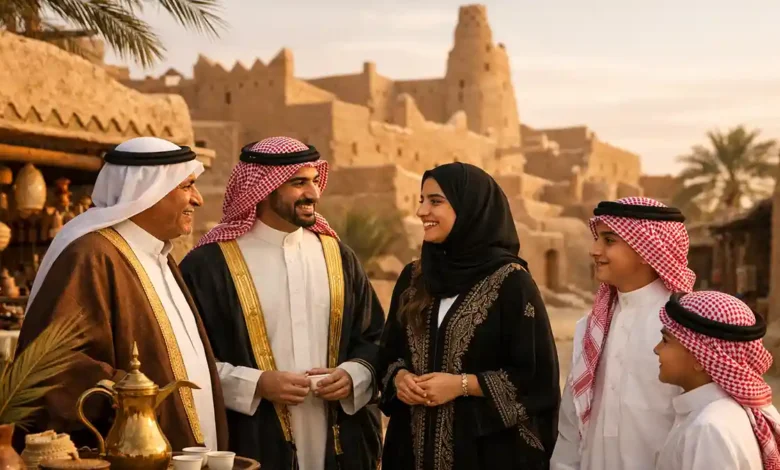
Saudi Founding Day is one of those national occasions that feels simple at first a holiday on February 22 but becomes far more meaningful once you understand what it’s actually pointing to. This day is about roots: the beginning of Saudi statehood in Diriyah in 1727, under Imam Muhammad bin Saud, and the long arc of continuity that connects early governance in Najd to the modern Kingdom.
If you’ve ever felt that history can sound like a list of dates and names, Founding Day does the opposite. It turns history into something you can see, wear, taste, and share through symbols, heritage, architecture, stories, and celebrations that feel personal rather than purely political.
This guide explains the history behind Founding Day, why February 22 matters, what the day represents culturally, and why it has become so important in today’s Saudi Arabia.
Quick facts (for fast understanding)
- Date: February 22 (every year)
- What it marks: The founding of the First Saudi State in 1727
- Where the story begins: Diriyah, the historic capital and center of early Saudi governance
- Key figure: Imam Muhammad bin Saud
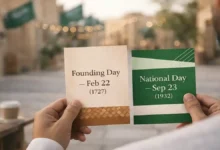
- Often confused with: Saudi National Day (September 23), which marks the unification of the modern Kingdom in 1932
1. What is Saudi Founding Day?
Saudi Founding Day is a national holiday that commemorates the start of Saudi statehood specifically, the formation of the First Saudi State in 1727 in Diriyah. While the modern Kingdom was unified later (a different milestone), Founding Day focuses on the beginning of the state building project: leadership, administration, security, community life, and continuity.
A helpful way to think about it:
- Founding Day (Feb 22): Where the Saudi state story begins.
- National Day (Sept 23): When the modern Kingdom took its final unified form.
They complement each other. One tells the origin story; the other marks the modern state’s unification.
2. Why is Founding Day on February 22?
Countries often choose national dates based on major turning points declarations, unifications, treaties, victories. Saudi Founding Day is tied to a specific historical point associated with the emergence of leadership in Diriyah and the start of stable governance that later developed into a broader state.
What makes this choice significant is the message it sends: Founding Day is less about a single dramatic event and more about state formation the start of a durable political identity. It highlights the idea that Saudi Arabia’s modern presence didn’t appear suddenly in the 20th century; it grew from earlier foundations.
3. Diriyah: why this place matters so much
If Founding Day has a geographic heart, it’s Diriyah.
Diriyah is not just an old town. It represents a time when communities in central Arabia were shaping governance, security, trade, and social order in ways that left a lasting imprint. In Saudi historical memory, Diriyah stands as the original capital of the First Saudi State a place where leadership and local identity were built into institutions.
The emotional power of place
History becomes real when it has a location you can stand in. That’s why the story of Diriyah resonates: you can see the architecture, the urban design, and the cultural patterns that reflect how people lived. Founding Day celebrations often highlight that lived heritage because it makes the idea of founding tangible.
At-Turaif and the idea of heritage
Many people connect Founding Day with At Turaif, the historic district that symbolizes early statehood, Najdi architecture, and the visual identity of the founding era. Even if you’re not a history specialist, the design language mud brick forms, geometric details, fortress like structures communicates something immediate: endurance, local genius, and cultural confidence.
4. The historical backbone (simple, not overwhelming)
To understand Founding Day properly, you don’t need to memorize everything. You need the structure the way Saudi statehood unfolded over time.
A clear three chapters model
Saudi history is often described through three major state phases:
- The First Saudi State (Diriyah era): begins in 1727
- The Second Saudi State: a later continuation of statehood in the Arabian Peninsula
- The modern Kingdom of Saudi Arabia: unified in 1932 (what National Day celebrates)
Founding Day is anchored to Chapter 1 the start of the political project, the early leadership in Diriyah, and the emergence of a state framework.
Why this matters
This structure turns the holiday into something deeper than a new event. It frames Founding Day as a statement of continuity: the country’s identity is not limited to one generation or one founding moment; it spans centuries of rebuilding, persistence, and renewal.
5. Who was Imam Muhammad bin Saud (and why is he central)?
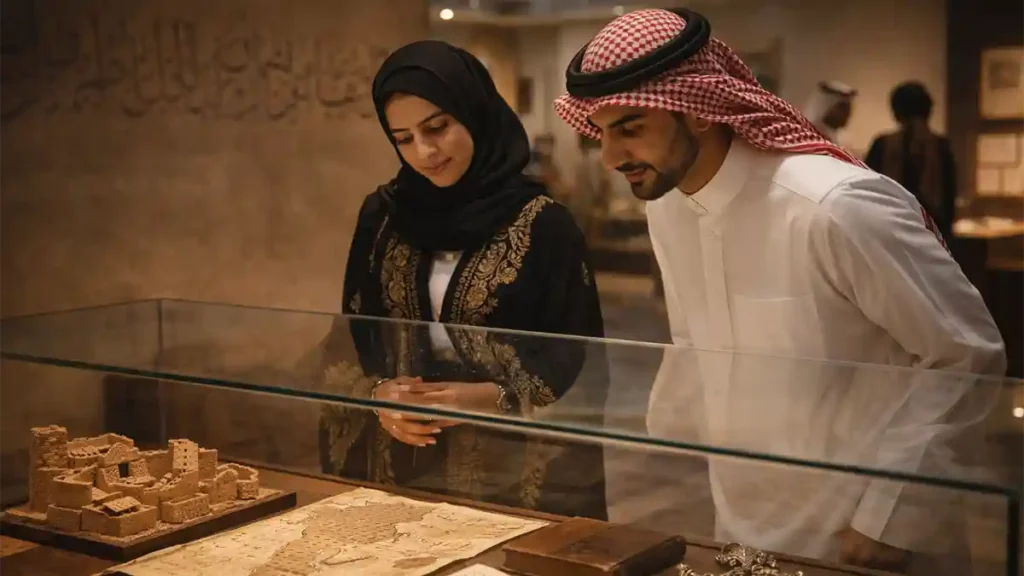
Imam Muhammad bin Saud is central to Founding Day because he represents the point at which leadership in Diriyah becomes more than local influence it becomes organized governance that could expand, stabilize, and endure.
When people hear founding, they sometimes imagine a single heroic scene. Real state building is different. It’s administration, alliances, dispute resolution, security, and the everyday work of keeping a society stable enough to grow. That is the type of leadership Founding Day is designed to highlight.
In short: Founding Day honors not only courage, but governance.
6. Founding Day vs National Day (one clean explanation)
This comparison is important, but it’s also where writing often becomes repetitive so here it is, clearly, once:
- Saudi Founding Day (Feb 22): celebrates the start of the First Saudi State in Diriyah in 1727.
- Saudi National Day (Sept 23): celebrates the 1932 unification of the modern Kingdom.
A simple analogy:
Founding Day is the first chapter. National Day is the completed book cover.
7. The meaning of Founding Day: what the holiday is really saying
Founding Day carries multiple layers of meaning, and that’s why it has grown quickly into a major cultural moment.
Meaning #1: We have roots
Modern Saudi Arabia is highly visible mega projects, global sports, tourism, technology, transformation plans. Founding Day adds balance: it reminds everyone that modern life is built on older foundations of identity and resilience.
Meaning #2: Our heritage is not decoration
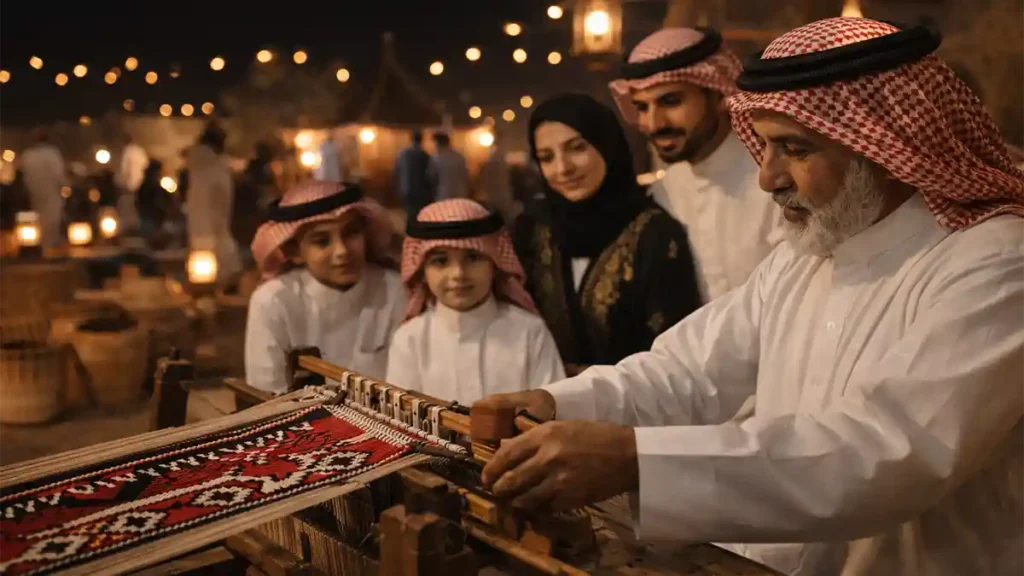
On Founding Day, heritage isn’t treated as a museum label. It becomes a living thing: clothes, crafts, poetry, architecture, hospitality, and regional traditions. That shift is powerful because it makes culture feel active rather than frozen.


Meaning #3: Statehood is a long story
Many countries link identity to a single modern event. Founding Day positions Saudi identity as a long narrative of state building, continuity, and renewal an identity that has been tested and rebuilt across time.
Meaning #4: Unity doesn’t erase diversity
Saudi Arabia is a country of regions with rich, distinct heritage Najd, Hijaz, the Eastern Province, the South, and more. Founding Day tends to highlight heritage broadly, which helps people feel represented through traditions, art, and cultural symbols.
8. The Founding Day symbols: why the logo feels heritage first
A major reason Founding Day feels different from other national occasions is its visual language. The day is often represented through heritage symbols objects and motifs that communicate identity without needing long explanations.
These symbols commonly highlight ideas like:
- Strength and pride (often represented through falconry and traditional concepts of honor)
- Endurance and nobility (often linked to Arabian horses and desert resilience)
- Prosperity and generosity (commonly associated with palm trees and hospitality culture)
- Community and economy (markets, craft traditions, trade routes, social gathering spaces)
- National unity (the flag as an overarching symbol)
Even if someone doesn’t know the historical timeline, they can read the message: this day is about who people were, how they lived, and what they carried forward.
9. What Founding Day celebrations look like in real life
Founding Day celebrations are designed to feel cultural less like a formal ceremony and more like an immersive heritage experience.
Common themes you’ll see
- Traditional attire and regional dress
- Cultural performances (folk dances, drumming, poetic forms, storytelling)
- Heritage exhibitions (crafts, architecture displays, historical reinterpretations)
- Food culture (regional dishes, Saudi coffee traditions, hospitality rituals)
- Family centered public programming
Why the heritage aesthetic is intentional
Founding Day is not trying to compete with National Day’s modern patriotic energy. It has its own lane: it highlights identity through cultural memory. It invites people to connect to the founding era through the texture of daily life what people wore, built, traded, and celebrated.
10. Why Founding Day matters today (the modern reasons)
Founding Day isn’t only about the past. It matters because it answers modern needs: identity in a fast changing world, cultural confidence, social cohesion, and a shared story that people can repeat easily.
1. It strengthens national identity for a young population
Saudi Arabia has a young demographic. For younger generations, history can feel distant unless it becomes accessible. Founding Day helps translate history into formats that work today events, visuals, education, media, and community celebration.
2. It adds cultural depth to modernization
Transformation can sometimes create anxiety: Are we changing too fast? Founding Day offers continuity. It says: change is part of the story, but so are roots. You can build the future without losing the past.
3. It boosts heritage literacy (not just pride)
A strong national identity isn’t only emotion; it’s knowledge. Founding Day encourages people to learn more about Diriyah, Najdi architecture, early governance, and cultural traditions that shaped society. That’s a deeper kind of pride one grounded in understanding.
4. It supports the heritage economy and cultural tourism
Heritage is not only sentimental; it’s also an economic asset when developed respectfully. Global tourism trends show that many travelers want story rich destinations places with culture, architecture, and identity. Founding Day strengthens Saudi Arabia’s storytelling internationally by making the national narrative more visible and easier to understand.
5. It improves cultural diplomacy and global understanding
When a country’s identity is reduced to headlines, outsiders often miss its depth. Founding Day gives Saudi Arabia a clear, culturally grounded narrative: origins, place, symbols, continuity. That clarity supports cultural diplomacy because it’s relatable and human.
11. A practical case study: why Diriyah keeps appearing in Founding Day narratives
Diriyah is a perfect example of how Founding Day connects heritage with the future.
- Historically: it represents early Saudi governance and the founding era’s capital identity.
- Culturally: it represents Najdi architecture and the visual language of endurance and community.
- Strategically: it represents the idea that heritage can be developed into a living cultural destination rather than left as a static relic.
This is why Founding Day often highlights Diriyah: it’s the cleanest bridge between origin and modern ambition.
12. Common misconceptions (and what’s actually true)
Misconception #1: Founding Day is just a second National Day
Not really. National Day focuses on 1932 unification. Founding Day focuses on 1727 origins. They tell different chapters.
Misconception #2: It’s only about politics
Founding Day is intentionally cultural. The public facing celebration emphasizes heritage clothing, crafts, architecture, hospitality, art because identity lives in daily life, not only in official documents.
Misconception #3: It’s mainly about discounts and promotions
Some brands run promotions, but that doesn’t define the day. Founding Day is about memory and meaning. The strongest celebrations are cultural and educational, not commercial.
Misconception #4: It’s hard to understand unless you’re a historian
The opposite: Founding Day is designed to be understandable. The date, the place (Diriyah), and the idea (origins) are all easy to grasp once explained properly.
13. How to celebrate respectfully (especially for expats and visitors)
Founding Day is welcoming, but it carries cultural value. A respectful approach is simple.
Do
- Attend heritage events with genuine curiosity
- Ask Saudi friends or colleagues what Founding Day means to them personally
- Learn a few basics (Diriyah, 1727, Imam Muhammad bin Saud)
- Appreciate regional traditions without turning them into costumes
Avoid
- Using heritage symbols carelessly in marketing or memes
- Treating the day like a theme party
- Reducing the meaning to shopping content
A good rule: celebrate in a way that honors families, elders, and local culture not just your camera roll.
14. The deeper takeaway: Founding Day is a continuity holiday
Some countries celebrate independence. Others celebrate revolutions. Saudi Founding Day celebrates continuity how identity, governance, and social life formed and endured through time.
That’s why it resonates: it doesn’t ask people to love history as an academic subject. It asks them to recognize history as their story visible in architecture, traditions, hospitality, and the symbols that still carry meaning.
Quick FAQ
When is Saudi Founding Day celebrated?
Saudi Founding Day is celebrated every year on February 22.
What does Saudi Founding Day commemorate?
It commemorates the founding of the First Saudi State in 1727, with Diriyah as the historic starting point.
Who is most associated with Founding Day?
Imam Muhammad bin Saud is the key figure associated with the founding era highlighted on Founding Day.
What is the difference between Founding Day and National Day?
Founding Day marks 1727 origins, while National Day marks the 1932 unification of the modern Kingdom.
Why is Diriyah important on Founding Day?
Diriyah is central because it represents the historic base of early Saudi governance and the founding era’s capital identity.
What do the Founding Day symbols usually represent?
They represent heritage and identity community life, pride, endurance, prosperity, tradition, and national unity.
How do people typically celebrate Founding Day?
Celebrations often include heritage clothing, cultural performances, exhibitions, crafts, family events, and traditional hospitality experiences.
Can visitors and expats participate in Founding Day celebrations?
Yes, participation is welcome, especially when done respectfully through cultural events, learning, and appreciation of local traditions.
Conclusion: why Founding Day truly matters
Saudi Founding Day matters because it makes the nation’s story longer, richer, and more human.
It tells Saudi Arabia and the world that modern progress is not a replacement of identity, but an extension of it. It highlights Diriyah as the starting point of statehood, honors early leadership as governance rather than legend, and turns heritage into something lived through symbols, celebration, and shared memory.
In a time when societies everywhere are changing quickly, Founding Day delivers a powerful message in plain terms:
You can build the future faster when you know where you began.