FIA EMI Pakistan App: 7 Myths People Believe and What’s Actually True
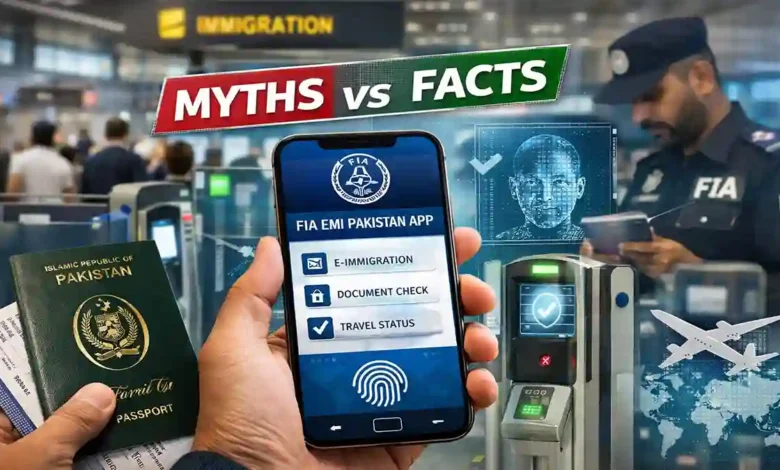
FIA EMI Pakistan App is one of the most discussed travel topics among Pakistanis right now, and not because everyone suddenly loves apps. It is being discussed because people are anxious about airport checks, offloading, document verification, and last minute surprises.
If you have seen viral messages like:
- Install the app or you won’t be allowed to fly.
- It clears immigration in 10 seconds for everyone.
- Your profile must be approved by an agent.
- The app is spying on your phone.
You are not alone. These claims spread fast because they mix a little truth with a lot of fear. The result is confusion: some travelers panic install whatever link they receive, others refuse to install anything, and many are stuck wondering what is real.
This deep dive does three things:
- Defines what people usually mean when they say EMI/IMMI/e-immigration app.
- Breaks down 7 popular myths and what’s actually true behind each.
- Gives you a practical traveler playbook: privacy safe behavior, scam avoidance, and document readiness.
This article is written to be clear, modern, and realistic. No drama, no vague talk. Just what you need to understand the situation and travel with confidence.
First, clear up the name confusion (EMI vs IMMI vs e-immigration)
A big reason myths exist is that people use multiple labels for what may be the same idea:
- EMI app: what many social posts call it (sometimes without any official reference).
- IMMI app: a name that appears in media reporting about a mobile application connected to immigration screening.
- E-immigration app: a broader label for any official mobile workflow tied to immigration clearance.
In everyday talk, people often mean a government linked travel or immigration verification app connected to Pakistani airports. That is the concept.
Here is the key point: a concept or pilot is not the same thing as a nationwide, mandatory rule for every traveler. Most myths begin when people treat an early plan, a pilot, or a target time (like 10 seconds) as a universal promise.
Why myths spread so easily in travel topics
Travel rumors spread faster than other rumors because the cost feels high. If a traveler believes: One mistake and I’ll be offloaded, they are more likely to forward messages without verifying.
Also, scammers love hot topics. When travelers are stressed, they pay for quick solutions. That is why you see:
- fake app download links,
- profile approval services,
- agents demanding OTP codes,
- and install this APK messages.
So let’s separate fear from facts.
The 7 Myths (And What’s Actually True)
Myth 1: The FIA EMI Pakistan App is mandatory for everyone.
What’s actually true
Mandatory is a strong word. For something to be mandatory for all travelers, you would normally see clear, consistent instructions across:
- airline check in procedures,
- airport signage,
- official notices,
- and uniform enforcement at multiple airports.
In many cases, what happens instead is that a process starts in phases: pilots, specific routes, specific airports, or limited passenger categories. That is how most airport technology rollouts work globally.
So the most accurate view is: Treat mandatory for everyone claims as unverified unless confirmed by official channels or clearly communicated airport procedures.
Why people believe it
Because offloading and travel checks are real. People connect the two ideas: There is strict screening + there is an app = the app must be mandatory. That conclusion feels logical, but it is not automatically correct.
What to do
- Do not rely on WhatsApp forwards.
- Verify through official sources or airline guidance for your specific airport and flight.
- Even if an app is suggested, remember: your documents and travel intent still matter more than an installation.
Myth 2: If you install the app, immigration will be cleared in 10 seconds guaranteed.
What’s actually true
Claims like 10 seconds are usually tied to automation goals, like e-gates or faster verification for low risk, well documented passengers. These are targets, not guarantees.
Even the best automated systems can slow down because of:
- network issues,
- passport scan errors,
- mismatched names (ticket vs passport),
- outdated phone data,
- incomplete entries,
- or random secondary screening.
Think of it this way: automation can reduce average time, but it cannot remove human checks entirely.
Why people believe it
Because 10 seconds is a catchy number. It sounds like a technology breakthrough. It gets clicks and shares, so it spreads.
What to do
Use the app (only if it is confirmed official and relevant to you) as a preparation tool. But still:
- arrive early,
- carry printed and digital copies of key documents,
- keep your story consistent.
Myth 3: Registering on the app means you cannot be offloaded.
What’s actually true
Offloading decisions are not based on one factor. They can involve:
- document authenticity,
- visa type and travel intent mismatch,
- suspicious itinerary patterns,
- prior immigration flags,
- missing supporting documents,
- or concerns about illegal migration and trafficking networks.
An app might help by pre-checking information and reducing surprises, but it cannot override reality. If documents do not match the story, or if a case triggers risk screening, travelers can still face questioning.
Why people believe it
Because people want certainty. Traveling is expensive and emotional. The idea that one app solves everything is comforting.
What to do
Think in layers:




Layer 1 (non negotiable): valid passport, correct visa, consistent details.
Layer 2 (support): itinerary, employment/education proof, hotel address, return ticket.
Layer 3 (optional tech): app based pre entry, if genuinely official and required.
If Layer 1 fails, Layer 3 cannot rescue you.
Myth 4: The app approves visas, cancels visas, or decides your immigration status.
What’s actually true
Apps do not approve visas. Visas are issued by destination country authorities through their own systems (embassies, e-visas, official portals).
What an immigration app can do is:
- verify identity details,
- confirm record matches official databases,
- flag inconsistencies,
- support screening and queue management,
- and route some passengers to manual checks.
So the app can influence process flow, but it does not replace visa issuance.
Why people believe it
Because verification sounds like approval. Many people confuse the two. Also, viral posts oversimplify.
What to do
If someone says: Your visa will be approved in the app, treat it as misinformation. Visa proof should be:
- official e-visa confirmation,
- sticker visa,
- permit documents,
- and the correct category for your travel purpose.
Myth 5: You must pay an agent to approve your EMI/IMMI profile.
What’s actually true
This is a classic scam pattern. When a topic is hot, scammers create a fake bottleneck: Your profile is pending unless you pay.
If an app is official, you should expect:
- free access through official stores,
- clear instructions,
- and no need to pay random individuals for approval.
You might still pay legitimate costs related to travel (visa fees, protectors where applicable, attestation fees), but that is different from paying a stranger to clear your app status.
Why people believe it
Because they fear offloading and want shortcuts. Scammers sell relief.
What to do
Never pay anyone who:
- asks for your OTP,
- wants remote access to your phone,
- requests full passport photos via WhatsApp with no official verification,
- claims they can remove a flag instantly,
- or pressures you with a time limit.
If you need real help, use official airline support, airport facilitation desks, or verified service providers with clear documentation and receipts.
Myth 6: The app is spying on everything: bank apps, calls, photos, microphone.
What’s actually true
Privacy concerns are valid, but they should be handled with evidence and smart settings, not panic.
A travel verification app may reasonably request:
- camera access (for document scanning),
- storage access (to upload images or PDFs),
- internet access,
- notifications (status updates).
Those can make sense.
What is suspicious is when an app requests permissions that do not match its purpose, such as:
- Accessibility access,
- Device admin rights,
- installing unknown apps,
- SMS reading (sometimes used for OTP, but should be clearly justified),
- continuous location tracking with no explanation.
Also, the biggest privacy risk often is not the official app. It is fake apps pretending to be official.
What to do (privacy safe steps)
- Install only from official stores, not APK links.
- Read the permission prompts carefully.
- Deny anything that feels unrelated.
- Keep travel scans in a separate folder; delete them after travel if you prefer.
- Use two factor authentication on your email and accounts before travel.
If you want an extra safety move: use a dedicated travel email address and keep your main accounts protected.
Myth 7: Any app called EMI/IMMI is official. If it has the right logo, it’s safe.
What’s actually true
Names and logos are easy to copy. This is the most dangerous myth because it pushes people to download fake apps quickly.
Fake apps commonly show up as:
- similar names (EMI Pakistan, eIMMI Pro, Immigration Fast Track)
- slightly altered logos,
- websites that look official but are not,
- APK files shared in groups,
- update required links that lead to malware.
What to do (official verification checklist)
Before installing anything:
- Use Google Play or Apple App Store only (avoid APK downloads).
- Check the developer name and publishing history.
- Review permissions and the store data safety section.
- Check reviews for patterns (fake reviews are often repetitive and generic).
- Do not trust download link graphics circulating in groups.
If your gut says this feels rushed, pause. Rushed installs are exactly what scammers want.
The Real Traveler Playbook (Practical and Calm)
Even if an app becomes widely used, your success at the airport still relies on basics. Here is the best approach that works regardless of tech changes.
(1) Document readiness: the strongest protection
Have the essentials organized in a single folder (digital and printed):
- Passport (validity checked)
- Visa or entry permit (correct category)
- Return ticket (or onward ticket if required)
- Hotel booking or address where you will stay
- Contact details (host, employer, university, sponsor)
- Proof of funds (if relevant for your destination)
- Employment letter / student ID / admission proof (if relevant)
- Travel insurance (if required by the destination)
A clean document set reduces confusion and gives officers fewer reasons to doubt your travel intent.
(2) Consistency: your story must match your paperwork
Many travel problems start when a traveler says one thing but their documents suggest another. Examples:
- Saying tourism but carrying an employment contract
- Claiming a short visit but holding a one way ticket
- Saying visiting family but not knowing basic details (address, relationship, duration)
- Showing a visa for one purpose but explaining another
If you want smooth clearance, be consistent, clear, and calm.
(3) Timing: arrive like someone who respects processes
If you are a first time traveler, traveling on a new visa, or have a complex route:
- arrive earlier than usual,
- keep your phone charged,
- keep documents accessible,
- avoid last minute changes that create mismatches.
(4) If you are asked questions: respond professionally
Do this:
- keep answers short and factual,
- avoid arguments,
- show documents without delay,
- ask what additional proof is needed.
Avoid:
- emotional outbursts,
- long stories,
- blaming staff,
- showing random screenshots that confuse the case.
Professional behavior can reduce friction even when the situation is stressful.
How to Avoid Scams Around “EMI/IMMI” (Must Read)
Scams follow predictable patterns. If you remember these red flags, you protect yourself instantly.
Red flag patterns
- Your profile is blocked. Pay now.
- Send OTP to confirm approval.
- Install this APK because Play Store is down.
- We can remove your offloading risk for a fee.
- Give your passport photo and CNIC on WhatsApp.
- Share your phone screen so we can guide you.
Safe alternatives
- Use official store listings only.
- Use airline guidance and airport desks for process questions.
- If someone claims inside access, assume it is a trap.
In travel, the biggest mistake is not a missing app. It is trusting the wrong person with your identity.
A Simple Glossary (So You Don’t Get Confused)
- Immigration clearance: the process of verifying you can legally exit/enter a country.
- Offloading: being stopped from traveling before departure, usually after document or screening concerns.
- E-gates: automated gates used at airports for eligible passengers to reduce manual processing.
- Risk screening: evaluation of travel patterns and document signals to identify suspicious cases.
- Verification: checking that details match official records (not approving a visa).
Who Needs to Pay Extra Attention? (Real Life Scenarios)
(1) First time travelers
If this is your first international trip, you are more likely to be nervous and inconsistent. Prepare:
- print key documents,
- memorize key details (address, dates, employer/university),
- avoid relying on I have it on my phone only.
(2) Students traveling abroad
Students should keep:
- admission letter,
- fee receipt or scholarship proof,
- accommodation details,
- university contact information,
- and a clear plan for return (if applicable).
(3) Overseas Pakistanis visiting home
If you are returning to Pakistan, keep:
- residency card details,
- overseas ID cards (if applicable),
- and a consistent address/contact plan.
(4) Travelers with job seeking intent
This is where many problems happen. If your visa does not allow work, do not describe your trip as job hunting in a way that contradicts your visa. Be honest, but be accurate and aligned with your visa category.
The Bigger Picture: Why Automation Is Being Discussed
Airport modernization is not happening because apps are trendy. It is happening because:
- passenger volumes are high,
- manual checks create bottlenecks,
- enforcement against illegal migration and trafficking is increasing,
- and agencies want earlier visibility into travel details.
That environment creates two parallel realities:
- For genuine travelers, the goal is smoother processing.
- For risky cases, the goal is earlier detection and intervention.
This is why you see technology language like profiling, verification, and faster clearance being discussed.
Quick FAQ
Is the FIA EMI Pakistan App mandatory for all travelers in 2026?
Not automatically for everyone. Treat mandatory claims as flight and airport specific unless confirmed through official guidance.
What is the app meant to do?
It is generally discussed as a way to support faster immigration processing and improved verification and screening before or during travel.
Does installing the app guarantee I will not be offloaded?
No. Offloading can still occur due to document issues, inconsistencies, or screening flags.
Does the app approve visas?
No. Visas are issued by destination country authorities. The app is about verification and process support, not visa issuance.
Is it safe to install?
It can be safe if it is genuinely official and installed from official stores. Avoid APK links and unknown websites.
What permissions are normal for a travel verification app?
Camera, storage, internet, and notifications can be normal. Be cautious about permissions that do not match the app’s purpose.
Should I pay an agent to approve my profile?
No. Avoid anyone asking for money, OTP codes, or remote phone access for approval.
What is the smartest way to avoid airport confusion?
Prepare documents, keep your travel story consistent, arrive early, and follow only verified official instructions.
Conclusion: Don’t Panic. Prepare.
The FIA EMI Pakistan App debate is louder than it needs to be because fear spreads faster than facts.
Here is the clean takeaway:
- An e-immigration or IMMI style workflow is being discussed as part of border modernization and screening improvements.
- That does not automatically mean mandatory for everyone immediately.
- No app replaces strong documents, consistent travel intent, and calm behavior.
- Your biggest risk is not the official process. Your biggest risk is fake links, scams, and rumor based decisions.
If you travel like a professional, you reduce your chances of trouble dramatically: verify sources, protect your privacy, and keep your documents in order.




One Comment