Pakistan and America Cooperation: 10 Big Areas Where Partnership Is Growing

Pakistan and America cooperation is shifting into a more practical phase. Instead of being defined by one headline issue, it is increasingly shaped by projects, market access, financing, institutional dialogues, and people to people networks. That does not mean disagreements have vanished. It means both sides are testing a more durable model: focus on shared interests that can be measured, funded, and implemented.
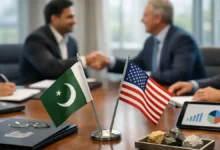
You can see this in the economic track. Pakistan and the United States have been negotiating trade issues including reciprocal tariffs, with reporting that Pakistan sought relief from a 29% tariff on its exports and explored ways to expand U.S. imports as part of a broader package. More recently, there has been reporting on a trade agreement tied to tariff reductions and cooperation around developing Pakistan’s oil reserves, alongside broader investment aims.
At the same time, the relationship is expanding in less flashy but deeply important lanes: climate smart agriculture, renewable energy planning, health security, higher education partnerships, and targeted counterterrorism coordination.
This article breaks down 10 big areas where cooperation is growing, what is driving the momentum, what could slow it, and what realistic next steps look like.
(1) Trade and tariffs: from recurring talks to tangible deals
Trade is where diplomacy becomes personal: factory orders, export earnings, and jobs respond quickly to policy changes. Over the past year, Pakistan and the United States have moved beyond generic statements and into detailed trade discussions, including negotiations around reciprocal tariffs.
A major reason trade cooperation is gaining attention is that both governments can frame it as a win for everyday people. Pakistan wants more predictable access for its exports and relief from cost barriers. The U.S. side wants stronger market access, better compliance, and a relationship that supports American business interests.
Reporting has also pointed to a broader trade agreement that includes tariff reductions and an energy cooperation angle linked to developing Pakistan’s oil reserves. The key point is not the headline. The key point is that trade cooperation is being treated as a multi sector package: tariffs, investment facilitation, and sector opportunities that can be tracked and implemented.
What makes this lane important right now
- Trade agreements produce measurable outcomes: lower costs, higher volumes, better certainty.
- Economic cooperation is often easier to sustain than purely political promises.
- It creates incentives for both sides to keep working even when politics gets noisy.
Where progress can stall
- If tariff relief is discussed but not converted into clear, operational outcomes.
- If compliance, standards, or payment channels remain friction heavy for exporters.
- If domestic politics on either side turns trade into a short term talking point.
(2) A stronger trade architecture: using TIFA as the problem-solving table
Big trade announcements matter, but the quiet machinery behind them matters more. One major institutional mechanism is the U.S.-Pakistan Trade and Investment Framework Agreement (TIFA), which establishes a structured council chaired by Pakistan’s commerce leadership and the U.S. Trade Representative.
Think of TIFA as a standing table where both sides can raise issues that businesses struggle with: customs delays, regulatory ambiguity, sector standards, IP concerns, investment conditions, and dispute resolution pathways. When these practical irritants are handled, confidence increases and investment follows.
Why this is “growing cooperation” even if it sounds boring
- Stable frameworks matter more than one off meetings.
- Businesses plan around predictable processes.
- Technical cooperation reduces the risk premium investors attach to cross border work.
What to watch next
- Regularity and follow through: agendas, subcommittees, and delivered fixes.
- Sector specific outcomes: not just general dialogue.
- A shift from reactive to proactive anticipating bottlenecks before they hit exporters.
(3) Critical minerals and mining investment: cooperation with strategic gravity
Few areas combine economics and geopolitics as strongly as minerals. Pakistan is seeking investment in its mining sector, while the U.S. has strong incentives to diversify critical mineral supply chains.
This is not theoretical. There has been sustained public reporting around investor interest and financing discussions connected to major mining projects, including Reko Diq, and broader outreach to attract U.S. investment in Pakistan’s mineral sector.
In September 2025, AP reported a $500 million investment deal involving a U.S. company and a Pakistani entity aimed at developing a polymetallic refinery and supporting a wider critical minerals agenda. Deals like this matter because they begin shifting the story from extraction only into processing capacity, which is where more jobs and value are created.
Why this lane is accelerating
- Critical minerals are central to global manufacturing and energy transition supply chains.
- Pakistan has significant mineral potential but needs capital, technology, and governance confidence.
- The U.S. side is increasingly open to investment pathways that also support American exports and services.
Risks that could slow momentum
- Security concerns in project areas can raise costs and scare away top tier investors.
- Policy inconsistency creates uncertainty on royalties, licensing, and local benefits.
- Local communities must see real gains, or projects face reputational and political resistance.
(4) Reko Diq financing: a flagship example of project-based partnership
Reko Diq has become a shorthand for the new cooperation model: a big, bankable project with multiple financiers and long time horizons. Reuters reported major development financing steps, including International Finance Corporation funding commitments and expectations of additional support from institutions including the U.S. Export Import Bank, with production projected to begin in 2028.
In December 2025, the U.S. Embassy in Pakistan highlighted that the U.S. Export Import Bank approved $1.25 billion in financing to support mining of critical minerals at Reko Diq. This is significant because export credit financing often connects directly to U.S. origin equipment and services, linking Pakistan’s development goals with American commercial participation.
What this shows about the relationship
- Cooperation is becoming more transactional and project driven.
- Large scale financing requires governance standards and clear accountability.
- A flagship project can pull in supporting industries: logistics, engineering, services, training.
What must go right for this to become a success story
- Transparent implementation, credible security planning, and local workforce development.
- Clear community benefit mechanisms to reduce backlash.
- A roadmap that supports downstream value, not just raw exports.
(5) Energy security and renewables: moving from statements to system upgrades
Energy is one of the most practical cooperation areas because the problems are concrete: power reliability, affordability, and a stable grid that supports industrial growth.
A joint statement on the U.S. Pakistan Energy Security Dialogue emphasized mutual commitment to advancing renewable energy transition and promoting stability and security in energy outcomes. While energy dialogues are not the same as finished power plants, they often unlock technical assistance, planning support, and investment confidence, especially when paired with reforms that make projects bankable.


Another economic dimension: the U.S. Pakistan trade agreement reporting included an energy component tied to developing Pakistan’s oil reserves, showing that cooperation is not only about renewables; it is also about near term energy security strategies.
Where cooperation is most valuable
- Grid modernization and loss reduction.
- Renewable integration planning so solar and wind do not destabilize the system.
- Energy efficiency standards that reduce demand pressure.
Common obstacles
- Financial constraints in the power sector.
- Policy changes that shift incentives and scare off investors.
- Complex contracting and payment risks that raise project costs.
(6) Climate and water resilience: Green Alliance plus real programs
Climate cooperation has become practical because Pakistan faces repeated shocks: floods, heatwaves, and water stress. The U.S. Pakistan Green Alliance framework highlights cooperation to expand climate smart agriculture, clean energy, and water management.
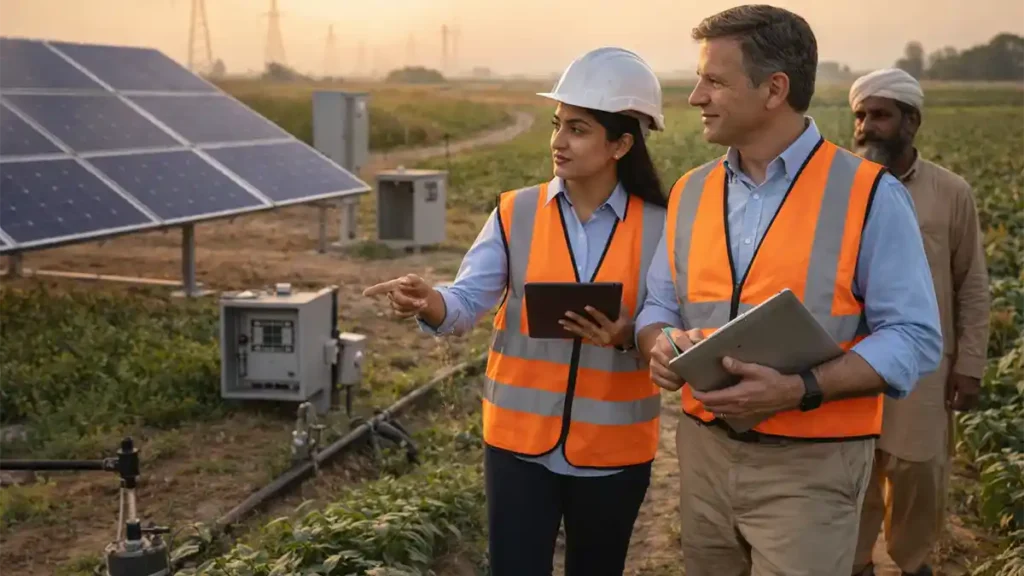
One of the most concrete examples is a U.S. launched, five year $24 million climate smart agriculture project (2025-2029) designed to support farmers with sustainable tools, practices, and technology, including seeds, irrigation efficiency, and market connections. Programs like this can be more impactful than high level pledges because they target productivity and household income while improving resilience.
Why this cooperation is growing
- Climate risk is now an economic risk.
- Agriculture sits at the center of food prices and livelihoods.
- Water management and farm productivity are high-leverage areas for stability.
How to judge whether it is working
- Scaling beyond pilot projects.
- Measurable gains in yield, water efficiency, and farmer income.
- Local capacity building so progress continues without constant external inputs.
(7) Health security and polio: cooperation under pressure, but still central
Health cooperation is often overlooked until a crisis hits. Pakistan and Afghanistan remain the only two countries where polio has not been eradicated, and Pakistan continues nationwide vaccination drives targeting tens of millions of children.
At the same time, Reuters reported that global polio eradication efforts could be delayed due to U.S. funding cuts affecting WHO and partner operations, including loss of expected funding and disruption of collaboration pathways.
This creates a clear policy lesson: cooperation must be resilient, diversified, and integrated into broader health systems rather than treated as a single program effort.
Why the health lane still matters
- Disease surveillance protects everyone; outbreaks do not respect borders.
- Polio infrastructure can strengthen broader immunization and primary healthcare.
- Health cooperation builds trust through visible, human outcomes.
What needs attention
- Sustainable funding models and program continuity.
- Community trust and protection for health workers.
- Better integration: using campaign logistics to strengthen routine health delivery.
(8) Counterterrorism: more structured dialogue, more targeted cooperation
Security cooperation has not disappeared; it has become more focused and procedural. The U.S. and Pakistan held a round of the U.S. Pakistan Counterterrorism Dialogue in Islamabad on August 12, 2025, reflecting continued engagement on shared security concerns.
The core value of structured dialogue is predictability. When security cooperation becomes a regular channel rather than a crisis response both sides can coordinate on capacity building, threat assessments, and enforcement cooperation in ways that reduce misunderstanding.
Why this area keeps expanding
- Regional security threats remain active and adaptive.
- Both sides benefit from disruption of extremist networks and financing.
- Technical cooperation can continue even when political narratives differ.
What can derail it
- If broader political tensions consume the agenda.
- If public messaging gets ahead of private coordination.
- If cooperation is not anchored in clearly shared objectives.
(9) Education and research partnerships: the long game investment
If you want the most durable form of cooperation, look at education. It creates relationships that outlast election cycles and builds skills that enable growth.
A USAID funded summit brought together over 180 Pakistani and American university leaders and faculty to collaborate, exchange knowledge, and build partnerships. These initiatives are not symbolic. They influence curriculum modernization, research collaboration, entrepreneurship programming, and pathways for student and faculty exchange.
Where the biggest payoff comes from
- Applied research that addresses Pakistan’s priorities: water, agriculture, public health, energy.
- University industry linkages that convert training into jobs.
- Alumni networks that become business bridges across borders.
What makes this cooperation credible
- Regular, institution to institution projects (not only annual events).
- Co-funded research and joint publication pipelines.
- Clear metrics: graduates placed, research deployed, startups formed.
(10) Technology and the digital economy: from services to scalable ecosystems
Technology cooperation is growing because it is scalable and fast moving. The U.S. State Department has explicitly highlighted business opportunities in Pakistan’s ICT sector and its scalability, alongside investment incentives and upcoming opportunities.
Digital cooperation includes more than IT outsourcing. It includes workforce development, cybersecurity maturity, platform regulation, startup financing, and cross border commercial reliability. The better the rules and infrastructure, the more confident U.S. investors and partners become.
What needs to happen for real acceleration
- Regulatory clarity that makes cross border contracts predictable.
- Skills development in product, security, and enterprise sales not only coding.
- Diaspora backed venture bridges that bring capital and mentorship.
The people-to-people engine behind all 10 areas
Even when headlines fluctuate, the human connection keeps the relationship functional. Pew Research Center reported that an estimated 680,000 people in the U.S. identified as Pakistani in 2023, based on U.S. Census Bureau estimates.
Remittances also remain a major stabilizer. The State Bank of Pakistan reported FY25 workers’ remittances rising to $38.3 billion, up 26.6% versus FY24. These flows are not only financial; they fund education, healthcare, small businesses, and consumer demand, and they deepen cross border connections.
The strategic insight here is simple: when economic and human networks get stronger, cooperation becomes harder to reverse.
Quick FAQ
1. Is Pakistan and America cooperation actually growing or just headlines?
It is growing most clearly in structured lanes like trade negotiations, investment in minerals, education partnerships, and formal security dialogues.
2. What is the biggest recent economic signal?
A key signal is major project linked financing and investment activity around critical minerals and mining, including Reko Diq related financing and refinery initiatives.
3. Did Pakistan and the U.S. reach a trade deal?
Reporting has described a trade agreement involving tariff reductions and cooperation related to developing Pakistan’s oil reserves, though details like exact tariff levels have not always been public in summaries.
4. What role does TIFA play?
TIFA provides a standing framework and council for resolving trade and investment issues and improving the operating environment for businesses.
5. What is the Green Alliance in simple words?
It is a cooperation framework focused on climate smart agriculture, clean energy, and water management practical areas linked to resilience and growth.
6. Why is health cooperation still a major priority?
Polio remains endemic in Pakistan and Afghanistan, so vaccination and surveillance remain urgent, while global funding shifts can affect program continuity.
7. Is counterterrorism still part of the relationship?
Yes. Both sides continue structured engagement through formal counterterrorism dialogue rounds, including a reported round in Islamabad in August 2025.
8. What is the simplest way to judge whether cooperation is real?
Look for implementation: signed financing, operational projects, institutional follow through, and repeatable programs not just meetings or statements.
Conclusion: the new formula is “deliverables, not declarations”
Pakistan and America cooperation is growing most visibly where the incentives are clear and the outcomes can be measured: trade and tariffs, critical minerals investment, energy planning, climate smart agriculture, health security, higher education links, digital economy growth, and structured counterterrorism coordination.
The direction is promising, but momentum is not automatic. Cooperation expands when both sides do three things consistently:
- Convert dialogue into projects with timelines and budgets.
- Reduce friction for businesses and institutions through reliable rules and processes.
- Invest in people students, researchers, entrepreneurs, health workers, and professionals.
If those three pillars stay in place, the relationship will keep widening not as a dramatic reinvention, but as a steady build of practical partnerships that survive political weather.