MOI Launches “Security Oasis” at Camel Festival
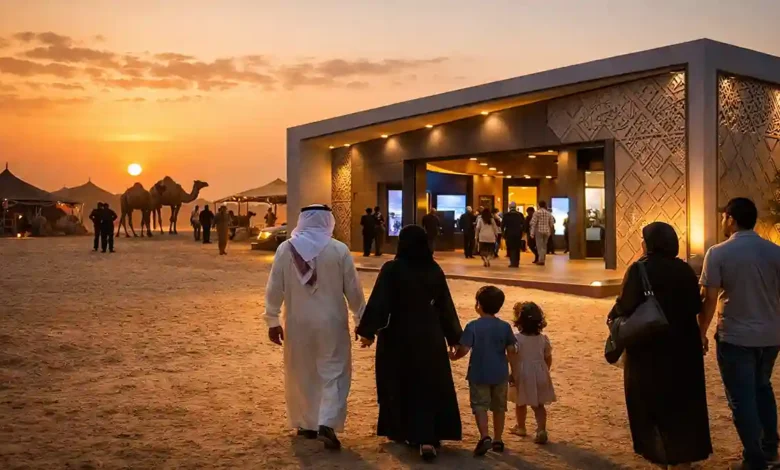
Security Oasis exhibition is the kind of phrase that sounds calm almost poetic but the moment you walk into it at the King Abdulaziz Camel Festival, you realize it’s about something very practical: how a modern country protects people, borders, roads, and major events… while still honoring its heritage.
That mix of past and future is exactly why the Ministry of Interior (MOI) chose this festival to spotlight “Security Oasis.” The King Abdulaziz Camel Festival is not a small local gathering. It’s one of the Kingdom’s biggest heritage events, held in Al-Sayahid northeast of Riyadh, and it draws massive crowds, major camel owners, and international interest.
So, when the MOI launches an exhibition inside this setting, it isn’t “just a booth.” It’s a statement: security and community services aren’t separate from culture they support it.
Security Oasis Exhibition at the Camel Festival: What It Is and Why It Matters
Let’s keep it simple. The Security Oasis exhibition is a large, multi-pavilion showcase presented by the MOI during the festival. Its goal is to introduce visitors families, camel owners, tourists, and even diplomats to the Kingdom’s security ecosystem: what it does, how it has evolved, and how it’s being upgraded with technology and digital services.
This matters for three reasons:
- The audience is huge and diverse. Camel festivals attract people who might not normally visit a government expo.
- The setting is symbolic. The camel is a core part of Saudi identity and the exhibition deliberately connects “heritage security” (think camel patrols) with modern capabilities.
- The MOI’s work touches daily life. From digital platforms to emergency response, the ministry wants citizens and residents to understand what’s available and how to use it.
In other words, “Security Oasis” isn’t only about showcasing equipment. It’s about building trust through visibility, education, and real-world relevance.
The Festival Backdrop: Why the King Abdulaziz Camel Festival Is the Perfect Stage
To understand why “Security Oasis” fits here, you need to understand the scale of the festival itself.
According to Saudipedia, the ninth edition (2024) ran from December 1, 2024 to January 3, 2025, hosted at King Abdulaziz Equestrian Field in Al-Sayahid, northeast of Riyadh, and included a wide range of races and cultural activities.
On the broader festival profile, Saudipedia notes it typically runs 30 to 45 days, covers a vast area (over 225 km²), and sees around 38,000 camels traveling to the Al-Dahna desert to take part.
This isn’t just spectacle it’s an entire seasonal economy. Recent reporting also describes the festival as an engine for the camel breeding industry, with auctions and related jobs expanding alongside the event.
When you place a security exhibition inside a gathering of that size, you get something powerful:
- real crowds (not just invited guests),
- real safety needs (traffic, crowd flow, emergency readiness),
- and a real cultural setting where security work becomes visible and relatable.
Inside the Security Oasis: What Visitors Actually See
A good exhibition doesn’t lecture people. It guides them through an experience. And based on official coverage, “Security Oasis” leans heavily into interactive learning and “see it to believe it” storytelling.
1) A pavilion model many sectors, one message
“Security Oasis” includes pavilions linked to provinces’ emirates, security sectors, and MOI departments so visitors can explore different parts of the system without feeling like they’re in a classroom.
2) The story of “then and now”
One of the most compelling design choices is the deliberate contrast between old and new.
Saudipedia highlights how the exhibition points to two symbolic ends of a timeline: camels as historic tools of mobility and patrol, and modern innovations such as advanced vehicles (even referencing the Lucid electric vehicle in the exhibition’s narrative of evolution).
This isn’t nostalgia. It’s a message: Saudi security has roots, but it is also adapting fast.
3) Technology, AI, and digital services (without the boring vibe)
Arab News reporting (via SPA coverage) says visitors were briefed on MOI development projects, investments in technology, AI applications, and digital solutions designed to enhance public safety and service quality.
Importantly, the exhibition doesn’t keep these ideas abstract. It connects them to things people recognize:
- Absher (widely used for digital government services),
- 911 call centers, and
- digital services supporting individuals, businesses, and government entities.
When you frame “AI” as “faster service, safer roads, smoother operations,” people lean in.
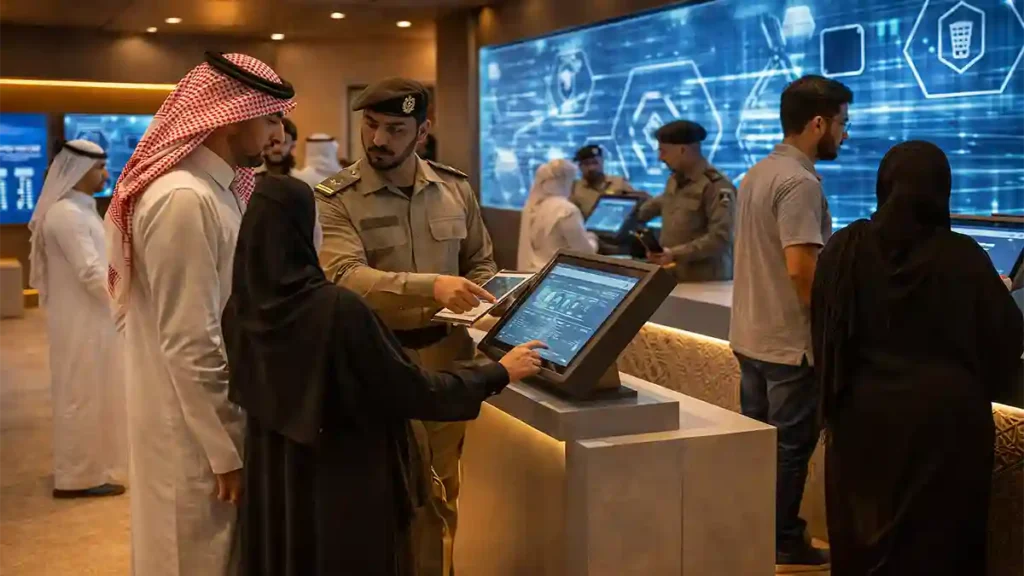
The “Live Experience” Factor: Why Interactivity Changes Everything
People remember what they do more than what they read. That’s why interactive elements matter especially for public safety awareness.
Arab News coverage describes the shooting range as a major highlight, offering supervised experiences with professional guidance.
It also references military scenarios, musical performances, and cultural elements such as camel and cavalry bands and folk performances.
From a visitor perspective, this does two things:
- It keeps the experience family-friendly and engaging rather than purely technical.
- It makes “security” feel human a lived reality involving training, readiness, coordination, and service.
And for younger visitors, that matters even more. A teen who tries an interactive simulator or watches a scenario demonstration may walk away with real curiosity about careers, volunteering, or at least safer behavior (traffic awareness, emergency reporting, etc.).
Spotlight: Border Guard Pavilion and the Heritage-to-High-Tech Story
One of the most talked-about sections is the General Directorate of Border Guard pavilion.
In Arab News reporting, visitors explored 115 years of history, from camel patrols and sailing boats to modern technology and electronic services.
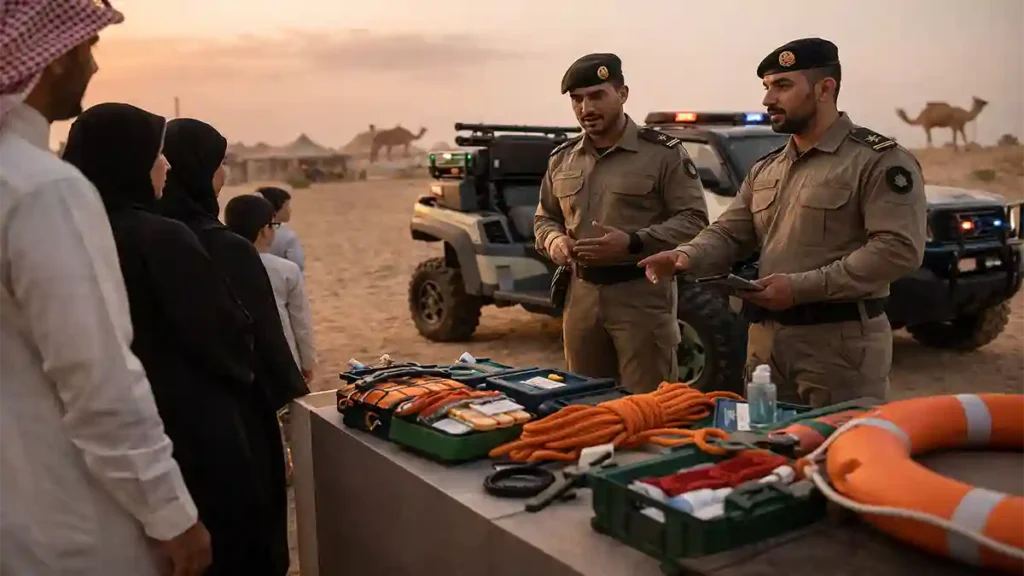
The pavilion also showcased anti-drug smuggling efforts, border security awareness, search and rescue operations, and monitoring plus interactive activities like laser shooting and marine vehicle simulators.
This is smart exhibition design because it ties security to stories:
- how borders were protected before modern infrastructure,
- how rescue work operates today,
- and how technology multiplies capability (monitoring, response coordination, maritime operations).
It also reflects an important reality: border security isn’t only “guards at gates.” It’s surveillance, rescue readiness, anti-smuggling work, and public awareness.
Diplomacy at the Festival: Why International Visitors Pay Attention
When diplomats show up at an exhibition, it tells you something about the message.
Arab News reported that multiple ambassadors (including Japan, Egypt, Morocco, Jordan, Serbia, India, Romania, and Albania) visited the Security Oasis exhibition alongside a French mission delegation.
This kind of visit does two things:
- It presents Saudi security modernization as a national capability organized, tech-forward, and service-oriented.
- It positions the camel festival as more than culture; it becomes a platform for global engagement.
In today’s world, “soft power” often looks like music, food, and art. Saudi Arabia is adding a new layer: heritage + modern governance in one space.
Security Meets Sustainability, Traffic Safety, and Hajj/Umrah Services
One of the most modern angles of “Security Oasis” is that it doesn’t limit security to crime prevention.
Arab News coverage notes that visitors were briefed on technology and digital solutions aimed at enhancing:
- public safety,
- environmental sustainability,
- traffic safety, and
- Hajj and Umrah services.
That list is revealing. It shows how security is being defined more broadly:
- Traffic safety means reducing injuries and deaths, improving enforcement, and using smarter systems.
- Hajj and Umrah services involve crowd management, permits, coordination, and emergency readiness at a massive scale.
- Environmental sustainability increasingly overlaps with security through safe operations, monitoring, and responsible management in large public events and border areas.
For visitors, it connects the MOI’s work to daily life and national events they care about.
The Festival Economy: Why Safety Infrastructure Helps Growth
Large festivals are economic ecosystems. And the camel festival is a big one.
Recent coverage describes strong demand and market activity auction participation, price movement, and jobs in transport and related services.
Even Saudipedia frames the festival as cultural and economic, with high award values and major organization efforts over time. It notes award values reaching SAR250 million (sixth edition, 2021) and SAR300 million (seventh edition, 2022), highlighting the scale of investment around the festival world.
Here’s the key connection:
- The bigger the festival economy becomes, the more critical safety, traffic planning, and emergency readiness become.
- And when the MOI demonstrates those capabilities publicly, it strengthens confidence in attending, investing, and expanding.
So “Security Oasis” is not only a public relations showcase. It’s part of the enabling infrastructure behind major heritage tourism.
What the Launch Signals About Saudi Arabia’s Direction
A “launch” like this signals priorities and a certain style of governance.
1) Government services are becoming more visible and user-facing
Instead of expecting people to “just know” how systems work, the MOI is meeting citizens where they are at major cultural gatherings.
2) Heritage is being used as a bridge to the future
The exhibition’s emphasis on evolution from camel patrol history to modern digital platforms mirrors the wider Vision 2030 narrative: continuity without stagnation.
3) Security is being framed as a service, not only enforcement
By highlighting platforms, call centers, and solutions, the message shifts from “authority” to “support” which is essential for modern public trust.
A Visitor’s Walkthrough: How to Experience Security Oasis Like a Pro
If you’re attending the camel festival and want to make the most of the exhibition, here’s a simple strategy:
- Start with the overview pavilion (to understand the exhibition’s layout).
- Move to the “heritage-to-modern” sections (Border Guard history is a strong entry point).
- Explore digital services demonstrations (especially anything connected to platforms and emergency response).
- Finish with interactive experiences (shooting range/simulators where available and appropriate).
This flow helps you connect the story: why it started, how it works now, and where it’s going next.
Quick FAQ
Is “Security Oasis” only for professionals?
No. It’s designed for public visitors, with demonstrations, awareness content, and interactive elements.
Why place a security exhibition at a camel festival?
Because the festival is a major national heritage gathering with huge attendance, and it’s an ideal place to build awareness and show modernization alongside tradition.
What’s the biggest takeaway?
Security isn’t presented as a behind-the-scenes function it’s presented as a living service that evolves with society and supports culture, tourism, and major events.
Conclusion: A Modern “Oasis” Built on Trust, Tech, and Tradition
The King Abdulaziz Camel Festival already tells a powerful story about Saudi heritage camels, desert life, poetry, competition, and pride. What the Ministry of Interior has done with the Security Oasis exhibition is add a second story that runs in parallel: the story of how the Kingdom protects those traditions while modernizing the systems that keep daily life safe.
From border awareness and rescue narratives to AI-driven services and platforms people use every day, “Security Oasis” is built to be understood by ordinary visitors not just officials.
And that’s what makes it significant: it’s not security hidden behind barriers. It’s security brought into the public square confident, accessible, and future-facing right in the heart of one of Saudi Arabia’s most iconic heritage festivals.



3 Comments