Saudi Business Trends: New Opportunities for Entrepreneurs

Saudi business trends are shifting the rules of what makes a business succeed in the Kingdom. The market is no longer only about having a good product or a strong location. Today, winners are building around new customer habits (cashless buying, delivery convenience, experience spending), expanding private-sector demand, and an ecosystem that’s becoming more structured for founders especially in services, technology-enabled operations, tourism, logistics, and sustainability.
If you’re exploring your next venture, the goal isn’t to chase buzzwords. It’s to spot repeatable demand problems that many customers share, budgets that are already being spent, and gaps where service quality is still inconsistent. That’s where the best entrepreneurial opportunities usually live.
This guide breaks down what’s changing, why it matters, and how to turn those shifts into practical, launchable business ideas whether you’re starting lean or planning to scale.
Why the opportunity set is expanding now
Saudi Arabia’s business environment has been evolving for years, but several forces have converged in a way that feels especially “startup-friendly” right now:
- A strong push toward a larger SME economy means more new businesses need tools, services, compliance support, and suppliers.
- A cashless-first retail reality makes subscriptions, online services, and digital commerce much easier to run.
- Tourism and events growth creates demand for experiences, hospitality support, and visitor-focused services.
- Infrastructure improvements especially delivery, digital identity, and payments reduce friction for new entrants.
- Rising expectations for service quality create openings for premium, process-driven operators in almost every category.
In simple terms: more businesses are being formed, more money is moving through digital channels, and customers are becoming more willing to pay for convenience and trust.
How to read trends like an entrepreneur (not a spectator)
Trends can be confusing because headlines often focus on mega-projects or big numbers. Founders need a different filter one that turns change into a decision.
Use these three lenses:
(1) Behavior: What are people doing differently every week?
If customers now pay by card/phone by default, expect faster checkout and recurring billing models to work better. If families spend more on local experiences, look for weekend-friendly services.
(2) Infrastructure: What has become easier than it used to be?
When delivery networks mature, an online store can serve multiple cities without massive in-house logistics. When digital payments become standard, small businesses can sell subscriptions without chasing cash.
(3) Institutions: Where is policy building long-term demand?
When the environment is encouraging SMEs and investment, it doesn’t guarantee your success but it often creates secondary markets: training, compliance, B2B services, and specialized support.
A practical rule: build where the trend removes friction. Friction is what kills young businesses slow payments, unclear processes, unreliable vendors, and low trust.
Trend 1: SMEs are multiplying and they need “business basics” at scale
As more SMEs enter the market, the biggest opportunities are not always flashy. They’re often in repeatable, essential services that small companies can’t run efficiently alone.
What SMEs consistently pay for
- Bookkeeping, VAT setup, reporting, and monthly closing
- E-invoicing workflows and document handling
- Simple HR operations (contracts, onboarding, payroll support)
- Customer support staffing (especially WhatsApp-first help)
- Inventory tracking and basic procurement systems
- Process cleanup: menus, pricing sheets, SOPs, training checklists
Why this is a strong founder lane:
SMEs prefer vendors who are reliable, clear, and fast. If you can package a service into a clean monthly plan with predictable deliverables you can grow through referrals and retention.
Mini case example:
A small “SME Ops Studio” chooses one niche (clinics or cafés) and sells a monthly package: invoicing setup, bookkeeping, staff training templates, and a simple KPI report. The service is not complicated, but the value is huge because it saves owners time and prevents costly mistakes.
Trend 2: Cashless payments are changing how businesses earn
The rise of digital payments does more than speed up checkout. It changes what business models are realistic.
Models that become easier in a cashless market
- Memberships and subscriptions (fitness, home services, meal plans, tutoring)
- Deposits and booking fees (events, photography, tours, consultations)
- Micro-transactions at scale (digital add-ons, small upgrades, bundles)
- Payment links for SMEs (especially for service providers)
Where entrepreneurs can enter without building “a fintech company”
You don’t need to create a payment platform to benefit from the shift. You can build:
- Subscription-based cleaning or laundry pickup
- Small merchant enablement: POS setup + digital menus + ordering flow
- Billing automation for a niche service (salons, workshops, clinics)
- Customer success services that reduce refunds and chargebacks
Founder advantage:
When payment becomes easy, customers buy faster but they also expect smoother service. Businesses that deliver predictable quality will outperform those that rely on price alone.
Trend 3: E-commerce is maturing into brand-building, not just “online selling”
E-commerce competition is higher now, but the ecosystem is better. That combination rewards founders who focus on brand clarity and operational discipline.
What’s changing in online retail
- Customers expect fast fulfillment and clear returns
- Visual identity matters more (product photography, packaging, trust signals)
- Niche brands can win, even against larger marketplaces, by building loyalty
Opportunities beyond launching another store
- Fulfillment and packaging studios for small sellers (labeling, bundles, quality checks)
- Product photography + listing optimization for a specific category
- Customer support outsourcing for e-commerce brands (Arabic/English)
- Subscription bundles (refill products, wellness items, specialty foods)
Simple strategy that works:
Pick one category, one audience, and one promise. If your store looks like “a bit of everything,” customers treat it like a commodity.

Trend 4: Tourism and events are fueling a bigger experience economy
As tourism expands, the demand isn’t only for hotels. It’s for everything around the trip: planning, transport, experiences, content, and operational support for hospitality businesses.
High-potential opportunities linked to tourism growth
- Licensed niche tours (food, heritage, architecture, family-friendly itineraries)
- Airport-to-hotel transfers with premium service standards
- Short-stay support: cleaning teams, linen services, maintenance response
- Experiences as products: photography walks, cultural workshops, guided shopping
- Visitor services: multilingual help, itinerary assistance, concierge-style support
Mini case example:
A “Weekend Experience Company” builds curated itineraries for GCC visitors: pickup, café route, one cultural spot, one activity, and a photo package. It doesn’t need to own vehicles or venues just strong partner agreements, reliable scheduling, and service consistency.
Trend 5: Regional headquarters growth is boosting B2B demand
As more international firms establish larger footprints, they create steady spending in areas entrepreneurs can serve.
B2B services in demand
- Corporate relocation support (housing, schools, onboarding)
- Office setup and workplace services (IT provisioning, printing, fit-out vendors)
- Training providers (customer care, sales operations, managerial basics)
- Recruiting services focused on one function or sector
- Compliance documentation, translation, and admin support
What corporate buyers want:
Clear proposals, defined scope, response times, and reporting. If you can deliver a professional process, you can compete even without being the cheapest.
Trend 6: Logistics is becoming a standalone opportunity, not just an expense
Better logistics unlocks business models that used to be painful: nationwide delivery, cold-chain product expansion, reverse logistics (returns), and B2B distribution for SMEs.
Founder-friendly logistics plays
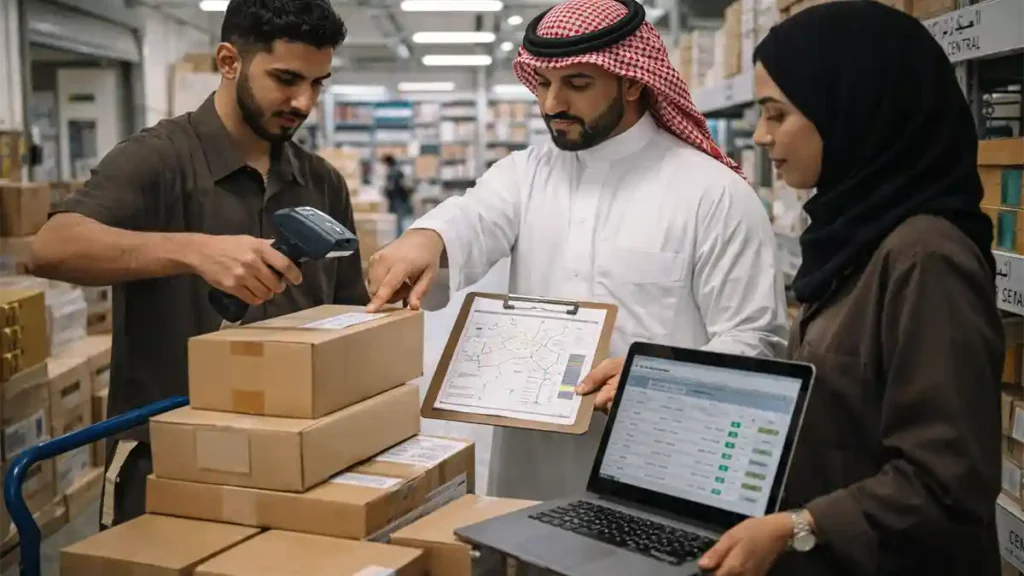
- Micro-fulfillment centers serving a single city
- Return-handling services for online sellers
- Cold-chain delivery partnerships for specialty food brands
- Packaging innovation (durable, sustainable, premium unboxing)
This trend is especially powerful because logistics improvements help multiple sectors at once: retail, food, healthcare supplies, and tourism.
Trend 7: Special Economic Zones and targeted incentives can be strategic tools
Special Economic Zones (SEZs) and sector-focused frameworks matter most to founders who operate in logistics, cloud/data, manufacturing, export, or supply-chain businesses.
When SEZs are worth exploring
- You need efficient import/export handling
- You plan to serve multiple markets (GCC and beyond)
- Your business is infrastructure-heavy and benefits from stable operating rules
- You’re building in cloud, digital services, or industrial supply chains
Practical guidance:
Treat this as a strategic option once your activity and scale justify it. Start with a clear business model first, then choose the best operating setup.
Trend 8: Sustainability is turning into a business category
Sustainability is not only branding anymore. It’s becoming a commercial requirement in parts of the economy especially where cost, efficiency, and procurement standards matter.
Businesses that can grow in the green lane
- Energy-efficiency services (audits, LED retrofits, smart controls)
- Waste reduction services for hospitality and retail
- Sustainable packaging suppliers and consulting for e-commerce brands
- Fleet optimization support for delivery-heavy businesses
How to position it profitably:
Lead with savings and performance (“lower bills,” “less waste,” “fewer complaints”), then add the sustainability story as credibility not the other way around.
Trend 9: Talent development and “future skills” are becoming products
As the workforce diversifies and industries modernize, skill gaps create strong opportunities for education and training businesses especially those tied to measurable outcomes.
What people and companies pay for
- Job-ready training (sales, customer success, admin operations, data basics)
- Corporate upskilling with real deliverables (scripts, SOPs, KPI dashboards)
- Short courses with certification pathways and mentorship
- Industry-specific English/Arabic professional training
Founder win condition:
Don’t sell “learning.” Sell outcomes portfolio, job interview readiness, performance improvement, or operational improvements.
Trend 10: Health, wellness, and family services are premiumizing
Demand is rising for trusted, well-designed wellness and family services especially those that feel safe, professional, and predictable.
Where entrepreneurs can build with strong trust signals
- Boutique wellness studios with clear specialization
- Nutrition and lifestyle coaching with evidence-based positioning
- Home-based services with strict quality standards (childcare support, elder support)
- Women-focused service brands that prioritize privacy and professionalism
In categories tied to health and family, reputation becomes the product. Strong policies, clear communication, and reliable staff matter more than flashy marketing.
The Opportunity Map: 15 practical ideas you can validate quickly
Below are trend-aligned business ideas that can be tested without “bet-the-house” risk.
Low-budget (start lean)
- WhatsApp-first customer support service for online sellers (Arabic/English)
- SME bookkeeping + invoicing setup for a single niche (cafés, salons, clinics)
- Product photography + listing optimization for one category
- Experience planning: weekend itineraries + booking management
- Subscription-based home services (cleaning, laundry pickup, pet care)
Mid-budget (build systems)
- Fulfillment + packaging studio for small e-commerce brands
- Training micro-business: sales scripts + SOPs + coaching for SMEs
- Premium gifting brand (dates/coffee/local crafts) with strong packaging
- Recruitment micro-firm focused on one job family (customer support, retail ops)
- B2B procurement helper for SMEs (vendor sourcing + quality checks)
Higher-budget (scale with contracts)
- Managed IT + cybersecurity packages for SMEs
- Energy-efficiency services for commercial spaces
- Tourism operator with licensed guides and partner network
- Cold-chain distribution partnership for specialty food
- SaaS tool built for one niche (appointments + reminders + customer tracking)
If you want the simplest starting point, choose a service that reduces pain for SMEs. It’s easier to sell “time saved” and “errors avoided” than an abstract promise.
A 7-day validation plan that prevents expensive mistakes
Most founders don’t fail because they aren’t smart. They fail because they build too much before learning what customers will actually pay for.
Day 1–2: Choose a narrow customer
Pick one: small clinics, cafés, salons, boutique hotels, online perfume sellers, logistics-heavy sellers, or tourism operators.
Day 3–4: Create a one-page offer
Include:
- One sentence: what you do
- Who it’s for
- The result (measurable outcome)
- A starting price (even a range)
- How long it takes (timeline)
Day 5–6: Speak to 20 prospects
Use visits, referrals, LinkedIn, DMs, WhatsApp intros whatever fits the niche.
Ask:
- What’s your biggest frustration today?
- What have you tried?
- What would “great” look like?
- What would you pay to fix it this month?
Day 7: Ask for commitment
The test is not “Do you like the idea?”
The test is: Will you start with a pilot, deposit, or signed proposal?
If you can’t get any commitment, refine the offer, the niche, or the outcome not just the logo.
Starting a business in Saudi Arabia: a practical launch checklist
Because many founders search “starting a business in Saudi Arabia,” here’s a simple, high-level checklist you can adapt:
- Define your activity clearly (your licensing path depends on it)
- Decide your business model (B2B vs B2C, subscription vs one-time, online vs offline)
- Price your offer with margins that can survive growth (don’t underprice to “enter”)
- Build a basic operating system: invoicing, contracts, customer support flow
- Choose one acquisition channel and do it consistently for 60–90 days
- Track a small set of KPIs (leads, conversion rate, delivery time, repeat customers)
This keeps you focused and reduces chaos the hidden cost that sinks many early businesses.
Common mistakes entrepreneurs make (and better alternatives)
Mistake 1: Going too broad
A “general services” business often becomes invisible.
Better: specialize, then expand once you earn trust.
Mistake 2: Copying a model without localizing operations
Even great global ideas fail if the experience feels inconvenient.
Better: localize communication, delivery expectations, and customer support norms.
Mistake 3: Selling features instead of outcomes
Customers don’t buy “a dashboard.” They buy fewer errors, faster service, and fewer complaints.
Better: package what improves their day-to-day results.
Mistake 4: Building before validating
Months of work can collapse if pricing or demand is wrong.
Better: sell a pilot first, then build around what customers pay for.
Mistake 5: Treating reputation as an afterthought
In service-heavy sectors, trust is your strongest asset.
Better: document standards, train staff, respond quickly, and fix issues visibly.
Quick FAQ
(1) What are the biggest Saudi business trends for entrepreneurs right now?
SME growth, cashless commerce, e-commerce operations, tourism experiences, logistics services, and sustainability-driven efficiency.
(2) What’s the easiest sector to start in as a new founder?
SME services (bookkeeping, invoicing, ops support), niche e-commerce, and subscription-based local services.
(3) Do I need a tech product to succeed?
No. Many strong opportunities are service-based, with tech used for efficiency (payments, booking, reporting).
(4) How can I validate an idea quickly?
Pick one niche, build a one-page offer, speak to 20 prospects, then ask for a paid pilot or deposit.
(5) Is tourism only for large companies?
Not at all. Niche tours, experience services, and hospitality support can be launched lean with partner networks.
(6) What makes a small business stand out in a competitive market?
Clear positioning, fast response, consistent delivery, and strong trust signals (policies, guarantees, communication).
(7) Should I start B2B or B2C?
B2B is often steadier early because businesses pay for time saved and operational improvement.
(8) What’s the biggest mistake to avoid?
Building too much before confirming what customers will pay for and at what price.
Conclusion: Build where demand is becoming routine
The most useful way to think about Saudi business trends is not “what’s popular.” It’s “what’s becoming normal.” Cashless purchases are normal. Online ordering and delivery are normal. Tourism and experiences are growing. SMEs are multiplying. Sustainability is becoming practical. Corporate B2B spending is increasing in new categories.
Your best opportunity is to choose a trend that reduces friction and build a business that turns that shift into dependable value for customers. Start narrow, validate fast, deliver consistently, and scale with systems.
That’s how entrepreneurs turn momentum into a real company.





2 Comments