Saudi Arabia Travel Guide 2026: New Destinations and Experiences
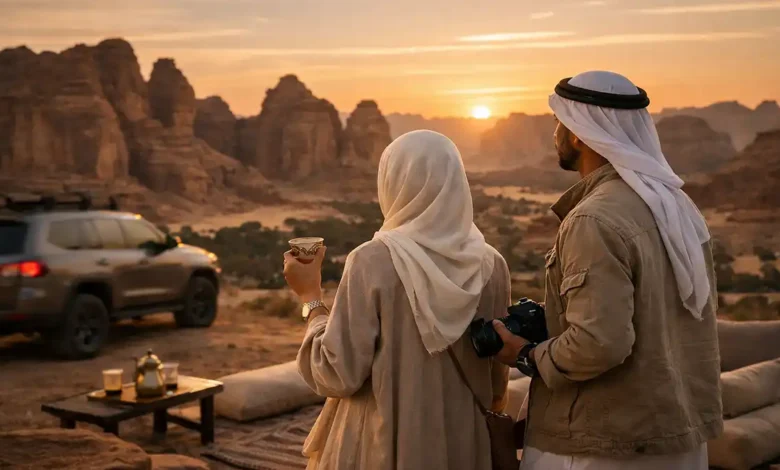
Saudi Arabia travel guide 2026 is no longer just about ticking off a landmark and leaving. The Kingdom is building a whole new style of trip where ancient history, sea-and-desert nature, mega-events, and next-generation hospitality can all fit into one itinerary.
A few years ago, most first-time visitors stuck to the “big three” idea: Riyadh for modern Saudi, Jeddah for the coast, and a quick desert stop if time allowed. In 2026, you can still do that and you should but the exciting part is how many new doors are opening. The tourism numbers show why momentum feels so visible: Saudi Arabia reported around 116 million domestic and inbound tourists in 2024, continuing rapid growth.
So how do you plan smartly for 2026 without getting overwhelmed by the choices? This guide breaks it down like a local-minded traveler: what’s new, where to go, what to book early, and how to build a trip that feels authentic (not rushed, not touristy, not “copy-paste”).
What’s actually new in 2026?
Let’s be clear: Saudi’s “new destinations” aren’t only brand-new places they’re also classic regions that suddenly became easier, more visitor-ready, and more rewarding.
Here are the biggest “2026 travel shifts” to know:
1) The Red Sea coast is turning into a real holiday zone (not just a concept)
Saudi’s west coast is where the biggest leisure transformation is happening. The Red Sea destination already opened initial resorts and continues expanding phase one over 2024–2025, with more openings planned beyond that.
On Shura Island, Red Sea Global also signals a wave of additional resort openings in 2026.
This matters because it changes how you travel: you’re no longer limited to “city + desert.” You can now do city + beach + islands + stargazing desert in one country, without sacrificing comfort.
2) A new wellness-and-yachting vibe is arriving via AMAALA
If The Red Sea is “luxury nature,” AMAALA is leaning into wellness, lifestyle, and coastal experiences. Red Sea Global announced AMAALA’s opening as a new destination in late 2025, setting the stage for expanded visitor experiences into 2026.
3) Diriyah is becoming the cultural heart of a Riyadh trip
Diriyah (home to At-Turaif, a UNESCO World Heritage site) has been a “must” for history lovers for years but now it’s becoming a fuller, more walkable visitor experience as development accelerates. For 2026, it’s best to plan Diriyah as more than a half-day photo stop think: heritage, dining, museums, night atmosphere, and curated cultural programming.
4) UNESCO Saudi is bigger than most travelers realize
Saudi now has multiple UNESCO World Heritage sites including cultural and natural listings making it one of the most interesting heritage road-trip countries in the region. UNESCO’s official listing for Saudi Arabia includes sites such as Hegra, At-Turaif, Historic Jeddah, Al-Ahsa Oasis, Ḥimā Cultural Area, and more recent inscriptions like Al-Faw (2024) and ‘Uruq Bani Ma’arid (2023).
Quick planning basics for 2026 (visa, timing, and travel style)
Saudi eVisa 2026: what most travelers need to know
For many nationalities, Saudi’s tourist eVisa is straightforward: it’s typically one-year, multiple entry, allowing stays up to 90 days.
That single detail changes planning: you can do one trip in spring and another in winter without reapplying.
Practical tip: Even if your trip is short, keep your itinerary flexible. Saudi is a “distance country” (big drives, big regions). A buffer day prevents your trip from feeling like a checklist.
Best time to visit
Most travelers will enjoy:
- November to March for cities + desert + outdoor walking
- Shoulder seasons (October / April) for fewer crowds and warm evenings
- Summer if your plan is mostly coastal + indoor city experiences (or you’re used to Gulf heat)
Saudi’s best experiences are often outdoors–so your comfort level in heat should shape your itinerary.
Choosing your “Saudi travel personality”
Saudi works best when you pick one main travel style and build around it:
- Culture & Heritage Loop (UNESCO, old towns, museums, food history)
- Nature & Adventure (mountains, deserts, diving, national parks)
- Luxury Escape (Red Sea resorts, wellness, fine dining, curated tours)
- Events & City Energy (Riyadh seasons, concerts, sports, shopping)
You can mix, but choose a “main lane” so the trip feels coherent.
New destinations and experiences to prioritize in 2026
1) The Red Sea: islands, reefs, and “regenerative tourism” luxury
The Red Sea destination is designed as a high-end, nature-forward region with multiple resorts, island environments, and marine life as a core attraction. Phase one includes an airport and 16 resorts rolling out across 2024–2025, and Shura Island points to additional resort openings in 2026.
Why it feels new:
Because it’s not a “Dubai copy.” It’s closer to a resort-and-nature model: calmer, curated, and built around sea experiences.
What to do (beyond the resort):
- Snorkeling/diving (ask operators about reef protection rules)
- Island hopping (where permitted)
- Sunset sailing or lagoon experiences
- Stargazing nights (the west coast skies can be spectacular)
How to get there:
The dedicated Red Sea International Airport (RSI) opened for domestic flights in 2023 and began welcoming international connections afterward.
2) AMAALA: the “wellness coast” concept coming to life
AMAALA is pitched as a lifestyle and wellness-led coastal destination. Red Sea Global’s announcement of AMAALA’s opening positions 2026 as a year when travelers start treating it as a bookable, real itinerary anchor (not a future headline).
Best fit travelers: couples, solo wellness travelers, luxury groups, “burnout recovery” trips.
Experience ideas that feel very 2026:
- Guided wellness programs (movement + sleep + nutrition)
- Spa therapies inspired by regional traditions
- Coastal walking + mindfulness experiences
- Yacht-club style day itineraries
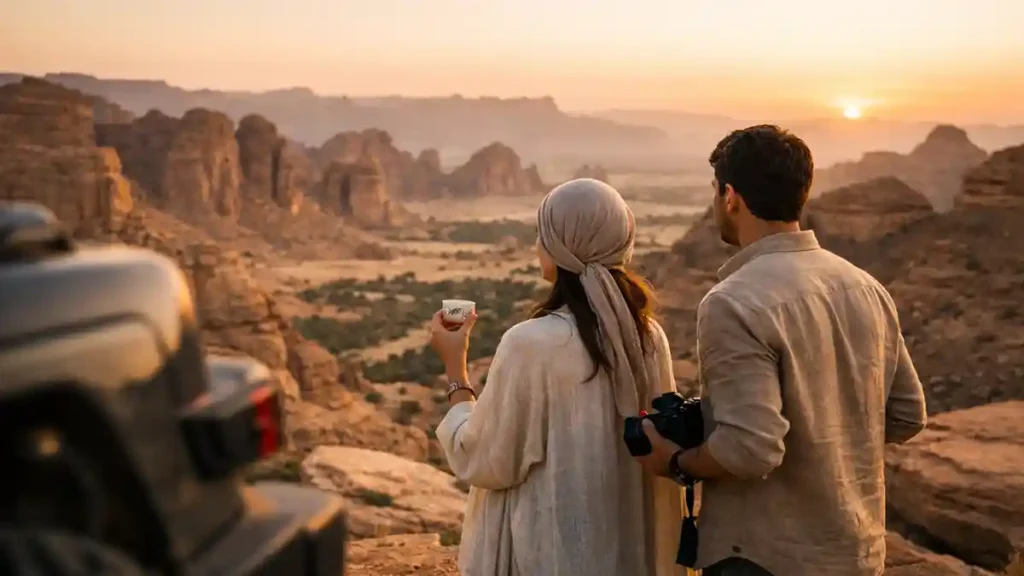
3) AlUla: the heritage destination that feels cinematic in real life
AlUla is not “just a site.” It’s a whole region of landscapes and layered history. The Royal Commission for AlUla highlights key visitor areas including Hegra, Dadan, AlUla Old Town, and Jabal Ikmah.
And if you’re choosing only one archaeological “wow moment” in Saudi, Hegra is the headline: UNESCO describes it as Saudi’s first World Heritage property, featuring monumental Nabataean tombs and inscriptions.
How to make AlUla feel special (not rushed):
- Spend 2–3 nights, not a day trip
- Do one sunrise/sunset viewpoint experience
- Book at least one guided heritage tour (context transforms the visit)
- Add a “slow hour” in Old Town–coffee + wandering beats speed-walking
Mini case study (realistic 3-day AlUla rhythm):
- Day 1: Arrive + Old Town evening + relaxed dinner
- Day 2: Hegra guided tour + midday rest + sunset viewpoint
- Day 3: Dadan/Jabal Ikmah + nature walk + depart
That pacing turns AlUla into a story, not a stop.
4) Diriyah & At-Turaif: Saudi’s origin story, now with modern energy
Diriyah matters because it’s history you can feel Najdi architecture, the roots of the Saudi state, and a setting that looks especially beautiful at golden hour. Vision 2030’s Diriyah overview frames it as a major cultural project and visitor destination.
How to experience Diriyah in a modern way:
- Go late afternoon into evening (better light, better vibe)
- Pair heritage with a modern Saudi dining experience
- Combine with a Riyadh art district / museum day for contrast
5) Jeddah Al Balad: living history on the Red Sea
Historic Jeddah (Al Balad) is UNESCO-listed and remains one of the most atmospheric places to walk in the Kingdom coral-stone architecture, old trade history, and a street-life feel that’s different from Riyadh. UNESCO’s Saudi listing includes Historic Jeddah, the Gate to Makkah as a key heritage site.
2026 experience tip:
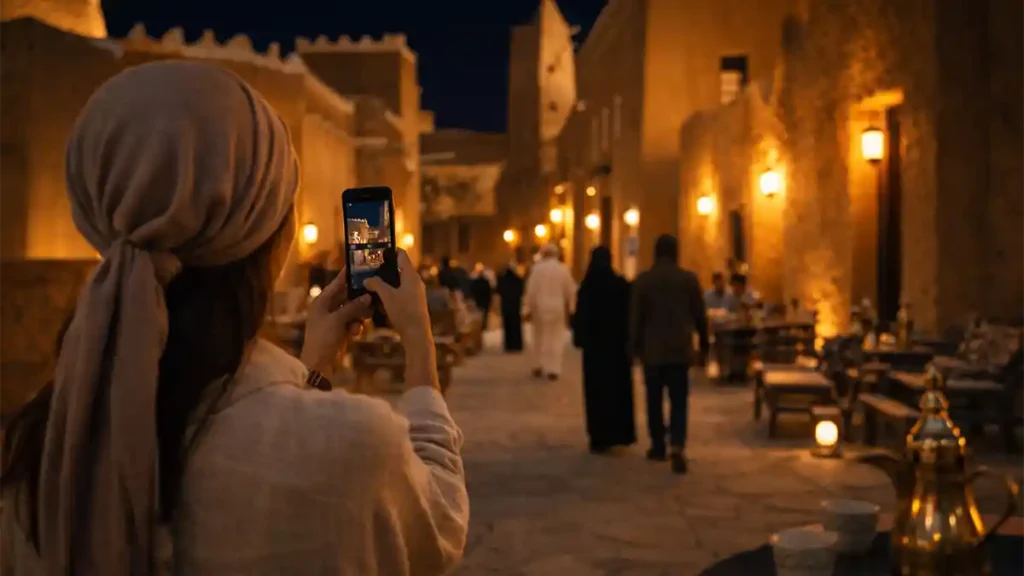
Don’t visit only in daylight. Al Balad in the evening feels more alive food, lights, and that “old city” mood.
6) Saudi cruising: a new way to sample the region
Cruising is becoming a real option for travelers who want “Saudi + nearby ports” without constant unpacking. AROYA Cruises is actively marketing 2026 sailings, and travel-industry coverage also notes expansions including Arabian Gulf sailings starting in February 2026.
Who should consider it:
- Families who want convenience
- First-timers who want a “sampler” trip
- Travelers who like structured entertainment + shore excursions
2026 itineraries that actually work (pick one)
Itinerary A: First-timer classic (7 days)
Riyadh (3 nights) + Diriyah (half/full day) + Jeddah (3 nights)
- Riyadh: museums, modern districts, food scene
- Diriyah: heritage evening
- Jeddah: Al Balad, corniche, cafés, day trip ideas
Why it’s good: You get the full “Saudi contrast” modern capital + coastal culture.
Itinerary B: Culture and landscapes (8–10 days)
Riyadh (2) + AlUla (3) + Jeddah (2–3) + optional Taif/nearby nature (1–2)
Best for travelers who want heritage and scenery.
Itinerary C: Luxury coast escape (6–9 days)
Jeddah (1–2) + The Red Sea (3–5) + optional AMAALA add-on (2–3)
This is the “new Saudi” holiday style for 2026
high comfort, nature focus, minimal stress.
Itinerary D: Saudi by sea (7–14 days)
Jeddah pre-stay (1–2) + Cruise (4–10) + Riyadh add-on (2–3)
Great if you want easy logistics and built-in entertainment.
Food, culture, and etiquette (the simple way)
Saudi hospitality is real and visitors who do best are the ones who travel with respect and curiosity.
Quick etiquette that makes your trip smoother:
- Dress modestly in public spaces (you can still dress stylishly)
- Ask before photographing people
- During prayer times, expect short pauses in some areas
- Learn a few phrases (even “Shukran” goes far)
Food experiences to try in 2026:
- Traditional Saudi rice dishes (regional styles vary)
- Seafood on the Red Sea coast
- Specialty coffee scene in Riyadh and Jeddah
- Date-based desserts and local honey tastings
A simple “food rule” for Saudi: don’t only chase what’s trendy try what’s regional.
Budgeting: what’s expensive, what’s good value
Saudi can be:
- Affordable (midrange hotels, domestic flights on deals, excellent local food)
- Very expensive (luxury resorts on the Red Sea/AMAALA, premium experiences)
Good value splurges:
- A guided heritage tour in AlUla (context is worth it)
- One iconic dinner experience (Diriyah or Jeddah)
- A short desert or stargazing experience
Safety and practical tips (so your trip feels effortless)
Transport reality check
Saudi is big. Plan travel days realistically.
- Use domestic flights when it saves you a full day
- If doing road trips, keep drives comfortable and start early
Connectivity
- eSIMs are convenient
- Download maps offline for remote areas
Booking strategy for 2026
If you’re traveling during peak season (Nov–Mar):
- Book AlUla hotels early
- Book Red Sea/AMAALA stays early (limited inventory by design)
- Don’t leave major tours to “maybe tomorrow” some experiences are controlled-entry
Frequently Asked Questions
Is Saudi Arabia worth visiting in 2026?
Yes–2026 is a sweet spot where many new experiences are coming online while the destinations still feel fresh and less over-saturated than classic tourist hubs. Tourism growth data also suggests the country is rapidly scaling visitor readiness.
How long should a first trip be?
7–10 days is ideal for a first-timer: one city + one heritage/nature add-on, or two cities with a day trip.
Can I do Saudi without luxury resorts?
Absolutely. Riyadh, Jeddah Al Balad, Diriyah, and AlUla can be done in midrange budgets just plan transport and stays early.
Is it easy to get a tourist visa?
For many travelers, yes: Saudi’s eVisa is typically one-year, multiple entry, with stays up to 90 days.
Quick FAQ
Q1: Is 2026 a good year to visit Saudi Arabia?
Yes, more new destinations, better visitor services, and bigger event calendars.
Q2: Do I need a visa for Saudi Arabia in 2026?
Most travelers can use the Saudi eVisa (rules depend on nationality).
Q3: What’s the best time to travel?
November–March for outdoor comfort; April/October for fewer crowds.
Q4: Which “new” experiences are most worth it?
Red Sea resorts, AMAALA wellness, and AlUla heritage are top picks.
Q5: How many days are enough for a first trip?
7–10 days is ideal: Riyadh + Jeddah + one signature destination (AlUla or Red Sea).
Q6: Is Saudi Arabia expensive for tourists?
It can be cities are flexible on budget, while Red Sea/AMAALA are premium.
Q7: Can families visit easily?
Yes, major cities are family-friendly, and many attractions are designed for all ages.
Q8: What should I book early?
Peak-season hotels, AlUla tours, and Red Sea/AMAALA stays (limited availability).
Conclusion: how to make your 2026 Saudi trip feel unforgettable
The smartest way to use Saudi Arabia travel guide 2026 thinking is this: don’t try to see everything. Instead, build your trip around one signature experience Red Sea islands, AlUla archaeology, Diriyah heritage nights, or a cruise route and let everything else support that theme.
Saudi’s travel story is changing fast, but the best parts remain timeless: wide skies, deep history, strong hospitality, and the feeling that you’re seeing a destination at the start of a new era.




8 Comments