AliExpress vs Alibaba vs 1688: What Pakistan Importers Should Use (2026)
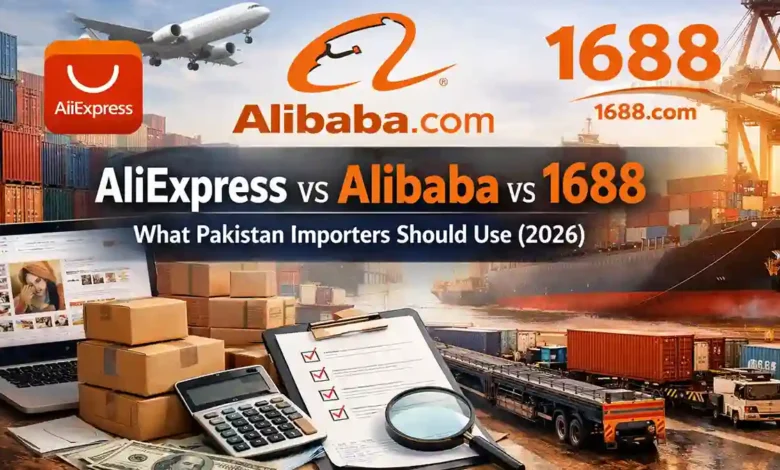
AliExpress vs Alibaba vs 1688 isn’t a which one is best? question. It’s a which one is best for this order, at this stage, with this risk level? question.
In Pakistan, import success isn’t decided by a platform logo. It’s decided by landed cost, supplier control, logistics execution, and how fast you learn. A product that looks cheap on screen can become expensive after freight, duties, handling, and defect losses. On the other hand, a product that looks pricey can still win if it arrives fast, sells out, and avoids returns.
This guide is written for Pakistan importers in 2026 beginners testing products, resellers scaling inventory, and wholesalers chasing better margins. We’ll cover:
- What each platform is actually designed for
- Where each platform saves money (and where it quietly costs you)
- How to choose based on your order size, product type, and timeline
- Pakistan specific realities: customs, courier vs freight, documentation, and clearing
- Practical playbooks you can copy for real importing results
No fluff. No just do dropshipping fantasies. Let’s make it simple, profitable, and repeatable.
The Quick Verdict (Simple and Practical)
Here’s the clearest way to think about it:
- AliExpress = best for small quantities, fast testing, variety, and quick restocks
- Alibaba = best for serious wholesale, supplier negotiation, customization, and repeat ordering
- 1688 = best for lowest unit prices, but requires stronger execution (payment path, consolidation, quality checks)
If you’re building a real import business in Pakistan, a smart long term sequence is often:
AliExpress (test) → Alibaba (scale) → 1688 (optimize).
Now let’s break down why that works.
One Table That Explains 80% of the Confusion
| Factor | AliExpress | Alibaba | 1688 |
|---|---|---|---|
| Market style | Retail / small batch | Global B2B | China domestic wholesale |
| Best for Pakistan importers | Testing, low MOQs, variety | Wholesale scaling, custom orders | Margin optimization on known winners |
| Typical MOQ | 1–10 | 50–5,000+ | Varies widely (often wholesale friendly) |
| Unit price | Highest | Mid | Often lowest |
| Supplier type | Mostly resellers | Factories + trading companies | Factories + wholesalers + traders |
| Negotiation | Limited | Strong | Mixed (depends on seller) |
| Buyer protection | Disputes vary by listing | Structured B2B buying options | Depends on how you purchase |
| Logistics to Pakistan | Usually direct parcel | Freight workflow | Usually agent/forwarder workflow |
| Learning curve | Easy | Medium | Highest |
Think of this like three lanes:
- Lane 1: quick and easy (AliExpress)
- Lane 2: professional and scalable (Alibaba)
- Lane 3: cheapest, but skill based (1688)
Step Zero: Know Which Importer Type You Are
Before you pick a platform, pick your category:
(1) The Tester (Beginner Reseller)
- You want to test 5–20 products quickly
- You can accept higher unit cost at the start
- You care about speed and variety more than perfect pricing
Best platform: AliExpress
(2) The Scaler (Wholesale Reseller)
- You already know what sells
- You need predictable quality, packaging, and supply
- You plan to reorder
Best platform: Alibaba
(3) The Margin Hunter (Advanced Importer)
- You reorder the same SKUs repeatedly
- You can handle consolidation and inspections
- You want to squeeze the last 10–25% margin advantage
Best platform: 1688 (with a proper workflow)
Most people fail because they choose the platform for the person they want to be, not the importer they are today.
AliExpress in 2026: The Smart Use (and the Wrong Use)
AliExpress is often dismissed as consumer shopping. For Pakistan importers, that’s exactly why it can be powerful when used correctly.
When AliExpress is a smart choice
(1) Product testing without commitment
AliExpress lets you buy tiny quantities. That’s perfect when you’re exploring:
- phone accessories
- small home items
- fashion add ons
- car accessories
- seasonal or trend products
Instead of spending big on bulk inventory, you spend small on learning.
(2) Trend speed
Trends move fast in Pakistan markets, especially online. AliExpress can help you:
- test a product in days, not months
- validate pricing and demand
- learn which colors/sizes actually sell
(3) Emergency restock
If you’re out of stock and cash flow is tight, AliExpress can keep you alive while your slower bulk shipment is on the way.
Where AliExpress quietly hurts profit
AliExpress can become expensive because:
- per unit prices are usually higher
- shipping costs can be inconsistent
- quality consistency is less predictable for repeat orders
AliExpress is rarely the best place for long term wholesale unless your business model can support premium pricing.
The best way to use AliExpress as a Pakistan importer
Treat AliExpress like a research lab:
- buy small quantities
- track returns/defects
- keep notes on what sold fastest
- move winners to wholesale sourcing
If you skip the move winners step, you trap yourself in low margins.
Alibaba in 2026: The Default Platform for Serious Importing
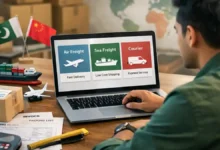
Alibaba is built for cross border B2B. That matters because B2B importing isn’t only buying a product it’s managing:



- specifications
- supplier reliability
- lead times
- packaging
- documentation
- repeat ordering
Alibaba performs best when you want control.
What Alibaba does better than AliExpress
(1) Real negotiation
You can negotiate:
- price breaks for higher quantity
- packaging cost
- logo printing
- carton sizing (huge for freight costs)
- payment terms (sometimes)
(2) Clearer supplier communication
Alibaba conversations are designed for business orders. That reduces “surprise changes” later.
(3) Custom branding
If you want your own packaging, inserts, labels, or brand identity, Alibaba is the practical starting point.
The Alibaba sourcing workflow that actually works
Many importers do this backwards, so here’s the clean sequence:
- Choose one category (don’t source 20 unrelated products in one order)
- Shortlist 8–12 suppliers
- Send one clear message with exact specs and quantity
- Compare quotations (including packaging and lead time)
- Order samples from the top 2–3 suppliers
- Confirm packaging size and final specs
- Place your first bulk order with a quality plan
This creates predictability. Predictability creates profit.
Alibaba is best for Pakistan importers who need repeatability
If you plan to reorder, you want:
- consistent material
- consistent sizing
- consistent packaging
- consistent lead times
Alibaba is structured for that relationship.
1688 in 2026: The Cheapest Marketplace If You Can Handle It
If Alibaba is global wholesale, 1688 is closer to China’s internal wholesale engine. That’s why prices often look surprisingly low.
Why 1688 looks cheaper
1688 listings are commonly aimed at domestic buyers. Many sellers compete on thin margins, fast turnover, and bulk. That environment can push prices down.
Why many Pakistan importers struggle with 1688
1688 can become frustrating because of:
- language barriers
- sellers optimized for local buyers
- payment pathways that may be easier inside China
- logistics setup that usually expects China side handling
This doesn’t mean 1688 is a bad choice. It means it’s a skills based platform.
When 1688 becomes a great choice
1688 works best when you:
- already know your winning products
- can buy in meaningful quantity
- can consolidate items from multiple sellers
- can verify quality before shipping
If you try 1688 as a beginner with no process, it often becomes chaos.
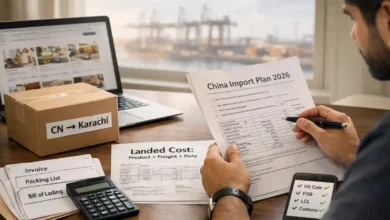
The Pakistan Import Reality: Platforms Don’t Matter Without Landed Cost
Let’s get blunt: your platform choice matters less than your landed cost discipline.
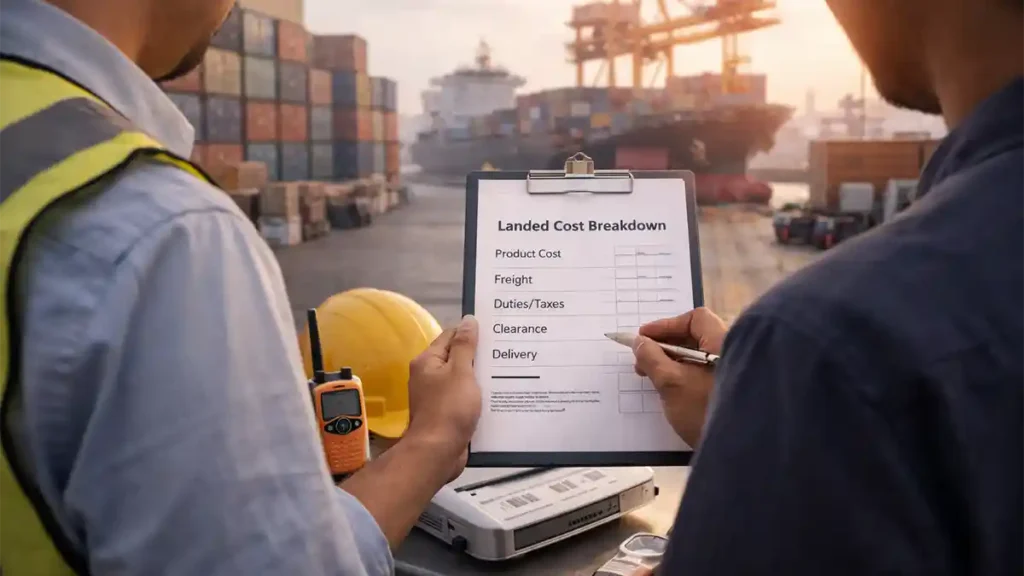
A product is not cheap because it’s cheap online. A product is cheap when it lands in Pakistan and still leaves margin after:
- freight
- duties/taxes
- clearing charges
- damage/defects
- returns
- storage and delivery
The simplest landed cost formula (use this for every SKU)
Landed cost per unit =
- product cost per unit
- China side local shipping / handling
- international freight (per unit)
- duties/taxes (per unit)
- clearing/processing charges (per unit)
- last mile delivery to your warehouse
- defect allowance (a small % buffer)
If you calculate this properly, platform confusion disappears quickly.
Courier vs Freight: The Shipping Choice That Changes Everything
Pakistan importers usually run into two worlds:
World 1: Small parcel / courier import (common with AliExpress)
Pros
- easy
- fast
- low planning required
Cons
- high cost per unit
- inconsistent handling fees
- not ideal for bulky items
- scaling becomes expensive
Use this world for learning and testing.
World 2: Freight import (common with Alibaba and 1688 scaling)
Pros
- lower cost per unit at scale
- more control over timelines
- better economics for cartons and bulk
Cons
- requires forwarder coordination
- requires documentation discipline
- needs planning and cash flow management
If you’re serious about importing, freight is where the real profit shows up.
Incoterms: The Most Ignored Profit Lever
When you buy from Alibaba or 1688 (through a process), you’ll see terms like:
- EXW (Ex Works): you collect from supplier location
- FOB (Free On Board): supplier delivers to port; you handle shipping onward
- CIF (Cost, Insurance, Freight): supplier arranges shipping to destination port (details vary)
- DDP (Delivered Duty Paid): supplier (or agent) claims to deliver with duties included
For Pakistan importers:
- FOB is often a clean middle ground if you have a forwarder
- DDP can look simple, but you must verify what’s included and what’s excluded
- EXW can be cheapest on paper, but only if your logistics chain is strong
Don’t choose incoterms based on convenience alone. Choose them based on control and clarity.
Supplier Quality: How to Avoid Expensive Lessons
Quality issues don’t just cost you money. They cost you time, customer trust, and platform ratings if you sell online.
The three quality risks (and where they happen)
- Specification mismatch (wrong material, wrong size, wrong version)
- Inconsistent batch quality (sample is good, bulk is different)
- Packaging failure (damage happens in shipping, not production)
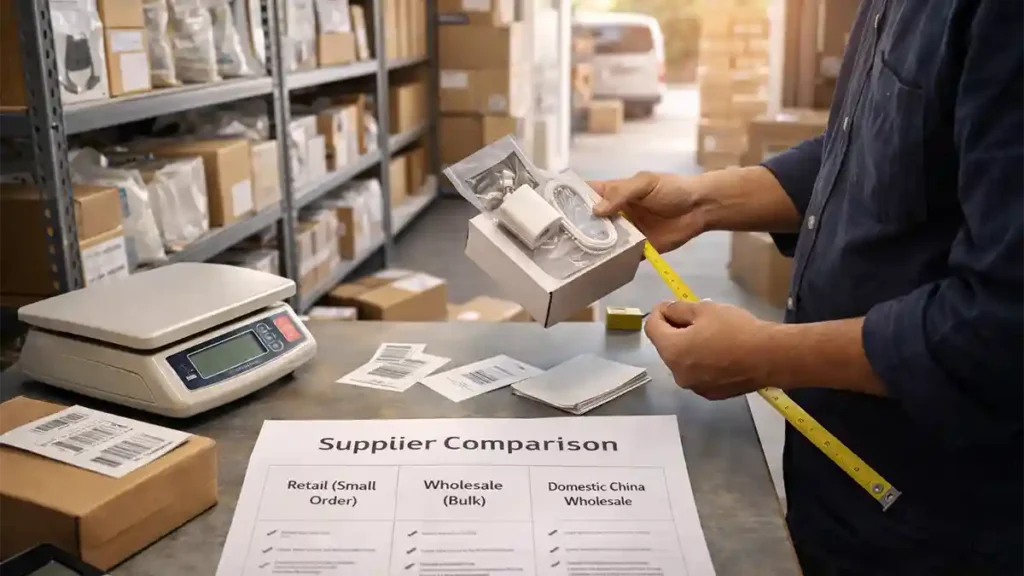
A simple quality checklist that works across all platforms
- Confirm specs in writing (material, size, model, color, quantity)
- Ask for real photos/videos of the exact item
- Order samples from short listed suppliers
- For bulk orders, use inspection or at least detailed pre shipment photos
- Confirm carton dimensions and weight (freight pricing depends on it)
If you do only one thing, do this: treat samples as a test of the supplier’s consistency, not just the product.
Picking the Right Platform by Order Size (No Guessing)
If your order is 1–20 units
Choose: AliExpress
Goal: learning and validation
Focus: speed and low commitment
If your order is 50–2,000 units
Choose: Alibaba
Goal: stable wholesale sourcing
Focus: supplier control, consistent packaging, reorder potential
If your order is 500+ units and you reorder often
Choose: 1688 (or factory direct through Alibaba)
Goal: margin improvement
Focus: consolidation + quality control + repeatability
This is the cleanest rule set for most Pakistan importers.
Category Based Recommendations (Pakistan Markets)
(1) Phone accessories and small gadgets
- Start: AliExpress for testing
- Scale: Alibaba for bulk cartons
- Optimize: 1688 for repeat SKUs with stable demand
These items sell fast, but competition is brutal. Winning requires better landed cost, not just trendy inventory.
(2) Home and kitchen items
- Best start: Alibaba
Because packaging, breakage risk, and carton sizes matter. Alibaba suppliers are usually more used to documentation and export packing.
(3) Fashion add ons (watches, belts, caps, bags)
- Testing: AliExpress
- Wholesale: Alibaba
- 1688: only after you understand your size/color demand patterns
Fashion returns can destroy margin, so don’t rush bulk orders.
(4) Packaging materials (pouches, boxes, stickers, labels)
- Best platform: 1688 (often)
Because packaging is a high repeat item and price differences compound over time. However, you need a workflow that handles communication and consolidation.
(5) Machinery or industrial parts
- Best platform: Alibaba (factory relationships)
For these categories, after sales support, spare parts, and documentation often matter as much as price.
The Three Playbooks Pakistan Importers Should Copy
Playbook A: Start Small, Scale Smart (Beginner friendly)
- Test 10 products on AliExpress (small quantities)
- Track sales and returns for 2–3 weeks
- Pick 2 winners
- Move to Alibaba and request quotes from 8 suppliers
- Order samples from top suppliers
- Place a small bulk order
- Build a repeat process before expanding SKUs
This playbook reduces risk and protects your cash.
Playbook B: Wholesale Launch (For serious business entry)
- Pick one category and one customer type
- Source only 1–3 SKUs initially
- Use Alibaba to compare suppliers properly
- Lock specs and packaging
- Choose a freight plan
- Launch with a controlled inventory cycle
This playbook wins on stability.
Playbook C: 1688 Margin Upgrade (For established sellers)
- Identify your top 5 repeat SKUs
- Source them on 1688 using samples
- Consolidate orders to reduce shipping cost
- Add inspection for bulk shipments
- Track defect rate and customer complaints
- Expand only when consistency is proven
This playbook is how you grow without burning your reputation.
Mini Case Studies (Realistic Pakistan Scenarios)
Case 1: Online reseller selling accessories
- Tests products on AliExpress
- Finds two best sellers
- Moves those two items to Alibaba for better unit economics
- Later uses 1688 for the single highest volume SKU
Result: faster learning first, better margins later
Case 2: Retail shop importing kitchen items
- Starts directly on Alibaba
- Focuses on packaging and breakage prevention
- Uses sample + bulk workflow
- Reorders the same products consistently
Result: fewer returns, stable inventory, repeatable profit
Case 3: Wholesaler dealing in packaging supplies
- Uses 1688 for price advantage
- Consolidates shipments from multiple sellers
- Keeps strict specs for thickness, size, and printing
- Reorders monthly
Result: strong margin and reliable supply once system is in place
The Decision Checklist (Use This Before Every Order)
Answer these questions and the right platform becomes obvious:
- How many units am I buying?
- Is this a test or a long term inventory item?
- Do I need customization (logo, packaging, labels)?
- Can I handle freight or do I need courier simplicity?
- What’s my acceptable defect rate?
- Can I afford delays, or do I need speed?
- What is my estimated landed cost per unit?
If you can’t answer #7, do not scale the order yet.
Quick FAQ
Which platform is best for beginners in Pakistan?
AliExpress is usually best for beginners because you can test products with small quantities and learn without big risk.
Which platform is best for wholesale importing into Pakistan?
Alibaba is the most practical wholesale platform because it supports negotiation, bulk orders, and supplier relationships.
Is 1688 always cheaper than Alibaba?
Often the unit price is lower on 1688, but your final profit depends on execution (payment path, consolidation, quality checks, freight).
What’s the fastest way to find what sells in Pakistan?
Test small quantities first (AliExpress), then scale only the products with proven sales and low return rates.
If I want custom packaging, where should I source?
Alibaba is usually the best starting point for branding, private labeling, and custom packaging.
Why do importers lose money even when product prices are cheap?
Because they ignore landed cost: freight, duties/taxes, clearing charges, defect losses, and delivery costs.
Can I import profitably without a freight forwarder?
For small parcel testing, yes. For serious wholesale scale, a reliable forwarder usually becomes essential.
What is the safest platform choice for my first bulk order?
Alibaba is typically safer for bulk because it’s designed for B2B sourcing and structured supplier communication.
Final Recommendation: What Pakistan Importers Should Use in 2026
Here’s the clean conclusion, without hype:
- Use AliExpress when you’re testing, learning, or restocking fast in small quantities.
- Use Alibaba when you want predictable wholesale sourcing, negotiation, customization, and reorder stability.
- Use 1688 when you’re ready to optimize margins on proven products and you can execute payment + consolidation + quality control.
If you want the highest success rate as a Pakistan importer, follow the progression:
AliExpress for learning → Alibaba for scale → 1688 for margin.
That’s not theory. That’s how most import businesses become stable.