Pakistan Cricket 2026: What’s Working, What Needs Fixing (Real Analysis)
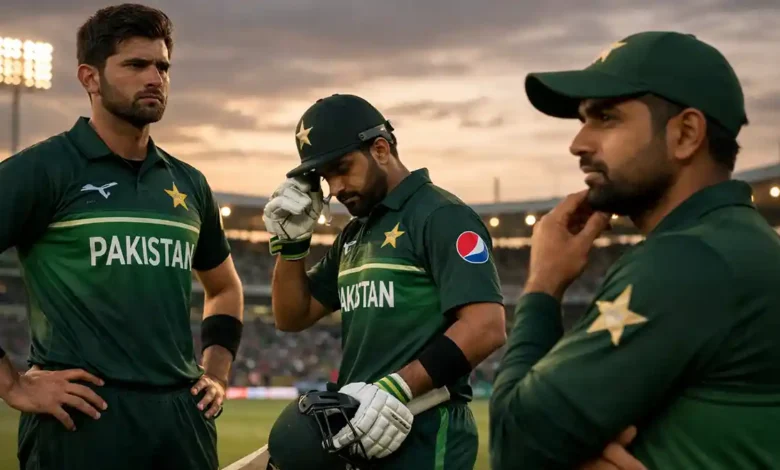
Pakistan Cricket 2026 is not a story of total decline, and it is not a story of genuine progress either. It sits in the uncomfortable middle: a team with enough talent to stay relevant, enough history to keep hope alive, and enough recurring problems to make every new cycle feel familiar. That tension defines Pakistan cricket right now.
The frustration around this side is not only about losing matches. Pakistan teams have always had periods of inconsistency. The bigger issue in 2026 is that the same weaknesses keep returning under different captains, coaches, selectors, and strategies. One series raises expectations, the next one resets the mood, and the debate starts again. The players change, the combinations shift, the support staff turns over, yet many of the same on field patterns remain. That is why the conversation feels heavier now. Supporters are no longer reacting to one bad result. They are reacting to a long stretch of instability.
And yet, calling Pakistan cricket finished would be shallow analysis. The team still has serious fast bowling resources, still produces high end individual performances, and still carries enough quality to trouble strong sides in any format. Pakistan are not short of cricketers. They are short of stability, clarity, and a repeatable cricket model. That is the real issue.
This is what makes Pakistan cricket so difficult to assess honestly. The squad is not weak enough to dismiss, but not stable enough to trust. The talent is visible, but the structure around that talent remains shaky. The rankings still suggest relevance. The performances often suggest a team that has not fully decided what it wants to be.
That is the real starting point for any serious conversation about Pakistan cricket in 2026.
Why the mood around Pakistan cricket feels worse than the rankings
One of the strangest things about Pakistan cricket right now is the gap between the team’s ranking position and the public mood. On paper, Pakistan are still competitive enough to sit in respectable positions across formats. But fans are not judging the side by a table alone. They are judging it by what they have watched with their own eyes.
They have watched Pakistan underperform in major tournaments, lose rhythm in important moments, and suffer collapses that feel far too severe for a team with this much experience. They have seen Pakistan stay in games for long stretches and then lose control in one burst. They have seen the side look talented, but not settled. That is why the frustration feels deeper than a normal bad patch.
A team can lose and still leave the impression that its direction is sound. Pakistan often do the opposite. Even when there are flashes of promise, they are quickly followed by another reshuffle, another tactical rethink, or another familiar breakdown. The result is a trust problem. Supporters no longer doubt the talent. They doubt the process.
That distinction matters. A talent problem can be solved slowly through development. A process problem is more damaging because it affects every level of the side, from batting plans to selection decisions to leadership changes. Pakistan’s central problem in 2026 is not the absence of ability. It is the absence of continuity.
What is still working for Pakistan cricket in 2026
For all the criticism, several things are still working. Any fair analysis has to acknowledge that, because Pakistan are not starting from zero.
Fast bowling remains Pakistan’s strongest identity
Pakistan’s clearest cricketing strength is still fast bowling. For decades, pace has been part of the country’s sporting identity, and that tradition remains alive. Shaheen Shah Afridi is still one of Pakistan’s most important match winners, capable of shaping an innings with the new ball and changing momentum with one spell. Naseem Shah continues to represent high end upside, while the broader pace pool still gives Pakistan genuine wicket taking potential.
That matters because teams with wicket taking pace never drift too far from relevance. Even when batting is inconsistent, a quality attack can keep a team competitive, create scoreboard pressure, and win matches that might otherwise slip away. Pakistan still possess that threat. Their problem is not that they lack bowling quality. Their problem is that they have not built a fully reliable team around it.
In modern cricket, fast bowlers can no longer carry a side by themselves. But they remain the quickest way to stay dangerous, and Pakistan still have that edge. When the rest of the unit functions even reasonably well, the bowling attack can still make Pakistan look like a serious side.
The batting still has a real ceiling
Pakistan’s batting has been one of the biggest sources of criticism, and much of that criticism is justified. But it would be wrong to say the batting unit lacks upside. The issue is not the absence of talent. It is the absence of a stable identity.
Pakistan still have batters capable of playing at a modern tempo, building match defining partnerships, and changing games quickly. There have been enough signs to show that the top order and middle order are not empty of quality. Players such as Fakhar Zaman still offer Pakistan an attacking dimension that many teams fear, while emerging names have shown that there is room for a more aggressive batting style if the management commits to it.
This is important because Pakistan’s batting debate is often framed too simply. The conversation is not really about whether Pakistan have good batters. Of course they do. The real question is whether the team knows how to use them best. Too often the innings feels caught between two approaches: overly cautious at the start or too frantic after a setback. Pakistan need a batting structure that allows players to attack without losing shape, and rebuild without freezing.
That balance has not yet been achieved. But the tools for it are still there.
The Test side still shows tactical life
Pakistan’s Test team does not receive as much emotional attention as the white ball sides, but it may still be the format where the team has the clearest path forward. The red ball side has shown that, under the right conditions, Pakistan can still win through patience, discipline, and smart use of bowling resources.
The Test team is far from complete, especially away from home, but there are signs of method in the way it approaches certain series. Pakistan can still identify conditions, build a plan around them, and stay in the contest for longer than critics sometimes admit. That ability matters. It shows the side is not tactically empty. There is still cricketing intelligence in the system.
The challenge is that this intelligence appears only in phases. Pakistan can look well prepared in one series, then lose shape again in another. That inconsistency makes it difficult to trust the long term direction. Still, of the three formats, Test cricket may be where Pakistan can most realistically build a disciplined identity if the board allows stability to take hold.
The domestic conversation at least recognizes competition
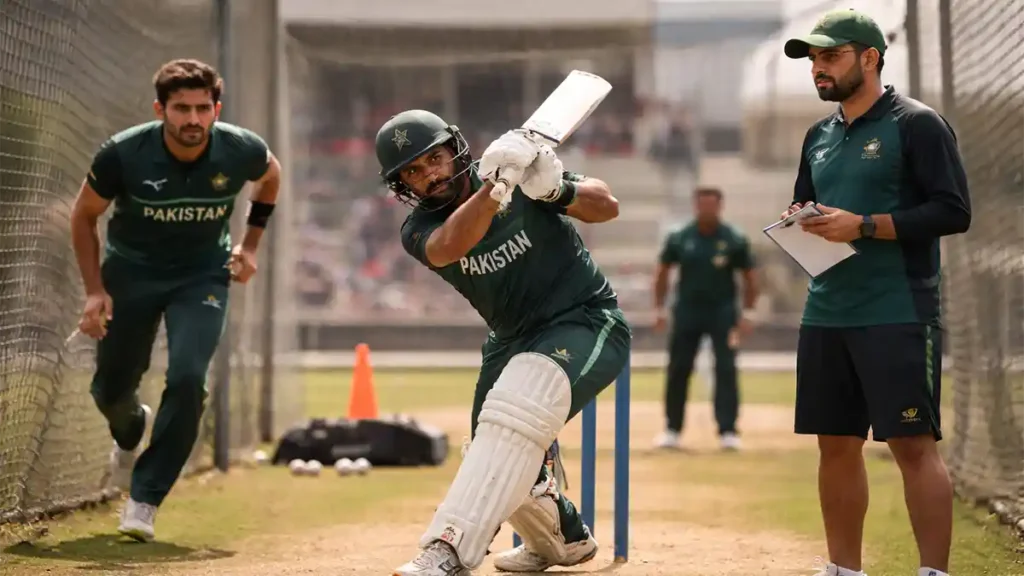
Another positive, even if imperfect, is that Pakistan cricket does seem aware of the need for stronger pathways and more competitive domestic structures. The board has spoken in the language of merit, progression, and performance pressure. That is encouraging in principle because any strong national side needs a domestic ecosystem that rewards clarity, consistency, and role development.
Pakistan do not need a domestic system that merely produces famous names. They need one that produces cricketers prepared for specific demands: powerplay hitters, middle order stabilizers, death bowlers, long spell Test bowlers, and fielders who can save matches with their athleticism. At least in theory, the conversation around pathways is moving in the right direction.
The difficulty, of course, is that good ideas only matter when they are allowed to settle. Pakistan cricket has often shown awareness of its own problems. The bigger challenge has been staying with one solution long enough for it to work.
What needs fixing most urgently
This is where the real work begins. Pakistan do not need cosmetic change. They need structural clarity.
The batting identity is still too fragile
The single biggest on field issue is the batting. Pakistan’s batting remains too easy to disrupt, especially under pressure. When the opening plan works, the innings can look smooth. When it fails, the side often slips quickly into uncertainty. That pattern has repeated too often to be dismissed as bad luck.
The deeper issue is not only technique. It is decision making under stress. Strong batting units know how to absorb pressure without losing shape. They know when to slow the game down, when to rotate, when to target a matchup, and when to reset. Pakistan too often look like a side switching between caution and panic.
This is why collapses hurt them so badly. A collapse is not just the loss of wickets. It is the loss of a shared batting structure. Once that structure disappears, Pakistan can go from control to survival mode in a matter of overs. That is not sustainable for a serious international side.
Pakistan’s batting needs clearer roles, better phase management, and more trust in players who can score proactively without throwing their wickets away. Until that happens, every format will remain vulnerable to the same cycle.
Constant change has become part of the problem
Pakistan cricket has spent too much time reacting. Coaching changes, selection shifts, captaincy debates, and public resets have become so common that instability now feels like part of the system. That is a major reason the team keeps struggling to build momentum.
A side cannot develop a stable identity when every poor tournament seems to trigger a new direction. Players need time to understand roles. Coaches need time to install systems. Captains need time to learn how to manage phases, bowlers, and personalities. None of that happens in an environment where every setback creates a fresh reset.
This is one of the most damaging habits in Pakistan cricket. The system keeps searching for dramatic turning points instead of long term order. But international cricket is rarely transformed by one appointment or one bold selection call. It improves through repetition, clarity, and patience.
Pakistan do need accountability. But accountability is not the same thing as churn. Right now, the team suffers too much from the second and benefits too little from the first.
Tactical thinking often turns into overcorrection
Pakistan are not short of ideas. In fact, they often seem full of ideas. The problem is that too many of those ideas arrive as overcorrections rather than balanced adjustments.
This can be seen in team combinations, bowling plans, and batting promotions. One defeat against pace can lead to a spin heavy response. One slow start can lead to calls for all out aggression. One batting collapse can lead to sweeping changes in selection. Instead of calmly refining a system, Pakistan often look like a team trying to solve complex problems with emotional speed.
Modern cricket does reward boldness. Flexible teams are usually strong teams. But flexibility is not the same thing as instability. A good side has a core identity and adjusts around it. Pakistan too often appear to rebuild their approach from game to game.
That is why the team can look intellectually restless. There is always a sense that a new plan is coming, but not enough evidence that the old plan was fully understood, properly tested, or patiently improved.
The domestic structure still lacks enough stability
Pakistan’s domestic cricket remains important to this conversation because national inconsistency usually begins much earlier. If the domestic structure keeps changing shape, then selection benchmarks become less reliable, player roles become less clear, and development becomes harder to measure.
This matters more than many people realize. International teams do not become settled if the environments feeding them remain unstable. Players need a clear route to the top. Coaches need a shared language between domestic and national systems. Selectors need comparable performances across seasons. When the structure keeps shifting, that clarity disappears.
Pakistan do not necessarily lack domestic talent. What they lack is a stable enough system to convert that talent into national certainty. Competitive cricket is essential, but so is continuity. Pakistan need a domestic setup that stops changing so often and starts building trust.
The team still struggles in defining moments
One of Pakistan cricket’s most consistent problems is the inability to control decisive phases. Matches are often not lost over an entire day or an entire innings. They are lost in one burst: a poor ten over stretch, a string of soft dismissals, a weak finish with the ball, or a tactical drift after a good start.
This is what makes Pakistan so frustrating to watch. They are often in the contest. They are rarely outclassed for every minute. But crucial moments still expose the side too easily. That pattern suggests a team that is not preparing well enough for pressure phases.
Big moments are not random. They are skills. Finishing an innings strongly is a skill. Recovering from 20 for 2 is a skill. Defending a modest total under pressure is a skill. Pakistan need to treat these situations as trainable rather than emotional. Until they do, the same match patterns will keep returning.
A format by format reality check
Looking at Pakistan cricket as one single story can be misleading. Each format has a slightly different problem.
Test cricket: imperfect, but still buildable
Pakistan’s Test side remains inconsistent, but it may be the easiest format in which to create a clear identity. The ingredients are there for a disciplined red ball team: patience, tactical variation, quality bowling spells, and the ability to work within home conditions intelligently.
The weakness is away performance and the ability to dominate outside familiar environments. Pakistan still need greater control overseas, especially in taking wickets consistently and building pressure for long periods. But red ball cricket still offers Pakistan a more realistic chance to become methodical. There is enough structure in the format for the team to settle if leadership and coaching remain steady.
The Test side does not need reinvention. It needs sharpening.
ODIs: respectable on paper, unstable in feel
Pakistan’s ODI cricket sits in an odd place. It still appears respectable when judged by reputation and historical comfort with the format, yet the team’s rhythm feels far less secure than that surface impression suggests.
One day cricket should, in theory, suit Pakistan. It gives time to recover from early mistakes, values bowling strength, and allows technically strong batters to play meaningful innings. But even here, Pakistan often struggle to control the middle of a game. The top order can start too slowly, the middle order can lose intent, and the death overs can undo earlier work.
The ODI side is not far from repair, but it needs a clearer map. Pakistan must define what kind of one day team they want to be: controlled and patient, or modern and assertive. At the moment, they often appear stuck between those two styles.
T20Is: the format that needs the boldest update
T20 cricket is where Pakistan most urgently need modernization. This is not because they lack T20 players. It is because global T20 cricket has evolved faster than Pakistan’s strategic comfort zone.
The best T20 teams now combine intent, depth, matchup planning, fearless running between the wickets, and flexible role execution. Pakistan have some of those pieces, but rarely all at once. They can still win big games, but they do not yet look like a fully modern T20 side built on repeatable logic.
Too often the approach appears reactive rather than proactive. Pakistan still have the skill to upset stronger teams, but tournament winning T20 cricket demands more than bursts of brilliance. It demands a system that can survive pressure, adjust quickly, and still keep its identity.
This is probably the clearest challenge for Pakistan over the next phase. T20 cannot be played with an older mindset and occasional improvisation. It needs deliberate reform.
The leadership problem is really a clarity problem
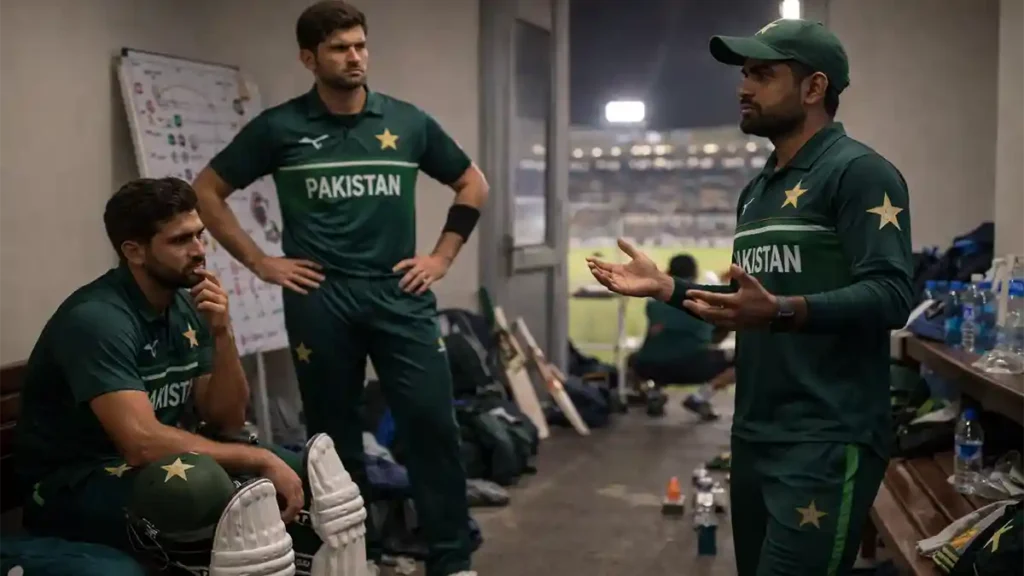
Captaincy debates dominate Pakistan cricket because leadership changes are easy to discuss and easy to dramatize. But the deeper issue is not simply who leads. It is what the captain is being asked to lead.
A captain can only be effective inside a stable cricket structure. If roles are unclear, if selection keeps shifting, and if the team itself is unsure of its preferred style, then even a strong leader will look inconsistent. Pakistan’s captaincy conversations often become too personal and not structural enough.
This is especially important for major names. Big players naturally attract more scrutiny, and Pakistan cricket has always personalized broader problems. But one player cannot fix a system that keeps changing around him. Nor can one captain solve a batting identity crisis, a selection culture problem, and a tactical inconsistency problem at the same time.
Pakistan need to stop treating captaincy as a miracle cure. Good leadership matters, but it works best when the structure underneath is strong.
What Pakistan should do next
The path forward is not mysterious. It just requires discipline.
Back one white ball plan for a full cycle
Pakistan need to choose a white ball identity and stay with it long enough for players to actually learn it. That means giving the coach and captain a proper runway, resisting panic after every tournament setback, and defining roles with patience rather than emotion.
Clarify batting roles from the top down
Openers should know whether they are expected to attack early or anchor the powerplay. Number three should not walk in every match with a different job. The middle order needs clear separation between rebuilders and finishers. When everyone is expected to do everything, nobody settles properly.
Select with purpose, not mood
Pakistan should absolutely bring in younger players, but it must happen within a clear developmental ladder. Selection should feel strategic, not reactionary. New players perform best when they enter a stable system, not a chaotic one.
Let the domestic system breathe
Pakistan need a domestic structure that becomes predictable in the best way. The competitions should be tough, meaningful, and stable enough that performances carry real value over time. Constant redesign only delays trust.
Train pressure phases deliberately
Pakistan’s repeated failures in crucial moments suggest a training problem as much as a temperament problem. Finishing, chase building, collapse recovery, and death over execution should all be treated as specialist areas. These are not vague qualities. They can be rehearsed.
Quick FAQ
What is the biggest problem in Pakistan cricket in 2026?
The biggest problem is batting instability. Pakistan still lose shape too quickly when the early plan fails, and that weakness affects every format.
Is Pakistan cricket in decline?
Not completely. Pakistan still have talent, strong bowling resources, and enough quality to remain competitive. The bigger issue is inconsistency and lack of long term direction.
What is still working for Pakistan?
Fast bowling remains Pakistan’s strongest foundation. The team also still has batting upside and enough quality to compete with strong sides when its plans hold together.
Why do fans seem more frustrated now?
Because the same problems keep returning. Supporters are not only reacting to defeats. They are reacting to repeated instability in selection, leadership, tactics, and batting approach.
Is Pakistan’s domestic system part of the problem?
Yes. Domestic instability makes it harder to create clear pathways, reliable selection standards, and role based development for players moving toward the national side.
Which format needs the most urgent improvement?
T20 cricket needs the biggest update because the global game has evolved quickly, and Pakistan still do not look fully settled in a modern T20 model.
Can Pakistan recover quickly?
Yes, but only if the board and team management commit to continuity. Pakistan do not need a miracle. They need a clear plan and time to build it properly.
What should Pakistan fix first?
They should start by stabilizing the white ball structure, clarifying batting roles, and reducing the constant cycle of reactive changes.
Final verdict
Pakistan cricket in 2026 is still important, still watchable, still dangerous, and still capable of strong results. But it is also still unfinished.
The best way to describe this team is simple: the talent remains high, but the process remains unstable. That is why Pakistan can still produce great spells, exciting innings, and dramatic wins, yet still leave supporters unsure about the future. The potential is obvious. The consistency is not.
What is working? The fast bowling culture, the presence of genuine match winners, the possibility of a stronger modern batting core, and a red ball team that still shows signs of tactical intelligence.
What needs fixing? The fragile batting identity, the constant structural churn, the habit of tactical overcorrection, the lack of domestic stability, and the repeated failure to control crucial phases of matches.
Pakistan do not need another loud revolution. They need a disciplined one. They need fewer emotional resets, fewer reactionary turns, and far more commitment to a stable cricketing idea. If that finally happens, 2026 may one day be remembered not as another wasted year, but as the point where Pakistan began choosing direction over drama.





One Comment