Daily Routine That Works: Simple Habits, Big Results
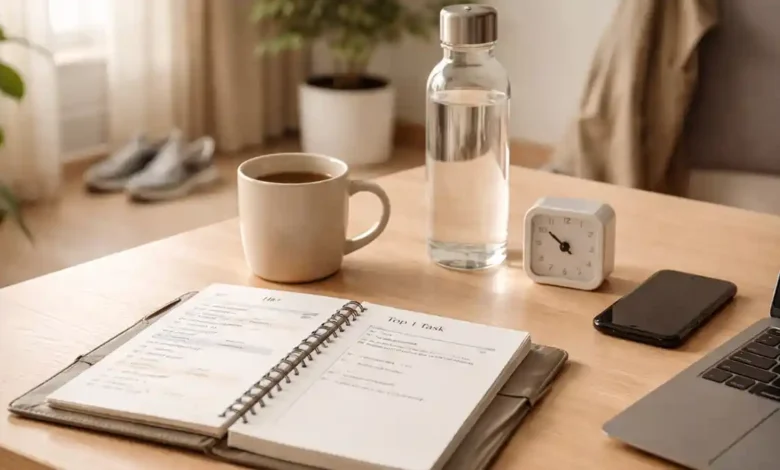
A daily routine that works is not a strict schedule that controls your life. It is a simple system you can repeat that protects your energy, reduces stress, and helps you move forward even on ordinary days. When routines are designed well, they make progress feel lighter because you stop negotiating with yourself all day long.
If your days feel busy but your goals stay stuck, the problem is rarely lack of motivation. More often, it is a lack of structure that matches real life. Motivation comes and goes. A routine stays, because it turns your best intentions into default behavior.
This article will help you build a routine that is modern, realistic, and sustainable. You will learn how to choose small habits that stick, how to shape your day around your energy, and how to keep your plan flexible without losing consistency. The goal is not perfection. The goal is a routine you can live with, and therefore repeat.
What a Daily Routine Really Is (and What It Is Not)
A routine is a set of repeatable actions linked to predictable moments in your day. It is built around anchors like waking up, starting work, eating lunch, and winding down at night.
A routine is not:
- A packed timetable with no breathing room
- A copy of someone else’s lifestyle
- A test of discipline where you fail if one day goes wrong
A routine is:
- A few reliable habits you can do in most conditions
- A structure that protects focus and health
- A system that makes good choices easier and bad choices less automatic
The best routines feel supportive, not heavy. They are designed to be repeated on your worst days, not only on your best days.
Why Routines Beat Motivation
Motivation is emotional. Routine is practical.
When you rely on motivation, you act only when you feel like it. When you rely on routine, you act because you planned it, and starting is easy.
1. Routines reduce decision fatigue
Every day contains hundreds of small decisions: what to eat, when to work, whether to exercise, what to reply, what to ignore. Those choices drain mental energy. A routine turns many decisions into defaults. Less mental clutter means more focus for what matters.
2. Routines protect your priorities from the urgent
Urgent tasks are loud. Important tasks are quiet. Without structure, the urgent wins, and your health, learning, and long term projects get pushed to someday. A routine gives your priorities a place on the calendar.
3. Routines create momentum
Small actions repeated daily build confidence. You begin to trust yourself again because you do what you said you would do. That trust is the foundation of bigger change.
Habit Science in Simple Terms (Why Small Habits Create Big Results)
Most habits follow a loop:
- Cue: a trigger (wake up, finish lunch, open laptop)
- Action: the habit (stretch, plan, focus)
- Reward: the benefit (relief, progress, calm, energy)
This matters because your brain loves patterns. Once the cue and reward are clear, repetition becomes easier.
How long does it take to form a habit?
A well known study tracking real world habit formation found the time to reach automaticity varies widely, with a median around 66 days (and a range that can be much shorter or much longer).
The key takeaway is not the exact number. The key is this: habits become easier through repetition, and consistency matters more than intensity.
The if then method that strengthens habits
Implementation intentions, often called if-then planning, help people follow through by linking a habit to a specific situation: If X happens, then I will do Y. Research reviews and summaries describe this as an effective way to improve goal follow through.
Example:
- If I finish breakfast, then I will walk for 10 minutes.
- If I open my laptop, then I will write my Top 1 task before messages.
This reduces friction because you are not deciding in the moment. You are simply following a script you already chose.
The Four Anchors of a Routine That Stays
If you build your routine around these anchors, everything else becomes easier to maintain.
Anchor 1: Sleep consistency
Sleep is not a luxury. It is performance support.
Many expert summaries and consensus recommendations for adults commonly point to 7 to 9 hours as a typical target range (individual needs vary).
Practical actions that help:
- Keep a steady wake time most days
- Reduce bright screens and heavy stimulation before bed
- Use a short wind down routine so your brain learns, This is the off switch
A strong evening routine is often the fastest way to improve mornings, mood, and focus.




Anchor 2: Daily movement you can repeat
You do not need extreme workouts for meaningful benefits. Many public health guidelines recommend adults aim for 150 minutes of moderate activity each week plus muscle strengthening activity on 2 days (and that activity can be broken up).
That can look like:
- 30 minutes brisk walking, 5 days a week
- Short home workouts
- Active breaks between tasks
A healthy routine is built on repeatable movement, not perfect training plans.
Anchor 3: Focus protection (your deep work space)
Many people feel busy because their attention is scattered. A routine becomes powerful when it creates a daily space for focused work: a short block where you do one meaningful thing without interruptions.
Even 25 to 45 minutes daily can change your output over time.
Anchor 4: A daily reset
Resets stop chaos from leaking into tomorrow.
A reset can be:
- a 5 minute desk cleanup
- a quick plan for tomorrow
- a short walk after work
- a calm transition into the evening
Resets are small, but they prevent the every day feels messy cycle.

Step 1: Design Your Routine Around Energy, Not Fantasy
Before you choose habits, understand your day.
Ask yourself:
- When am I naturally most focused?
- When do I usually feel tired?
- When do distractions pull me hardest?
Then build around your reality:
- Put your hardest task in your best energy window
- Put lighter tasks in your lower energy window
- Protect sleep so your baseline energy improves
A routine should work on a normal day, not only on an ideal day.
Step 2: Choose Minimum Habits (So You Stay Consistent)
If a habit cannot survive a busy day, it is not stable yet. Make it smaller until it is almost impossible to skip.
Examples of minimum habits:
- Movement: 10 minute walk
- Strength: 5 minutes of basic bodyweight work
- Planning: write 3 bullet points
- Reading: 2 pages
- Declutter: 3 minute reset
Minimum habits keep momentum alive. You can always do more when you have time and energy, but the minimum keeps your identity intact.
Step 3: Use Habit Stacking (The Easiest Way to Add New Habits)
Habit stacking means attaching a new habit to a habit you already do.
Formula:
After I do (current habit), I will do (new habit).
Examples:
- After I brush my teeth, I stretch for 60 seconds.
- After lunch, I walk for 10 minutes.
- After I sit at my desk, I write my Top 1 task.
This works because the cue is already built into your day.
A Simple Daily Routine Template (Flexible and Realistic)
You can copy this structure and adjust the details. Keep it simple at first.
Morning Routine (15 to 45 minutes)
Goal: wake up your body, clear your mind, set direction.
Choose 3 to 5 actions:
- Water (easy win)
- Light movement (2 to 5 minutes)
- One minute calm reset (breathing or quiet reflection)
- Plan the day (5 minutes)
- Top 1 priority
- Two supporting tasks
- One personal habit (walk, reading, family time)
- Breakfast that supports energy (optional)
Choose something that keeps you steady, not sleepy.
Mini morning routine (busy day):
Water + 60 second stretch + write Top 1 task.
That is enough to stay consistent.
Work or Study Routine (a practical productivity routine)
Goal: protect attention and reduce procrastination.
Start ritual (2 to 3 minutes)
- Open your notes
- Write your Top 1 task
- Set a timer
Focus block (25 to 90 minutes)
- One task only
- Phone away or on silent
- If a distraction appears, write it down and return
Recovery break (5 to 10 minutes)
- Walk
- Drink water
- Look away from screens
- Stretch shoulders and neck
This rhythm keeps you productive without burning out.
Midday Routine (energy and mood support)
Goal: prevent the afternoon crash and protect work life balance.
Options:
- 10 minute walk after lunch
- lighter tasks during low energy hours
- a short reset before returning to work (breathing, stretch, or water)
The point is to stop the day from turning into one long, exhausting push.
Evening Routine (20 to 60 minutes)
Goal: close the day and prepare tomorrow.
Choose 4 to 6 actions:
- Quick tidy reset (5 to 10 minutes)
- Tomorrow preview (5 minutes)
- Tomorrow’s Top 1 task
- One important appointment or commitment
- One health habit
- Lower stimulation (reduce endless scrolling)
- Wind down habit (reading, journaling, calm conversation, prayer)
- Set up the morning (clothes, water bottle, bag)
Mini evening routine (tired day):
Write tomorrow’s Top 1 task + set clothes + put phone away.
This protects tomorrow even if today was messy.

Time Blocking: The Simple Strategy That Creates Space for What Matters
Time blocking is not about filling every hour. It is about reserving blocks for priorities so they do not get replaced by random tasks.
Start with three blocks:
- One focus block for your most important work
- One admin block for messages, calls, and small tasks
- One life block for health, family, or learning
When your day has a shape, you stop drifting.
The Routine Rules That Keep You on Track
Rule 1: Never miss twice
One miss is normal life. Two misses can become a pattern. If you skip today, do the minimum tomorrow.
Rule 2: Make good habits easier to start
Use your environment:
- Keep your walking shoes visible
- Put a water bottle on your desk
- Prepare healthy snacks ahead
- Keep your workspace clean enough to begin quickly
Rule 3: Keep your routine flexible, but protect the anchors
Life changes. Your anchors should remain:
- sleep protection
- daily movement
- focus time
- a reset
If those stay, the routine stays.
A 14 Day Build Plan (So It Sticks)
Trying to change everything at once is the fastest way to quit. Build gradually.
Days 1 to 3: Sleep and one morning habit
- Choose a steady wake time
- Add a 5 minute plan each morning
Days 4 to 6: Add daily movement
- 10 minute walk after lunch (or after work)
- Keep it easy and repeatable
Days 7 to 9: Add one focus block
- 25 to 45 minutes daily
- One task, timer on, phone away
Days 10 to 12: Add an evening reset
- 5 minute tidy + tomorrow preview
Days 13 to 14: Review and simplify
Ask:
- What felt easy?
- What felt forced?
- What created the biggest benefit?
Keep what works. Remove what does not. A routine is a living system.
Real Life Routine Examples (Different Schedules)
Example 1: Student
- Morning routine: water + plan 3 tasks + quick review
- Study: one focus block for the hardest subject
- Evening routine: short recap + prepare bag + wind down
Example 2: Busy parent
- Morning: 3 minute plan + one small self care habit
- Midday: 10 minute movement (walk, stairs, stretching)
- Evening: tidy reset + prep tomorrow
Example 3: Office worker
- Morning routine: light movement + plan
- Work: one focus block before heavy messaging
- Evening: walk or gym + calm wind down
Example 4: Freelancer
- Morning: deep work first
- Midday: client calls and admin
- Afternoon: business growth tasks (marketing, portfolio)
- Evening routine: clear stop time + reset
These examples share the same structure: a morning routine, protected focus, daily movement, and an evening routine.
Common Problems and Fixes
I start strong and then stop.
Fix: your habits are too big. Reduce them to minimum habits you can do on a hard day.
My schedule changes all the time.
Fix: anchor habits to events, not clock time. Use habit stacking around waking, meals, and bedtime.
I feel tired all the time.
Fix: protect sleep and reduce late night stimulation. Many adults do best around 7 to 9 hours, and consistency matters.
I do not have time for exercise.
Fix: break it up. Guidelines commonly emphasize total weekly movement (like 150 minutes) can be accumulated in smaller chunks.
My routine feels boring.
Fix: keep the structure, vary the content. Keep the daily walk habit, but change the route. Keep strength days, but rotate exercises.
Quick FAQ
What is the simplest routine that still works?
Water in the morning, one daily focus block, a 10 minute walk, and a 5 minute evening reset.
How long does it take to build a real habit?
It varies, but research tracking habit automaticity found a median around 66 days, with wide variation by person and behavior.
Do I need a strict morning routine to be successful?
No. A short morning routine that sets direction is enough. Consistency matters more than length.
What if my routine breaks when life gets busy?
Shrink the habits to minimum habits and focus on anchors (sleep, movement, focus, reset).
How can I stop checking my phone first thing?
Put the phone out of reach at night and start with a tiny habit: water + plan Top 1 task.
How do I time block if I have many responsibilities?
Start with one protected block daily (25 to 45 minutes). Treat it like an appointment.
How much exercise should I aim for each week?
Many guidelines recommend about 150 minutes of moderate activity weekly plus strength work on two days.
What is the best evening habit for better mornings?
A short evening routine: tomorrow preview + set up the morning + calm wind down to protect sleep.
Conclusion: Simple Habits, Big Results
A routine is not about controlling every minute. It is about creating reliable habits that support your health, focus, and goals.
When you build a routine around small actions, you reduce stress because your day has a plan. You improve energy because sleep and movement become consistent. You get more done because focus blocks protect your best attention. You feel more balanced because resets stop life from piling up.
Start small. Repeat it. Adjust it. That is how a daily routine that works becomes your normal.