The Rise of Modern Saudi Arabia: A Journey
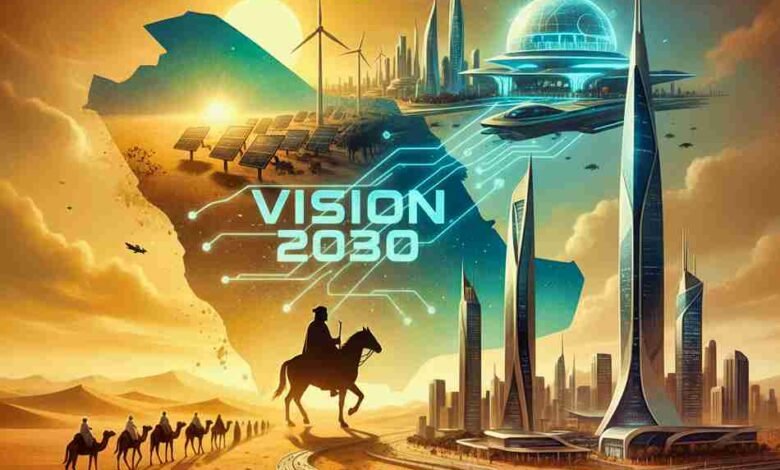
A Historical Journey: Saudi Arabia’s story is one of the most remarkable transformations of the modern era. In just over a century, the kingdom evolved from a land divided by tribal communities and harsh desert landscapes into one of the world’s most influential political, economic, and religious powers. This journey was not just shaped by oil or modern development projects but also by leadership, cultural identity, and a vision that continues to reshape the region today.
In this article, we take a deep dive into The Rise of Modern Saudi Arabia, tracing the kingdom’s long path from division to unity, from resource scarcity to global wealth, and from traditional society to a rapidly modernizing nation.
1. Arabia Before Unification: A Land of Tribes and Trade
Before Saudi Arabia emerged as a united kingdom, the Arabian Peninsula was a patchwork of independent tribes, local rulers, and small towns scattered across vast deserts. Life centered around:
Nomadic tribes such as the Bedouins
Caravan trade routes linking the peninsula to Africa and Asia
Small oasis towns like Riyadh and Diriyah
Two holy cities, Makkah and Madinah, which attracted pilgrims for centuries
The Hijaz region (home to the holy cities) was historically more connected to global trade due to pilgrimage routes. Meanwhile, central Arabia (Najd) was more isolated, shaped by tribal conflicts and alliances.
Despite its harsh environment, the peninsula had a strategic position. Pilgrims, merchants, and scholars passed through Arabia for centuries, influencing the local culture and economy.
A Land in Need of Unifying Leadership
By the late 19th century, much of the region suffered from political fragmentation. Tribal disputes, weak local rule, and foreign interference weakened stability. There was no centralized authority capable of uniting the land.
This is where the defining chapter of modern Saudi Arabia begins with the rise of the Al Saud family.
2. The Rebirth of the Al Saud: Abdulaziz Ibn Saud’s Vision
The story of modern Saudi Arabia truly begins with one man: Abdulaziz Ibn Abdul Rahman Al Saud, widely known as King Abdulaziz.
The Historic Capture of Riyadh (1902)
At just 26 years old, Abdulaziz led a small group of fighters on a bold mission to reclaim Riyadh, his family’s ancestral home. His victory in 1902 is considered the symbolic birth of the modern Saudi state.
This event demonstrated:
Strategic brilliance
Deep knowledge of tribal politics
A powerful vision for unification
After reclaiming Riyadh, Abdulaziz began a decades-long campaign to unite the scattered regions of Arabia.
Unifying the Peninsula (1902–1932)
Through diplomacy, military strategy, and alliances, Abdulaziz gradually brought Najd, the Eastern Province, Asir, and finally the Hijaz under one rule.
On September 23, 1932, he declared the creation of the Kingdom of Saudi Arabia.
This date is still celebrated as the kingdom’s National Day.
3. Oil Discovery: The Turning Point (1938)
Before oil, Saudi Arabia’s economy depended on:
Agriculture
Trade
Hajj and Umrah pilgrimage income
Limited local resources
But everything changed on March 3, 1938, when oil was discovered in commercial quantities in Dammam Well No. 7, known as “Prosperity Well.”
How Oil Transformed the Kingdom
The discovery of oil:
Provided massive wealth
Funded infrastructure development
Attracted major international partnerships
Lifted living standards
Enabled nationwide modernization
By the 1970s, Saudi Arabia had become the world’s largest oil exporter and a central player in OPEC.
However, oil wealth alone does not define Saudi Arabia’s rise. Leadership decisions on how to use this wealth shaped the country’s modern identity.
4. Building a Modern State: Education, Health, and Infrastructure
From the 1950s onward, Saudi Arabia invested heavily in improving the daily lives of its citizens.
Education for All
Schools and universities spread across the kingdom, replacing older systems of private or religious teaching. Today, Saudi universities such as King Saud University and King Fahd University of Petroleum and Minerals (KFUPM) are among the top institutions in the region.
Healthcare Expansion
Hospitals, clinics, and medical universities transformed the country’s healthcare system. Infant mortality rates dropped, and life expectancy increased significantly.
Infrastructure Revolution
The government built:
Road networks connecting cities
Airports in major regions
Modern housing projects
Water desalination plants (Saudi Arabia is now the world’s largest producer)
These investments played a key role in shaping modern Saudi society, turning remote towns into thriving urban centers.
5. The Global Influence of Saudi Arabia
Saudi Arabia’s rise is also linked to its growing role on the world stage.
Custodian of the Two Holy Mosques
The kingdom is home to Makkah and Madinah the holiest cities in Islam. Millions of Muslims visit each year for Hajj and Umrah, making the country a religious center for the entire Muslim world.
Economic Powerhouse
As a founding member of OPEC and the Arab League, Saudi Arabia influences global oil prices, energy policy, and regional diplomacy.
Strategic International Relations
The kingdom maintains strong ties with major global powers, including:
The United States
China
European countries
Gulf Cooperation Council (GCC) members
This diplomatic network strengthens its position as a key regional leader.
6. Cultural Identity: Tradition Meets Modernity
Saudi Arabia’s modernization has always been balanced with its cultural roots.
Preserving Heritage
The state invested in restoring historical sites such as:
Diriyah (the birthplace of the Saudi state)
Al-Ula (a UNESCO heritage site)
Historical mosques and old towns
Events like Janadriyah Festival celebrate Saudi crafts, poetry, and music.
Modern Social Reforms
In recent years, significant social changes have reshaped the kingdom:
Expansion of entertainment sectors
Growth of tourism
Women joining the workforce
Development of sports and media
These reforms illustrate how Saudi Arabia is embracing modern life while preserving traditions.
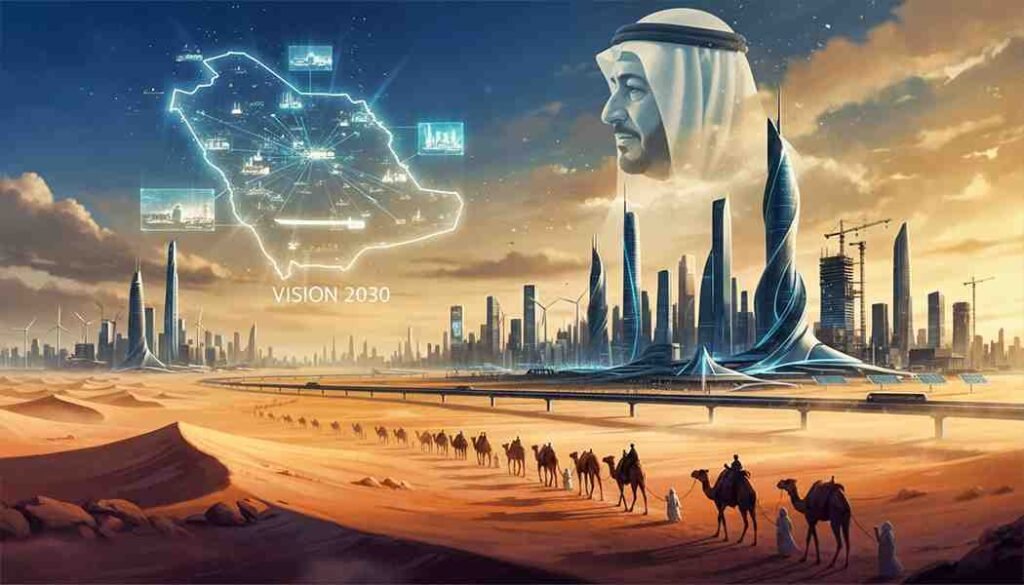
7. Vision 2030: A New Chapter in Saudi Arabia’s Transformation
In 2016, Crown Prince Mohammed bin Salman introduced Vision 2030, a national strategy aimed at reducing dependence on oil and building a diversified, innovative economy.
Key Pillars of Vision 2030
Economic diversification (more industries, less reliance on oil)
Social reform and quality of life improvements
Technological and digital transformation
Tourism and cultural development
Environmental sustainability and clean energy
Major Vision 2030 Projects
NEOM: A futuristic megacity powered by renewable energy
The Line: A linear smart city with no cars or carbon emissions
Qiddiya: A massive entertainment and sports hub
Red Sea Project: A luxury tourism destination
Diriyah Gate: A cultural and heritage development
These projects symbolize Saudi Arabia’s ambition to build a new global identity innovative, diversified, and forward looking.
8. Saudi Arabia in the 21st Century: Challenges and Opportunities
Every nation’s rise comes with challenges, and Saudi Arabia is no exception.
Key Challenges
Reducing oil dependency
Managing rapid modernization
Balancing tradition with reform
Environmental sustainability in a desert climate
Youth employment and future job opportunities
Opportunities
Growing tourism market
Expansion of technology and AI sectors
Renewable energy leadership (especially solar energy)
Cultural diplomacy and soft power
New global investment partnerships
By facing these challenges head-on, Saudi Arabia is shaping itself for a dynamic future.
Conclusion: A Journey Still in Progress
The Rise of Modern Saudi Arabia is a story of determination, unity, and visionary leadership. From its roots as a collection of tribes to becoming a global powerhouse, the kingdom’s journey is nothing short of extraordinary.
Today, Saudi Arabia stands at the crossroads of history once again embracing innovation while protecting its cultural identity. As Vision 2030 continues to unfold, the world watches closely as the kingdom builds its next chapter.
Modern Saudi Arabia is not just rising it is reshaping its place in the world, inviting everyone to witness a nation balancing tradition, progress, and ambition.



6 Comments