Saudi Tourism Boom: What’s New for Visitors Right Now
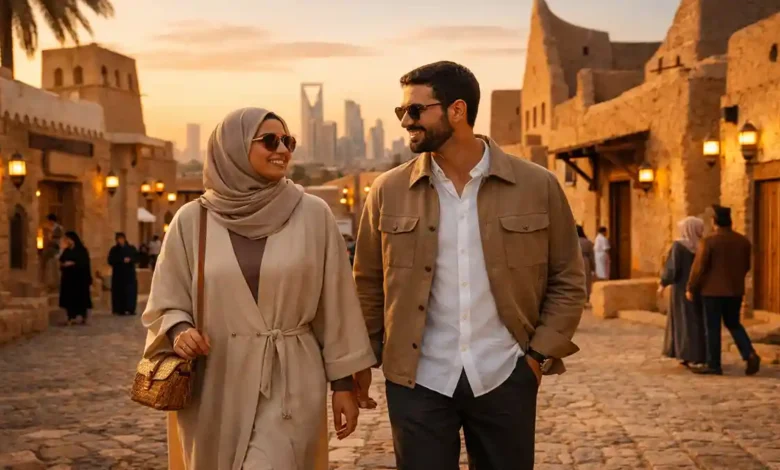
Saudi tourism boom is no longer a “coming soon” story it’s already reshaping what visitors can do, how quickly they can enter the country, and how many different trip styles Saudi Arabia can support at once. One day you’re in a neon-bright entertainment zone in Riyadh, the next you’re hiking through dramatic desert valleys near AlUla, and a few days later you’re switching off completely on the Red Sea coast where new resorts and marine experiences are arriving in phases.
What’s driving the excitement is simple: Saudi Arabia is building a tourism ecosystem, not just opening a few attractions. That means easier entry options, more events on the calendar, upgraded transport, and destinations that feel intentionally designed for visitors whether you’re a culture lover, a foodie, a beach person, or someone who travels for big-ticket sports and concerts.
In this guide, I’ll break down what’s actually new right now (not just buzzwords), what kind of travelers it suits, and how to plan a trip that feels smooth, modern, and worth the time.
The numbers behind the momentum (and why they matter to visitors)
Tourism growth can sound abstract until you feel it on the ground as extended opening hours, better signage, more hotel choice, and more direct flights. Saudi Arabia’s Ministry of Tourism has reported the Kingdom welcomed around 116 million domestic and inbound tourists in 2024, a year-on-year increase versus 2023.
That same “scale-up” shows in domestic travel behavior too. Official dashboards highlight tens of millions of domestic trips and significant visitor spending, which helps explain why you’re seeing new cafés, boutique hotels, and curated experiences popping up well beyond the biggest cities.
And the ambition is very clear: after surpassing earlier targets, Saudi tourism authorities now point toward a 150 million visitors goal by 2030.
What this means for you as a visitor:
When a destination grows this quickly, the “best experience” usually comes from choosing the right match city energy vs. heritage calm vs. beach reset then building your route around it instead of trying to do everything at once.
What’s new with entry, visas, and stopovers
(1) The Saudi eVisa is a real game-changer for trip planning
If you haven’t checked Saudi entry rules since a few years ago, the tourist experience is dramatically different now. The official Visit Saudi eVisa platform describes the tourist eVisa as one-year, multiple-entry, allowing stays up to 90 days (for eligible nationalities).
Practical upside: you can plan Saudi as a main trip or as a repeat destination without redoing the visa process every time.
(2) Stopover tourism is being pushed hard (in a good way)
Saudi is actively encouraging short visits for transit passengers. Visit Saudi’s stopover campaign describes a stopover visa that allows entry for up to 96 hours ideal if you’re flying through and want a “mini Saudi” experience.
How to use it well:
If you’ve got 2–4 days, don’t over-commit. Pick one city + one signature experience (for example: Riyadh + Diriyah at night, or Jeddah + Al Balad).
(3) A GCC “Schengen-style” visa is on the horizon but not yet
You may have heard about a unified GCC tourist visa concept. Recent reporting indicates rollout has been discussed for 2026 rather than 2025.
It’s not something to plan around today, but it signals where regional tourism is heading: easier multi-country routes across the Gulf.
What’s new in connectivity: flights, airports, and getting around
Riyadh is positioning itself as a major air hub
Saudi Arabia’s air connectivity push isn’t subtle new routes and new capacity are core to the strategy. A major headline is Riyadh Air, which announced inaugural London flights beginning October 26, 2025, with broader expansion expected afterward.
Why this matters: more direct routes usually mean better pricing competition, shorter travel times, and easier itineraries that don’t require a long layover elsewhere.
Mega-airport development is part of the long game
Riyadh’s future plans include the massive King Salman International Airport project, designed to scale the city’s role as a global gateway.
Even if you won’t “see” an airport project as a tourist, you will feel it later through route options and capacity.
The Red Sea is becoming easier to access
Red Sea Global has highlighted milestones like direct international flights into Red Sea International Airport and ongoing resort rollouts, which signals a shift from “project phase” to “visitor phase.”
The big destination upgrades visitors can experience right now
Let’s get specific. These are the areas where travelers most clearly feel the “new Saudi” effect.
(1) Riyadh feels like a different city at night (and it’s built for visitors)
Riyadh used to be described mainly through business, government, and malls. Today, it’s increasingly sold as a nightlife-without-clubs city: entertainment districts, pop-ups, global food brands, family zones, esports, concerts, and seasonal experiences that give you an itinerary without needing day trips.
Riyadh Season is a major driver
Riyadh Season has become a flagship event window. Saudi Arabia’s General Entertainment Authority reported over 8 million visitors since its launch in October 2025 (as of mid-December).
Best way to experience it (without chaos):
- Go on a weekday if possible
- Book tickets online for headline zones
- Build your night around one major area (Boulevard City, a show, or a themed zone), then leave space for a long dinner
The nearby heritage contrast: Diriyah
The Riyadh “new energy” hits harder when you pair it with Diriyah where heritage architecture and curated dining turn into a full evening plan.
Diriyah’s visitor info shows late operating hours for places like At-Turaif and Bujairi Terrace, which makes it easy to do after sunset.
Visitor tip: Diriyah is one of the best “first-night” experiences in Saudi high impact, photogenic, and not exhausting after a flight.
(2) AlUla is becoming a global heritage-and-nature destination (not just a day trip)
AlUla isn’t new but what’s new is how fast it’s being positioned and funded like a world-class destination with festivals, conservation planning, and private-sector development.
A recent Reuters report noted AlUla welcomed about 300,000 visitors in the previous year and aims for around 1 million visitors by 2030, while launching investment projects worth about SAR 6 billion to bring in private-sector participation.
What feels “new” on the ground: festivals with real pull
AlUla’s calendar is now part of trip planning. For example, the official Winter at Tantora listing shows dates for the 2025–26 edition (18 Dec 2025 to 10 Jan 2026).
Why it matters:
Events turn AlUla from “we’ll see it someday” into “let’s book those dates.”
What to do in AlUla (a modern itinerary that doesn’t feel rushed)
- Heritage: Hegra-style tomb landscapes and guided cultural storytelling
- Old Town: evening strolls, cafés, artisan spaces
- Nature: desert viewpoints, light adventure, stargazing
- Design-forward stays: accommodations that blend into the landscape instead of fighting it
AlUla travel is best when you slow down. If you only give it one night, you’ll spend most of your time checking in, checking out, and driving.
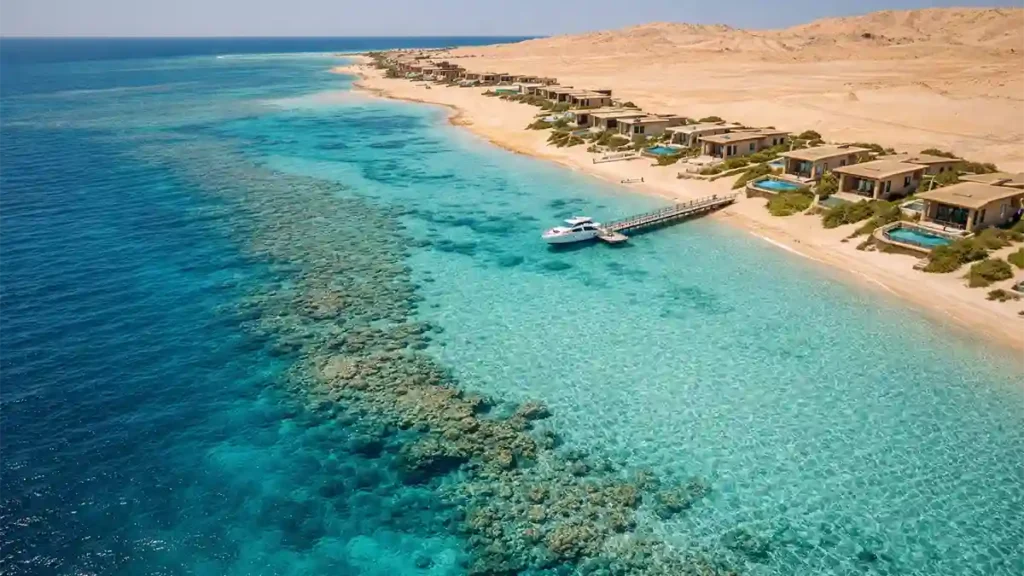
(3) The Red Sea is shifting from “vision” to “bookable reality”
If you’ve been watching Saudi tourism headlines, the Red Sea is probably the most talked-about “new” leisure space. The key thing visitors should know: it’s not opening as one big finished product. It’s rolling out resort by resort, season by season.
Red Sea Global describes a long-term plan that includes 50 hotels with 8,000 rooms and development across 22 islands and inland sites, with openings phased through 2024 and 2025 (and beyond).
What’s new for visitors: more choice and a wider price conversation
Saudi’s tourism minister has also spoken about expanding beyond pure luxury to include mid-range and upper-mid-range options, while still keeping high-end flagships.
What that means for travelers:
The Red Sea won’t stay “ultra-luxury only” forever. Over time, more travelers will be able to experience it without the premium price tag.
What the Red Sea experience is built around
- Snorkeling and diving in high-visibility waters
- Wellness and spa-forward stays
- Low-density, privacy-oriented travel
- Nature protection (including visitor management goals and caps discussed in official destination plans)
If you’re the kind of traveler who loves the Maldives vibe but wants something culturally different and closer to major Middle East city hubs the Red Sea is clearly aiming for that lane.
(4) Jeddah is leaning into heritage, waterfront life, and “easy city breaks”
Jeddah has long been a gateway city, but what feels fresh now is the way it’s packaged for visitors: historic walking routes, Corniche experiences, art, food, and event tie-ins.
A very “right now” trend is sea-based travel and excursions. AROYA Cruises, for example, is actively marketing Red Sea itineraries from Jeddah, showing how coastal tourism is being commercialized into bookable routes.
If you only have 48 hours in Jeddah:
- Morning: Al Balad heritage walk + coffee stops
- Afternoon: Corniche + sunset photos
- Night: seafood dinner + waterfront stroll
It’s a city that rewards low-stress exploration.
Beyond luxury: what Saudi is doing for “regular travelers”
One of the most important “what’s new” shifts isn’t a single building it’s strategy. After an early push to prove Saudi can do ultra-luxury, recent reporting shows a deliberate move toward a broader visitor base, including travelers who want comfort and quality but not “top-tier resort pricing.”
You can already see that in:
- A wider range of hotel brands in major cities
- More casual dining clusters and street-style food concepts
- Family entertainment zones designed for local and regional weekends
- Packaged experiences you can book quickly without a specialist agent
The result: Saudi is becoming easier to travel without feeling like you need a luxury budget or a fixer on the ground.
What’s new in experiences: not just places, but “things to do”
Here are the experience categories getting the fastest upgrades.
(1) Big-event travel is now a serious reason to visit
Riyadh Season is the headline, but the bigger trend is that Saudi is building an annual rhythm of event windows meaning you can plan a trip around what you want to see, not only where you want to go.
(2) Culture feels curated (in a modern way)
Instead of only museums, you’ll find:
- restored districts with dining integrated into the experience
- guided storytelling tours that help first-timers “get it” quickly
- festivals that mix heritage with contemporary performance
(3) Marine tourism is expanding: cruises, yachting, coastal routes
Saudi is actively marketing its Red Sea coastline for marine tourism. Cruise operators promote multi-night itineraries, and wider campaigns point to a push for high-end yachting attention.
4) Religious tourism is scaling with the wider tourism plan
Even if you’re not traveling for pilgrimage, this matters because it affects hotel supply, transport investment, and city infrastructure in places like Makkah and Madinah. Saudi’s stated goals include expanding capacity for religious visitors over the long term.
The “smart planning” section: how to visit Saudi smoothly
Saudi is easier than many first-timers expect but it’s still a country with its own norms. A little planning makes your trip feel effortless.
Dress code and public behavior
You don’t need to overthink it. Aim for modest, breathable, respectful clothing in public spaces. In resort environments you may see more relaxed styles, but cities and heritage areas are best approached with cultural awareness.
Weekends and timing
Saudi weekends are typically Friday and Saturday, and popular zones get busy. If you want a calmer experience:
- Do heritage sites on weekdays
- Do entertainment zones earlier in the evening
- Book restaurants in advance in hotspots like Diriyah
Weather reality check
Saudi summers can be intense. If your trip is outdoors-heavy (AlUla, desert activities), the cooler season is usually more comfortable.
Money and payments
Digital payments are common in major cities and new destinations. Still, keep a backup card and some cash for small vendors or quick purchases.
Language
English is widely used in tourism-facing spaces. Learning a few Arabic greetings goes a long way, especially in smaller towns.
Three modern itineraries (choose your vibe)
Itinerary A: 5 days “City energy + heritage”
Riyadh (3 nights) + Diriyah (1 evening) + day trip add-on
- Riyadh Season zones at night (if in season)
- Diriyah evening for heritage + dining
- Final day: museums, cafés, shopping, or a short desert experience
Itinerary B: 7 days “Heritage + wow landscapes”
AlUla (3 nights) + Riyadh or Jeddah (4 nights)
- Time it with a festival window if possible
- Keep AlUla slow: heritage + nature + one adventure day
- Finish in a city for relaxed dining and easy transport links
Itinerary C: 9–10 days “Red Sea reset + culture”
Red Sea coast (3–4 nights) + AlUla (3 nights) + Jeddah (3 nights)
- Coastal relaxation and marine activities
- AlUla for heritage landscapes
- Jeddah for waterfront + historic district strolls
So… is the Saudi tourism boom worth it?
Yes, if you travel with the right expectations.
Saudi Arabia is not trying to be a copy of Dubai, Europe, or Southeast Asia. Its strongest trips right now combine a modern entertainment layer (especially in Riyadh), deep heritage (AlUla, Diriyah, historic districts), and nature-forward luxury and wellness (Red Sea), all supported by a clear national push to make entry and movement simpler.
The biggest mistake first-timers make is treating Saudi like a checklist. The best trips feel balanced: one high-energy city, one heritage anchor, and one nature reset then enough breathing room to enjoy it.
Quick FAQ
Q1: What’s the newest “must-do” experience in Saudi right now?
Riyadh Season nights + a heritage evening in Diriyah.
Q2: Is Saudi easy for first-time visitors?
Yes—eVisa and better transport make planning much simpler.
Q3: Best place for luxury beach vibes?
The Red Sea coast—new resorts, clear water, and reef views.
Q4: What’s the top cultural trip outside the cities?
AlUla–heritage sites, desert landscapes, and festival seasons.
Q5: How many days are enough for a first trip?
5–7 days: one city + one heritage spot + one relaxation day.
Q6: When is the best time to visit?
Cooler months are ideal, especially for outdoor places like AlUla.
Conclusion: What’s new right now, in one sentence
Saudi tourism boom is evolving from headline projects into real, bookable experiences easier visas, bigger events, stronger flight links, and destinations like AlUla and the Red Sea maturing fast enough that visitors can genuinely plan around them today.




5 Comments