Saudi Riyal & Markets: Trends You Should Know

Saudi Riyal market trends are having a moment and not just for currency nerds. Whether you’re a business owner pricing imports, an expat sending money home, a traveler budgeting a trip, or an investor scanning the Gulf, the riyal sits at the center of a fast-moving story: big economic transformation, active capital markets, and interest-rate shifts that ripple through loans, mortgages, stocks, and government bonds.
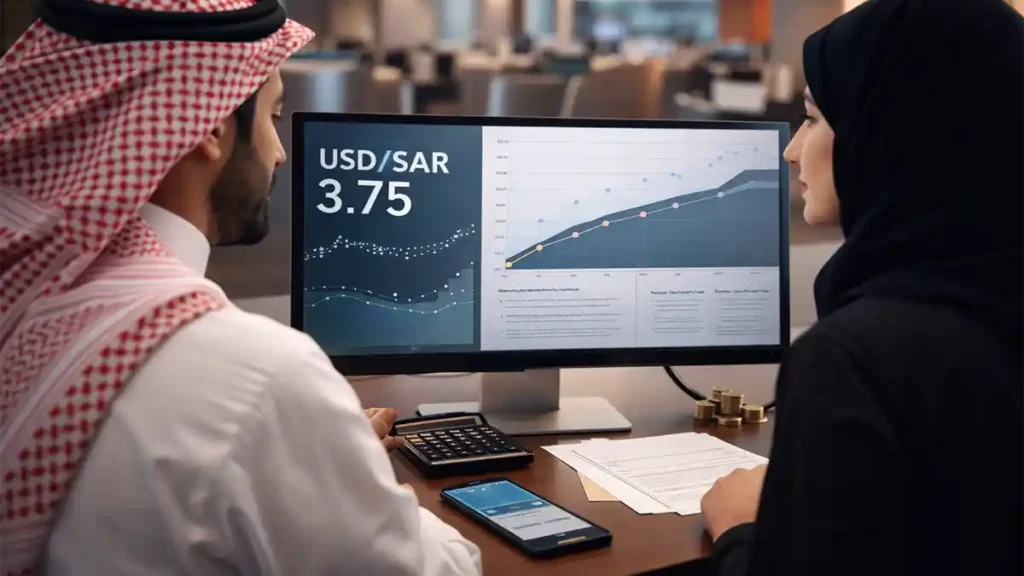
But here’s the thing: the Saudi riyal (SAR) doesn’t behave like most currencies. It’s pegged to the US dollar at 3.75 riyals per $1, and Saudi authorities have repeatedly emphasized their commitment to keeping that anchor in place. That single design choice shapes almost everything else how rates move, how inflation behaves, and why Saudi markets often react quickly to US monetary policy.
In this guide, we’ll break down the biggest trends you should know without turning it into an economics textbook. We’ll connect the dots between the USD/SAR peg, SAMA’s interest rates, inflation pressures, Tadawul’s stock market, and the booming world of Saudi sukuk and bonds. Along the way, I’ll share practical examples (the kind that actually help you make decisions) and a “watchlist” you can use week-to-week.
1) The Saudi riyal in one sentence: stable by design
Saudi Arabia runs a fixed exchange-rate regime where the riyal is maintained at 3.75 per US dollar a policy SAMA has described as an anchor for monetary and financial stability.
Why this matters (in real life)
Because the riyal is pegged to the dollar:
- Currency stability is high for trade and planning. Importers and exporters can price contracts with fewer “FX surprises.”
- Interest rates tend to follow the US. When the Federal Reserve cuts or raises, Gulf central banks often adjust to protect the peg.
- Inflation dynamics look different. A strong dollar can reduce imported inflation; a weaker dollar can do the opposite yet Saudi inflation is also heavily influenced by domestic housing costs.
So if you’re trying to understand “where the riyal is headed,” you’re mostly watching policy credibility, foreign assets/reserves, and the interest-rate gap not the usual currency speculation you’d see in floating FX markets.
2) The peg doesn’t mean “nothing moves” it means the action shifts elsewhere
A pegged currency can still face pressure. The difference is: instead of the exchange rate moving daily, the balancing happens through:
- Interest rates and liquidity
- Reserve assets / net foreign assets
- Fiscal policy and oil revenues
- Market confidence and capital flows
A key confidence indicator is reserve strength. The IMF noted that SAMA’s net foreign assets stabilized around $415 billion by end-2024, providing sizable buffers (including months of import cover).
Translation: The peg is most credible when the country has strong buffers and steady policy. Saudi Arabia has worked hard to keep that perception strong.
3) Interest rates: SAMA’s moves are a headline you should actually care about
If you only track one “money” indicator, make it this: SAMA repo and reverse repo rates.
In 2025, SAMA adjusted rates multiple times, including a 25 bps cut on December 10, 2025, taking the repo rate to 4.25% and reverse repo to 3.75%.
What repo and reverse repo mean (plain English)
- Repo rate influences the cost at which banks can access liquidity think “borrowing cost signal.”
- Reverse repo relates to the rate at which banks place funds think “floor” for short-term money.
Why rate changes affect “everything”
When rates fall:
- Loan growth often improves (cheaper borrowing)
- Mortgage affordability improves (especially important where rents are rising)
- Stocks can get support (lower discount rates)
- Bond prices can rise (yields can ease)
But there’s a tradeoff: if the US is cutting and Saudi follows, the peg stays comfortable yet policymakers still keep an eye on inflation, credit growth, and asset prices.
Quick “trend lens”: In a dollar-peg world, your “currency trend” often shows up as a rate trend what happens to mortgages, business loans, and risk appetite.
4) Inflation in Saudi Arabia: not “high,” but housing is the key swing factor
Saudi inflation has generally remained moderate compared with many major economies, and official data showed inflation around 1.9% year-on-year in November 2025.
But averages hide the story: Saudi inflation has been strongly influenced by housing and rents. Reuters reporting on 2025 inflation highlighted how rental increases were a major driver, and it noted policy responses aimed at managing rent pressures.
Why this matters for markets
- If rents rise, household budgets tighten, consumer spending shifts, and wage pressures can follow.
- Real estate sentiment spills into banks (mortgages), construction, retail, and even equities.
- Moderate inflation gives SAMA more room to align with global rate cuts without overheating though officials will always watch credit conditions.
Practical takeaway: For Saudi markets, inflation isn’t just “CPI.” It’s often a real estate narrative that influences consumer confidence and bank lending.
5) Oil still matters mostly through confidence, liquidity, and fiscal rhythm
Even with diversification, oil remains a major macro driver. SAMA’s own economic developments reporting showed oil price and production shifts feeding into the broader picture e.g., an average Arab Light price around $68.9 per barrel in Q2 2025 in one SAMA report.
When oil prices are strong:
- Government revenue is healthier
- Spending capacity rises
- Liquidity tends to improve
- Risk appetite often increases across local markets
When oil prices are weak:
- Markets focus more on deficits, borrowing plans, and project prioritization
- Bond issuance and financing strategies become bigger headlines
This is why “Saudi riyal and markets” discussions often circle back to oil even though the currency itself stays pegged.
6) Tadawul: the stock market story is deeper than daily index moves
Saudi equities have become a central piece of the region’s investment map. Market size is huge: data and reporting around late 2025 put Tadawul’s market capitalization around SAR 9.66 trillion in October 2025.
What’s driving the big trends?
A) Foreign participation is rising (slowly, but meaningfully)
Reports in 2025 highlighted growing foreign ownership and steady expansion in registered foreign investors.
And there have been recurring discussions about potential reforms to foreign ownership rules, which markets treat as a powerful “signal” even before any money moves.
B) IPO momentum keeps the market fresh
Saudi Arabia has been a regional leader in listings, with activity across Tadawul and Nomu (parallel market). For example, PwC reported Saudi Arabia leading GCC IPO volumes in FY24 with significant Tadawul IPOs and Nomu listings.
Why IPOs matter:
- They expand sector diversity
- They pull in retail and institutional attention
- They deepen the market’s “story” beyond oil-linked names
C) Rates and liquidity shape stock performance
Because of the peg, SAMA’s rate direction and global rates matter a lot for valuation and sentiment especially in banks, real estate, and consumer sectors.
Simple mental model:
- Lower rates + steady growth expectations → supportive for equities
- Higher rates + tighter liquidity → valuation pressure, rotation to defensives
7) The quiet powerhouse: Saudi sukuk and bonds
If you’re only watching stocks, you’re missing half the picture. Saudi Arabia has built a serious fixed-income ecosystem government issuance, corporate debt, sukuk structures, and a more active domestic yield curve.
Saudi debt management and issuance programs are increasingly transparent, with regular sukuk issuance tranches and published plans.
And Saudi Arabia’s total outstanding direct indebtedness was reported around SAR 1.2159 trillion by end-December 2024 by the National Debt Management Center.
Why this market is important for “riyals & markets”
- It affects bank balance sheets (banks often hold government paper)
- It influences corporate borrowing costs
- It provides pricing for long-term projects tied to Vision 2030
- It expands investment options for institutions seeking stable returns
Trend to watch: As global rates shift, local yields adjust. When rates fall, bond prices can rise making fixed income suddenly exciting again for portfolios.

8) Banking and liquidity: the transmission engine
Saudi markets are bank-driven. Banks transmit:
- Interest-rate policy into the economy
- Credit growth into corporate expansion
- Mortgage trends into real estate cycles
SAMA’s reporting and broader coverage in 2025 emphasized a banking system characterized by liquidity strength and ongoing development (including digital progress).
What to watch as a reader (without reading 200-page reports)
- Credit growth: are banks lending more to businesses and households?
- Deposit growth: are savings and demand deposits rising?
- Asset quality: are non-performing loans stable?
- Liquidity costs: are funding rates easing after SAMA cuts?
If those are moving in the “healthy” direction, equities and consumer activity often follow.
9) Vision 2030 changes market leadership sector by sector
Vision 2030 isn’t just a policy slogan it’s a capital allocation machine. As investment shifts toward tourism, logistics, entertainment, tech, and manufacturing, market leadership can rotate.
Even macro commentary in 2025 repeatedly linked growth expectations to non-oil expansion and diversification.
What that means for investors and businesses
- New listings may reflect “future economy” sectors
- Corporate earnings become more tied to domestic demand and services
- Market narratives broaden beyond oil price swings
A smart approach: Don’t think “Saudi market = oil.” Think “Saudi market = banks + petrochemicals + consumer + giga projects + services,” with the mix gradually evolving.
10) Practical “trend map” you can use (weekly or monthly)
Here’s a simple checklist I’d use if I wanted to stay informed without drowning in news:
A) For the Saudi riyal (peg confidence)
- SAMA statements on exchange-rate commitment
- Reserve / net foreign asset trend (buffer comfort)
- Oil revenue environment (sentiment + fiscal capacity)
B) For interest rates and liquidity
- SAMA repo / reverse repo updates
- Fed direction (because of the peg relationship)
C) For inflation and household pressure
- CPI prints and rent-driven components
D) For equities (Tadawul)
- Market cap / turnover trends
- IPO pipeline and foreign ownership reform signals
E) For bonds and sukuk
- NDMC issuance calendars and borrowing plans
11) Common questions people ask (and the honest answers)
“If the riyal is pegged, can I still ‘profit’ from FX?”
Not in the usual way. The USD/SAR rate is designed to be stable. Your “money opportunities” tend to show up more in:
- Interest-rate cycles (loans, deposits)
- Equity cycles (earnings + valuation)
- Bond cycles (yield changes)
“Does US policy control Saudi policy?”
Not completely but the peg creates a strong incentive to stay aligned, especially on short-term rates. That’s why you often see Gulf rate moves following Fed decisions.
“What’s the biggest inflation risk?”
In recent periods, housing/rents have been the major driver of inflation readings and public attention.
“What’s the biggest market risk?”
A short list:
- Oil price-driven sentiment swings
- Global risk-off events (geopolitics, recession fears)
- Interest-rate surprises
- Liquidity tightening
12) A grounded outlook: what “trends” likely matter next
No one can forecast markets perfectly, but you can identify the forces most likely to shape the next phase:
- Rate direction: With SAMA having cut rates to 4.25% repo in December 2025, the path of global easing (or pauses) will influence borrowing costs and valuations.
- Inflation vs rents: If rent pressures cool, consumer confidence can improve; if rents accelerate again, policy and household budgets come back into focus.
- Capital markets reforms: Any steps that deepen liquidity foreign ownership rules, new instruments, IPO pipeline strength can change sentiment fast.
- Fixed income growth: Continued sukuk/bond issuance and clearer yield curves support longer-term financing critical for mega projects and private-sector expansion.
- Non-oil growth: Diversification isn’t just “nice to have” it’s the long-run story that can stabilize earnings and reduce oil-dependence narratives.
Conclusion: The riyal is stable Saudi markets are where the story lives
If you remember one idea from this article, make it this:
The Saudi riyal is built for stability; Saudi markets are built for transformation.
The USD/SAR peg keeps the currency steady at 3.75, and the real action shows up through interest rates, inflation (especially housing), and market dynamics across Tadawul and the fast-growing sukuk/bond space.
That combination currency stability + evolving markets creates a unique environment. It can feel calmer than volatile FX markets, yet more dynamic than people expect once you look under the hood. If you track the right indicators (rates, inflation, reserves, equity flows, and debt issuance), you’ll understand the trend shifts early and you’ll make better decisions whether you’re investing, running a business, or simply managing your money in Saudi Arabia.






4 Comments