Petrol Price in Pakistan Today: New Rates + What Could Change Next Week
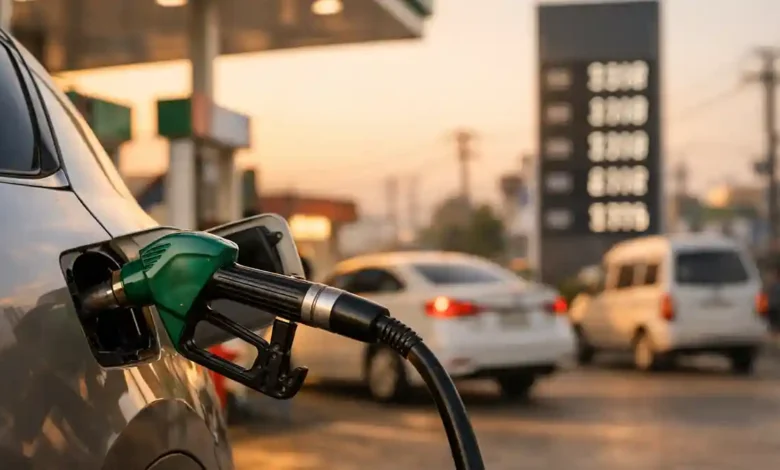
Petrol Price in Pakistan Today is no longer just a quick search for drivers before heading to a filling station. It has become a daily indicator of Pakistan’s wider economic mood. When fuel prices rise sharply, the impact does not stay limited to car owners. It moves into transport fares, goods delivery, food prices, business costs, and household budgets. That is why every fresh fuel update now matters far beyond the petrol pump.
As of March 10, 2026, the official notified price of petrol in Pakistan is Rs321.17 per litre, while high speed diesel stands at Rs335.86 per litre. These rates became effective from March 7, 2026, following a steep increase of Rs55 per litre on both products. Pakistan State Oil’s published rates confirm these notified prices, and Reuters reported that the increase was tied to strong international oil market pressure linked to Middle East tensions. Reuters also reported that the government has shifted to weekly fuel reviews instead of relying on the earlier fortnightly pattern.
That change alone makes this moment unusual. In the past, many Pakistanis expected fuel prices to move every two weeks, giving people at least a little time to adjust. Now the review cycle is shorter, which means consumers, transporters, traders, and businesses may have to react faster. In simple terms, Pakistan’s fuel market has become more sensitive, more uncertain, and more closely tied to fast moving global events.
The current petrol and diesel rates in Pakistan
The latest official benchmark is clear. According to the PSO fuel price page, effective March 7, 2026, Premier Euro 5 petrol is Rs321.17 per litre and Hi Cetane Diesel Euro 5 is Rs335.86 per litre. The same PSO listing shows these as the current published retail rates, subject to freight treatment at the outlet level.
What makes this increase especially significant is not only the final number, but the speed of the jump. Reuters described the latest increase as a rise of about 20%, which is an extraordinary move for a single revision. For millions of people, that kind of hike changes everyday calculations immediately. A motorcycle rider now feels the difference in weekly travel cost. A family with a small car feels it in school runs and work commutes. A transport operator feels it across an entire fleet.
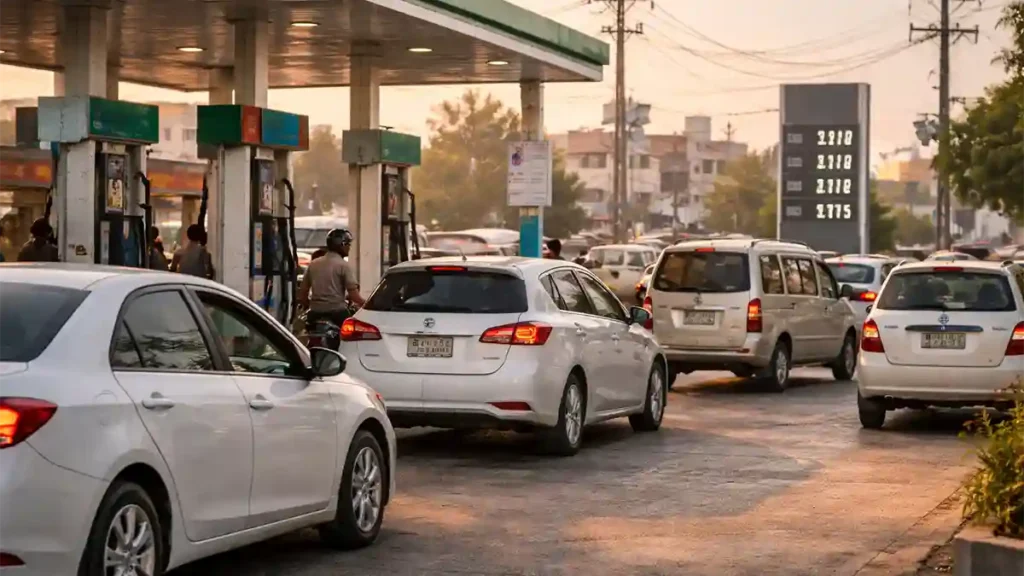
The market reaction also shows how sensitive the issue is. Reuters reported that the announcement triggered panic buying and long lines at fuel stations in major cities, as people rushed to fill tanks before the revised rates took effect. That behavior says a lot about public expectations. Fuel prices in Pakistan are not treated as abstract policy adjustments. They are experienced as immediate household shocks.
Why did petrol prices rise so sharply?
The immediate reason is global. Reuters reported that Pakistan raised retail fuel prices after a sharp increase in international oil prices driven by tensions in the Middle East and concerns around supply security. Pakistan imports most of its oil, so when global prices jump, domestic rates come under pressure very quickly. In such conditions, the government has limited room to keep local prices unchanged for long without creating supply distortions or additional fiscal strain.
This is the point many readers miss. Petrol in Pakistan may be paid for in rupees, but its cost begins in international markets. Global crude and refined product prices, freight expenses, insurance premiums, shipping routes, and import risk all feed into the final number. When those external costs surge suddenly, the domestic market cannot remain insulated for long. That is why a global conflict can affect the price of filling a motorbike tank in Lahore, Karachi, Peshawar, Multan, or Quetta.
The broader context also matters. Pakistan is not facing this fuel pressure in a calm economic environment. Reuters reported that the latest oil shock has intensified concern about inflation and has added pressure to a country already vulnerable to imported energy costs. This means the fuel issue is not only about one week’s rate notification. It is part of a larger economic chain that affects inflation expectations, business pricing, and public sentiment.
Why the weekly review system matters
One of the most important developments is the government’s decision to move to weekly price reassessments. Reuters reported that going forward, fuel prices will be reviewed on a weekly basis rather than under the old two week schedule. That may sound like a technical detail, but it changes the entire tone of the market.
A weekly review system means local prices can respond more quickly to international volatility. If oil prices continue rising, Pakistan may pass that pressure on faster than before. On the other hand, if global markets cool down, consumers could also see relief sooner than they would under a longer review cycle. In theory, it makes the system more responsive. In practice, it also makes life more uncertain for anyone who depends on predictable fuel costs.
That uncertainty affects planning. A household can manage a difficult fuel bill more easily than a constantly changing one. Businesses feel this even more sharply. A delivery company, bus operator, trader, or manufacturer cannot easily lock in transport costs when a major input may be re-priced every week. So even before another official revision arrives, the shift to weekly reviews changes behavior. People become more cautious, more reactive, and more defensive in pricing their own goods and services.
Petrol is important, but diesel may have the bigger economic effect
Public attention usually focuses on petrol because private motorists and motorcyclists feel it first. But in a country like Pakistan, diesel often has the deeper economic impact. Diesel powers a large share of goods transport, farm machinery, logistics networks, and commercial movement. When diesel rises, the cost of moving goods rises with it.
That is why the current diesel price of Rs335.86 per litre matters so much. Even people who do not own a diesel vehicle can still feel the impact. A higher diesel cost pushes up transport expenses for vegetables, flour, construction material, industrial supplies, and consumer products. Over time, that can show up in market prices, freight charges, and public transport costs. PSO’s current listing confirms diesel at this elevated level, and Reuters noted that the wider fuel shock is already adding to inflation concerns.
In other words, petrol hurts directly, but diesel often spreads the pain more widely across the economy. That is one reason fuel price news in Pakistan should never be read only through the lens of private cars. The real economic effect is much broader.
How fuel pricing works in practical terms
For many readers, petrol pricing in Pakistan can seem confusing. But the basic logic is not as mysterious as it appears. The final retail rate is shaped by several layers. International oil and refined product prices matter first. Then there are shipping and freight costs, insurance, import linked pressures, exchange rate effects, and domestic pricing decisions. By the time fuel reaches the retail outlet, the number reflects far more than a simple global crude price.
PSO’s own pricing page also carries an important freight disclaimer. It notes that listed prices are exclusive of applicable freight charges from the shipping point to the retail outlet, and that final selling prices at retail outlets are inclusive of those charges. This matters because it explains why fuel pricing can never be understood as a single flat number detached from logistics. Transport and supply chain realities remain part of the story even after the official rate is published.
This also helps explain why petrol prices do not always fall as quickly as people expect when global headlines turn positive for a day or two. International relief needs time to become durable. Shipping conditions, supply availability, and official review timing also play a role. A drop in global oil futures may improve sentiment, but that alone does not guarantee an immediate cut in domestic prices.
What could change next week?
This is the question most people care about: will petrol prices in Pakistan go up, go down, or stay the same next week?
The truthful answer is that a change is possible in either direction, but certainty is still low.
On the one hand, the new weekly review framework means the government now has more flexibility to react quickly if international markets soften. If oil prices lose momentum, if supply fears ease, and if shipping related costs stabilize, Pakistan could lower rates or at least avoid another sharp increase. In a weekly system, relief does not need to wait as long as it once did.
On the other hand, volatility remains the central problem. Reuters reported that Pakistan’s latest measures, including fuel conservation steps and broader austerity actions, were introduced because of a sharp oil spike linked to conflict and supply risk. Reuters also noted that the central bank kept interest rates unchanged at 10.5% while warning that energy price volatility had increased uncertainty in the inflation outlook. That tells us the government is not treating the fuel issue as a short lived inconvenience. It is treating it as a live macroeconomic risk.
So the next week’s outcome will likely depend on three major factors.
1. Global oil prices
If international oil prices continue to retreat, that would strengthen the case for some domestic relief. If they rebound again, upward pressure could return quickly.
2. Regional supply and shipping risk
Even if crude prices improve, supply chain anxiety can keep fuel expensive. Import dependent countries do not respond only to benchmark oil prices; they also respond to shipping realities.
3. Government pricing strategy
Because the state has now shifted to weekly reviews, official caution may remain high. Policymakers may prefer stability and supply continuity over aggressive price cuts if the external environment still looks fragile.
The most realistic expectation is this: next week’s fuel review is open, but not easy to predict. A reduction is possible. No one should rule that out. But given the level of global uncertainty, it would be premature to promise that a cut is definitely coming.
How rising petrol prices affect ordinary life in Pakistan
Fuel is one of those costs that reaches almost every corner of daily life. When petrol rises sharply, families start adjusting immediately. Non essential trips are reduced. Commutes become more expensive. Weekend plans are reconsidered. Small businesses that rely on delivery, client visits, or mobile operations start feeling pressure within days.
The impact becomes even greater for lower and middle income households. For wealthier consumers, higher fuel prices are frustrating. For more fragile households, they can disrupt the monthly budget. A steep fuel rise often forces trade offs. Money that might have gone toward school expenses, groceries, medicines, or savings may instead be absorbed by transport.
This is why fuel price stories always attract public attention in Pakistan. People understand instinctively that petrol is not just another commodity. It influences mobility, opportunity, and routine life. A teacher travelling daily, a sales worker crossing the city, a shopkeeper arranging supplies, a family managing school drop offs, and a commuter using shared transport all experience the effect in different ways.

Business pressure and the inflation connection
For businesses, fuel volatility is often more damaging than a single high price. A stable but expensive rate can still be planned around. A rapidly changing rate creates uncertainty in quotations, margins, and inventory decisions. A transporter cannot confidently price deliveries for the coming week if another major fuel revision may arrive within days. A retailer may raise delivery fees not only because costs have already risen, but because further increases are feared.
This behavior can spread inflation more quickly than expected. When businesses begin building risk into their prices, the public starts facing higher costs even outside direct fuel spending. Reuters reported that the oil rally has clouded Pakistan’s inflation outlook and has made policymakers more cautious. That is a serious signal. It means fuel is not only affecting transport; it is influencing expectations across the wider economy.
The government’s own austerity response also reflects the seriousness of the situation. Reuters reported that Pakistan announced a series of energy saving measures, including cuts to fuel use in the public sector and broader cost control steps, because of the strain created by rising global oil prices. When the state begins rationing or conserving fuel use at the institutional level, it shows that the shock is being taken seriously at the highest level.
What readers should watch before the next fuel update
For anyone trying to stay ahead of the next review, a few signals matter more than others.
First, keep an eye on official notifications. The most reliable published retail figures come from official petroleum pricing announcements and listings like PSO’s current rates page.
Second, watch international oil market direction rather than one day headlines. A single good trading day does not always change domestic fuel pricing. What matters more is whether the trend becomes stable.
Third, follow supply risk news, not just crude price news. Pakistan’s fuel cost is shaped by imported energy realities, which means supply routes and regional tension can matter as much as the oil benchmark itself.
Fourth, pay attention to diesel. If diesel remains under pressure, transport and business costs may stay elevated even if petrol gets more public attention.
Fifth, listen to the government’s tone. If official statements sound focused on stability, reserves, and conservation, that usually suggests policymakers still see the external environment as fragile.
A broader lesson from this fuel shock
The current fuel episode reveals something deeper about Pakistan’s economy. It shows how strongly the country remains exposed to imported energy volatility. Even when domestic policy tries to manage the impact, Pakistan cannot fully disconnect itself from international price swings, shipping conditions, or geopolitical shocks.
That does not mean the country has no options. Better energy planning, stronger diversification, improved transport efficiency, and reduced dependence on imported fuel over time can help. But those are medium and long term answers. In the short term, Pakistan remains vulnerable whenever global energy markets become unstable.
This is why petrol price updates now attract so much attention. They are not only about what people pay at the pump today. They also reveal how the country is navigating inflation risk, external shocks, and economic pressure in real time.
Quick FAQ
What is the petrol price in Pakistan today?
The official notified petrol price is Rs321.17 per litre.
What is the diesel price in Pakistan today?
The official notified high speed diesel price is Rs335.86 per litre.
When did the new fuel rates take effect?
The current published rates became effective from March 7, 2026.
How much did petrol and diesel increase?
Both petrol and diesel were increased by Rs55 per litre in the latest revision.
Why were prices raised so sharply?
The increase was linked to a strong rise in international oil prices and supply concerns caused by Middle East tensions.
Will fuel prices now be reviewed every week?
Yes. Reuters reported that the government shifted to weekly reviews going forward.
Could petrol prices go down next week?
Yes, a decrease is possible if international oil market conditions improve, but the outlook remains uncertain because volatility is still high.
Why does diesel matter so much?
Diesel affects transport, freight, agriculture, and business costs, so its rise can spread through the broader economy faster than many people expect.
Conclusion
Pakistan’s latest fuel revision is more than a routine update. It is a reflection of a tense international oil environment, an import dependent domestic energy structure, and a national economy that feels fuel shocks quickly and widely.
As of March 10, 2026, the official notified petrol price in Pakistan is Rs321.17 per litre, while high speed diesel is Rs335.86 per litre, with both rates effective from March 7 after a Rs55 per litre increase. The government has also moved to weekly fuel reviews, making next week’s outlook more fluid than usual.
Could prices change next week? Yes. They could move down if international conditions improve meaningfully. They could stay elevated if global volatility, supply anxiety, and inflation concerns remain strong. At this stage, the smartest view is cautious realism. Relief is possible, but it is not guaranteed.
For readers, the best approach is simple: treat the current notified rate as the active benchmark, expect fast moving updates, and understand that petrol prices in Pakistan are now being shaped by a much larger story than local pump demand alone.






One Comment