Pakistan US Relations 2026 Explained: What’s Changing and Why It Matters
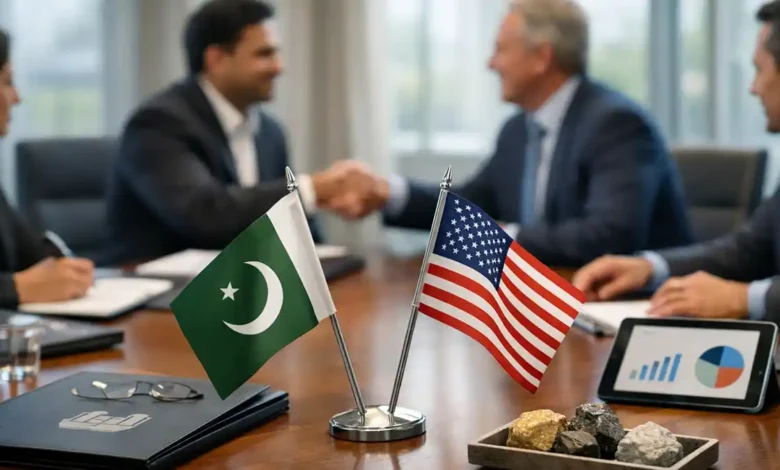
Pakistan US relations 2026 are changing in ways that don’t always generate dramatic headlines, but they are reshaping how both countries deal with each other. The relationship is moving away from emotional narratives “best friends” one year, “betrayal” the next and toward a more measurable, interest-driven approach focused on trade rules, selective security cooperation, and economic opportunities like energy and critical minerals.
This shift matters because Pakistan and the United States still influence each other’s options. Pakistan sits at a strategic intersection connecting South Asia, Central Asia, and the Gulf, and remains relevant to counterterrorism and regional stability. The U.S. remains one of the world’s most important markets, a major source of investment and technology, and a leading voice in global financial systems that shape Pakistan’s economic environment.
In 2026, three forces are pushing the relationship into a new shape:
- Economics is moving to the center. Market access, tariffs, investment conditions, and export stability are becoming core topics not side issues.
- Security cooperation is narrower, but more structured. The focus is increasingly on counterterrorism and capability sustainment rather than open-ended strategic alignment.
- Geopolitics is the constant background pressure. China competition, India-Pakistan risk management, Afghanistan spillover, and Gulf realignments all influence what’s possible.
This article breaks the changes down in plain English what’s driving them, what they mean in practice, and what to watch next.
(1) The old relationship vs. the relationship that actually exists in 2026
Many people still think Pakistan–U.S. ties work like a single grand bargain: Pakistan helps the U.S. on security, and the U.S. provides aid, access, and strategic support. That picture hasn’t been fully true for years, and in 2026 it’s even less accurate.
Today the relationship functions more like separate tracks running at the same time:
- Economic track: tariffs, exports, investment, business confidence, technology, financial stability
- Security track: counterterrorism coordination, training, interoperability, sustainment support
- Regional stability track: crisis management, de-escalation signals, diplomacy around flashpoints
- Global diplomacy track: selective cooperation on international initiatives where interests overlap
This is why the relationship can look inconsistent from the outside. One week you hear tension on politics or values; another week you see trade discussions moving forward or security engagement continuing. It’s not random it’s compartmentalized diplomacy.
(2) Why 2026 feels different: the global environment changed first
Pakistan–U.S. relations don’t shift in a vacuum. They respond to what the world is doing.
(A) The U.S. is operating in a “China-first” strategic era
Washington’s global policy priorities increasingly revolve around competition with China: supply chains, advanced technology, industrial policy, and influence across Asia. In that environment, Pakistan is not treated as the single “frontline state” it once was but it is still strategically relevant, particularly in areas where the U.S. wants optionality, stability, and leverage.
(B) Pakistan’s priorities are dominated by economic stabilization
Pakistan’s policy choices in 2026 are heavily shaped by inflation pressure, energy sector reforms, currency stability, and external financing needs. That makes economic relationships more important than ever. Pakistan cannot afford foreign policy that ignores trade access, investment confidence, or financial credibility.
(C) The region is more complex than “South Asia only”
Pakistan’s diplomatic map now links tightly with the Gulf, Central Asia, and broader Muslim world politics. That means the U.S. relationship is one important lane among several Saudi Arabia and the GCC matter, China matters, Turkey matters, and regional security spillovers matter.
The result is a relationship with fewer illusions, but clearer incentives.
(3) Economics is the new anchor: trade, tariffs, and market access
If you want to understand what’s “changing” in 2026, start with economics.
(A) Trade is not small and it’s politically meaningful
Even when security dominates the news cycle, trade quietly builds real interdependence. For Pakistan, the U.S. market is important for exports (especially textiles and value-added manufacturing). For the U.S., Pakistan is a meaningful trading partner in select categories and a large market for certain goods and services.
Trade matters because it creates domestic stakeholders. Exporters, importers, logistics firms, banks, and consumers become part of the relationship even when politicians disagree.
(B) Why tariffs became such a big deal
Tariffs aren’t just technical paperwork. They shape whether Pakistani exports remain competitive, whether orders shift to another country, and whether investors view Pakistan as a stable part of global supply chains.
In 2026, tariff discussions have a bigger diplomatic role because they act like a “scoreboard” for economic engagement. When tariffs improve, businesses feel immediate impact. When tariff uncertainty rises, investment slows and exporters tighten budgets.
(C) The bigger trade reset: from “aid” to “access”
A key change is the relationship’s economic logic:
- In earlier eras, economic support often came through aid packages tied to security cooperation.
- In 2026, progress is more likely to come through trade facilitation, predictable rules, and investment-friendly policy signals.
That shift is not just diplomatic it’s structural. It changes how Pakistan plans, how businesses invest, and how the relationship is explained to the public.
(4) The critical minerals factor: why Washington is looking harder at Pakistan’s resources
A noticeable change going into 2026 is stronger U.S. interest in critical minerals resources needed for modern technology, clean energy supply chains, and certain defense applications.
(A) Why critical minerals became strategic
Critical minerals are not just commodities. They are part of a global contest over:
- who controls extraction
- who controls refining and processing
- who builds the next generation of industrial supply chains
This has made mineral-rich or mineral-potential countries more important in diplomatic and investment strategies.
(B) What Pakistan offers and what it must fix to benefit
Pakistan has mineral potential, including large-scale projects that attract international attention. But minerals investment is difficult because it requires:
- stable regulation and enforceable contracts
- credible security arrangements
- transparent revenue sharing and local benefits
- infrastructure and reliable energy
- predictable dispute-resolution mechanisms
In other words, the minerals opportunity can lift Pakistan’s economic prospects but only if governance and execution improve.


(C) The Reko Diq case: why it keeps coming up
Major projects like Reko Diq represent the promise and the challenge. Such projects can generate investment, jobs, and export revenue but they also bring political controversy, local expectations, and legal complexity.
For Pakistan–U.S. relations, minerals are a new “bridge topic” because they sit between economics and strategy. They offer the U.S. a supply chain angle, and they offer Pakistan a non-security pathway to deeper engagement.
(5) Security cooperation is continuing just in a tighter format
Security never disappeared from Pakistan–U.S. relations. What changed is how it is framed and managed.
(A) From open-ended partnership to targeted cooperation
The post-9/11 era often felt unlimited big funding lines, broad cooperation language, and heavy public messaging. In 2026, cooperation is more targeted:
- counterterrorism coordination
- intelligence and threat sharing where interests align
- training and interoperability
- sustainment support for existing platforms
This “smaller but steadier” approach reduces political backlash and lowers the cost of disagreements.
(B) Why counterterrorism still binds the relationship
Both countries still have reasons to cooperate:
- Pakistan faces real threats from militant groups and cross-border instability.
- The U.S. wants regional threat containment and prevention of transnational spillover.
Even when there is mistrust, shared threats create a practical reason to keep channels open.
(C) The quiet value of joint exercises and structured dialogues
Joint exercises matter because they keep professional contact alive even when politics are tense. They build common procedures, shared terminology, and operational confidence.
Structured dialogues matter because they create continuity. Personal relationships can break when officials change; institutional channels survive transitions.
In 2026, that institutionalization is part of what’s “changing.” The relationship is less personality-driven and more process-driven.

(6) The F-16 and defense cooperation question: why it’s sensitive and why it continues
Defense cooperation is one of the most politically sensitive parts of Pakistan–U.S. relations because it immediately triggers regional reactions and domestic arguments.
A) Why sustainment support is different from “new weapons”
In many cases, defense engagement is framed around maintenance, upgrades, training, and safety for existing systems rather than large new acquisitions. This allows Washington to argue the support is linked to stability and counterterror capability rather than shifting the regional balance.
(B) Why Pakistan values defense links even with limits
Pakistan values defense engagement for practical reasons:
- platform readiness and safety
- access to parts, training, and technical support
- deterrence signaling
- professional military contacts that reduce miscalculation risk
Even limited cooperation can carry diplomatic weight because it signals a functional relationship.
(C) The political reality: defense ties come with strings
Defense engagement is rarely unconditional. In 2026, defense cooperation is more likely to be:
- carefully justified
- tightly scoped
- politically managed to avoid escalation narratives
That’s not ideal for either side, but it reflects how risk-sensitive the region has become.
(7) The IMF-era impact: economics is shaping foreign policy choices
Pakistan’s macroeconomic conditions influence diplomacy more directly than many people realize. When a country is stabilizing under tight fiscal conditions, foreign policy becomes constrained by economic reality.
A) Why financial credibility affects diplomacy
Investors, export buyers, and multinational firms watch macro signals: reserves, exchange rate stability, energy pricing, tax policy, and political predictability. If confidence falls, investment slows regardless of what diplomatic statements say.
In 2026, Pakistan’s credibility narrative matters because it affects:
- the cost of borrowing
- investor appetite
- trade finance availability
- energy project bankability
- long-term industrial planning
(B) What the U.S. represents in that environment
The U.S. is not simply “a country Pakistan trades with.” It also represents:
- a major financial ecosystem
- global corporate decision-making centers
- a powerful policy voice in international institutions
- reputational influence on risk ratings and investor psychology
This is why Pakistan’s engagement with the U.S. increasingly includes economic messaging: reforms, investment facilitation, and project readiness.
(8) The friction points that didn’t go away
Even with pragmatism, tension remains. In 2026, several issues continue to complicate the relationship.
(A) Human rights, governance, and political narratives
U.S. policy culture includes values language, reports, and congressional scrutiny. Pakistan’s domestic politics are sensitive, and external criticism is often viewed as interference. This creates a recurring cycle:
- U.S. raises concerns
- Pakistan pushes back on sovereignty grounds
- rhetoric hardens
- practical cooperation continues quietly
This friction doesn’t necessarily break the relationship, but it limits how warm it can look publicly.
(B) Trust and “memory” of past cycles
Both sides carry baggage: Afghanistan-era disputes, accusations, unmet expectations, and rapid swings in public tone. That history makes trust difficult, even when interests align.
(C) Messaging risk in a polarized media environment
In both countries, foreign policy messaging is consumed by audiences already divided. That makes it harder for leaders to sell nuance. A pragmatic relationship can be smart but not always easy to explain in one slogan.
(9) Regional geopolitics: the real pressure behind the scenes
Pakistan–U.S. relations in 2026 are shaped by regional realities more than by bilateral mood.
(A) China is the constant strategic reference point
Pakistan’s relationship with China is deep and structural economically, politically, and in long-term infrastructure planning. The U.S. doesn’t expect Pakistan to abandon China, but it does adjust its engagement based on China competition. That’s a permanent factor.
What changes in 2026 is the tone: rather than demanding exclusivity, the U.S. is more likely to pursue selective cooperation where Pakistan can engage without “choosing sides” completely.
(B) India-Pakistan risk management remains central
Any serious escalation between India and Pakistan becomes a global concern. Even when the U.S. prefers distance, crisis dynamics tend to pull it into de-escalation efforts, diplomacy, or risk messaging.
This shapes U.S. behavior: Washington seeks stability, discourages escalation, and tries to prevent crises from spiraling.
(C) Afghanistan spillover is still a security reality
Afghanistan’s instability creates security concerns that neither Pakistan nor the U.S. can ignore. Even when policy preferences differ, the shared interest in limiting transnational threats keeps a narrow security channel alive.
(D) The Gulf and “new middle powers” create more options for Pakistan
Pakistan has strengthened ties with Gulf partners and other regional players. This gives Pakistan more diplomatic room, but it also changes U.S. calculations: influence is shared, not monopolized.

(10) People-to-people ties: the long-term stabilizer that gets overlooked
Government relations fluctuate. People-to-people connections often outlast political storms.
Key stabilizers include:
- Pakistani diaspora and professional networks
- students, researchers, and academic collaboration
- business links and remittance channels
- cultural exchange and media ecosystems
Even when diplomacy is tense, these links keep the relationship from becoming purely transactional. They also shape how quickly cooperation can rebuild after downturns.
(11) What’s changing for Pakistan in 2026: practical outcomes to watch
Geopolitics can feel abstract, so here are tangible indicators that reveal whether the relationship is improving in a meaningful way.
(1) Export performance and order stability
If market access improves and tariff uncertainty declines, exporters gain confidence. If uncertainty rises, orders shift and hiring slows.
(2) Investment moving from announcements to execution
In 2026, watch whether investment discussions lead to:
- signed, enforceable agreements
- visible project milestones
- financing closures
- operational timelines
Announcements are cheap. Execution is the real signal.
(3) Security cooperation producing measurable benefits
Track whether cooperation improves:
- intelligence coordination
- capability development
- response times
- protection of key infrastructure and economic corridors
(4) Policy reforms that improve business conditions
If Pakistan improves taxation clarity, energy governance, contract enforcement, and regulatory predictability, it becomes easier for U.S. and global investors to commit long-term.
(12) What the U.S. is trying to achieve in 2026: the “pragmatic” logic
From Washington’s perspective, Pakistan matters for reasons that are less dramatic than in the past, but still real:
- prevent regional crises from spiraling
- contain transnational security threats
- preserve channels of influence in a strategically located country
- diversify economic engagement and supply chain options (including minerals)
- encourage reforms that improve stability and reduce shock risk
The U.S. approach in 2026 is best described as risk-managed engagement: work together where it’s productive, avoid commitments that create backlash, and keep leverage through economics and structured security ties.
(13) Three realistic scenarios for the rest of 2026
Scenario A: Pragmatic upswing
- trade and tariff conversations translate into practical facilitation
- investor interest strengthens around bankable projects
- counterterror channels remain stable
- public messaging stays careful, avoiding hype
Scenario B: Progress with setbacks
- economics improves, but political disputes flare
- a security incident triggers harsh statements
- cooperation continues, but at a lower temperature
Scenario C: Crisis-driven reset
- regional escalation or major domestic shock disrupts engagement
- trade momentum slows
- security becomes the dominant channel again
The most likely outcome is not a dramatic “best friends” story. It’s Scenario B: progress that survives turbulence because the incentives remain.
Quick FAQ
1. Why do Pakistan–U.S. relations look different in 2026?
Because the relationship is shifting toward practical cooperation trade rules, investment readiness, and targeted security channels rather than broad alliance narratives.
2. Is trade now more important than security?
Trade is becoming more visible and politically central, but security still matters. The difference is that security cooperation is narrower and more structured than in earlier eras.
3. What does “trade reset” mean in simple terms?
It means both sides are paying more attention to tariffs, market access, and business certainty things that directly affect exports, investment decisions, and jobs.
4. Why are critical minerals suddenly a big topic?
Critical minerals power modern industries and supply chains. Countries that can contribute to reliable sourcing and processing attract strategic and investment interest.
5. What is the biggest obstacle to minerals investment in Pakistan?
Not the resources themselves usually governance and execution: regulatory predictability, security, infrastructure, and transparent benefit-sharing.
6. Are Pakistan and the U.S. still cooperating on counterterrorism?
Yes, but in a more focused way through structured dialogues, professional coordination, and exercises that aim to keep interoperability and shared procedures alive.
7. Why does the IMF-era economy influence foreign policy so much?
Because macro stability shapes investor confidence, export financing, and the cost of borrowing. Economic credibility now directly affects Pakistan’s diplomatic options.
8. What should Pakistanis watch to judge whether ties are improving?
Look for measurable outcomes: export stability, real investment closures (not just announcements), improved business conditions, and security cooperation that reduces threat pressure.
Conclusion: The real meaning of the 2026 shift
Pakistan–U.S. ties are not returning to an old-style alliance, and they are not collapsing either. In 2026, the relationship is being rebuilt around practical deliverables:
- economics and market access are gaining prominence
- security cooperation is continuing, but with tighter scope
- critical minerals and investment are adding a new strategic-economic layer
- geopolitical pressures (China, India-Pakistan risk, Afghanistan spillover) shape every decision
The headline lesson is simple: Pakistan US relations 2026 are moving from “big promises” to “measured cooperation.” That may feel less emotional, but it can be more sustainable especially if both sides keep focusing on outcomes that benefit ordinary people: jobs, stability, investment, and reduced crisis risk.