Pakistan’s Chukar Partridge Explained: History, Habitat, and Why It Still Matters
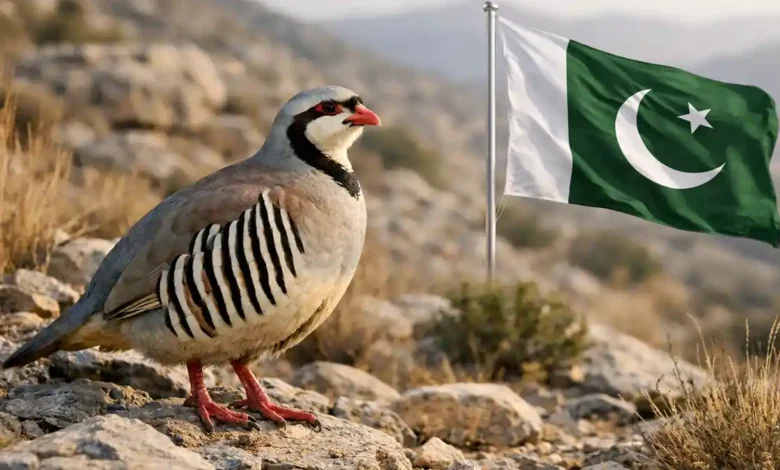
Pakistan’s Chukar Partridge is more than a beautiful bird seen on rocky slopes. It is a national symbol, a part of cultural memory, and an important species in upland ecosystems. Many people in Pakistan know it as chakor a bird associated with mountains, folklore, and resilience. It appears in stories, in poetry, in conversation, and in the natural landscapes that shape how many people imagine Pakistan itself.
What makes the chukar especially interesting is that it sits at the crossroads of nature and identity. It is scientifically important as a hardy ground bird adapted to dry and rugged terrain. It is culturally important because it carries symbolic meaning in South Asian traditions. And it still matters today because birds like the chukar can tell us a lot about habitat quality, ecological balance, and how people connect with wildlife.
This article is a full, clear, and modern deep dive into Pakistan’s chukar partridge its history, habitat, behavior, cultural significance, ecological role, and why it continues to deserve attention in Pakistan today.
What Is the Chukar Partridge?
The chukar partridge, scientifically known as Alectoris chukar, is a ground dwelling bird in the pheasant family. It belongs to the same broad group of birds that includes partridges, pheasants, and quails. Unlike many birds that spend much of their time in trees, the chukar is built for life on the ground especially on steep, rocky, and dry terrain.
How it looks
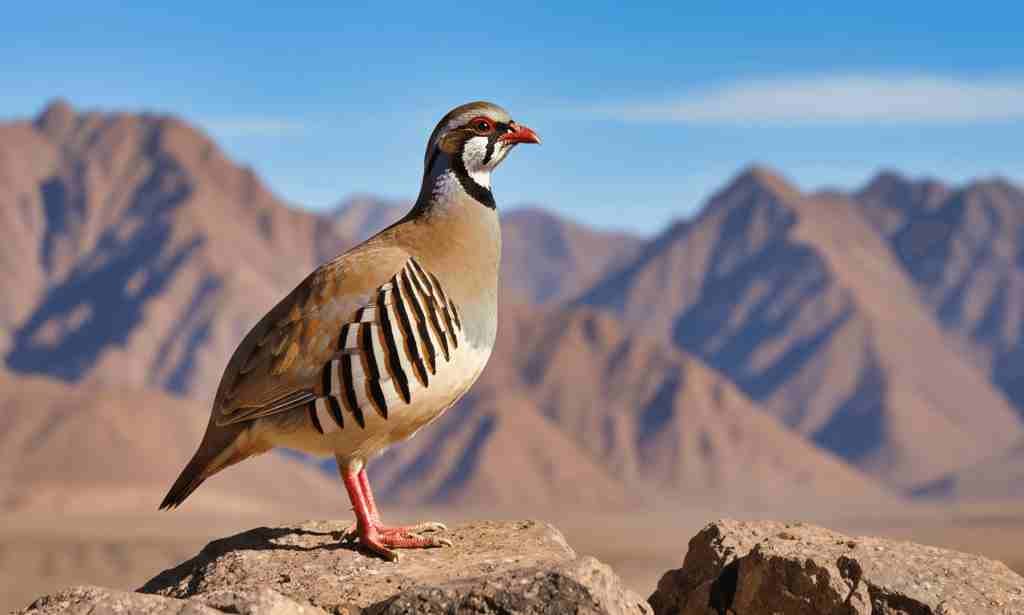
The chukar is easy to recognize once you know its key features:
- A pale or creamy throat
- A bold black band that runs across the forehead, through the eye, and around the throat
- Distinct black and rust barring on the flanks
- Red bill
- Red legs
- Sandy gray brown body that blends well with rocky hillsides
This combination gives the bird a sharp, elegant look. It appears compact and sturdy rather than delicate, which fits its rugged habitat and active lifestyle.
Why it is called chukar
The name chukar is linked to the bird’s call. Its repeated vocal notes sound like a quick, rhythmic chuk chuk chukar, which is why the bird’s common name echoes its voice. In many places, people hear the bird before they see it.
A bird built for hills
The chukar is not a long distance soaring bird. It is a runner first. It moves confidently across stones, loose slopes, and uneven ground. When disturbed, it may burst into a short flight, but it often prefers to run uphill or disappear around rocks. That behavior is one of the reasons it feels so perfectly matched to mountain and hill environments.
Why the Chukar Is So Important in Pakistan
Pakistan’s chukar partridge is not just another species on a bird list. It carries national, cultural, and ecological importance all at once.
A national symbol that fits the landscape
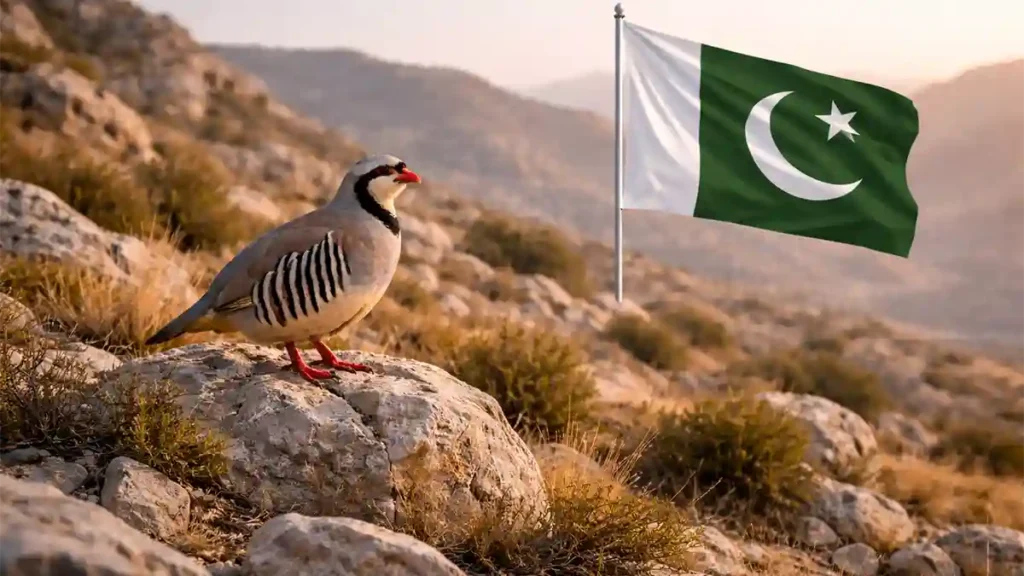
The chukar is widely recognized as the national bird of Pakistan. That choice makes deep sense. Pakistan is a country of striking geographical contrasts, but mountain and hill landscapes play a major role in its national identity. The chukar, with its natural home in rocky uplands and dry slopes, represents that terrain in a way that feels authentic.
It is not a symbol borrowed from somewhere else. It belongs to the ecological character of the region.
A bird people know by name
Some national symbols are respected but rarely understood. The chukar is different. Many people know it as chakor, and the name itself carries emotional and cultural recognition. This familiarity gives the bird real presence in public memory. It is not just a textbook fact it is a living reference.
More than biology
What makes the chukar unique is that it exists in both nature and imagination. It is a real bird with a defined habitat, diet, and breeding cycle. But it is also a cultural symbol that appears in poetry, folklore, and expressions of longing and beauty. That dual role is a major reason it still matters.
The History of the Chukar in a Pakistan Context
When we talk about the history of Pakistan’s chukar partridge, we are really talking about three overlapping stories:
- Natural history – where the species comes from and how it lives
- Cultural history – how people have described and symbolized it
- National history – how it became part of Pakistan’s identity
Let’s look at each one clearly.
1. Natural History: A Tough Upland Bird
The chukar is an Old World partridge with a wide native range across parts of Asia and nearby regions. It is naturally associated with dry, rocky, and semi arid upland environments. This broad natural distribution helps explain why it adapts well to many landscapes in and around Pakistan.
The species is not a fragile specialist that survives only in one tiny location. Instead, it is a resilient bird that thrives in challenging terrain as long as key habitat conditions remain in place.
This natural history matters because it shows why the chukar fits Pakistan so well. It is a bird shaped by slopes, stone, sparse vegetation, and seasonal shifts in food and water availability exactly the kind of ecological patterns found in many Pakistani upland regions.
2. Cultural History: The Chakor in Poetry and Folklore
The chukar, often referred to as chakor in South Asian cultural contexts, has long held symbolic meaning in poetry and folklore. It is often associated with longing, devotion, and the moon. Whether taken literally or metaphorically, the bird appears in a way that goes beyond simple natural description.
This cultural layer matters because it gives the chukar emotional weight. People may admire the bird not only for its appearance or movement, but for what it represents in language and imagination.
In many cases, wildlife becomes important to a society not just because it exists in the environment, but because it enters stories, songs, and shared ideas. The chukar is one of those species.
3. National History: A Symbol That Still Feels Alive
Some national symbols become formal labels and slowly lose everyday relevance. The chukar has avoided that fate. It still feels recognizable and meaningful because:
- It matches Pakistan’s mountain identity
- It is known by a local name (chakor)
- It appears in cultural references
- It remains part of real landscapes, not just history
That combination keeps it alive in public consciousness. The chukar is not only a symbol of the past; it is a species that can still anchor conversations about nature, identity, and conservation in the present.
Habitat: Where Pakistan’s Chukar Partridge Lives
To understand the chukar, you have to understand its habitat. This is a bird that depends on a specific kind of environment not dense forests, not wetlands, and not city parks.
The chukar’s ideal habitat
Chukars are most strongly associated with:
- Rocky hillsides
- Arid and semi arid slopes
- Sparse grasses
- Low shrubs
- Open terrain with patches of cover
- Areas with access to water (especially in hotter periods)
They do well in places that seem harsh to many other species. What looks dry and difficult to humans can be excellent chukar habitat if the right mix of rocks, cover, food plants, and seasonal water is available.
Why rocky slopes are so important
Rocky terrain gives the chukar several survival advantages:
- Camouflage: Its body color blends into stone and dry ground
- Escape routes: It can run uphill quickly and weave between rocks
- Nest concealment: Ground nests can be hidden near stones or brush
- Visibility: Open slopes help birds detect threats early
In short, the habitat is not random background scenery it is central to the bird’s way of life.
Habitat in Pakistan
In Pakistan, the chukar is strongly linked to upland and mountainous regions, including dry hill systems and foothill belts where open rocky terrain and scrub vegetation occur. This is one reason the bird feels naturally Pakistani in the ecological sense. It belongs to landscapes that are visually and culturally familiar.
Water matters more than people think
Although the chukar is associated with dry landscapes, it still depends on water especially during hot seasons. Local distribution and movement can shift depending on where water is available. This means drought, changing rainfall, or disturbance around water sources can affect where chukars are seen and how well they do in a given area.
Behavior: Why the Chukar Feels So Hardy and Alert
The chukar’s behavior is one of the biggest reasons people find it memorable. It is active, cautious, social at times, and clearly adapted to difficult ground.
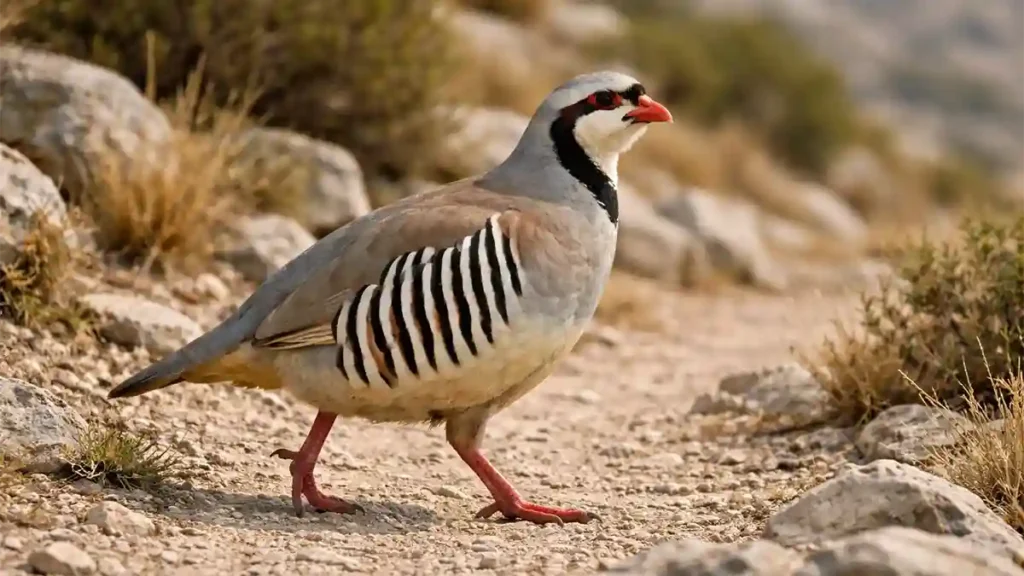
Runner before flier
One of the most defining traits of the chukar is that it prefers to run rather than fly. It can fly, and it does when needed, but it often escapes by moving quickly over slopes and through rocks.
This is not a weakness. It is an adaptation. Flying is energy intensive and can expose a bird in open terrain. Running allows the chukar to stay low, move fast, and use the landscape as protection.
Alert and watchful
Chukars tend to be vigilant. In open habitats, alertness is essential. They rely on early detection of danger, quick movement, and group awareness in many situations. Their posture, scanning behavior, and sudden bursts of movement all reflect life in exposed terrain.
Social structure: coveys and pairs
Outside the breeding season, chukars are often found in small groups called coveys. Group living helps with vigilance and locating resources. During the breeding season, however, they become more focused on pair bonds and nesting territories.
This seasonal shift from social grouping to breeding pairs is common in many ground birds and reflects changing priorities through the year.
Vocal behavior
The chukar’s call is one of its most recognizable features. Its repeated vocal notes are often heard echoing across slopes, especially when birds are communicating within groups or responding to disturbance.
For birdwatchers and local observers, the voice is often the first clue that chukars are nearby.
Diet and Feeding: What the Chukar Eats
The chukar’s diet changes with age and season, which is a sign of ecological flexibility.
Adult diet
Adult chukars feed mainly on plant material, including:
- Seeds • Shoots • Leaves • Grasses • Seasonal green vegetation
This diet fits their habitat. In dry uplands, a bird that can make good use of seeds and hardy plant growth has a clear survival advantage.
Chick diet: more insects, more protein
Chukar chicks rely more heavily on insects early in life. Young birds need protein for growth, and insects provide dense nutrition during this critical stage. As they mature, their diet becomes more plant based like that of the adults.
This difference between adult and chick diet is important. It means breeding success depends not only on nesting cover, but also on the availability of insect rich microhabitats for young birds.
Seasonal feeding patterns
Food availability in chukar habitats can change quickly depending on rainfall, temperature, grazing pressure, and plant cycles. Chukars respond by shifting where they feed and how widely they move. This is one reason habitat quality must be understood as a seasonal issue, not just a fixed map location.
Breeding and Nesting: Where the Next Generation Begins
Ground nesting birds live with risk, and the chukar is no exception. Its breeding success depends heavily on habitat quality, cover, and disturbance levels.
Pairing and courtship
During the breeding season, chukars form pair bonds and become more territorial. Calling, posture, and movement all play a role in courtship and communication.
This is a period when the birds are especially sensitive to disturbance because they are investing energy in nesting and raising young.
Ground nests in concealed spots
Chukars usually make simple ground nests in sheltered places, often near rocks, shrubs, or natural depressions. The nest may be lined with grasses and other soft material.
Because the nest is on the ground, concealment is everything. Too much disturbance from people, animals, or habitat damage can reduce nesting success.
Eggs and incubation
Chukars can lay relatively large clutches, which helps balance the risks of ground nesting. The female typically incubates the eggs, and the success of the nest depends on weather, cover, predation pressure, and habitat conditions.
Precocial chicks
Chukar chicks are precocial, meaning they hatch with open eyes, leave the nest early, and begin feeding quickly. This fast start is an important adaptation for life in open country. Staying at one nest site for too long can be dangerous, so mobility gives them a better chance.
Why Pakistan’s Chukar Partridge Still Matters Today
This is the key question. Why should people care about the chukar in a modern Pakistan shaped by urbanization, climate pressure, and fast changing priorities?
Because the chukar matters on multiple levels at the same time.
1. It connects people to wildlife in a familiar way
Conservation often struggles when the species being discussed feels distant, rare, or abstract. The chukar is different. It is recognizable, culturally meaningful, and visually distinctive. That makes it an excellent bridge species for public awareness.
People are more likely to care about habitat conservation when they can connect it to a known bird especially one that is also a national symbol.
2. It reflects upland habitat health
The chukar depends on a specific balance of:
- Open rocky ground
- Cover for nesting and shelter
- Food plants
- Seasonal water access
- Manageable disturbance levels
When that balance changes, local chukar populations may also shift. For that reason, the species can serve as a useful indicator of upland habitat condition.
If a region that once supported visible chukar activity begins showing reduced sightings, weaker breeding success, or seasonal disappearance, it may point to broader environmental changes that deserve attention.
3. It keeps small wildlife in the national conversation
Large mammals often dominate wildlife headlines and understandably so. But ecosystems are not built only around famous species. Birds like the chukar are part of the everyday ecological structure of mountain and hill landscapes.
Protecting habitat for chukars often helps many other species too, including:
- Small mammals • Raptors • Reptiles • Insects • Native plants
In other words, the chukar can be a practical starting point for wider habitat conservation.
4. It carries cultural meaning that can strengthen conservation
A species with cultural value has a major advantage in conservation messaging. The chukar is not only an upland bird; it is a bird that lives in language, symbolism, and memory. That gives educators, journalists, and conservation groups a strong way to communicate why habitat protection matters.
People protect what they recognize. They defend what they value. The chukar helps create both recognition and value.
Lessons from Monitoring in Other Countries
A useful point in modern wildlife management is this: a species can be widespread and still need local monitoring.
In some range countries, long term field monitoring has shown that chukar populations can fluctuate over time due to habitat conditions, climate effects, and human pressures such as unmanaged hunting or land use changes. The broad lesson is simple but important:
Common does not mean safe everywhere
Even when a species is not globally endangered, local declines can still happen. Without regular monitoring, those changes may go unnoticed until they become more serious.
This matters for Pakistan because the chukar is both ecologically important and symbolically important. That is exactly the kind of species that should be monitored regularly not because of panic, but because of responsibility.
What Could Threaten Chukar Populations Locally in Pakistan?
The chukar is a resilient bird, but resilience is not the same as invulnerability. Local populations can face pressure when habitat conditions shift too far.
1. Habitat degradation
If rocky slopes lose their vegetation structure, nesting cover, or food plants, chukars may struggle to breed or remain in the area. Habitat degradation can happen through multiple pathways, including repeated disturbance, poor land use practices, or severe overpressure on upland vegetation.
2. Water stress
Chukars live in dry landscapes, but they still need reliable access to water at critical times. Extended drought, climate shifts, or disturbance around water sources can affect how they move and where they settle.
3. Poorly managed hunting pressure
In places where hunting exists, lack of consistent monitoring can create risk. Sustainable management requires real data on population trends, breeding success, and habitat condition. Without that, decisions may be based on assumptions rather than evidence.
4. Climate linked change
Climate variability affects rainfall, vegetation patterns, and water availability all of which matter for chukar habitat. The bird may adjust seasonally, but rapid or repeated changes can reduce habitat quality over time in some areas.
A Practical Conservation Roadmap for Pakistan’s Chukar Partridge
Protecting the chukar does not require dramatic slogans. It requires smart, steady, practical work.
1. Build regular monitoring systems
A strong first step is province level or regional monitoring in known upland habitats. This can include:
- Seasonal counts
- Repeat surveys in fixed locations
- Habitat notes (cover, water, disturbance)
- Simple trend tracking over time
Long term data is far more useful than one time impressions.
2. Pair bird counts with habitat assessment
Counting birds alone is helpful, but counting birds and recording habitat condition is much better. If numbers change, habitat data helps explain why.
Useful field notes can include:
- Shrub cover
- Signs of heavy grazing
- Water availability
- Human disturbance
- Nesting cover quality
3. Use national bird status in education
Because the chukar is Pakistan’s national bird, it can be used effectively in:
- School awareness campaigns
- Nature clubs
- Local media stories
- Wildlife education materials
- Public conservation messaging
This is a rare advantage: Pakistan already has a built in symbol that can connect patriotism with environmental care.
4. Encourage ethical birdwatching and photography
Bird popularity can support conservation, but only if people observe responsibly. Good practices include:
- Keeping distance from nesting areas
- Avoiding repeated disturbance for photos
- Not flushing birds on purpose
- Respecting breeding seasons
- Limiting intrusive call playback
5. Support citizen science carefully
Local sightings, birdwatching groups, and public reporting can improve knowledge of chukar distribution. But data quality matters. Training in identification, seasonal timing, and ethical observation helps make citizen science more useful and less disruptive.
How to Recognize a Chukar in the Field
If someone in Pakistan wants to identify a chukar confidently, the best approach is to use a combination of features, not just one.
Field ID checklist
Look for:
- Creamy or pale throat
- Distinct black face and throat band
- Strong flank barring (black and chestnut/rufous tones)
- Red bill and legs
- Plump, compact body
- Movement across rocky slopes
- Loud repeated chuk chuk calls
Best beginner tip
Do not rely only on body color. Light conditions in dry terrain can make colors look faded. Instead, focus on the black facial band + barred flanks + red bill/legs combination. That set of features is much more reliable.
Behavior is part of identification
If the bird runs confidently over steep rocky ground and seems built for climbing rather than graceful flight, that behavior supports the identification strongly.
Why the Chukar Still Deserves More Attention in Pakistan
Pakistan’s chukar partridge remains relevant because it brings together everything that makes wildlife conservation meaningful:
- Identity – it is a national symbol
- Ecology – it reflects upland habitat conditions
- Culture – it lives in poetry, folklore, and language
- Accessibility – people can recognize and relate to it
In a time when environmental discussions can feel distant or highly technical, the chukar offers something practical and powerful: a familiar species that can help people reconnect with local landscapes.
It also reminds us of an important truth: conservation is not only about saving rare animals at the edge of extinction. It is also about respecting the species that shape our national character and ecological memory.
The chukar is one of those species.
Quick FAQ
What is Pakistan’s national bird?
Pakistan’s national bird is the Chukar Partridge (Alectoris chukar), also commonly called chakor.
Why is the chukar important in Pakistan?
It is important because it is a national symbol, a culturally recognized bird, and an ecologically important upland species.
Where does the chukar live in Pakistan?
It is mainly associated with rocky, dry, and semi arid upland habitats, including hillsides and mountain slopes with sparse vegetation and some cover.
Can chukars fly?
Yes, they can fly, but they often prefer to run and climb over rocky ground. They usually take short flights when disturbed.
What does the chukar eat?
Adult chukars mostly eat seeds, shoots, leaves, and other plant material, while chicks depend more on insects in early life.
Is the chukar endangered?
The chukar is generally considered a widespread species, but local populations can still face pressure from habitat change, water stress, and poor management.
Why is the chukar linked to poetry and folklore?
In South Asian traditions, the chakor is often associated with longing, beauty, and the moon, which gives it strong symbolic meaning.
What is one practical way to protect chukars in Pakistan?
A very effective step is regular habitat and population monitoring, especially in upland areas, so decisions are based on real field data.
Strong Conclusion
Pakistan’s chukar partridge is not just an emblem from a list of national symbols. It is a living part of Pakistan’s upland world resilient, distinctive, and deeply rooted in both ecology and culture. Its rocky habitat, ground running behavior, bold markings, and familiar call make it one of the most recognizable birds associated with mountain landscapes in the region.
More importantly, it still matters today. The chukar can help Pakistan strengthen public awareness about wildlife, encourage better habitat monitoring, and build conservation narratives that people genuinely connect with. Because it is both culturally meaningful and ecologically useful, it can serve as a bridge between science and society.
Pakistan does not need to rediscover the chukar. It needs to keep valuing it through awareness, habitat care, and practical monitoring so that future generations know it not only as a symbol, but as a living bird in a living landscape.