FIA EMI App Pakistan 2026: What’s New, What’s Required, and What to Expect
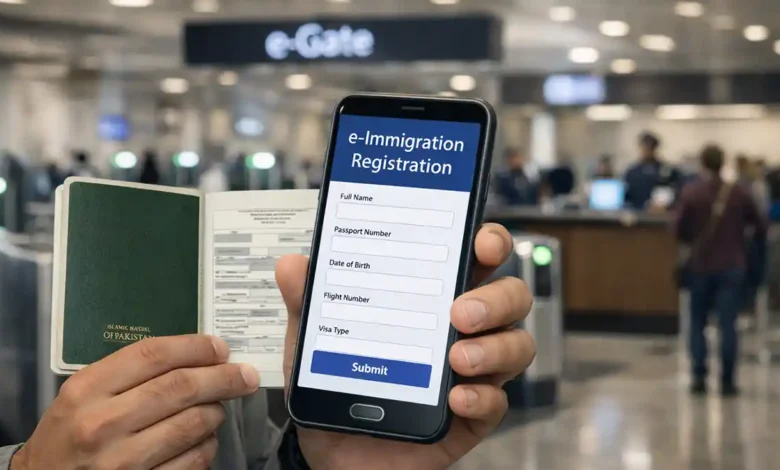
FIA EMI App Pakistan is turning into a serious travel topic for one reason: people don’t mind rules, but they hate uncertainty especially when it can end in an airport delay, secondary screening, or an “offload” that ruins plans and budgets.
In 2026, Pakistan’s immigration workflow is clearly moving toward digital pre-verification, faster processing, and stronger risk screening. The public messaging around these changes connects them to two priorities: (1) making clearance smoother for legitimate travelers, and (2) stopping illegal migration routes and human smuggling networks.
This guide is written to keep you calm and prepared. You’ll learn what’s new, what information is typically required, how to avoid common mistakes, what airport experience may look like as these systems expand, and how to handle privacy and security like a professional traveler.
(1) Why Pakistan Is Pushing Digital Immigration in 2026
If you’ve traveled internationally in the past few years, you’ve probably noticed a pattern: immigration has become more data driven everywhere. Pakistan is now accelerating that shift. Three practical reasons explain why.
(A) Crackdown pressure and measurable enforcement outcomes
A policy meeting chaired by Shehbaz Sharif discussed human smuggling and illegal migration and highlighted a reported decline in illegal travel to Europe (47%) after intensified screening at departure points.
Whether you focus on the number or the direction, the message is the same: enforcement is central, and technology is being framed as the tool that makes enforcement more consistent.
(B) Airlines and immigration are sharing more “travel truth” data
A key concept mentioned in official briefings is enabling access to API-PNR data (airline passenger information and booking records) to identify potentially problematic travel documents earlier.
For legitimate travelers, this means a simple thing: the details on your passport, visa, and itinerary should match, and errors are more likely to be detected.
(C) Faster clearance is being positioned as the “reward” for clean travel
Public reporting and briefings describe efforts to reduce queues and modernize clearance using e-gates and a mobile passenger data approach.
In modern border systems, speed usually comes from confidence: when a system can verify you quickly, it can process you quickly.
(2) What the “EMI App” Concept Means in Plain English
The phrase “EMI app” is often used online as shorthand for a digital exit/immigration management workflow. In practice, the idea is straightforward:
Move part of the verification process earlier so fewer decisions depend on a last minute, counter based check.
Instead of arriving at the airport and hoping everything “looks fine,” the system aims to:
- collect core passenger identity and trip information,
- match it with official records,
- run automated checks for inconsistencies,
- and route travelers either toward faster clearance (including e-gates where available) or toward manual review.
Media reports describe the FIA’s development of an AI powered immigration application meant to curb human smuggling and streamline clearance, with pilots tied to airport rollout.
What this is not
- It is not a replacement for a visa.
- It is not a guarantee of clearance.
- It is not the same “EMI” used in finance (Electronic Money Institution).
It is best understood as a digital screening layer connected to border management modernization.
(3) What’s New in 2026: The Upgrades Travelers Should Know
Here are the major themes being reported and discussed publicly, translated into traveler-friendly language.
(A) 10 second immigration claims and the e-gate direction
One widely circulated claim is that a mobile e-immigration approach could cut waiting time dramatically (even “10 seconds” in some reporting).
Treat that as an ambition, not a promise. In real airports, throughput depends on:
- how many e-gates exist,
- whether your passport is compatible (chip/e-passport capability can matter),
- passenger volume at that hour,
- and whether you are routed to automated clearance or manual checks.
Still, it signals a strong push toward automation.
(B) AI based pre-screening tied to anti smuggling goals
Multiple outlets reported that the Federal Investigation Agency developed an AI powered app to curb human smuggling and ease immigration processing, with pilot rollout at Islamabad International Airport.
This matters because it explains why certain traveler categories (especially employment routes and first time travelers) may face extra verification.
(C) API PNR airline data checks becoming part of the workflow
Briefings referenced enabling access to API-PNR to identify potentially illegal travel documents and suspicious travel patterns in advance.
Practically, it means:
- itinerary inconsistencies matter more,
- last minute changes can trigger questions,
- and accuracy in the data you submit becomes critical.
(D) Clear messaging to travelers: carry complete documents, avoid illegal agents
In late 2025, Dawn reported that FIA urged the public not to panic, advised travelers to carry complete and verified documents, avoid illegal agents, and noted a helpline for complaints (1991).
This is a useful signal: the “compliance” mindset is being pushed, and it’s aimed at protecting travelers from getting trapped by shady intermediaries.
(4) What’s Required: The Information You Should Be Ready to Provide
Even if the exact user interface changes over time, digital immigration workflows usually require a consistent set of fields. Think of these as “the standard travel identity bundle.”
(A) Identity details (always core)
- Full name (exactly as printed on passport)
- Date of birth
- Passport number and expiry date
- Nationality
- CNIC/NICOP details (often requested for Pakistani citizens, especially for verification consistency)
- A live photo/selfie or biometric like identity confirmation (common in modern identity workflows)
Traveler rule: always treat the passport as the primary source of truth for name spelling and formatting.
(B) Trip details (your itinerary facts)
- Flight number
- Departure airport and destination
- Travel purpose (tourism, work, study, family visit, transit)
- Visa category and validity (if your destination requires it)
- Ticket/booking reference details (where requested)
Why this matters: if API-PNR checks are integrated, mismatches between your “submitted details” and airline records are more likely to stand out.
(C) Contact details (often required)
- Phone number and email
- Current address (Pakistan or overseas)
- Emergency contact (sometimes)
(D) Supporting documents (depends on purpose of travel)
Not every workflow requires uploads, but documentation can determine whether you pass quickly or get pulled into manual review.
(1) Tourism / visit visa travelers
Keep ready:
- e-visa or visa printout
- hotel booking or host details (if relevant)
- return ticket
- travel insurance (if required by destination)
(2) Students (especially first time travelers)
Keep ready:




- admission letter / enrollment confirmation
- visa / entry permit
- proof of funds or scholarship letter (if applicable)
- accommodation proof (dorm letter, lease, family address)
Students often face questions simply because it’s a first time profile, not because anything is wrong.
(3) Workers / employment visas (more scrutiny by design)
Employment routes can be targeted by trafficking networks, which is why official messaging ties AI screening to curbing illegal migration and smuggling.
Keep ready:
- work visa / entry permit
- basic contract or employer letter
- employer contact and address
- any Pakistan side emigration clearance documents that apply to your case (this sits outside the app itself but matters at departure)
(4) Overseas Pakistanis (GCC, EU, UK, North America)
Usually smooth when documentation is consistent, but still keep:
- residency card/permit (for your country of residence)
- return ticket
- NICOP (if you rely on it for identity continuity)
(5) What “Verified” Usually Means (And Why People Get Stuck)
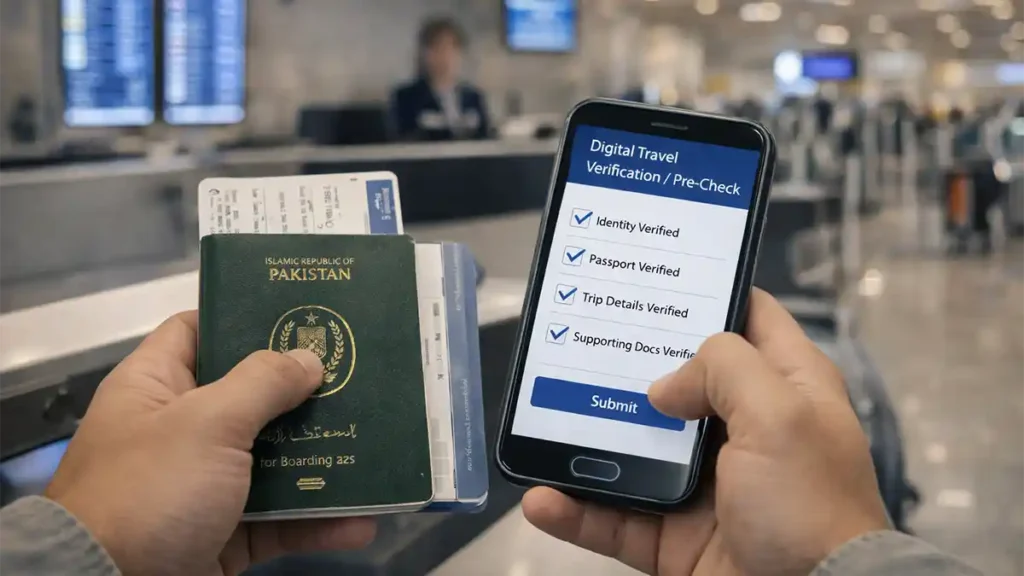
In a digital screening system, “verified” rarely means “approved.” It usually means the system found your profile consistent across records.
Verification typically checks:
- passport data integrity (correct format, valid dates)
- name/DOB matching between identity records
- visa category consistency with purpose of travel
- itinerary consistency with airline booking data (where integrated)
- risk signals based on known fraud patterns (the part people dislike, but it’s how systems attempt prevention)
Most travel trouble is boring, not dramatic: a wrong digit, a name mismatch, an expiry date error, or inconsistent purpose/visa statements.
(6) How to Prepare Like an Expert Traveler (No Panic, No Guessing)
This is the “do it once, do it right” checklist.
Step 1: Use official sources only
- Download apps only from official app stores.
- Avoid forwarded links and unofficial APKs.
- Be suspicious of anyone “selling approval” or offering shortcuts.
That “avoid illegal agents” warning is not random; it’s a repeated enforcement theme.
Step 2: Enter passport details exactly, character by character
- Passport number: double check letters vs digits (common mistakes: O vs 0, I vs 1)
- Name spelling: match passport, not social media, not CNIC nickname
- Date format: confirm day/month order before submitting
Step 3: Keep clean digital copies in one folder
Create a simple “Travel Pack” folder on your phone:
- passport scan
- visa/permit PDF
- ticket/itinerary
- key supporting document (admission letter or employer letter)
- accommodation proof (if relevant)
Step 4: Save proof of submission
If the workflow provides a receipt, reference ID, QR, or confirmation screen:
- screenshot it (where permitted)
- store it in the same folder
Step 5: Plan for weak airport connectivity
- complete verification before departure day
- keep your phone charged
- carry a power bank
- if you rely on OTP, do it while your network is stable
(7) What to Expect at the Airport in 2026: A Realistic Picture
In most countries, modernization doesn’t arrive as a clean switch. It arrives as a hybrid.
You’ll likely see a mixed system
- e-gates for eligible travelers (where installed and active)
- standard immigration counters for everyone else
- secondary screening desks for exceptions and flagged profiles
Official briefings have discussed e-gates and tech based prevention as part of modernization.
Who is most likely to experience faster processing
- frequent travelers with consistent history
- travelers with complete, consistent documentation
- travelers whose identity records match cleanly
Who is more likely to be asked extra questions
- first time international travelers
- employment visa travelers and high risk routes
- passengers with last minute itinerary changes
- travelers with incomplete or inconsistent supporting documents
This is not a judgment of character; it’s how risk based screening behaves.
(8) Real World Examples (So You Can Recognize Problems Early)
Example 1: The student with a “small” name mismatch
A student has a valid visa and a real admission letter, but submits the name in a different order than the passport. The system flags “non match,” pushing the traveler into manual review.
Fix: use passport spelling and spacing exactly; keep visa and admission letter ready for quick clarity.
Example 2: The worker with a real visa but weak supporting proof
A traveler has an employment visa but can’t clearly explain employer details or present a simple contract/letter. Because anti smuggling is a core priority of the AI screening narrative, the traveler gets routed into extra checks.
Fix: keep basic employment proof ready and consistent (employer name, job title, location, contact).
Example 3: The overseas resident with a near expiry passport
Everything looks fine until the passport expiry date is within a limited window, and the airline or destination rules require more validity. The traveler gets delayed, not by EMI, but by standard travel rules.
Fix: check passport validity months in advance; do not gamble on “it’ll be fine.”
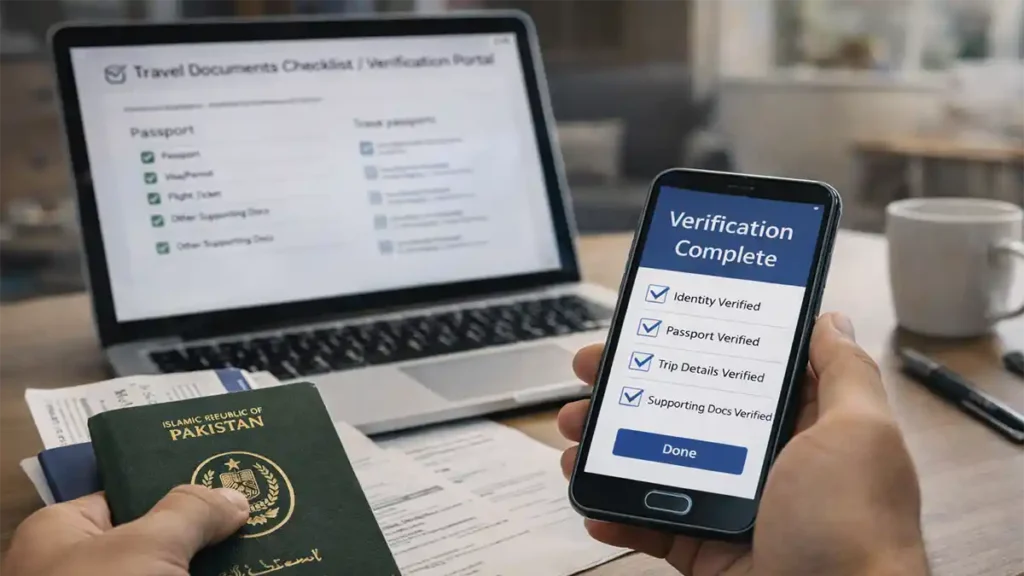
(9) Common Issues and Smart Fixes
Issue: OTP not arriving
Try:
- switching from Wi-Fi to mobile data
- checking spam/junk for email OTP
- waiting a few minutes before retrying (rapid retries can trigger rate limits)
Issue: “Details do not match”
Usually caused by:
- wrong passport digit
- DOB format confusion
- name mismatch (Muhammad/Mohammad variants are common)
Fix:
- re check the passport’s machine readable zone and type exactly
Issue: App crashes or freezes
Do:
- update the app
- update phone OS
- clear cache
- reinstall only if you remember credentials
Issue: Document scan fails
- use bright lighting
- avoid glare
- keep passport flat
- clean your camera lens
(10) Privacy and Security: What Data Might Be Collected and How to Protect Yourself
The moment passports meet apps, privacy becomes a fair concern. FIA’s mobile application privacy page states that information collected through the app is used for purposes such as user authentication, secure service delivery, and system functions.
Practical privacy habits that actually help
- install only from official stores
- avoid public Wi-Fi when submitting passport data
- use a strong passcode on your phone
- never share OTPs or verification codes
- keep device software updated
Balanced reality: digital screening can reduce chaos and improve consistency, but it also raises the cost of sloppy data handling. Treat your travel identity like a sensitive asset.
(11) Is the EMI App Mandatory in 2026?
People want a single answer. The professional answer is: it can depend on rollout phase, airport implementation, and route category.
What is clear from public reporting is that the state is actively pushing:
- AI based immigration screening pilots,
- airline data access and prevention measures,
- and an e-immigration app narrative linked to faster clearance.
Best traveler strategy: assume digital verification will increasingly be part of normal travel. If your route or airport offers it, complete it early and keep proof.
(12) What to Expect Next in 2026
Based on the direction described in official briefings and mainstream reporting, here’s the likely progression:
- Pilot deployments at major hubs (starting with Islamabad as widely reported).
- Broader e-gate usage and more structured routing of passengers to automated vs manual lanes.
- More consistent airline data integration through API-PNR and related checks.
- Stronger pressure against illegal agents and higher scrutiny for suspicious patterns.
For ordinary travelers, the benefit is real: fewer surprises when you travel correctly. The tradeoff is also real: less tolerance for messy documents, mismatches, and casual “I’ll explain at the counter” behavior.
(13) The Calm Traveler’s Checklist (Print This Mentally)
Before you leave for the airport:
- passport valid and undamaged
- visa/permit available (PDF + screenshot)
- ticket/itinerary matches submitted details
- supporting proof ready (study/work)
- phone charged, documents in one folder
- no reliance on agents promising “guaranteed clearance”
That last point matters because authorities have repeatedly warned the public against illegal agents and urged complete documentation.
Quick FAQ
What is FIA EMI App Pakistan used for?
It’s described in public reporting as part of a move toward digital passenger data submission, AI based screening, and faster clearance pathways (including e-gates where active).
Is the AI immigration app real or just social media hype?
Multiple mainstream outlets have reported the development and pilot plans for an AI powered immigration application, with Islamabad mentioned as a starting point.
Is the EMI app mandatory for every traveler in 2026?
Implementation can vary by rollout stage and airport. The safest approach is to treat it as increasingly required whenever your route or airport supports it.
What information should I prepare before registering?
Passport details, contact information, flight itinerary, and visa/permit details. If traveling for work or study, keep a clean set of supporting proof ready.
Will e-gates replace immigration officers?
Not immediately. Expect hybrid operations: e-gates for eligible travelers and manual counters for everyone else or for cases requiring review.
Why do workers and first time travelers face more questioning?
Because the modernization narrative is explicitly tied to curbing illegal migration and human smuggling, and those routes are often exploited by traffickers.
What does the FIA privacy policy suggest about app data use?
FIA’s mobile app privacy page states collected data is used for purposes including user authentication and secure service delivery.
What’s the simplest way to avoid last minute airport delays?
Submit accurate details early, match passport spelling exactly, keep your visa and key supporting documents ready, and avoid illegal agents or shortcuts.
Conclusion: What This Means for You
The practical meaning of FIA EMI App Pakistan in 2026 is not “more trouble.” It’s a shift in how clearance decisions are formed.
Instead of everything happening at a counter in a few stressful minutes, the system is being designed to:
- verify earlier (so mistakes show up sooner),
- screen smarter (especially against illegal migration networks),
- and process faster (through e-gates and automated routing) where conditions allow.
If you want the smoothest experience, don’t chase rumors. Do three things well:
- enter details exactly as your passport shows,
- keep your core documents organized,
- complete any available verification early.
That’s how you travel confidently in a system that is becoming more digital, more structured, and less forgiving of sloppy input.





6 Comments