Bab-e-Khyber: The Historic Gateway to the Khyber Pass
bab-e-khyber, khyber gate history jamrud
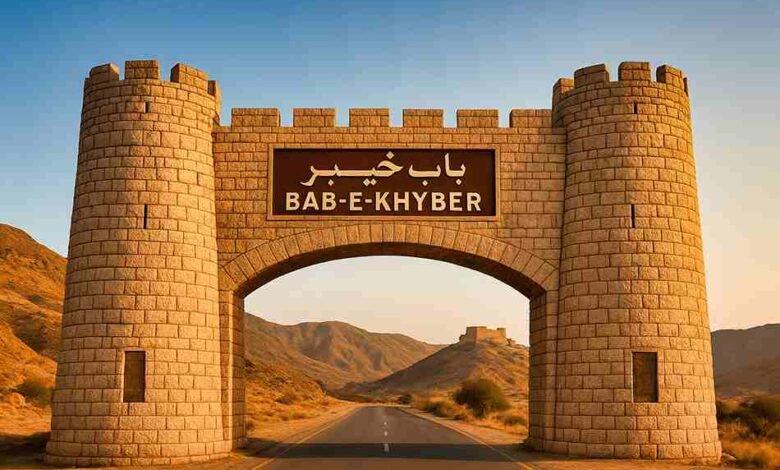
Bab-e-Khyber (also spelled Bab-e-Khayber) is one of Pakistan’s most famous landmarks, standing proudly at the mouth of the historic Khyber Pass in the Khyber Pakhtunkhwa province. Situated near Jamrud, just west of Peshawar, the gate represents a timeless link between the civilizations of South and Central Asia.
Constructed in the early 1960s, this monumental gateway is not just an architectural structure it is a symbol of Pakistan’s cultural heritage and its ancient role as a crossroads of history.
Location: Gateway to the Khyber Pass
Bab-e-Khyber is located in Jamrud town, approximately 18 kilometers west of Peshawar, at the entrance of the Khyber Pass. The pass has been used for thousands of years as a vital trade and military route connecting Pakistan with Afghanistan.
Right beside the gate lies the Jamrud Fort, built in 1837 by the Sikh general Hari Singh Nalwa during the reign of Maharaja Ranjit Singh a reminder of the area’s long military history.
Who Built Bab-e-Khyber and When?
The modern Bab-e-Khyber was constructed and inaugurated in June 1963 during the government of Field Marshal Muhammad Ayub Khan, Pakistan’s then-President.
It was built by the Government of Pakistan as part of national development efforts to highlight the cultural and historical significance of the Khyber Pass.
Since its inauguration, the gate has become a symbol of pride for the Pashtun region and an icon of Pakistan’s northwestern frontier.
Historical Context and Significance
While the structure itself is modern, the Khyber Pass it guards has existed for over 2,000 years as one of the world’s most important mountain routes.
- It served as a gateway for traders, travelers, and conquerors from Alexander the Great and Genghis Khan to the Mughals and the British Empire.
- Through this pass, Silk Road caravans carried goods, ideas, and cultures between Central Asia and South Asia.
- The pass was often referred to as the “Key to the Indian Subcontinent” because whoever controlled it, controlled entry into South Asia.
Thus, Bab-e-Khyber is not only a gateway to the Khyber Pass but also a symbol of centuries of history, struggle, and connection.
Architectural Features
The structure of Bab-e-Khyber is simple yet imposing.
- It features a large central arch, built from stone and cement, representing the strength and resilience of the people of Khyber.
- Traditional motifs and inscriptions adorn the arch, and the name “باب خیبر – Bab-e-Khyber” is prominently displayed.
- The gate stands against the backdrop of rocky hills, offering breathtaking views of the Khyber Pass.
Nearby, a small public area and park allow visitors to take photographs and learn about the region’s rich heritage.
Cultural and National Importance
- Symbol of Heritage: Represents the ancient trade and military routes that shaped South Asian history.
- Tourist Attraction: A must-visit site near Peshawar, attracting tourists, historians, and photographers.
- National Symbol: Featured on Pakistani currency notes and stamps as a mark of national pride.
- Link to Identity: Serves as a reminder of the bravery and hospitality of the Pashtun tribes who inhabit this region.
Visiting Bab-e-Khyber: Travel Information
- Location: Jamrud, near Peshawar, Khyber Pakhtunkhwa, Pakistan.
- Distance: Around 18 km from Peshawar city center.
- Nearby attractions: Jamrud Fort, Peshawar Museum, Qissa Khwani Bazaar.
- Best time to visit: Morning or evening for photography; golden light enhances the landscape.
- Note: Always check local travel advisories before visiting border areas.
Conclusion
Bab-e-Khyber stands as a proud reminder of Pakistan’s rich cultural heritage and the centuries-old stories that echo through the Khyber Pass.
Built in 1963, the gate celebrates Pakistan’s deep historical roots, symbolizing connection, strength, and endurance.
Whether you are a history enthusiast, traveler, or simply exploring Peshawar, a visit to Bab-e-Khyber offers a glimpse into the living history of the subcontinent.