Asaan Karobar Card 2026: Eligibility, Loan Limits, Apply Online

Asaan Karobar Card 2026 is designed for small entrepreneurs in Punjab who need business funding without the burden of conventional interest. Official Punjab government listings describe it as an interest free digital SME card with financing of up to PKR 1 million, meant to help small businesses start, stabilize, and grow through controlled business use. The scheme remains visible on official Punjab portals, and PITB’s recent official messaging around Asaan Karobar Phase II shows that the broader system is still being actively managed through digital channels.
That makes this scheme important for two kinds of readers: people planning to launch a small business, and existing micro entrepreneurs who need working capital but cannot comfortably manage a high markup commercial loan. In practical terms, this card is meant to support real business activity such as stock purchases, supplier payments, government fees, and utility expenses, not open ended personal spending. The structure is digital by design, which helps the government and the lending system keep the money tied to actual business use.
A lot of confusion online starts with the fact that Punjab has promoted both Asaan Karobar Card and Asaan Karobar Finance under the same broader policy umbrella. They are connected, but they are not the same product. The card is the smaller ticket facility for micro and small entrepreneurs, capped at Rs 1 million. The separate finance scheme is aimed at larger SME borrowing and carries a different eligibility structure, including age 25–55 and active FBR filer requirements. If your need is modest, operational, and working capital focused, the card is usually the more relevant scheme to understand first.
Punjab’s own fiscal planning shows that this is part of a wider economic push, not just a one time announcement. The Punjab Finance Department’s FY2025–26 working paper lists CM Punjab Asaan Karobar Finance & Card together with an allocation of Rs 19 billion, which signals that the government sees these programs as meaningful tools for enterprise support. That matters because small business financing works best when it is backed by a sustained policy framework rather than a short lived publicity cycle.
What the Asaan Karobar Card actually is
At its core, the card is a business use financing tool packaged in a simpler form than a conventional SME loan. The official description presents it as a digital card based facility that gives eligible entrepreneurs access to interest free funds, with the expectation that those funds will be used through traceable, structured channels. This makes the scheme easier to supervise and easier to target toward real commercial activity.
That distinction matters. This is not a personal relief grant, and it is not designed as a free spending consumer card. It sits somewhere between a micro enterprise loan and a digitally controlled working capital line. That is why official summaries repeatedly emphasize business related usage, digital submission, verification, and business linked spending rules. For serious applicants, that is actually good news. It means the scheme is meant to reward clear business intent rather than vague borrowing demand.
Card vs Finance scheme: the difference readers should understand
Many applicants search for Asaan Karobar and end up mixing two separate products into one. The card offers up to Rs 1 million through a digital SME card for small entrepreneurs. The finance scheme is larger and more formal, with official Punjab references showing an age range of 25–55 and eligibility tied to active FBR tax filer status, among other conditions.
In simple words, the card is built for smaller needs, easier access, and controlled day to day business usage. The finance scheme is for businesses seeking bigger ticket amounts and can involve more formal underwriting. If someone quotes larger limits, active filer rules, or upper tier finance conditions while discussing the card, they are probably talking about the other product. Knowing that difference can save applicants from preparing the wrong documents or misunderstanding the real eligibility criteria.
Who is eligible in 2026?
The official public eligibility criteria for the card point to a fairly specific applicant profile. The applicant should be a Pakistani national residing in Punjab, with a valid CNIC, a mobile number registered in the applicant’s own name, and an existing or prospective business in Punjab. Official scheme listings also mention a clean credit history, no overdue loans, and a satisfactory credit and psychometric assessment.
The age range publicly surfaced for the card is 21 to 57 years. That is one of the clearest differences between the card and the larger finance scheme, whose official listing shows 25 to 55 years. This makes the card particularly relevant for younger entrepreneurs who may not yet fit the profile for larger formal SME borrowing but still need a structured way to access business capital.
Official listings also indicate that applications are limited to one per individual or business. That may sound like a small rule, but it has a practical implication: applicants should treat the first submission seriously. This is not the sort of process where careless trial and error is a good strategy. A complete, accurate, and well prepared application is much more useful than a rushed one.
Loan limit, tenure, and what interest free really means
The headline figure is straightforward: the card offers financing of up to Rs 1 million. Official sources describe the end user rate as 0%, which is why the scheme has attracted so much interest among small business owners. For entrepreneurs working on thin margins, the difference between a markup bearing loan and an interest free facility can be significant.
But interest free should not be confused with completely free. The official card listing shows a non refundable processing fee of Rs 500. It also lists an annual card fee of Rs 25,000 plus FED, to be recovered from the approved limit, along with additional charges such as life assurance, card issuance, and delivery under the scheme structure. In other words, the financing is subsidized, but the facility still has operating costs that borrowers should factor into their planning from the start.
The public scheme details also point to a 3 year structure with a 3 month grace period after card issuance. After that grace period, the borrower is expected to begin repayment, with official public wording stating a minimum monthly payment of 5% of the outstanding loan balance, principal portion only. That tells you something important about the philosophy of the scheme: it is meant to support enterprise activity, but it is still built around discipline, not casual borrowing.

How the approved amount is released
The card is not designed as an unrestricted lump sum payout. Official scheme language shows that the first 50% of the limit is available for use within the first 6 months, while continued access is tied to usage behavior and repayment performance. That structure encourages applicants to treat the first stage as a proving period rather than a spending rush.
Public scheme summaries also indicate that the second 50% is linked to satisfactory usage, regular repayments, and registration with PRA/FBR. This is one of the most important parts of the program because it reveals the government’s broader objective. The scheme is not only about distributing money. It is also about pushing more small businesses toward formal, traceable economic participation.
For a careful entrepreneur, this staged release can actually work well. A retailer might use the first portion for initial stock, a small food business might use it for equipment and inputs, and a service business might use it for tools, software, or setup costs. If that first phase goes well, the remaining limit becomes a logical expansion step rather than a risky oversupply of capital. That is a more sustainable structure than handing out the full amount without performance signals.
What the card can be used for
Official public descriptions make it clear that the card is intended for business related transactions. Government and media summaries around the launch mention uses such as vendor payments, purchase of raw materials, government fees, taxes, and utility bills. This makes the facility especially relevant for businesses whose day to day survival depends on steady working capital rather than large scale capital expenditure.
The scheme is also controlled in how spending works. Official public wording states that cash withdrawal up to 25% of the limit is allowed for miscellaneous business purposes, while non essential transactions, including personal consumption and entertainment, are blocked. That tells applicants exactly how they should think about the card: it is there to keep a business moving, not to blur the line between commercial finance and personal spending.
This structure can actually help small entrepreneurs build better habits. One of the most common problems in micro businesses is that business cash and household cash get mixed together. Once that happens, it becomes difficult to track stock cycles, plan repayments, or assess whether the business is truly profitable. A controlled card does not solve every problem, but it can reduce that kind of drift.
What applicants should prepare before applying
Even though the process is digital, preparation still matters. Official listings mention digital verification of CNIC, creditworthiness, and business premises, which means applicants should not assume they can fill the form casually and sort out the details later. At minimum, an applicant should have a valid CNIC, a mobile number issued in their own name, and clear, consistent information about the business and its location in Punjab.
It also helps to prepare evidence that the business is real. Since the scheme covers both existing and prospective businesses, applicants do not necessarily need years of operating history, but they do need credibility. That can come from a rental arrangement, workplace details, ownership proof where relevant, utility records, or a clear description of the business model. If your application says the business exists or will operate in Punjab, you should be able to support that claim with clean information.
Another smart step is to review your own financial and identity consistency before you apply. A mismatched SIM, overdue loan history, weak credit behavior, or vague business details can create unnecessary obstacles. Since the official criteria include credit and psychometric assessment, the scheme clearly goes beyond basic form-filling. Applicants should approach it like a real business finance process, even if the interface feels simple.
How to apply online
The public application flow is digital and linked to the official Punjab/PITB managed system. PITB’s official messaging has specifically urged applicants to use the authentic website and pay through a government authorized PSID, which is an important warning in a scheme that is likely to attract fake portals, misleading social media pages, and unofficial helpers.
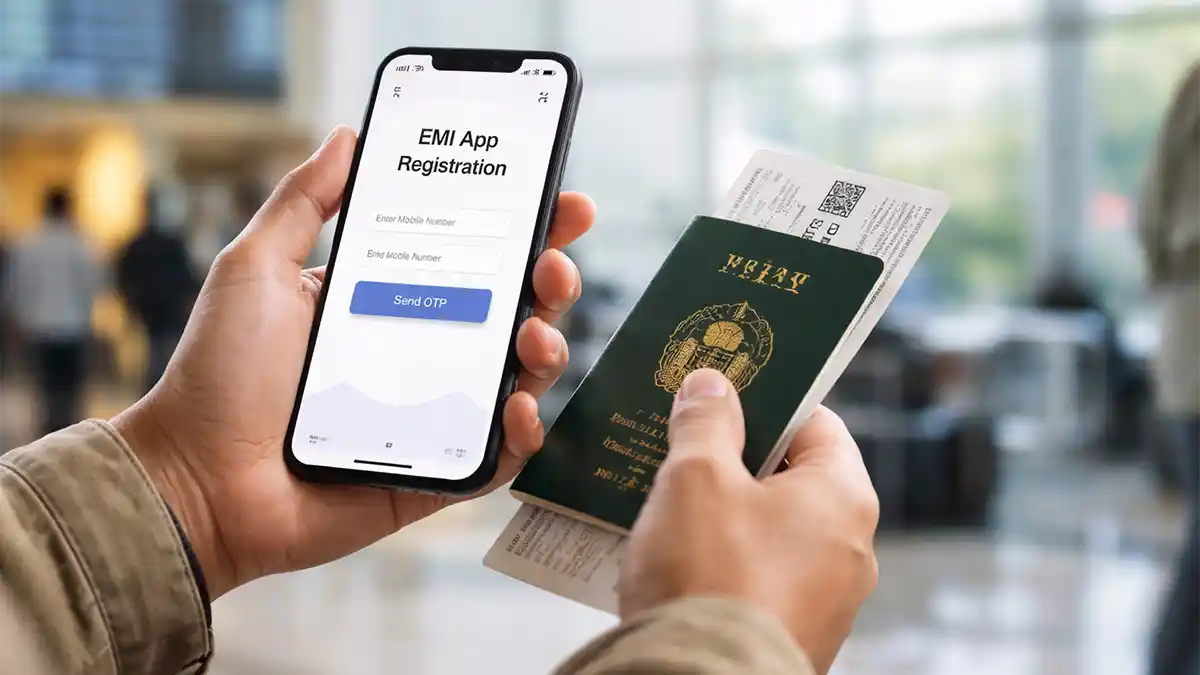
The official registration route publicly referenced for the card is akc.punjab.gov.pk. Public guidance from LCCI’s application explainer also reflects the expected workflow: visit the official portal, click apply, read the instructions carefully, register your account, and then continue through the digital form. While the LCCI explainer is not the primary scheme owner, its step by step outline closely matches the public facing registration process shown around the official portal.
The registration stage typically asks for personal details such as your name, CNIC data, date of birth, and a mobile number issued against your own CNIC. After registration, you log in and move into the business information sections. Those parts generally require accurate details about your business, ownership, location, and related records. The safest approach is to enter every field carefully and save your data properly at each stage rather than racing to final submission.
Once the form is complete, the applicant is expected to pay the Rs 500 non refundable processing fee through the official payment method. PITB’s recent official warning about using a government authorized PSID is especially relevant here. If someone asks you to send money to a personal account, third party wallet, or unofficial agent for approval, that should be treated as a red flag.
After submission, the process moves into verification and assessment. Since official scheme listings mention digital verification of CNIC, creditworthiness, and business premises, applicants should be ready for review rather than assuming approval is automatic. A neat application does not guarantee success, but it does remove many avoidable reasons for delay.

What improves your chances of approval
The strongest applications usually have one thing in common: they are coherent. The applicant’s identity details match the mobile number. The business description makes sense. The location is clear. The intended use of funds is practical and measurable. When an application tells a clean story, it becomes easier for the reviewing system to treat it as a genuine low risk business case.
It also helps if the business need is specific rather than vague. An applicant who says, I need inventory for a neighborhood grocery, supplier payments, and utility support during expansion, sounds more prepared than someone who simply writes, Need funds for business growth. The first explanation shows operational thinking. The second only shows desire. Even in a subsidized scheme, clear business logic usually travels better than emotional urgency. This is a reasoned inference based on the scheme’s emphasis on credit assessment, psychometric review, and business verification.
Formalization matters too. The link between later limit release and PRA/FBR registration shows that the scheme rewards applicants who are willing to move toward documented, compliant business activity. In other words, this program is not just a cash access door. It is also a pathway toward more formal entrepreneurship in Punjab.
Common mistakes to avoid
The first mistake is confusing the card with the separate finance scheme. That confusion leads many applicants to quote the wrong age bracket, wrong document expectations, or the wrong borrowing limits. The second mistake is thinking the card works like unrestricted personal cash. Official wording is clear that the scheme is built around business transactions and that non essential spending is blocked.
The third mistake is focusing only on the interest free headline and ignoring the operating structure. Borrowers still face the Rs 500 processing fee, the annual card fee, and a clear repayment timetable after the grace period. A facility can be subsidized and still require disciplined cash flow planning. That is why borrowers should estimate their monthly repayment ability before they apply, not after the card is approved.
The fourth mistake is trusting unofficial sources too quickly. PITB’s own recent public messaging about the authentic website and government authorized PSID shows that applicants should stay alert. When a scheme becomes popular, imitation pages and misleading intermediaries usually appear alongside it. Using only the official route is the safest way to protect both your money and your data.
Is the scheme worth it?
For the right business, yes. A working capital facility of up to Rs 1 million can make a real difference to a small retailer, service provider, food business, workshop, tailoring unit, repair shop, or home based enterprise moving toward a more formal setup. For businesses like these, access to stock, supplier payments, and operating liquidity often matters more than a large long term loan.
At the same time, the card is not a perfect fit for every business model. A venture that needs major machinery, heavy expansion, or multi location scaling may find the card too small and too tightly controlled. In that case, the separate Asaan Karobar Finance scheme may be more appropriate because it is designed for larger amounts and a different borrower profile.
The biggest strength of the card is that it combines access with discipline. It gives smaller entrepreneurs a more realistic entry point into formal business finance while still protecting the scheme through digital tracking, phased release, repayment rules, and usage restrictions. For many micro and small businesses, that balance may be exactly what makes the program workable.
Quick FAQ
What is the maximum limit under Asaan Karobar Card 2026?
The official Punjab scheme listing describes the card as an interest free digital SME facility of up to Rs 1 million for small entrepreneurs in Punjab.
Is the Asaan Karobar Card really interest free?
Yes, the public scheme summary presents it as 0% for the borrower, but that does not mean zero total cost. The official details also surface a Rs 500 processing fee and an annual card fee of Rs 25,000 + FED, with late payment charges as per bank policy.
Who can apply for Asaan Karobar Card?
Official public eligibility snippets indicate that applicants should generally be Pakistani nationals residing in Punjab, aged about 21 to 57, with a valid CNIC, a mobile number in their own name, a business in Punjab, clean credit history, and satisfactory credit plus psychometric assessment.
Can a new business apply, or only an existing one?
The public eligibility wording mentions existing or prospective business located in Punjab, which means the scheme is not limited only to already established businesses.
How can the card money be used?
Official scheme summaries say the card can be used for vendor and supplier payments, utility bills, government fees, taxes, and digital transactions, while cash withdrawal is capped at up to 25% of the limit for business purposes.
How does repayment work?
Public details indicate a 3 year tenure, a 3-month grace period, and then monthly repayments, with widely surfaced official style summaries noting at least 5% of the outstanding principal portion as the monthly payment benchmark after the grace period.
Is the full amount released at once?
Not necessarily. Officially surfaced details say the first 50% is available within the first 6 months, while the second 50% depends on satisfactory usage, regular repayments, and PRA/FBR registration.
Where should I apply online?
Apply only through the official Punjab/PITB-managed application flow. Recent PITB posts in March 2026 specifically urged applicants to use the authentic website and pay via a government-authorized PSID, which is an important warning against fake portals and unofficial payment requests.
Final verdict
As of March 2026, the Asaan Karobar Card remains one of Punjab’s most relevant small business support tools for entrepreneurs who need manageable, interest free working capital. Official sources continue to present it as a digital SME card with financing of up to Rs 1 million, while related PITB messaging confirms that the digital application ecosystem is still active and being publicly guided through official channels.
The smartest way to approach this scheme is not to see it as free money. It is better understood as a structured business facility for applicants who know what they want to build, how they will use the funds, and how they will repay on time. If you can approach it with that mindset, the card can do more than solve a short term cash problem. It can help move a small business toward more stable and more formal growth.





3 Comments