Saudi Arabia Economy 2026: What’s Changing and Why It Matters
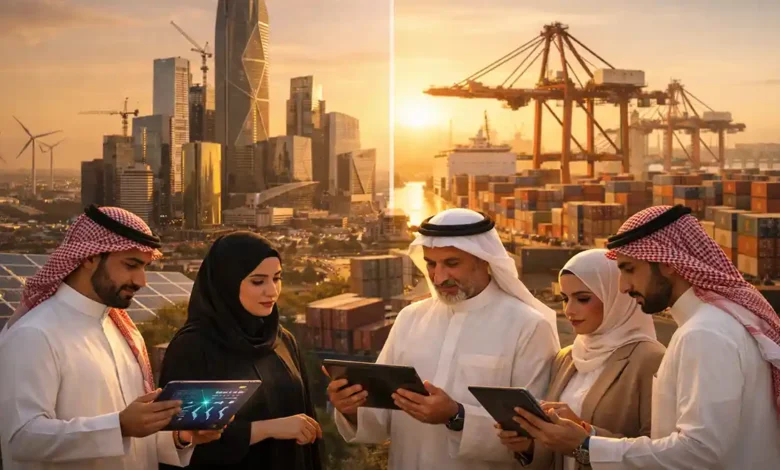
Saudi Arabia economy 2026 isn’t just “oil plus some projects” anymore. By 2026, the Kingdom’s story is increasingly about how fast non-oil engines can scale, how smartly government spending is prioritized, and whether private businesses can turn headline megaprojects into everyday jobs, salaries, exports, and long-term growth.
If you’ve been watching Saudi Arabia over the last few years, you’ve probably noticed two truths happening at the same time:
- The country is still an energy giant, and oil still matters a lot especially for revenues and global influence.
- But the “center of gravity” inside the economy is moving toward non-oil activity: services, tourism, construction, logistics, manufacturing, tech, finance, and entertainment.
And 2026 sits right in the middle of that shift late enough that major reforms are visible on the ground, but early enough that big risks (execution, costs, global demand, oil prices, housing affordability) still shape outcomes.
Let’s break down what’s changing in 2026 and what it means for residents, investors, businesses, and anyone trying to understand where the Kingdom is headed.
1) The 2026 headline: growth is expected to be led by non-oil activity
Saudi Arabia’s own budget planning for FY2026 points to real GDP growth of 4.6%, with non-oil activities described as the engine of economic growth.
That phrasing matters. It signals that the government isn’t relying on a single lever (oil production) to drive the economy forward. Instead, growth expectations are built around domestic demand, investment, and structural reforms.
International institutions broadly support the idea that Saudi growth momentum improves into 2026. The World Bank projects Saudi growth recovering and averaging around 4.6% in 2026–2027, with hydrocarbon GDP boosted as OPEC+ voluntary cuts phase out, while non-oil GDP keeps rising steadily as diversification continues.
Meanwhile, the IMF has highlighted how non-oil sectors have been doing the heavy lifting recently—non-oil real GDP growth reached 4.5% in 2024 (driven by areas like retail, hospitality, and construction), even while oil output was constrained by OPEC+ cuts.
What’s changing in 2026:
Instead of asking “Will oil rise or fall?”, the more useful question becomes:
“How much of Saudi Arabia’s growth can be sustained by non-oil sectors even if oil prices soften?”
That’s a very different kind of economy than the one people remember from a decade ago.
2) Fiscal policy in 2026: a more “planned deficit,” not a panic deficit
A major 2026 shift is how openly Saudi Arabia is managing the fiscal picture: deficits aren’t being treated as failure; they’re being treated as a deliberate choice to finance transformation.
From the FY2026 budget statement:
- Total revenues projected: ~SAR 1,147 bn in FY2026
- Total expenditures projected: ~SAR 1,313 bn in FY2026
- Budget deficit projected: ~SAR 165 bn (3.3% of GDP) in FY2026
And the government also signals a medium-term path, rather than improvising year to year.
Why this matters in 2026:
Saudi Arabia is trying to do something tricky: keep the economy growing fast enough to diversify, while still maintaining fiscal credibility. The budget frames this as a balancing act supporting growth and “giga-project” execution while preserving longer-term discipline.
On the debt side, the FY2026 budget statement projects public debt rising to about SAR 1,622 bn (32.7% of GDP) in FY2026.
That level is still moderate compared with many major economies, but the direction matters because it tells you the transformation is being financed through a mix of revenues, borrowing, and state investment vehicles.
What’s changing in 2026:
The fiscal debate becomes less about “surplus vs deficit” and more about:
- Are projects delivering measurable economic returns?
- Is the spending mix creating private-sector activity?
- Are costs controlled so debt doesn’t rise without payoff?

3) Vision 2030 in “delivery mode,” with more recalibration
By 2026, Vision 2030 is no longer a “plan.” It’s a delivery machine hundreds of programs, targets, procurement pipelines, construction schedules, and policy reforms.
Reuters reported that Saudi officials have described 85% of Vision 2030 targets as completed or on track (as of end-2024), while also noting that parts of the plan face delays and recalibrations, including very large projects like NEOM.
This is a normal pattern for mega-transformations: early years are vision and funding; later years become execution and hard choices.
What’s changing in 2026:
- More prioritization: “Must-do” infrastructure and high-impact sectors get attention.
- More pressure on outcomes: jobs, exports, SME growth, productivity.
- More realism: timelines and scopes may shift to protect economic efficiency.
In plain terms: 2026 is less about announcements and more about whether daily life and business reality reflect the transformation.
4) The non-oil growth model: construction + services + tourism + investment
Saudi Arabia’s non-oil growth has been powered by a predictable mix:
- Construction and real estate development (including giga-project ecosystems)
- Services growth (retail, hospitality, transport, business services)
- Tourism and events
- Investment expansion (public and private)
The IMF’s description of recent growth drivers retail, hospitality, construction reads like a preview of what remains central through 2026.
The tourism factor gets bigger in 2026
Tourism is one of the clearest “non-oil” success stories because you can measure it: visitor numbers, hotel supply, spending, flights, jobs, and new destinations.
Saudi tourism authorities state the Kingdom has moved beyond the earlier goal of 100 million visitors and now targets 150 million visitors by 2030, alongside hosting major global events.
What changes in 2026:
Tourism stops being a “sector” and becomes an economic platform:
- hospitality jobs,
- airline capacity and airports,
- food and retail supply chains,
- local experience businesses,
- entertainment, sports, and festivals,
- regional city development beyond Riyadh and Jeddah.
5) The real estate “tightrope”: growth engine + cost-of-living pressure
Real estate is a growth engine construction activity, investment flows, jobs, and city upgrades.
But it also creates one of the biggest 2026 challenges: housing affordability, especially in fast-growing hubs like Riyadh.
Reuters reported Saudi inflation eased to 1.9% (Nov 2025), with housing rents a key driver; it also noted steps like a cap on rental increases in parts of Riyadh and a law aimed at facilitating foreign property purchases (effective the following year).
What’s changing in 2026:
- The government is more actively managing housing-market side effects of rapid growth.
- Real estate becomes more regulated in practical ways to avoid destabilizing rent shocks.
- Foreign participation frameworks expand but with local market stability in mind.
For businesses, this matters because housing costs shape wages, hiring, and how livable a city feels for talent.
6) Labor market and society: more participation, more productivity questions
A modern economy isn’t just buildings and budgets it’s people.
One of the biggest structural shifts under Vision 2030 has been the expansion of workforce participation, especially among women. Saudi Vision 2030’s official overview highlights the rise in women’s labor force participation from 17% (2017) to 35.4% (Q3 2024).
What changes in 2026:
- The “quantity” phase (bringing more people into the labor market) increasingly gives way to the “quality” phase:
- skills,
- productivity,
- wage growth linked to output,
- private-sector career paths,
- management depth,
- entrepreneurship.
In other words: 2026 is about converting higher participation into higher productivity so growth is not just fast, but sustainable.
7) The oil factor in 2026: still vital, but playing a different role
Oil remains critical for:
- export earnings,
- fiscal space,
- global influence,
- energy investment capacity.
But the economic narrative changes when oil GDP is not the only growth story.
The World Bank expects hydrocarbon GDP to accelerate as production cuts phase out, contributing to stronger overall growth in 2026.
And Saudi budget planning notes oil activities growth tied to the phasing out of additional voluntary cuts.
What changes in 2026:
Oil becomes more like the “stabilizer and financier,” while non-oil becomes the “employment and activity engine.”
That’s a healthier structure if the non-oil side keeps scaling fast enough.
8) PIF and giga-projects: the shift from “build” to “monetize”
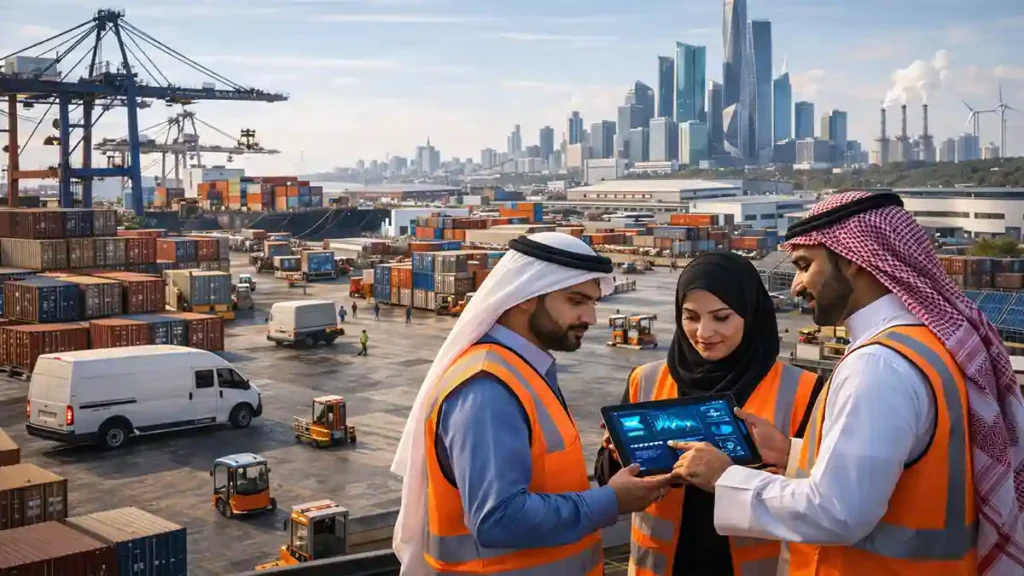
The Public Investment Fund (PIF) and giga-project ecosystems (NEOM, Red Sea, Qiddiya, Diriyah, etc.) are not just construction sites they’re intended to create:
- new cities and destinations,
- new industries,
- new investment platforms,
- exportable services and products,
- long-term revenue streams.
But 2026 is where questions get sharper:
- Which projects generate cash flows sooner?
- Which ones are strategic but long-term?
- Where does private capital come in?
- How do you keep costs and timelines under control?
Reuters has pointed to the reality of recalibration and prioritization within the broader Vision 2030 portfolio.
What’s changing in 2026:
Expect more emphasis on:
- commercial viability,
- phased delivery,
- investor-friendly regulations,
- “anchor assets” that drive surrounding SME ecosystems.
9) Money, prices, and confidence: low inflation helps, but watch rents
Saudi Arabia’s inflation has remained relatively contained compared to many economies. Reuters’ report on inflation easing to 1.9% in Nov 2025 highlights how housing rents are the key pressure point and why policy attention is going there.
What’s changing in 2026:
If inflation stays low, it supports:
- consumer confidence,
- private spending,
- long-term project financing,
- predictable operating costs for businesses.
But if rent inflation accelerates again, it can hit households and employers. That’s why housing policy becomes economically central not just “social.”
10) What all this means in practical terms (jobs, business, and opportunity)
Here’s the simplest way to understand Saudi Arabia economy 2026:
If you’re a job seeker or employee
- Opportunity is expanding beyond government roles into tourism, logistics, retail, tech, construction, finance, and entertainment.
- The winning advantage becomes skills: languages, digital tools, project management, hospitality operations, sales, compliance, data, and customer experience.
If you’re a small business or entrepreneur
2026 is strong for businesses that serve:
- construction ecosystems (supply, fit-out, maintenance, services),
- hospitality and experiences,
- B2B services (HR, accounting, digital marketing, cybersecurity),
- logistics and last-mile delivery,
- food and retail concepts with Saudi localization.
If you’re an investor or analyst
Watch these “signal metrics” more than headlines:
- non-oil GDP growth trend (not one quarter several years),
- fiscal balance path and debt trajectory,
- housing/rent stability and supply response,
- tourism capacity, visitor growth, and spend per visitor,
- the pipeline of privatization and private capital participation.
11) Key risks in 2026 (and why they’re manageable if handled early)
No transformation is smooth. The main risks that shape 2026 include:
- Oil price volatility (still affects revenues and sentiment).
- Project execution risk (timelines, cost overruns, contractor capacity).
- Housing cost pressure (can raise wages and reduce affordability).
- Global demand shocks (tourism, trade, investment flows).
- Skills and productivity gaps (the difference between “jobs created” and “value created”).
The good news is that Saudi policy frameworks increasingly acknowledge these risks and treat them as management problems budget planning, regulation, and sequencing not as surprises.
Conclusion: 2026 is the year the “new Saudi economy” becomes normal
Saudi Arabia isn’t “post-oil” in 2026 and it doesn’t need to be. What’s changing is the structure of growth.
- Growth expectations increasingly rely on non-oil activity.
- Fiscal policy is being used deliberately to finance transformation, with a planned deficit and clear medium-term framing.
- Vision 2030 is in delivery mode, with real progress and real recalibration where needed.
- Tourism and services are turning into durable economic engines, not side stories.
- Housing and rents are now a central economic issue, because success brings pressure.
So when you look at Saudi Arabia economy 2026, the most important shift is this:
The economy is becoming more complex in a good way.
More sectors, more jobs, more private activity, more policy sophistication, and more “real economy” signals you can track.
And that’s exactly what a modern, diversified economy is supposed to look like.





2 Comments