UAE Population 2025: Latest Estimate, Dubai & Expat Share
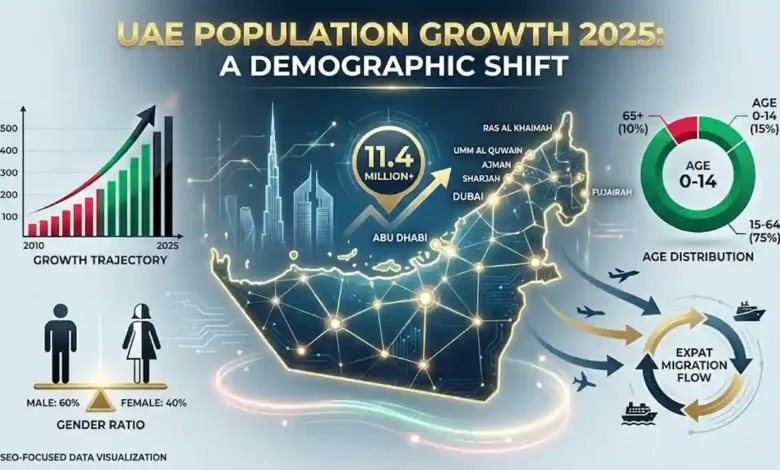
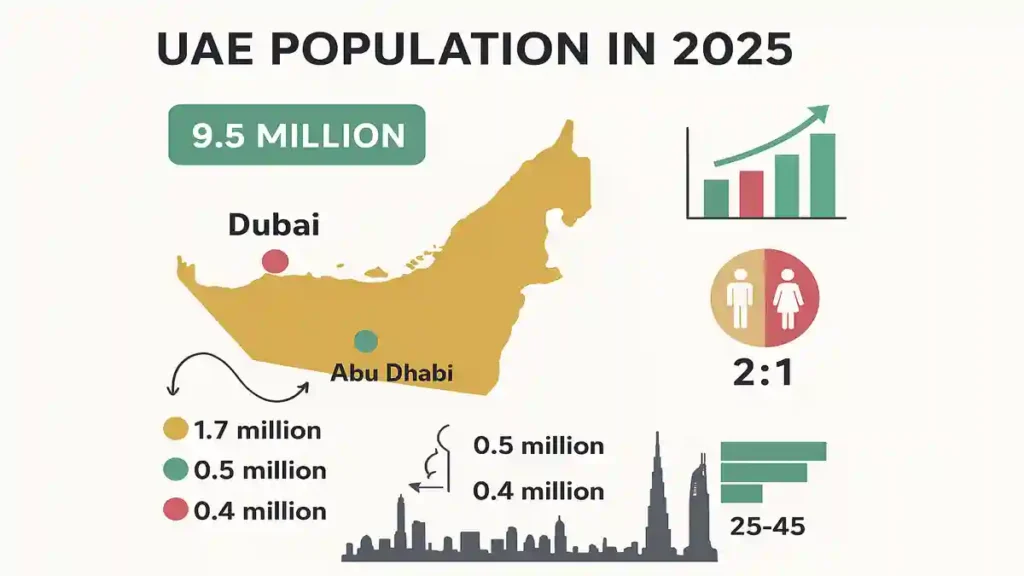
Current Population Overview: The United Arab Emirates (UAE) has experienced significant demographic changes in recent years. As of the latest estimates, the population stands at approximately 9.5 million. This figure reflects steady growth, prompted primarily by a combination of natural increase and robust immigration patterns. The growth rate, which currently hovers around 1.5% annually, illustrates the UAE’s attraction as a global economic hub and a desirable destination for expatriates seeking job opportunities and a high standard of living.
Population distribution among the seven emirates varies widely. The most populous emirate is Dubai, home to roughly 3.5 million residents, followed by Abu Dhabi, which accounts for approximately 2.9 million. These two emirates serve as the primary economic engines of the UAE, drawing in a diverse workforce from around the globe. Sharjah and Ajman follow, with populations of around 1.7 million and 0.5 million, respectively, while the remaining emirates, such as Fujairah, Ras Al Khaimah, and Umm Al Quwain, have smaller populations, each ranging from 0.3 to 0.5 million.
Several factors contribute to this demographic landscape. The UAE’s strategic geographic location, coupled with its robust economy and favorable policies towards skilled labor, continue to attract expatriates. The natural population increase, although present, is modest compared to the influx of immigrants. Recent census data indicates that nearly 88% of the UAE’s population consists of expatriates, underscoring the country’s multicultural character.
In summary, the current population statistics of the UAE highlight its vibrant demographic composition, driven by continued growth and diverse immigration trends, establishing the foundation for future population projections as the nation looks towards 2025.
Projected Population Growth for 2025
The projected population growth of the United Arab Emirates (UAE) for the year 2025 is expected to reflect significant demographic changes and trends. According to various statistical forecasts from demographic experts and government reports, the population of the UAE is anticipated to reach approximately 10 million by 2025. This marks a consistent growth rate that has characterized the nation over the past few decades, driven largely by both expatriate inflow and natural population growth.
One of the key aspects of the UAE’s projected demographic profile is its age distribution. The population is expected to remain predominantly young, with a significant portion of individuals aged between 25 and 45 years. This demographic characteristic is encouraged by the country’s diverse labor market, attracting youth from various parts of the world seeking career opportunities. Additionally, the UAE’s focus on developing sectors such as technology and tourism is anticipated to sustain this youthful demographic, ultimately contributing positively to the country’s economic landscape.
Gender ratios also play a vital role in understanding the population dynamics of the UAE. It is projected that the male population will continue to surpass the female population, a trend commonly attributed to the large number of male expatriates engaged in labor intensive industries. Currently, this imbalance could result in a gender ratio of approximately 2:1 in favor of males, underlining the influence of the labor market on the overall demographic structure.
Moreover, mega events such as Expo 2020 are expected to further influence population growth in the UAE. The exposure and economic opportunities brought about by such events typically attract a surge of visitors, temporary residents, and potential citizens who wish to participate in the ongoing development initiatives. Overall, the projected growth of the UAE population by 2025 is a multifaceted phenomenon shaped by various factors, positioning the nation as a dynamic demographic hub in the Gulf region.
Key Trends Influencing Population Changes
The demographic landscape of the UAE is continuously evolving, shaped by several significant trends that influence the population dynamics of the nation. One of the primary factors contributing to population changes is urbanization. The UAE’s rapid development, particularly in cities like Dubai and Abu Dhabi, has attracted both local and international residents. This urbanization drives a concentration of the population in metropolitan areas, leading to increased demand for housing, social services, and infrastructure.
Another crucial element is the expatriate workforce, which constitutes a substantial portion of the UAE’s demographic composition. The nation’s economy relies heavily on foreign labor, with expatriates accounting for over 80% of the workforce in certain sectors. As industries expand, the demand for skilled labor continues to grow, further influencing migration patterns and population increases. This influx of expatriates not only impacts workforce dynamics but also affects cultural diversity and community structures within the UAE.
Changes in birth and death rates also play a critical role in shaping population trends. Although the UAE has witnessed a stable birth rate, increased access to healthcare and improved living standards have contributed to higher life expectancies. Consequently, the overall population is aging, which presents challenges in terms of healthcare provision and pension systems. Addressing the needs of an increasingly elderly population will require strategic planning and investment in health and social services.
Moreover, policies governing immigration have a profound impact on population changes. The UAE government has implemented various measures to attract talent and promote long term residency options for skilled professionals. These policies not only assist in fuelling economic growth but also impact the demographic profile, resulting in a diverse population mix. As the country gears up for the population projections in 2025, understanding these trends and their implications will be vital for effective planning and sustainable development.
Implications of Population Growth in 2025
The projected population growth in the United Arab Emirates by 2025 is poised to have significant implications across various sectors, including the economy, social structure, and the environment. As the population increases, the demand for labor is expected to rise sharply, necessitating a strategic response from employers and the government alike. The labor market will likely experience an expansion in job opportunities, particularly in sectors such as construction, healthcare, and technology. This demand will require an influx of skilled professionals, prompting further investment in education and vocational training to ensure that the workforce is equipped to meet these challenges.
Healthcare systems will also face increased pressure as the population grows. The UAE government must develop and expand healthcare facilities and services to cater to a larger demographic. This expansion may include enhancing primary care services, increasing the availability of specialized care, and promoting public health initiatives. A robust healthcare infrastructure is crucial for maintaining the well being of the population, mitigating disparities in health outcomes, and ensuring that the increasing population has access to quality medical care.
Education will require a comprehensive reevaluation to address the needs of a growing population. Increased enrollment in schools and universities will challenge existing institutions to expand their capacity while maintaining high educational standards. Initiatives to foster innovation and ensure curriculum relevance in a rapidly changing global landscape will be pivotal in preparing the youth for future employment challenges.
Urban development is another critical area affected by population growth. The rapid influx of residents necessitates meticulous urban planning to avoid overcrowding and inadequate infrastructure. The UAE government is undertaking strategic initiatives to develop sustainable cities that accommodate population expansion. This may include investments in public transportation, housing, and green spaces that promote a better quality of life.
In conclusion, the implications of population growth in the UAE by 2025 are multifaceted, presenting both challenges and opportunities. Addressing these implications requires proactive planning and strategic policy initiatives to ensure that economic, social, and environmental needs are met effectively.
Quick FAQ: UAE Population 2025
What is the UAE population in 2025?
Most recent estimates place it around 11 million+, but the exact figure varies by source and update timing (mid year vs end year).
Why do different websites show different UAE population numbers?
Because some use resident population, others use mid year estimates, and some include short term/temporary residents differently.
Which emirate has the largest population in 2025?
Typically Dubai and Abu Dhabi are the top two, driven by jobs, business hubs, and infrastructure.
What percentage of the UAE population is expatriate?
The UAE remains expat majority, and many estimates put expatriates at roughly 80%+ of the total population.
Is the UAE population still growing in 2025?
Yes, growth is mainly influenced by migration, hiring cycles, new visas/residency policies, and economic expansion.
Why is the UAE gender ratio higher for males?
Because many sectors rely on a male heavy expatriate workforce, which affects overall population balance.
Are UAE nationals a small share of the population?
Yes, citizens are a minority compared to expatriates, although their share can differ depending on the dataset.




What’s the best way to cite UAE population data in an article?
Use one primary source (official or a reputable global dataset), mention the date, and clearly state whether it’s an estimate or official release.

极好的 旅游信息网站, 请继续 保持热情。谢谢! [url=https://iqvel.com/zh-Hans/a/%E7%BE%8E%E5%9B%BD/%E8%BF%AA%E7%B4%8D%E5%88%A9%E5%9C%8B%E5%AE%B6%E5%85%AC%E5%9C%92%E5%92%8C%E4%BF%9D%E7%95%99%E5%8D%80]灰熊麋鹿[/url] 我一直梦想, 去那么多国家。真棒。
Thank you very much for the compliments and comments on the good work.
我经常计划, 能像你们一样多旅行。真的很鼓舞 你们的博客 确实 激励出行。增加文章!
好久没见过, 这么生动的旅行故事。你们最棒。 [url=https://iqvel.com/zh-Hans/country/%E5%B8%8C%E8%85%8A]德爾菲[/url] 确实少有, 如此积极的氛围。谢谢。