Pakistan Weather Alert Guide: Monsoon, Heatwaves, and Safety Tips
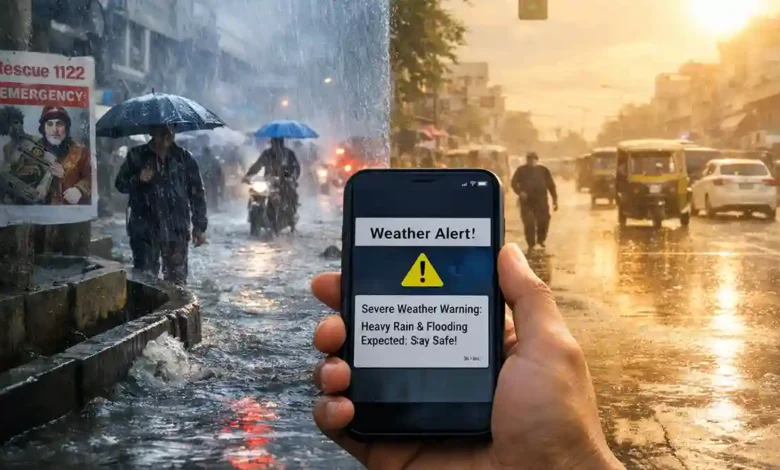
Pakistan Weather Alert Guide, if you only check the weather after the sky turns dark, you’re already late. In Pakistan, monsoon bursts can flood a street in minutes, and heatwaves can turn “normal hot” into a medical emergency without warning. The good news: you don’t need complicated tools to stay safe you need a simple system.
In this guide, you’ll learn how to read PMD weather alerts like a pro, what “advisory” vs “warning” actually means, and exactly what to do before, during, and after monsoon rain or extreme heat. You’ll also get c–p checklists you can use at home, at work, and on the road so you’re not making decisions under pressure.
Quick Safety Checklist: Monsoon + Heatwaves (Save This)
Do this today (10 minutes):
- Bookmark PMD weather alerts and follow NDMA/PDMA updates
- Charge power bank + keep torch/emergency light ready
- Store CNIC/passport/property papers in a waterproof pouch
- Keep 6–8 bottles of clean water (or as available)
- Put ORS sachets + basic first aid in one easy to grab bag
- Clear nearby drain openings (where safe)
When an alert is issued:
- Avoid underpasses, nullahs, and low lying roads
- Don’t drive into standing water you can’t judge
- Reduce outdoor activity in peak heat hours
- Check on elderly neighbors/relatives
After flooding/rain:
- Treat drinking water as unsafe unless boiled/filtered
- Remove standing water to reduce mosquitoes
- Watch for fever/diarrhea signs and act early
Why Weather Alerts Deserve Your Attention (Without Panic)
A good alert habit isn’t fear it’s timing. Alerts give you a head start so you can:
- avoid risky travel windows,
- secure your home,
- protect children and elderly family members,
- and reduce health risks during extreme heat.
Pakistan has experienced extreme weather with large scale impacts, including major flooding events that affected millions and disrupted homes, roads, and services. These events show why preparedness shouldn’t be a one time reaction it needs to be a seasonal routine.
Pakistan’s Main Weather Hazards in Plain English
(1) Monsoon rains and flooding
Monsoon rain is essential for water systems and agriculture, but it can cause:
- Urban flooding (blocked drains, overwhelmed sewerage)
- River flooding (water rising over hours to days)
- Flash floods (fast water surges, especially near hills and nullahs)
- Landslides (common in hilly terrain after continuous rain)
- Post flood health risks (unsafe water, mosquitoes, infections)
(2) Heatwaves
A heatwave is more than “it’s hot.” It can:
- dehydrate the body quickly,
- raise core temperature,
- worsen heart and kidney stress,
- and increase risk for outdoor workers and people without cooling.
(3) Thunderstorms, lightning, hail, and dust storms
These can:
- damage homes, crops, and vehicles,
- cause blackouts,
- increase road accidents,
- and injure people outdoors (especially lightning risk).
(4) Northern risks: landslides and high flow events
In the north, risk increases when:
- intense rain hits steep slopes,
- streams swell suddenly,
- and roads are cut off from medical help and supplies.
Pakistan Weather Alert Guide: Which Sources to Trust
A strong rule: official sources first, social media second.
Reliable sources to follow
- Pakistan Meteorological Department (PMD): forecasts, advisories, and warnings
- NDMA / Provincial Disaster Management Authorities (PDMAs): preparedness guidance, public safety messaging, emergency coordination
The 2 source test before sharing a message
Before forwarding a viral alert:
- Check if PMD or NDMA/PDMA posted something similar
- Confirm via a reputable news outlet
If it fails both, don’t spread it.
This reduces panic and helps people act on real risks.
How to Read Alerts Like a Practical Person
Different agencies use different terms, but the meaning is usually similar:
Advisory
- Conditions may develop.
- Use it to prepare (charge devices, review travel plans, clear drains).
Watch / Outlook
- Risk is rising or likely.
- Use it to adjust plans (avoid hill travel, reschedule outdoor work, check vulnerable relatives).
Warning / Alert
- Hazard is happening or imminent.
- Use it to act now (stay home if advised, avoid underpasses, move valuables higher, follow evacuation instructions).
Alerts are designed to buy you time use that time wisely.
Monsoon Season Safety: Before, During, and After Heavy Rain
First: understand your local monsoon pattern
Monsoon impacts differ by location:
- Karachi/coastal Sindh: urban flooding, power risks, contamination
- Punjab cities: waterlogging, storm winds, drainage overload
- KP/northern areas: flash floods, landslides, swollen streams
- Balochistan: sudden flooding in dry channels, road washouts
The same rainfall amount can be manageable in one area and dangerous in another due to drainage, terrain, and infrastructure.
Before monsoon rain: a simple home setup that pays off
Home checklist (do it once per season)
- Clear gutters, roof outlets, and nearby street drain openings
- Store valuables on higher shelves or in sealed plastic bins
- Waterproof documents (CNICs, passports, property papers) using zip bags
- Charge power banks and keep a torch/emergency light ready
- Store safe drinking water (at least a few bottles)
- Identify a safer room if water enters (upper level or raised area)
Family plan (keep it simple)
- Choose a meeting point near home if mobile networks fail
- Pick one out of area contact everyone can call
- Teach children: never step into moving floodwater
Vehicle readiness (especially in cities)
- Check tire tread and brakes
- Ensure wipers work well
- Keep a mini car kit: water, torch, phone cable, basic tools
During heavy rain: decisions that prevent accidents
(1) Avoid floodwater in streets
Urban floodwater often contains:
- sewage contamination,
- hidden open manholes,
- sharp debris,
- and sometimes electrical leakage near damaged wiring.
(2) Don’t drive into water “to test it”
If you can’t judge depth, don’t enter. Vehicles can stall or get swept.
A practical rule: if water is near the middle of your tire, turn back.
If you can avoid it earlier, even better.
(3) Take electricity seriously
- Avoid touching wet metal gates or exposed wires
- Unplug sensitive devices during severe fluctuation
- If water enters rooms, switch off power from the main only if it’s safe to reach
(4) Follow evacuation or safety instructions
If local authorities advise moving out, treat it as time sensitive. Leaving early is safer than leaving late.
After rain/flooding: the hidden “health phase”
Safe water comes first
- Drink boiled water if you’re unsure
- Use filtration or purification where possible
- Keep children away from puddles and standing water
Mosquito control
Standing water breeds mosquitoes fast:
- empty containers and buckets,
- clear clogged corners,
- cover stored water properly,
- use repellents and nets.
Heatwave Safety: How Heat Harms the Body (and How to Respond)
Heat related illness often starts quietly.




Heat exhaustion vs heat stroke
Heat exhaustion (warning stage)
- heavy sweating, weakness
- headache, dizziness
- nausea
- muscle cramps
What to do: move to shade, sip water/ORS, cool the body with damp cloth and airflow.
Heat stroke (medical emergency)
- confusion, fainting, seizures
- very high body temperature
- hot skin (may be dry or sweaty)
- rapid pulse
What to do: seek urgent medical help and cool the person immediately (water on skin + fan; cold packs to armpits/groin if available).
Who is at higher risk in Pakistan?
- outdoor workers (construction, traffic police, delivery riders, farmers)
- elderly people
- children
- people with heart disease, diabetes, kidney issues
- anyone without ventilation or reliable electricity
Heatwave habits that actually work
(1) Time your day
- Do outdoor tasks early morning if possible
- Reduce exposure in peak heat hours (late morning through afternoon is often the hardest)
(2) Hydration strategy
- Drink regularly; don’t wait for thirst
- ORS helps when sweating heavily
- Limit heavy, oily meals during peak heat (they can feel worse in extreme temperatures)
(3) Clothing and shade
- Light, breathable clothes
- Cap/hat or umbrella under direct sun
- A wet cloth on the neck/wrists can cool quickly
(4) Cooling at home without expensive equipment
- Cross ventilation (open opposite windows when safe)
- Block direct sunlight with curtains
- Use a fan with a damp cloth nearby for extra cooling
- If upper floors trap heat, rest on a cooler level when possible
Heatwave advice for workers and employers
Heat safety is productivity protection:
- short work blocks + scheduled water breaks
- shade breaks at fixed intervals
- buddy checks for confusion or dizziness (confusion is a red flag)
When Monsoon and Heat Hit in the Same Season
Some years bring harsh pre monsoon heat followed by intense rainfall. This “double risk” stresses:
- electricity and cooling systems,
- roads and drainage,
- health services,
- and household budgets.
A better approach is seasonal readiness small preparations repeated each year.
Emergency Kit: Small, Realistic, and Useful
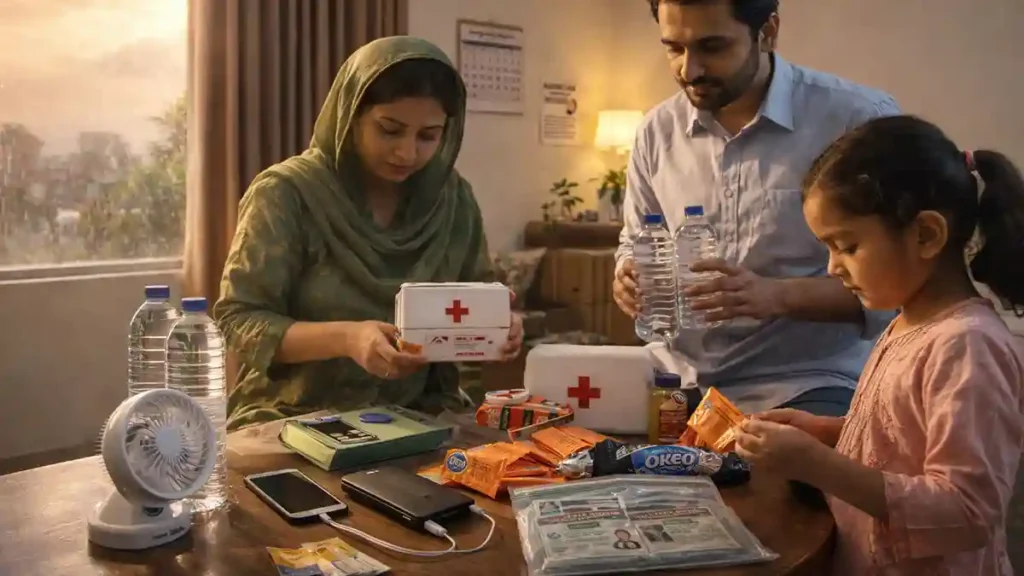
You don’t need a huge backpack. A small go bag works.
Essentials
- copies of CNICs and key papers (waterproofed)
- basic first aid
- ORS sachets and common medicines
- torch + batteries
- power bank + cable
- bottled water + dry snacks
- whistle
- small cash
For families
- baby supplies if needed
- one warm layer (weather can shift fast)
- written emergency contacts (in case the phone dies)
Travel Safety During Monsoon and Heatwaves
Road travel: the highest everyday risk
Avoid:
- hill roads during continuous rain (landslide danger)
- night travel in flood prone districts
- driving through underpasses during storm warnings
If travel is necessary:
- share your route with family
- keep fuel above half
- keep offline maps if network drops
Rail and air travel
Weather delays happen. Prepare calmly:
- keep water and snacks
- keep medicines in carry on
- charge devices before departure
Phone Setup: Turn Alerts Into Action
Do this in 5 minutes:
- bookmark PMD’s official alert/updates page
- follow NDMA/PDMA accounts where available
- create one family “emergency only” group (no spam)
When an alert arrives:
- screenshot the official update
- share a short action message
Example:
“Heavy rain advisory tonight. Charge phones, avoid underpass route, keep kids indoors after sunset.”
Common Mistakes to Avoid
- Waiting for perfect certainty: weather is probability based; act on risk.
- Driving because you’ve done it before: conditions change fast.
- Ignoring heat symptoms: heat illness is medical, not “weakness.”
- Forwarding unverified alerts: misinformation causes panic and bad decisions.
Quick FAQ
What’s the difference between a weather advisory and a warning in Pakistan?
A weather advisory means conditions may develop and you should prepare (charge devices, adjust plans, clear drains). A warning means the hazard is happening or imminent take immediate action, avoid travel, and follow official instructions.
Which weather alerts should I trust in Pakistan?
Start with Pakistan Meteorological Department (PMD) for official forecasts and advisories, then confirm with NDMA/PDMA updates for safety guidance and disaster coordination. Use social media only as a secondary reference.
Is it safe to drive through water during monsoon rain?
It’s risky. Floodwater can hide open manholes, debris, and deep potholes, and vehicles can stall or get swept. If you can’t judge the depth confidently, turn back and choose a safer route.
What are the first signs of heat exhaustion?
Common early signs include heavy sweating, weakness, dizziness, headache, nausea, and muscle cramps. Move to shade, drink water/ORS, and cool the body immediately. If confusion or fainting occurs, treat it as urgent.
What should I keep in an emergency kit for monsoon and heatwaves?
Keep it small and practical: waterproofed document copies, torch, power bank, first aid, ORS sachets, essential medicines, bottled water, dry snacks, a whistle, and some cash.
How can I make my home safer before heavy rain?
Clear gutters and nearby drain openings (where safe), lift valuables higher, waterproof important documents, charge backup power, store clean water, and identify a safer area (upper level/raised room) if water enters.
What should I do after flooding to avoid illness?
Use boiled/filtered water, wash hands carefully, keep children away from puddles, and remove standing water to reduce mosquitoes. If you notice fever, vomiting, or diarrhea seek help early.
Are heatwaves getting worse in Pakistan?
Many experts link rising frequency and intensity of extreme heat and heavy rainfall to broader climate stress. Regardless of the cause, the practical response is the same: follow alerts, reduce exposure, and prepare early.
What is the Pakistan Weather Alert Guide?
The Pakistan Weather Alert Guide is a simple, step by step approach to understanding official weather alerts (especially monsoon and heatwave warnings) and taking practical actions to stay safe at home, on the road, and at work.
Conclusion
Pakistan’s weather doesn’t always give you time to think so your best protection is a simple routine. Treat every major PMD weather alert as a decision tool, not a headline. When monsoon warnings arrive, stay off flooded routes, avoid underpasses and nullahs, and prioritize electricity and clean water safety. When heatwave conditions build, reduce outdoor exposure, hydrate on schedule, and cool the body early because heat illness can turn serious faster than people expect.
If you follow one rule from this Pakistan Weather Alert Guide, make it this: prepare before the peak hits. Charge devices, waterproof documents, keep ORS and clean water ready, and check on children and elderly relatives. Weather extremes may not be fully controllable, but your response can be and that’s what keeps families safe.
Save This: 60 Second Alert Response
- Advisory: Prep (charge, water, ORS, drains, plan route)
- Watch/Outlook: Adjust plans (avoid travel, secure home, check relatives)
- Warning: Act now (stay home if advised, avoid risky roads, follow official instructions)





2 Comments