Pakistan National Dress: History, Meaning, and How the World Sees It
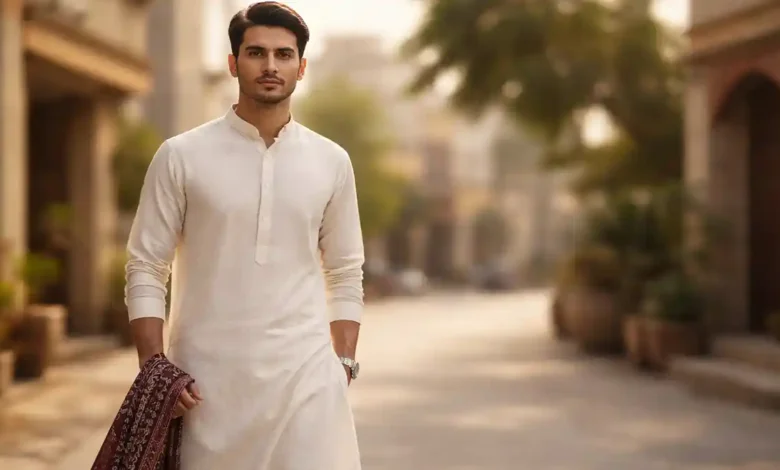
Pakistan national dress is usually described in one phrase: shalwar kameez. But reducing it to a label misses the real story. This outfit isn’t just traditional clothing. It’s a living part of daily life worn in markets, offices, universities, weddings, and state ceremonies. It carries identity without shouting, and it adapts without losing its shape.
In Pakistan, what you wear often communicates where you come from, what you respect, and how you want to be seen. The national dress does all of that while staying practical. It’s comfortable in heat, suitable for formal settings, and flexible enough to reflect regional culture. This is why it has lasted through decades of changing trends: it solves real needs and represents something deeper than style.
1. What Is Pakistan’s National Dress?
Pakistan’s national dress is widely recognized as the shalwar kameez a combination built around ease, modesty, and movement:
- Shalwar: loose trousers, typically gathered at the waist and narrowing at the ankle
- Kameez: a long tunic with side slits that allow comfortable walking and sitting
- Dupatta (commonly for women): a scarf or shawl used for modesty, etiquette, or styling
It’s also important to understand that national dress doesn’t mean a single, fixed uniform. The silhouette stays familiar, but the details change by region, season, and occasion. A simple cotton shalwar kameez for daytime wear and an embroidered formal outfit for a wedding can belong to the same tradition while looking entirely different.
2. How Did It Become National?
The shalwar kameez has deep roots across South and Central Asia. Pakistan did not invent it in a single moment. Instead, the outfit gradually became a national symbol because it worked across Pakistan’s diversity.
After independence, Pakistan needed cultural markers that could unify without erasing provincial identity. The shalwar kameez fit the moment for several reasons:
- It was already familiar in many communities
- It aligned with cultural preferences for modest clothing
- It was suitable for different climates and routines
- It allowed regional expression through textiles and craft
Over time, it became more than daily wear. It became a public language of identity: recognizable, respectable, and widely shared.
3. History: Practical Origins, Cultural Evolution
Clothing history is rarely a straight line. The national dress evolved through centuries of influence especially from courtly styles and regional textile traditions. The key point is simple: it became common because it was useful.
Pakistan’s climate ranges from humid coastal heat to mountain winters. A clothing system that can be layered, stitched in different fabrics, and adjusted for seasons naturally survives. That adaptability explains why the national dress remains relevant today.
4. The Outfit’s Hidden Architecture: Why Small Details Matter
At first glance, the shalwar kameez looks uncomplicated. In reality, it’s full of design choices that shape meaning and appearance.
Shalwar variations
- Roomy shalwar: relaxed, traditional, ideal for everyday movement
- Straight trouser cut: more urban, office ready, modern profile
- Tapered styles: sharper silhouette, often favored by younger wearers
Kameez variations
The tunic carries most of the personality. The effect changes with:
- collar and neckline design
- sleeve structure
- hem length
- side slit height
- fabric weight and drape
- embroidery placement
Dupatta: function and expression
The dupatta can signal many things depending on setting:
- cultural etiquette in formal gatherings
- personal modesty in religious spaces
- stylistic balance in fashion forward looks
These details are why the national dress can look minimalist in one context and ceremonial in another.
5. Regional Identity Within a National Silhouette
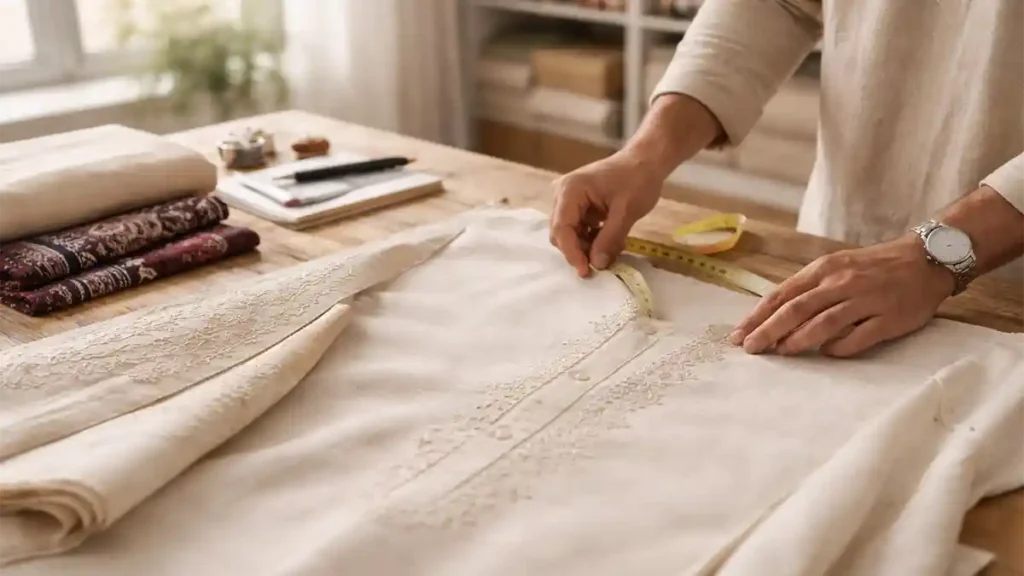
Pakistan is not culturally flat. One of the reasons the national dress works is that it leaves room for regional identity.
Punjab: everyday confidence and clean tailoring
Punjabi styling often emphasizes practicality and a crisp finish, especially in cities where tailoring tends to be sharper.
Sindh: bold heritage through patterns and ajrak culture
Sindh is strongly associated with ajrak and block printed traditions. Even when the base outfit is simple, Sindhi textiles can turn it into a statement.
Khyber Pakhtunkhwa: structure, layering, and classic accessories
KP styling frequently includes waistcoats, sturdy footwear, and cuts designed for active daily routines.
Balochistan: embroidery as tradition, not decoration
Balochi clothing especially for women can feature dense embroidery that reflects heritage and community identity.
Gilgit Baltistan and AJK: climate driven layering
In colder regions, heavier fabrics and outer layers are common, but the national silhouette remains recognizable.
This blend unity without uniformity is a major strength of Pakistan’s national dress.
6. Formal National Style: Sherwani and State Presentation
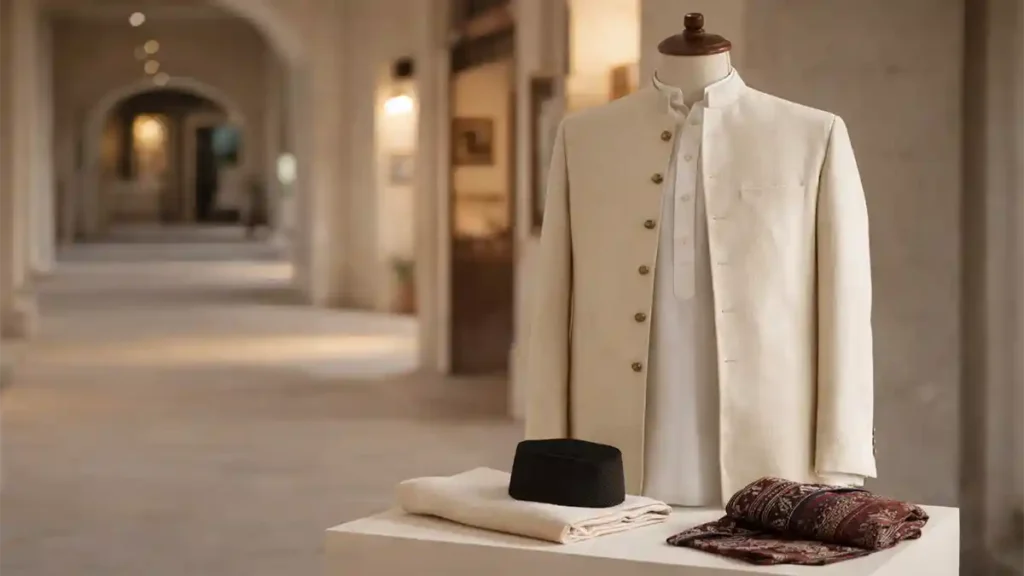
While shalwar kameez dominates daily life, sherwani represents formality and ceremony. It’s often chosen for weddings, national celebrations, and high status events because it carries a dignified presence.
Pakistan’s early political history also shaped how traditional clothing was used publicly. Leaders often leaned into local dress as a statement of identity and independence especially in contexts where Western suits were treated as default official attire.
The result is a layered national wardrobe:
- shalwar kameez as everyday national identity
- sherwani as ceremonial national formality
7. What Pakistan’s National Dress Means Inside the Country
The national dress carries meaning even when no one says it out loud.

(1) Belonging
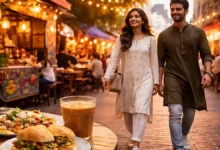
For many, wearing shalwar kameez signals cultural connection an everyday reminder of where you belong.
(2) Respectability
In Pakistan, the outfit is widely seen as appropriate across settings: family gatherings, schools, work, and religious spaces.
(3) Comfort without sacrificing dignity
It allows movement and breathing room while still looking composed.
(4) A social equalizer in shape
People from different backgrounds can wear the same silhouette. Status tends to show through fabric quality and tailoring rather than the base design itself.
This is part of its quiet power: it feels normal while carrying national symbolism.
8. Modern Evolution: From Daily Wear to Fashion Industry
Pakistan’s fashion culture didn’t replace the national dress it redesigned it.
City styling
Urban versions often feature:
- slimmer cuts
- neutral color palettes
- structured shoulders and collars
- trousers replacing very wide shalwars
Formal styling
In formalwear, the same silhouette becomes a canvas for:
- heavy embroidery
- premium textiles
- crafted dupatta drapes
- statement jewelry and accessories
Social media influence
Digital culture accelerated experimentation:
- seasonal trends in colors and prints
- styling tutorials for dupattas
- fusion looks combining tradition with modern footwear and outerwear
The result is a national dress that feels current without losing its cultural foundation.
9. How the World Sees It: Admiration, Curiosity, and Misreading
International perception depends on context.
(A) Cultural respect and diplomacy
When global figures wear local styles during visits, it is often interpreted as a gesture of respect. It also increases global awareness of the silhouette.
(B) Fashion interpretation
Outside Pakistan, the shalwar kameez is frequently viewed through the lens of modest fashion and comfort forward design. In many fashion circles, it’s appreciated for elegance and versatility.
(C) Stereotypes and politicization
In some environments, South Asian and Muslim clothing can be unfairly reduced to assumptions. This isn’t about the outfit’s design it’s about the viewer’s bias. When people treat traditional clothing as a political statement, they miss what it actually is: a practical cultural form.
(D) Diaspora meaning
For Pakistanis abroad, the national dress can feel like home. It appears in weddings, Eid gatherings, and cultural events, and sometimes becomes part of identity negotiation when to blend in, when to be visible, and when to celebrate heritage openly.
10. Misconceptions That Deserve Correction
It’s one fixed look.
Not true. The silhouette is shared, but the styling varies widely by region and occasion.
It’s only religious.
It can be connected to modesty, but it’s also cultural, practical, and aesthetic.
It’s outdated.
The national dress evolves constantly through tailoring, fabric innovation, and fashion cycles.
11. Wearing It Well: A Practical Style Guide
If the goal is a sharp look, three factors matter most:
Fit
- clean shoulders
- sleeves that sit properly
- kameez length appropriate to the event
- balanced trouser volume
Fabric choice
- breathable fabrics for heat
- heavier weaves for winter
- textured or embroidered fabrics for formal events
Styling
- waistcoats add structure to men’s looks
- dupatta draping changes the entire outfit’s tone
- footwear and accessories can elevate the simplest outfit
Good shalwar kameez style is rarely about being flashy it’s about looking intentional.
12. The Future: Why Pakistan’s National Dress Will Keep Winning
This is not a trend that will disappear. It’s a foundation.
The national dress will likely grow through:
- stronger artisan branding (embroidery, block printing, heritage motifs)
- more sustainable textile interest
- wider global demand through diaspora markets and e-commerce
- ongoing fusion styling that keeps it relevant for younger audiences
Its advantage is structural: it meets practical needs while carrying cultural meaning.
Quick FAQ
What is Pakistan’s national dress?
Pakistan’s national dress is widely identified as the shalwar kameez, worn across the country by men and women.
Why did shalwar kameez become a national symbol?
Because it’s practical, modest, widely worn across provinces, and adaptable making it a unifying outfit in a diverse nation.
Is shalwar kameez only traditional, or is it modern too?
Both. The base remains traditional, but cuts, fabrics, and styling change constantly especially in cities and formal fashion.
What’s the difference between shalwar kameez and sherwani?
Shalwar kameez is the everyday base outfit; sherwani is a more formal overgarment often worn on ceremonial occasions.
What does the dupatta represent?
It can represent modesty, cultural etiquette, elegance, or simply fashion depending on the person and the setting.
How does the world recognize Pakistan’s national dress?
International media often describes the silhouette as distinctive and culturally significant sometimes highlighted during diplomatic visits and public appearances.
Are regional outfits separate from the national dress?
Not really. Most regions express identity through fabrics, embroidery, and styling while staying within the national silhouette.
Is wearing shalwar kameez abroad seen as standing out?
It can be depending on the country and context. For many in the diaspora, it’s also a proud, intentional way to keep culture visible and alive.
Conclusion: A Living Symbol, Not a Museum Piece
Pakistan’s national dress survives because it does two things at once: it works in everyday life, and it represents something people care about. It reflects modesty and confidence, comfort and respectability, tradition and reinvention.
The shalwar kameez isn’t just what Pakistan wears it’s one of the ways Pakistan explains itself. And when the world sees it, the best interpretations recognize what Pakistanis already know: this outfit is not frozen in history. It’s alive, evolving, and still central to national identity.