Pakistan Economy Explained: What’s Driving Prices, Jobs, and Growth
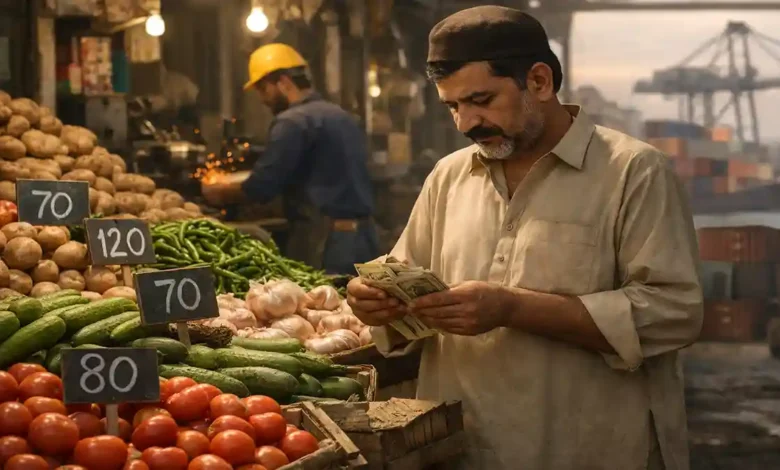
Pakistan economy explained in plain language means answering three everyday questions: Why is everything getting expensive? Why are jobs hard to find (or not paying enough)? And what actually makes the country grow? The headlines can feel confusing: one month inflation eases, another month electricity bills jump; the rupee stabilizes, then import costs rise again; interest rates fall, but business still complains about slow demand.
This guide connects the dots without jargon. You’ll learn how Pakistan’s “price machine” works, what shapes hiring and wages, and why growth often comes in waves strong in some years, fragile in others. We’ll also use recent official updates on inflation, GDP growth, monetary policy, and external accounts to ground the story in real numbers.
Table of Contents
- A quick snapshot of where the economy stands
- The price story: what’s behind inflation
- Interest rates and the SBP: why borrowing gets cheaper or costlier
- Jobs and wages: what’s really happening in the labor market
- Growth: what expands GDP in Pakistan (and what holds it back)
- The rupee and dollars: trade, remittances, and the current account
- Energy and taxes: why bills and budgets shape everything
- What could realistically improve prices, jobs, and growth
- A simple “dashboard” to track Pakistan’s economy
- Conclusion + key takeaways
- FAQs
1) A Quick Snapshot: Where Pakistan’s Economy Stands
Let’s start with a basic map. Pakistan’s economy is usually discussed in fiscal years (FY), which run July to June.
Growth (GDP)
Pakistan’s real GDP growth was reported at 2.68% in FY2025 in the official Economic Survey highlights. That’s positive but it’s also the kind of “slow-to-moderate” growth that doesn’t always create enough jobs for a rapidly growing working-age population.
Inflation (Prices)
Inflation has come down a lot from the peak period, but price pressure still shows up especially in food and administered energy prices (electricity/gas). For example, Pakistan Bureau of Statistics (PBS) CPI releases in 2025 show monthly increases and detailed category moves (food, transport, housing, etc.).
Interest rates (Borrowing costs)
In December 2025, the State Bank of Pakistan (SBP) cut the policy rate to 10.5% (effective Dec 16, 2025), highlighting that inflation averaged within the SBP’s target range during July–November FY26, though core inflation remained sticky.
IMF program and reforms
Pakistan’s macro story in 2024–2025 is closely tied to stabilization and reforms under IMF arrangements, with the IMF emphasizing ongoing reforms especially in the energy sector to sustain stability and competitiveness.
External balance (dollars coming in vs going out)
Pakistan’s external position improved notably in FY25, including a current account surplus (a major shift from prior deficits). SBP balance of payments reporting shows the swing in the current account balance between FY24 and FY25.
Jobs (Labor market)
Official labor force survey reporting and related government releases in late 2025 point to unemployment estimates around 6.9% for 2024–25, with youth unemployment higher an important clue about why “the economy” can improve while households still feel stress.
So the economy is not one simple thing. It’s a bundle of moving parts and the three you feel daily are prices, jobs, and growth.
2) The Price Story: What’s Behind Inflation in Pakistan?
Inflation sounds technical, but you already understand it. If your grocery bill jumps while your income doesn’t, that’s inflation in real life.
In Pakistan, inflation usually comes from five big channels:
A) Food prices and supply shocks
Food is a huge share of household spending, and Pakistan’s food prices can swing quickly because of:
- seasonal changes (vegetables, wheat flour dynamics)
- transport costs
- storage and middlemen structures
- weather impacts and crop outcomes
PBS CPI reporting regularly shows how much food categories contribute to monthly and yearly inflation.
Why this matters: even if “headline inflation” looks moderate, a spike in onions, tomatoes, wheat flour, cooking oil, or milk can make people feel like inflation is still “out of control.”
B) Energy prices (electricity, gas, fuel)
Energy is the economy’s bloodstream. When electricity tariffs rise, it hits:
- households (higher monthly bills)
- businesses (higher cost per unit produced)
- services (shops, transport, cold storage, hospitals)
IMF communications and Pakistani policy discussions repeatedly flag the need for energy sector reforms because inefficiencies and circular debt pressures
keep pushing the system toward higher costs.
Simple example: if a bakery’s electricity and gas costs rise, it doesn’t just hurt the bakery it shows up in bread prices.
C) The rupee–dollar link (imported inflation)
Pakistan imports fuel, machinery, chemicals, palm oil, and many industrial inputs. When the rupee weakens, imported items get costlier in rupees even if global prices stay the same.
That imported cost then spreads through the economy:
- fuel → transport → food distribution
- machinery parts → manufacturing costs
- chemicals → agriculture yields and textile processing
This is why people watch the rupee like a scoreboard.
D) Taxes and administered prices
Sometimes inflation isn’t “market-driven” it’s policy-driven:
- sales taxes
- duties on imports
- revisions in regulated prices
- changes in electricity surcharges and tariffs
These can move the consumer basket quickly, especially for energy and transport-related items.
E) Expectations and “inflation psychology”
If businesses expect costs to rise next month, they often raise prices early. If workers expect prices to rise, they push for wage increases. That cycle can become self-reinforcing.
This is one reason central banks care about credibility: when people believe inflation will fall, pricing behavior calms down.

3) Interest Rates and the SBP: Why Borrowing Gets Cheaper or Costlier
Pakistan Economy Explained in one sentence:
Prices are heavily influenced by how easy or expensive it is to borrow money and SBP controls the “master switch” through the policy rate.
The SBP policy rate affects:
- bank lending rates (business loans, car loans)
- investment appetite
- consumer demand (how much people buy on credit)
- exchange rate pressures (capital flows, dollar demand)
In December 2025, SBP reduced the policy rate to 10.5%, noting inflation stayed within the 5–7% target range on average in early FY26, while core inflation remained sticky.
How rate cuts help (and why they don’t “magically fix” things)
When rates fall:
- businesses can borrow a bit cheaper
- government debt servicing pressure can ease over time
- investment projects become more attractive
But rate cuts don’t instantly create jobs if:
- electricity costs remain high
- demand is weak
- policy uncertainty is high
- export competitiveness is constrained
Also, the IMF has cautioned (via reporting and program context) about the importance of keeping policy data-driven so inflation expectations and external buffers stay stable.
4) Jobs and Wages: What’s Really Happening in the Labor Market?
If you ask households what the economy feels like, many won’t talk about GDP. They’ll talk about:
- job availability
- salary growth vs prices
- “connections” vs merit
- side hustles and informal work
A) Pakistan has a “youth bulge” pressure cooker
A large number of young people enter the job market every year. That’s not automatically bad youth can be an advantage but only if the economy creates enough productive jobs.
Recent official labor force survey reporting and public briefings point to unemployment estimates around 6.9% (2024–25), with youth unemployment higher than the overall rate.
B) The hidden reality: underemployment and informality
Even when unemployment isn’t extremely high on paper, people may be:
- working fewer hours than they want
- stuck in low-productivity jobs
- earning wages that don’t match living costs
- working informally with no social protection
This is why the “jobs crisis” can feel bigger than one number.
C) Where jobs actually come from in Pakistan
Most jobs are created in:
- Agriculture and livestock (directly and through supply chains)
- Services (retail, transport, trade, private education, healthcare)
- Small and medium enterprises (SMEs)
Large factories matter a lot for exports and productivity, but SMEs and services often absorb more workers.
D) Case study: textiles big employer, big constraint
Textiles and apparel are central to exports and jobs, but they’re highly sensitive to:
- energy tariffs and outages
- global demand cycles
- exchange rate stability
- availability of working capital
When energy prices rise and financing is expensive, hiring slows even if the sector remains strategically important.
E) A newer jobs engine: IT, freelancing, and services exports
Pakistan’s tech talent and freelance market have created real income streams, especially for young people. But scaling this requires:
- stable internet infrastructure
- easier payments and invoicing
- predictable tax and regulatory frameworks
- skills development at scale
This is one of Pakistan’s most realistic “job multipliers” if policy supports it consistently.
5) Growth: What Expands GDP in Pakistan (and What Holds It Back)
Pakistan’s official data shows 2.68% real GDP growth in FY2025.
But what actually drives growth?
A) Three engines of growth
- Consumption (what households spend)
- Investment (factories, machines, construction, technology)
- Net exports (exports minus imports)
Pakistan often grows when consumption rises but consumption-driven growth can be fragile if it fuels imports and external deficits.
B) Why investment is the “quality growth” lever
Investment raises productivity: better machines, better logistics, better skills. That creates:
- more output per worker
- more competitive exports
- higher wages over time
Pakistan’s investment has historically been constrained by:
- high financing costs (interest rates)
- energy bottlenecks
- policy uncertainty
- narrow tax base and fiscal stress
C) Agriculture: big base, big volatility
Agriculture supports livelihoods and feeds the country, but it’s vulnerable to:
- water issues
- climate variability
- input costs (fertilizer, diesel)
- crop support pricing and procurement decisions
When crops do well, growth looks better; when they don’t, rural incomes suffer, and food inflation rises.
D) The stabilization link: growth improves when the “macro” calms down
When the current account is manageable and inflation is lower, the economy can breathe. SBP’s reporting shows an improved external position in FY25, including a current account surplus compared with prior deficits.
That kind of stabilization can:
- reduce panic buying of dollars
- make imports more predictable
- encourage businesses to plan longer-term
But stabilization is only step one. Step two is structural change especially in energy and taxation.

6) The Rupee and Dollars: Trade, Remittances, and the Current Account
A practical way to understand Pakistan’s economy is to see it as a household that needs dollars to pay certain bills (imports, debt payments). Dollars mainly come from:
A) Exports
Textiles, rice, services, and other goods bring in dollars but export growth requires competitiveness (energy cost, productivity, logistics).
B) Remittances
Workers abroad send money home, supporting families and stabilizing external accounts. SBP releases regularly report remittance inflows (for example, June 2025 remittances were reported at $3.4 billion, up year-on-year in SBP’s release).
Remittance sources often include Gulf countries, the UK, and the US making Gulf labor market trends very relevant for Pakistani households.
C) The current account (a key scoreboard)
SBP’s balance of payments summary tables show how the current account shifted across fiscal years and months reflecting changes in imports, exports, and income flows.
Why you should care:
When the current account is deeply negative, Pakistan tends to face currency pressure. When it improves, the rupee often stabilizes, and inflation pressure can ease.
7) Energy and Taxes: Why Bills and Budgets Shape Everything
If you want one “master explanation” for repeated price stress and slow job creation, look at two systems:
A) The energy system
Pakistan’s power sector challenges show up as:
- high tariffs
- circular debt
- losses in distribution
- subsidy debates
- periodic reform pushes under IMF-linked frameworks
IMF messaging emphasizes that energy reforms are critical to competitiveness and sustainability.
And domestic reporting in late 2025 highlighted policy steps and subsidies tied to keeping circular debt within agreed limits.
Economic impact:
High electricity costs are like a hidden tax on every product especially locally manufactured goods.
B) The tax system and fiscal pressure
Pakistan’s tax base has historically been narrow relative to spending needs. When revenues lag:
- borrowing increases
- debt servicing rises
- development spending gets squeezed
- inflation can worsen if financing becomes unstable
A healthier tax system can reduce “emergency economics” and create room for long-term planning exactly what businesses need to hire.
8) What Could Realistically Improve Prices, Jobs, and Growth?
Here’s the honest version: there’s no single magic policy. But there are high-impact moves that consistently show up in serious reform discussions.
1) Make energy cheaper and more reliable (without hiding costs)
This is about:
- reducing line losses
- improving collections
- modernizing distribution
- competitive power markets where feasible
- targeted subsidies (supporting vulnerable households, not blanket distortion)
This matters for inflation and jobs because it lowers business costs.
2) Build an export-and-investment playbook (not just slogans)
Pakistan needs more firms that can:
- produce at scale
- meet global compliance standards
- move goods fast through ports and borders
- keep input costs predictable
Export growth creates jobs that are less fragile than consumption booms.
3) Skill development tied to real hiring
Generic training doesn’t work. Programs must connect training → internships → hiring in:
- IT and services
- construction and technical trades
- healthcare support roles
- logistics and warehousing
- modern retail and e-commerce
4) Keep macro policy predictable
When businesses can’t predict taxes, import rules, or the exchange rate regime, they delay investment. Predictability is underrated and it’s a job creator.
5) Strengthen social protection and productivity together
Helping vulnerable households through targeted cash transfers or subsidies can reduce the political pressure that often derails reforms while productivity reforms make those protections affordable.
9) A Simple “Dashboard” to Track Pakistan’s Economy
If you want to read the economy like a pro (without being an economist), track these:
- Inflation (CPI) – especially food and energy baskets
- SBP policy rate – signals credit conditions
- Current account – pressure or relief on the rupee
- Remittances – household support + dollar supply
- Exports and imports – competitiveness and demand
- GDP growth – the broad pace of expansion
- Unemployment / youth indicators – job stress signals
Track these monthly or quarterly and you’ll understand most “economic drama” before it hits your wallet.
Conclusion: The Real Story Behind Prices, Jobs, and Growth
Pakistan’s economy is often described like it’s a mystery. It’s not. It’s a system with clear cause-and-effect:
- Prices rise when food and energy costs spike, when the rupee weakens, when taxes and administered tariffs change, and when expectations get unanchored.
- Jobs struggle when investment is low, energy is expensive, skills don’t match market needs, and businesses can’t plan confidently especially with a large youth population entering the workforce.
- Growth improves when macro stability returns (lower inflation, steadier external accounts) and when reforms reduce structural costs particularly in energy and fiscal systems.
The hopeful takeaway is this: Pakistan has powerful strengths entrepreneurial SMEs, a large workforce, a strategic location, and strong remittance links. But turning those strengths into broad prosperity requires staying consistent on fundamentals: competitive energy, predictable policy, export capacity, and job-linked skills.
If you remember one line, remember this: stability makes growth possible but reforms make growth durable.
FAQs
1) Why do prices rise even when inflation “falls”?
Because inflation is a rate of change. Prices can keep rising, just more slowly. Also, food and electricity costs can still jump even if overall inflation cools.
2) Does an SBP rate cut immediately create jobs?
Not immediately. It can support investment over time, but job creation also depends on energy costs, demand, and business confidence.
3) Why is the rupee so important for inflation?
A weaker rupee makes imports (fuel, machinery, edible oil, inputs) costlier in rupees, and those costs spread through the economy.
4) How do remittances help the economy?
They support household spending and add dollars to the system, easing external pressure and often supporting currency stability.
5) What’s one reform that helps both prices and jobs?
Energy sector efficiency lower losses, better collections, and a more reliable system–can reduce production costs and improve competitiveness.






10 Comments