iPhone vs Android 2026: Which One Should You Buy?
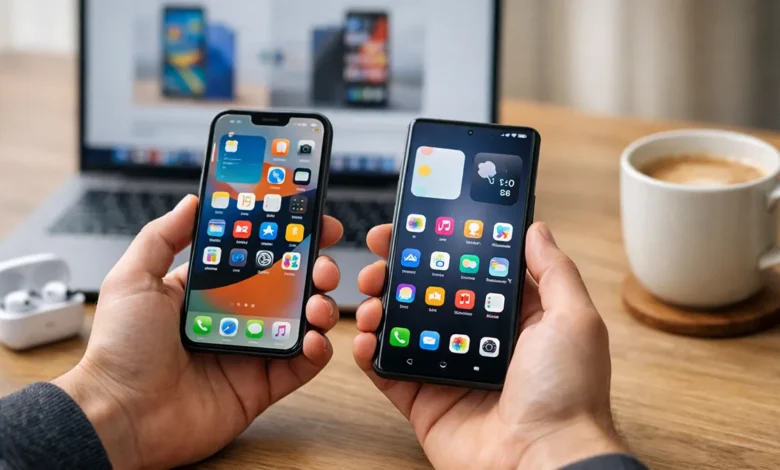
iPhone vs Android 2026 is the biggest phone decision for most buyers, and the right choice is less about “which is best” and more about “which is best for you.” In 2026, both platforms are fast, polished, and packed with features. The real differences show up in daily life: how your phone fits your other devices, how long it stays supported, how your photos and videos look, how messaging feels with friends, and whether you prefer a simple system or a flexible one.
If you are upgrading from a 2- to 5-year-old phone, almost anything you buy will feel like a jump forward. So your goal is not to chase the highest spec. Your goal is to avoid regret by choosing the platform that matches your habits.
This guide breaks it down in plain English, with practical examples, clear pros and cons, and a decision framework you can use even if you do not follow tech news.
The 2026 smartphone reality: what actually changed
A few changes in the last couple of years made the iPhone vs Android debate more balanced than it used to be.
(1) Cross-platform texting is less painful
Apple now supports RCS messaging on iPhone (where carriers support it). Apple also states you need iOS 18 for RCS, and in iOS 26 you can choose which app to use for SMS, MMS, and RCS messages.
That does not replace iMessage, but it improves everyday texting with Android friends compared to old-school SMS/MMS.
(2) Android flagships can last as long as many iPhones
For years, iPhone was the easy win for long updates. In 2026, Android has caught up on the right models:
- Google says Pixel 8 and later phones get 7 years of OS and security updates (plus Pixel feature drops).
- Samsung states it is extending security update support for Galaxy devices by up to 7 years (model-dependent).
This means longevity is no longer “iPhone only.” It is “choose a brand and model with a proven update policy.”
(3) AI is now built into the OS on both sides
Apple positions iOS 26 around a new design and Apple Intelligence experiences like Live Translation, along with new Messages features like polls and custom backgrounds.
Google highlights Android 16 features like Live Updates in notifications and Advanced Protection for stronger security.
AI is not the only reason to buy a phone, but it is increasingly part of everyday tasks like summarizing, translating, editing photos, and reducing notification noise.
(4) The market is still basically two platforms
StatCounter’s global mobile OS share for December 2025 shows Android around 71.68% and iOS around 27.93%.
That matters because it means both ecosystems are stable, massive, and well supported by app developers.
Quick answer: iPhone or Android in 2026?
If you want a fast decision, use this:
Choose iPhone if you want:
- A simple, consistent experience with strong defaults
- Great video performance and easy content creation workflows
- Seamless integration with Mac, iPad, Apple Watch, AirPods
- Predictable day-one software updates on supported models
Choose Android if you want:
- More choice: brands, prices, designs, foldables, features
- More customization and default app control
- Strong value in the midrange (often the best deals)
- A Google-first experience that feels deeply integrated
If both sets sound good, keep reading. The right decision is usually decided by ecosystem, updates, camera style, and budget.
Software experience: iOS 26 vs Android 16 in real life
iOS 26: polished, consistent, and “designed for everyone”
Apple’s iOS 26 messaging upgrades include polls and custom backgrounds, and Apple highlights Live Translation across apps like Messages and Phone.
The iPhone experience is built around consistency. Menus, gestures, and app behavior usually feel uniform across devices.
What people love about iOS
- It feels stable and predictable
- Settings are simpler for most users
- Device-to-device setup is usually smooth
- Apple services and accessories are tightly integrated
Where iOS can feel limiting
- You get fewer deep customization options
- Some workflows are locked into Apple’s preferred way
- If you enjoy tweaking, iOS may feel “too managed”
Android 16: flexible, personal, and improving fast
Google describes Android 16 as bringing features like Live Updates and stronger protection through Advanced Protection.
Android is not one single experience. A Pixel feels different from a Samsung, and both differ from brands that add their own UI layers.
What people love about Android
- Customization: launchers, widgets, icon packs, automation
- More control over defaults (browser, messaging, assistant, keyboard)
- Hardware variety (including foldables and niche devices)
Where Android can frustrate
- Update timing varies by brand and model
- Some features arrive first on Pixels or specific brands
- There can be more “extra apps” depending on the manufacturer
Bottom line: iOS is the best “one consistent experience.” Android is the best “choose your own experience.”
Updates and longevity: the most underrated buying factor
A phone is not just hardware. It is a long-term device you carry daily. Updates affect security, resale value, app compatibility, and even camera improvements.
iPhone updates
Apple typically delivers updates to supported iPhones at the same time. For many buyers, that predictability is a major benefit.
Android updates: pick the right model
Android longevity is now excellent on flagship and premium models from brands that commit publicly:
- Pixel 8 and later: Google states 7 years of OS and security updates.
- Samsung: Samsung states security update support extended by up to 7 years for eligible Galaxy devices.
Practical rule
- If you keep phones 4 to 7 years, buy a device with a clear long support policy.
- If you upgrade every 2 to 3 years, updates matter less, but still affect resale.
Ecosystem: the hidden force that decides satisfaction
This is the factor most people feel every day without realizing it.
Apple ecosystem: smooth when you are “all in”
If you use a Mac or iPad, iPhone is hard to beat for convenience. Calls, messages, photos, notes, and accessories usually work with less setup. Apple Watch is also a major ecosystem pull.
Who benefits most from iPhone
- People with Apple devices already
- Families who share photos, location, and messaging
- Users who want minimal setup and fewer decisions
Android ecosystem: mix-and-match freedom
Android works well with Google services and a wide range of accessories. You can build an ecosystem around Google (Pixel + Nest), Samsung (Galaxy + SmartThings), or mix brands.
Who benefits most from Android
- People who want choice and customization
- Users who rely on Google services daily
- Buyers who want the best value for money
Reality check: if your close circle uses iPhone features heavily, iPhone can reduce friction. If you live in Google apps and want more device variety, Android often fits better.
Messaging in 2026: iMessage, RCS, and what matters
Messaging can influence your phone happiness more than camera specs.
- iMessage is still a strong advantage in iPhone-to-iPhone chats.
- Apple explains that RCS on iPhone requires iOS 18 and a carrier plan that supports RCS, and notes that in iOS 26 you can choose which app handles SMS/MMS/RCS messages.
What this means in practice
- If your most important group chats are on iMessage, staying on iPhone keeps everything seamless.
- If your friends use WhatsApp/Telegram for everything, the platform matters less.
- If your friend group is mixed, RCS support helps iPhone-Android texting feel more modern than old SMS/MMS.
iPhone vs Android camera in 2026: the honest truth
The best camera is the one that matches your style.
iPhone: consistent photos and strong video workflows
Apple’s iPhone 17 Pro press release highlights three 48MP rear cameras and upgrades aimed at detail and low-light improvements.
Even without diving into specs, the iPhone strength is consistency: you can shoot quickly and trust the result.
Best for
- Video creators and social media work
- People who want reliable point-and-shoot results
- Families and everyday photography without fuss
Android: variety and specialization
Android is where you see the widest camera diversity. Different brands tune colors, sharpness, and HDR differently. Some focus on zoom, others on portrait quality, others on low-light.
Best for
- People who like different photo looks
- Users who want specific features (zoom, pro controls, foldable camera use)
- Buyers who enjoy editing and customization
Simple takeaway
- If you want the easiest path to great photos and excellent video, iPhone is a safe pick.
- If you want camera choice and unique hardware options, Android gives more flexibility.
AI features: useful, but not the only reason to buy
AI is everywhere in 2026 phone marketing, but the best AI is the kind that disappears into your workflow.
iOS 26: built-in intelligence and communication upgrades
Apple highlights iOS 26 features such as Live Translation and Messages improvements like polls and custom backgrounds.
Apple’s approach tends to focus on integrated features that feel like part of the OS rather than separate apps.
Android 16: security and notification intelligence
Google’s Android 16 announcements emphasize Advanced Protection and improvements like Live Updates in notifications.
Buyer advice: treat AI as a bonus. Battery, camera, updates, and ecosystem will shape your daily life more than any single AI feature.
Privacy and security: what is true in 2026
Both platforms can be very secure. The difference is how much safety is built in by default versus dependent on your choices.
iPhone approach: strong defaults and tighter control
Apple’s model is controlled distribution, consistent permissions, and strong guardrails. This reduces risk for many everyday users.
Android approach: strong security, but choose wisely
Google promotes Advanced Protection as a way to enable the strongest protections against threats.
Security on Android is excellent on well-supported devices, but buyers should prioritize:
- clear update policy
- reputable brand support
- safe app habits
Simple security checklist for any phone
- Keep OS and apps updated
- Use a password manager
- Turn on 2FA for important accounts
- Use a strong lock screen
- Back up photos and documents
App stores, rules, and freedom: guardrails vs flexibility
Android has long supported alternative app stores and broader installation options. iPhone is more restricted in many regions, though rules vary.
In the EU, Apple announced changes to iOS, Safari, and the App Store to comply with the Digital Markets Act, including options that affect app distribution and payments, while also emphasizing new security risks.
What it means for buyers
- If you want maximum flexibility, Android is still the easiest path globally.
- If you want strong default safety and fewer decisions, iPhone is still the most “managed” experience in many places.
Hardware choice: one lineup vs an entire marketplace
iPhone: simpler lineup, fewer confusing choices
iPhone shopping is usually straightforward: pick size, storage, and “standard vs Pro.”
Android: huge variety at every price
Android gives you:
- compact phones, big phones, foldables
- stylus phones
- gaming-focused models
- strong midrange options
If you enjoy finding the perfect fit, Android is fun. If you want the easiest decision, iPhone feels simpler.
Battery and charging: what to focus on
Battery life depends more on the specific model than the platform. Still, a few guidelines help:
What improves battery life most
- efficient chip + good modem
- bigger battery cell
- smart display management
- software optimization
Charging and ports
Apple states iPhone 15 and later models use USB-C, which simplifies cables and accessories.
This matters if you travel or already own USB-C chargers for laptops and tablets.
Productivity: best smartphone 2026 for work and school
The best smartphone in 2026 is the one that matches your tools.
Choose iPhone if you use Apple devices daily
If your laptop is a Mac and you use an iPad, the iPhone integrates smoothly across your workflow.
Choose Android if your world is Google-first
If your life is Gmail, Google Calendar, Drive, Photos, and Google services, Android often feels more native and flexible.
If your workflow is mostly web apps: both are excellent. Choose based on ecosystem and budget.
iPhone or Android for gaming?
If you are asking “iPhone or Android for gaming,” here is the practical truth: both can be amazing, but gaming performance depends on the phone model.
What matters for gaming
- sustained performance (heat and throttling)
- screen refresh rate and brightness
- touch response
- battery size
- cooling design
Smart buyer tip: watch real-world gaming tests of the exact model you want. Two Android phones can differ a lot even if both are “flagships.”
Total cost: price, resale, repairs, and subscriptions
A phone can look cheap upfront and become expensive later.
Resale value
iPhones often retain value strongly in many markets. Some Android flagships do too, but resale varies more by brand and region.
Repair experience
- Apple support tends to be consistent in availability (though repairs can be expensive).
- Android repair experience depends heavily on brand presence and parts availability where you live.
Subscription creep
Both ecosystems push cloud storage and premium services. Budget for:
- cloud backup
- extended warranty (if needed)
- accessory replacements
- battery replacement later in the phone’s life
Real-world decision scenarios (simple and practical)
Scenario 1: “My friends and family all use iPhone”
If your closest circles live in iMessage and FaceTime, iPhone is usually the low-friction choice. Even with RCS improving cross-platform texting, iMessage groups still feel smoother on iPhone.
Scenario 2: “I want the best value, not the most expensive phone”
Android often wins here. A strong midrange Android can feel premium for less money, and you still get excellent cameras and modern features. If you prefer iPhone, consider buying a slightly older model new, or a certified refurbished device.
Scenario 3: “I care most about camera and social media”
If video is your priority, iPhone remains a strong default. If you want camera variety and specialized hardware, Android gives more options. Apple’s iPhone 17 Pro materials emphasize a high-end camera system with three 48MP rear cameras.
Scenario 4: “I keep phones for years”
Buy the phone with the best support policy in your budget. Pixel 8 and later have a clear 7-year statement, and Samsung states up to 7 years of security updates for eligible devices.
Scenario 5: “I want flexibility and customization”
Android is usually the better fit: launchers, widgets, default apps, and custom workflows can be tailored to your preferences.
The 2026 checklist: how to buy without regret
Before you buy, do these eight things:
- Confirm the update policy for the exact model
- Choose the ecosystem you actually use (watch, laptop, earbuds)
- Test camera indoors (low light shows real quality)
- Check battery reviews (not just battery size)
- Pick the right storage (photos and videos grow fast)
- Plan your backup (cloud or local)
- Think about repairs (service availability near you)
- Set a budget that includes accessories (case, charger, screen protector)
Quick FAQ
(1) Is iPhone more secure than Android?
iPhone has strong default guardrails. Android can be just as secure on well-supported devices, especially with features like Advanced Protection.
(2) Which lasts longer in 2026?
iPhone longevity is strong, and Pixel 8+ has a 7-year update policy. Samsung states up to 7 years of security updates for eligible models.
(3) Is texting better between iPhone and Android now?
It is improved because iPhone supports RCS where carriers support it (iOS 18 required). Apple also notes iOS 26 lets you choose which app handles SMS/MMS/RCS.
(4) Which is better for camera?
iPhone is a reliable choice for consistent photos and strong video. Android offers more camera variety depending on brand and model.
(5) Which is better for gaming?
Both can be excellent. Choose based on the specific phone’s screen, cooling, and sustained performance.
(6) Should I buy a flagship or midrange phone?
If you keep phones for years, a flagship can pay off. If you upgrade often, a strong midrange phone is usually better value.
(7) Does iPhone still use USB-C in 2026?
Yes. Apple states iPhone 15 and later models use USB-C.
(8) What is the number one deciding factor?
Ecosystem fit: your laptop, watch, earbuds, cloud services, and the apps you use daily.
Final verdict: which should you buy?
If you want the simplest premium experience, consistent software behavior, and an ecosystem that feels seamless, buy an iPhone.
If you want more hardware choice, more customization, and excellent value across many price points, buy an Android.
In 2026, you are not choosing between “good” and “bad.” You are choosing between two excellent platforms with different personalities. Pick the one that matches your daily life, and you will enjoy your phone far more than someone who buys only based on specs.


4 Comments