Inflation Explained: How Rising Prices Change Your Spending, Savings, and Future

Inflation explained in plain terms: it’s what’s happening when your money still looks the same, but it quietly buys less than it used to.
Maybe you’ve felt it already. Your usual grocery basket costs more. Rent renewals feel heavier. A quick takeaway meal that used to be cheap now feels like a small luxury. None of this is random and you don’t need an economics degree to understand it.
This guide breaks inflation down like a real life topic (because it is). We’ll cover what inflation actually means, how it’s measured, why it happens, who wins and loses, and what you can do practically to protect your spending power and long term plans.
Inflation Explained: The Simple Definition (No Jargon)
Inflation is the rate at which prices rise over time meaning the same goods and services become more expensive. The IMF describes inflation as the increase in prices over a period of time, often measured broadly as the cost of living rising across the economy.
Two key things to remember:
- Inflation is usually about overall price changes, not just one item getting expensive.
- Inflation is about time: it’s not one bad shopping day it’s a trend.
A quick example
If inflation is 5% this year, something that cost 100 becomes about 105 next year (on average). That sounds small until you realize it compounds and touches nearly everything.
Why You Should Care (Even If You Don’t Follow The Economy)
Inflation isn’t only a news headline. It’s a daily life force that affects:
- your grocery bill
- your rent and home costs
- your transport and fuel spending
- your salary’s real value
- your savings growth (or shrinkage)
- your loan and credit costs
The simplest way to say it:
Inflation reduces purchasing power.
Purchasing power is how much real stuff your money can buy. When inflation rises faster than your income, life feels tighter even if you’re earning the same.
How Inflation Is Measured (And Why Numbers Sometimes Confuse People)
You’ve probably heard of CPI inflation on the news. That’s one of the most common measures.
1. Consumer Price Index (CPI)
The CPI measures the average change over time in the prices paid by consumers for a market basket of goods and services.
Think of it like a giant, carefully tracked shopping list that includes things like:
- food and beverages
- housing and utilities
- transportation
- medical care
- education and communication
- recreation
When that basket gets more expensive, CPI rises.
2. Core inflation (why it exists)
You’ll also hear core inflation, which usually excludes food and energy because they can swing wildly. Core inflation helps economists see if inflation is becoming sticky across the economy.
3. Other measures exist (and that’s okay)
Different countries and central banks use different indexes. In the U.S., the Fed often focuses on the PCE price index, a measure designed to capture a wide range of consumer spending and changing behavior.
Bottom line: Don’t get stuck arguing which index is perfect. What matters most is understanding the direction and how it impacts your personal budget.
The Personal Inflation Rate Is Real (And It Might Be Higher Than CPI)
Official inflation is an average. Your real inflation depends on what you spend on.
If most of your money goes to:
- rent
- school fees
- groceries
- commuting
…your personal inflation can feel higher than the national number especially if those categories rise faster than average.
Try this simple check:
Look at your last 3 months of spending vs. the same 3 months last year. If you’re spending noticeably more for the same lifestyle, inflation is hitting you harder than the headline rate.

What Causes Inflation? (The Three Big Drivers)
Inflation isn’t one single thing. It’s a result of pressure building in an economy, often from a few major sources.
1. Demand pull inflation (too much demand)
This happens when people and businesses are spending strongly, but supply can’t keep up fast enough.
- More money is chasing the same number of goods.
- Sellers raise prices because they can.
You often see this in strong recoveries or boom times.
2. Cost push inflation (costs rise first)
This happens when production gets more expensive then businesses pass those costs onto customers.
Common triggers:
- fuel/energy price spikes
- supply chain disruptions
- higher wages
- currency depreciation (imports cost more)
Even if demand is normal, costs rising can still push prices up.
3. Expectations (inflation psychology)
This one is sneaky but powerful.
If businesses expect costs to rise, they raise prices now.
If workers expect prices to rise, they ask for higher wages.
If everyone expects inflation, inflation becomes harder to stop.
This is one reason central banks care a lot about keeping inflation expectations anchored.
Inflation vs. One Thing Got Expensive
Not every price rise is inflation.
- If tomatoes jump because of bad weather, that’s a specific price shock.
- If most categories rise broadly over months, that’s inflation.
This matters because broad inflation often requires policy action (like interest rate changes), while a single category spike may fade naturally.
What Inflation Does to Your Money (The Real Life Effects)
Let’s get practical. Inflation impacts your money in 5 major ways.
1. Your cash loses value over time
Cash is convenient, but it doesn’t automatically grow. If inflation is 4% and your cash earns 0%, you’re losing purchasing power.
2. Your savings need to beat inflation to truly grow
If a savings account pays 2% interest but inflation is 4%, you’re effectively -2% in real terms.
That doesn’t mean savings accounts are useless they’re essential for safety and emergencies. It means you need a plan beyond parking everything in cash long term.
3. Your salary might rise… but still fall behind
If your salary increases 5% but your living costs rise 8%, you’re poorer in real terms even though you got a raise.
This is why wage growth and inflation are always discussed together.
4. Your debt can become easier (or harder)
Inflation affects debt in a strange way:
- If you have fixed rate debt, inflation can help you, because you repay with cheaper money later.
- If you have variable rate debt, higher inflation can lead to higher interest rates making repayments more expensive.
5. Your future plans get more expensive
Education, weddings, buying a home, starting a business anything planned for later often costs more in an inflationary period.
A Real Example: When Inflation Spiked (And Why It Got So Much Attention)
In the U.S., CPI inflation reached 9.1% over the year ending June 2022 one of the largest increases in decades.
Why that mattered:
- It was high enough that people felt it quickly in essentials.
- It influenced interest rates, borrowing costs, and investment markets.
- It pushed inflation into everyday conversation, not just economics textbooks.
Even if you don’t live in the U.S., this example shows what happens when inflation becomes visible to everyone: spending behavior changes, wage pressure rises, and policy gets tighter.
When Inflation Gets Extreme: High Inflation and Hyperinflation
Most countries aim to avoid extremely high inflation because it can damage trust in money itself.
Economists often define hyperinflation using Phillip Cagan’s classic threshold: when monthly inflation exceeds 50%.
Hyperinflation isn’t just prices are annoying. It can mean:
- salaries become meaningless quickly
- people rush to spend immediately
- savings are destroyed
- long term planning collapses
A modern example of severe inflation pressure: Argentina’s annual inflation hit 211.4% in 2023, reflecting a major cost of living crisis for households.
What Central Banks Do About Inflation (And Why Interest Rates Move)
Central banks try to keep inflation low and stable because stability helps people plan, save, invest, and build businesses.
Many major central banks set targets around 2%:
- The U.S. Federal Reserve has stated that 2% inflation over the longer run aligns with its goals (measured by PCE inflation).
- The European Central Bank aims for 2% inflation over the medium term, and treats above/below deviations as equally undesirable.
The main tool: interest rates
When inflation is high, central banks may raise rates to cool demand:
- borrowing becomes more expensive
- spending slows
- businesses expand more carefully
- inflation pressure eases over time
When inflation is too low (or the economy is weak), they may lower rates to encourage borrowing and spending.
Important: rate changes don’t work overnight. Inflation often responds with delays.
Who Wins and Who Loses From Inflation?
Inflation is not fair in how it hits people.
Often hurt the most:
- people on fixed incomes
- households living paycheck to paycheck
- renters in fast rising housing markets
- savers holding most wealth in cash
Sometimes benefit (depending on conditions):
- borrowers with fixed rate loans
- businesses with strong pricing power
- owners of assets that rise with inflation (in some periods)
But even winners can lose if inflation becomes unstable because uncertainty hurts everyone.
Practical Ways to Protect Your Money From Inflation
This is the part that matters most. You can’t control inflation but you can control your strategy.
1. Build a realistic budget that matches today’s prices
If you’re using an old budget from last year, it may be quietly failing.
Do this:
- update groceries, fuel, utilities, subscriptions
- track small leaks (delivery fees, impulse buys)
- set a weekly spending check in
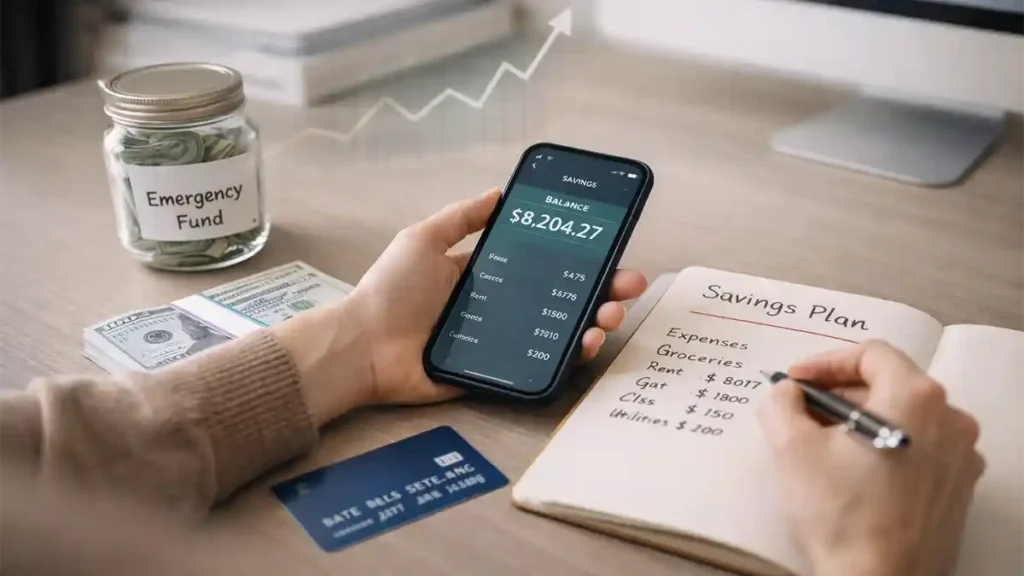
2. Keep an emergency fund (even if returns are low)
Yes, inflation erodes cash but emergency cash protects you from debt, panic selling investments, or missing bills.
A good target is often 3-6 months of essentials, adjusted for your job stability and family needs.
3. Treat high interest debt like a fire
Credit card debt often grows faster than inflation. Paying it down can be a guaranteed return in stress reduction and long term savings.
4. Grow your income on purpose
Inflation is a reminder that income growth matters.
Options:
- negotiate salary based on performance + market rates
- add a high skill side income (writing, design, coding, consulting)
- upgrade skills that increase earning power
Even small increases help because inflation compounds.
5. Invest with a long term, diversified mindset
No single investment is a magic shield. But historically, long term investing has been one of the most realistic ways to outrun inflation over decades.
General principles (not personal financial advice):
- diversify across asset types
- understand that short term volatility is normal
- avoid panic decisions based on headlines
- match risk to your timeline (short timeline = lower risk)
6. Be careful with inflation hacks online
When inflation rises, the internet fills with extreme advice.
Red flags:
- guaranteed returns
- pressure to act fast
- complicated schemes you can’t explain simply
- anyone discouraging diversification
If you can’t explain the investment clearly, don’t put your rent money into it.
A Simple Inflation Checklist You Can Use This Week
Here’s a quick, realistic plan:
- ✓ Track your top 10 expenses for 30 days
- ✓ Cut 1-2 low value recurring costs
- ✓ Build or rebuild emergency savings
- ✓ Pay down high interest debt first
- ✓ Make a plan for income growth (one action this month)
- ✓ Review your savings/investments to ensure they match your goals
Small moves, repeated, beat big dramatic moves that don’t last.
The Big Takeaway (And a More Calm Way to Think About It)
Inflation can feel personal because it shows up in your cart, your rent, and your daily decisions. But it’s also understandable.
When you understand inflation, you stop feeling mystery stress and start making smarter moves:
- you budget based on reality
- you save with a purpose
- you borrow carefully
- you invest with patience
- you focus on growing income over time
Inflation explained isn’t about fear. It’s about clarity.
Because when you know what inflation is doing to your money, you can stop reacting and start planning.