FIA EMI App Pakistan: Do travelers really need it?
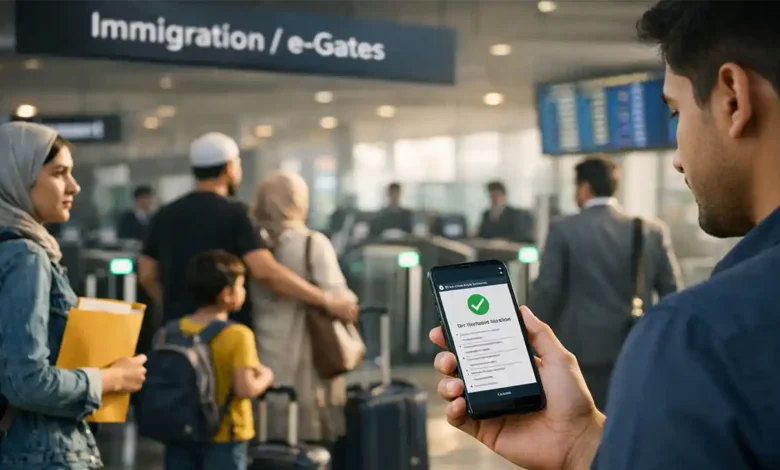
FIA EMI App Pakistan is being discussed as a shortcut through the most stressful part of flying: airport immigration. Some travelers see it as a smart upgrade. Others worry it is another hurdle, another scan, another reason to get stopped. Both reactions are understandable, because airport systems affect real people in real ways: missed flights, anxious families, students carrying folders of documents, and overseas Pakistanis trying to get home without drama.
So let’s answer the practical question clearly:
Do travelers really need it, and if so, who benefits most?
This article explains the EMI idea in simple terms, connects it to the bigger shift happening at Pakistan’s airports (e-gates, database verification, risk checks), and gives you a decision guide you can actually use. You will also find a safety checklist to avoid scams, a privacy perspective that is fair (not fear-based), and a quick FAQ designed for Roz New.
The real problem the app is trying to solve
Airport immigration has two jobs that often clash:
(1) Move genuine travelers quickly
Everyone wants shorter lines. Airlines want on-time departures. Airports want smoother flow. Travelers want a calm experience instead of crowded halls and last-minute confusion.
(2) Stop irregular travel, fraud, and misuse of documents
Authorities also have to detect forged papers, suspicious travel patterns, and attempts linked to illegal immigration and human smuggling prevention. That means deeper checks for some passengers, which can slow down everyone else when done only at the counter.
The EMI concept tries to reduce that conflict by shifting part of the verification earlier, before you reach the immigration desk. In theory, that gives officers better information and gives low-risk travelers a faster path.
What the FIA EMI App is (in plain English)
The simplest way to understand the FIA EMI App is to think of it as a pre-check layer for immigration.
Instead of arriving at the airport and starting from zero, you enter key details in advance. The system then cross-checks those details with official records and flags issues early. If you are eligible, the process can become quicker, especially where e-gates are active.
What it is designed to do
- Collect basic identity and travel inputs before you travel
- Match your entries with records like passport and identity data
- Reduce manual data entry at the counter
- Support faster clearance for travelers who pass automated checks
- Help authorities focus attention on higher-risk cases
What it does not replace
- Your passport
- Your visa or residence permit
- Airline rules (boarding can be refused by airlines if documents do not meet destination requirements)
- Standard questioning when an officer needs clarification
A useful mindset is this: the app is not a travel document; it is a verification workflow.
How it connects to IBMS and e-gates
Many travelers hear “app” and assume everything depends on the phone. In reality, the phone is usually the front door. The bigger structure is behind the scenes.
IBMS: the core system layer
FIA Integrated Border Management System (IBMS) is often described as the backbone that supports modern border checks. Think of it as the platform that helps integrate passenger information, identity validation, and screening logic.
e-gates: the hardware fast lane
Pakistan airport e-gates are automated gates that typically use passport scans and biometric matching to confirm identity quickly. When e-gates work well, the gate is not “deciding” your eligibility on its own. It is simply executing a clearance step based on policy rules and verified data.
Why the app matters in that model
If your data is pre-verified, the gate or counter does less work. That is how faster processing becomes possible without lowering security.
So, do travelers really need the app?
Here is the honest answer:
Most travelers do not “need” the app in the same way they need a passport. However, many travelers can benefit from it, and it may become increasingly useful as airport systems scale.
Because rollouts can be uneven, the better question is:
Should you use it for your specific travel profile?
Let’s break that down.
A decision guide: who should use it first
(1) Frequent flyers
If you travel often, saving even 10 to 15 minutes per trip becomes valuable across the year. Frequent flyers also tend to have stable documents and consistent travel patterns, which usually pair well with automated workflows.
Why it can help
- Less time in queues
- More predictable processing
- Fewer repetitive checks, especially when documents are clean
(2) Overseas Pakistanis (especially peak seasons)
During school holidays and high-travel months, immigration counters become congested. Anything that reduces counter load can improve flow for everyone, including those not using the app.
Why it can help




- Faster movement when airports are busy
- Potentially smoother entry and exit if the system recognizes verified data quickly
(3) Students traveling for study (first time or returning)
Students are often the most vulnerable group in terms of confusion. They can be misled by agents, miss a required document, or misunderstand destination requirements.
Why it can help
- A structured pre-check approach encourages better preparation
- Early flags can push you to fix issues before travel day
- You avoid discovering a mismatch at the worst possible moment
(4) First-time international travelers and families
First-time travelers often struggle with small details: name formatting, mismatched dates, missing supporting evidence for travel purpose, or incomplete paperwork.
Why it can help
- The process can act like a checklist
- It reduces last-minute panic
- It may improve confidence because you have completed steps ahead of time
(5) Travelers with a history of heavy questioning or offloading risk
If you have previously faced offloading or extended checks, you already understand the emotional and financial cost. While no app can guarantee clearance, proactive verification can reduce avoidable mistakes that trigger suspicion.
Why it can help
- Minimizes human error in basic entries
- Encourages you to gather supporting documents early
- May reduce surprises if the system flags issues earlier in the journey

Who may not need it (and should not stress)
(1) Travelers whose airports are not fully integrated yet
If e-gates are limited or the app is not actively used at your departure point, the benefit may be small. Traditional counters remain the primary path in many transition phases.
(2) Travelers who struggle with mobile workflows
If your phone is unreliable, you are uncomfortable with digital identity steps, or you often have OTP problems, trying to register on travel day can create new stress.
(3) Travelers with simple, straightforward trips
A basic family visit with standard documents and consistent travel history usually clears without drama through normal channels.
The real benefits you can expect (and what to be skeptical about)
Benefit 1: Shorter queues in practice
If enough travelers use fast lanes and pre-verification, the whole system breathes. Even passengers who never touch the app can see shorter lines because counters are less overloaded.
Benefit 2: Fewer “last-minute surprises”
Many airport issues are not criminal or serious. They are small inconsistencies that trigger delays: incomplete supporting documents, mismatched names, unclear travel purpose, missing return ticket evidence for certain destinations, or weak justification for travel.
Pre-verification encourages earlier preparation, which naturally reduces these failures.
Benefit 3: Better targeting of high-risk cases
Risk-based screening at airports is a modern approach: allow quick processing for low-risk travelers, focus attention where the risk indicators are stronger. That helps genuine travelers by reducing blanket slowdowns.
What to be cautious about: “instant clearance for everyone”
Marketing-style claims about a few seconds are usually best-case scenarios. Real-world processing depends on:
- System uptime
- Network speed
- Passport chip readability
- Biometric match quality
- Edge cases (name changes, dual documents, recent renewals)
- Human review when needed
If you approach the app as a helpful tool rather than a guarantee, you will have a better experience.
The biggest traveler concern: privacy and control
Any identity verification app raises fair questions:
- What data is collected?
- How is it stored and protected?
- Who can access it?
- How long is it retained?
- What happens if there is a false flag?
A balanced approach is not “trust everything” or “fear everything.” It is practical caution.
A privacy-smart traveler checklist
- Use only official app sources (official app store listing, correct developer, consistent naming).
- Avoid sharing OTPs with anyone, including “helpers” at the airport.
- Do not hand your phone to strangers to complete registration.
- Keep screenshots of sensitive documents minimal.
- Use a screen lock and update your phone’s security settings before travel.
The overlooked issue: false flags and data-entry mistakes
Digital screening can reduce errors, but it can also surface them more quickly. The most common problems are not complicated.
Common mistakes that create delays
- Passport number typed incorrectly
- Wrong issuance or expiry dates
- Name spelling differences compared to passport
- Confusing visa category or travel purpose
- Using a nickname instead of the passport name
- Wrong destination city or flight number
How to avoid this
- Enter information exactly as shown on your passport
- Double-check critical fields before submitting
- Keep your itinerary handy while entering details
- If the app allows updates, correct mistakes early, not on travel day
A realistic “use it well” playbook
If you decide to use the app, do it like a professional traveler, not like a rushed passenger.
Step 1: Complete setup before travel day
Do it at home with calm focus. Travel day is for the airport, not for troubleshooting apps.
Step 2: Prepare a document pack (digital and physical)
Even in a modern system, you should carry supporting documents that match your travel purpose. For example:
- Student: admission letter, fee receipt, address proof
- Work: offer letter, contract, residence permit
- Visit: return ticket, hotel booking or host details
- Umrah: booking package, visa, group details (where applicable)
Step 3: Keep your phone ready
Charge your phone, carry a power bank, and keep mobile data active if airport Wi-Fi is unreliable.
Step 4: Keep a calm fallback plan
If the app fails or the system is not fully integrated, use the standard counter process. A digital tool should never be the only plan.
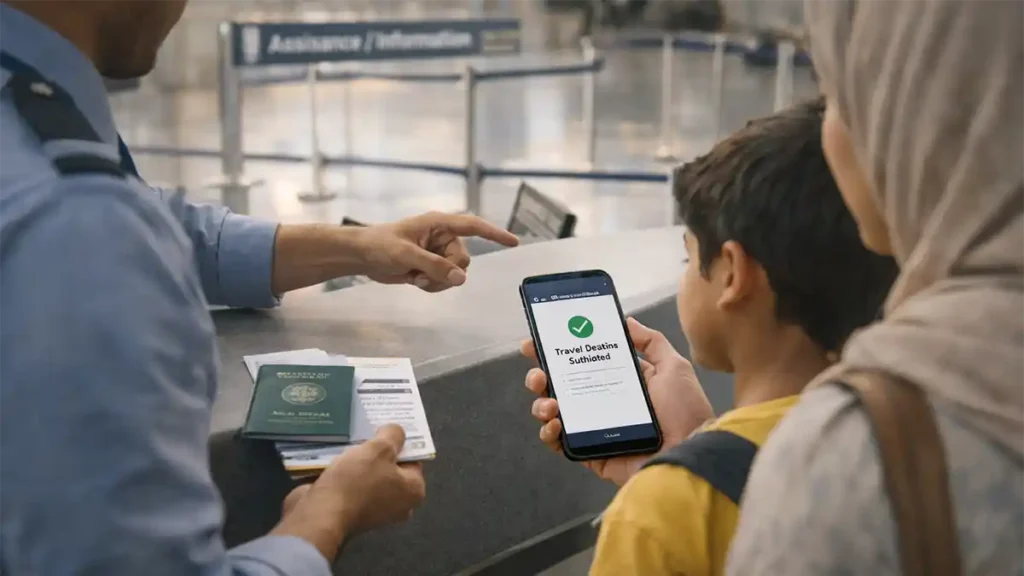
How the app may change airport experience for different travelers
For genuine tourists and family visitors
The biggest win is speed and predictability. If you have clear documents and a simple purpose, automated steps can reduce waiting.
For students
The bigger win is not speed. It is preparation. Students who treat the process like a checklist are less likely to face last-minute doubts.
For travelers with weak documentation or unclear purpose
This is where reality matters: the app cannot fix missing documents or unclear travel logic. If your case is messy, the best outcome is early awareness so you can strengthen your file before arrival at the airport.
For those using agents
The app may reduce agent control. That is a good thing. Your identity and travel details should be managed by you, not by a third party who may cut corners.
Myths vs facts (quick clarity)
Myth: “If I use the app, I cannot be questioned”
Fact: Officers can still ask questions when clarification is needed.
Myth: “If I do not use the app, I will be blocked”
Fact: In transition periods, airports usually run parallel processes. If a requirement becomes mandatory for certain routes, airlines and official channels typically communicate it.
Myth: “The app guarantees I will not be offloaded”
Fact: Offloading decisions can involve multiple factors, including destination requirements, document validity, and risk indicators. The app may reduce avoidable issues, not eliminate scrutiny.
Myth: “It is only about speed”
Fact: Speed is part of it, but the deeper goal is better verification and earlier screening.
Safety note: how to avoid fake apps and airport scams
Whenever a government-related app becomes popular, fake versions and “helpers” appear.
Red flags to watch for
- Someone asks for your OTP
- Someone offers “fast-track approval” for money
- Someone asks you to send passport photos over messaging apps
- The app name or developer looks suspicious
- The listing has poor spelling, weak design, or random permissions
Smart practice
- Download only from official app stores
- Verify the developer name carefully
- Read permissions before allowing access
- Never pay anyone for “verification”
Where this is heading in 2026 and beyond
Border systems around the world are moving toward:
- Pre-arrival data checks
- Automated gates for eligible travelers
- Risk scoring to target investigations
- Faster clearance for low-risk passengers
Pakistan’s move toward app-based pre-verification and e-gates fits that global direction. Even if it feels new today, it is likely to become normal over time, just like online boarding passes became standard.
Quick FAQ
1. Is the FIA EMI App mandatory for all travelers?
Not in the way a passport is. Adoption can vary by airport and rollout phase. Follow official airport and airline instructions for your route.
2. Will it make immigration “instant” every time?
No. Fast processing depends on system integration, eligibility, and clean data. Expect improvement, not perfection.
3. Can it reduce the chance of offloading?
It can reduce avoidable errors by encouraging pre-verification and better preparation. It cannot guarantee clearance in every situation.
4. Should students use it?
Students benefit strongly because structured steps and early checks reduce common mistakes and missing paperwork issues.
5. What if I do not have a smartphone?
In many transition phases, traditional counters remain available. If a route ever requires digital steps, airlines usually communicate that clearly.
6. Is it safe to enter my details?
Treat it like any official identity service: use official sources, protect your OTP, and avoid sharing sensitive information with third parties.
7. What if the app shows an error or I get flagged?
Do not panic. Recheck entries, correct mistakes if allowed, and carry supporting documents. If needed, use the standard counter process and cooperate calmly.
8. What is the biggest benefit for genuine travelers?
Less waiting and more predictability, especially when e-gates and pre-verification workflows are active at your airport.
Final verdict: do travelers really need it?
FIA EMI App Pakistan is best seen as a practical tool, not a new travel requirement.
If you are a frequent traveler, a student, an overseas Pakistani traveling during peak seasons, or someone who wants predictability, using it (where available) is likely worth it.
If your travel is simple and your airport is not fully integrated yet, you can still travel normally without panic. The smarter move is to stay informed, keep your documents strong, and treat digital verification as a support layer, not a substitute for preparation.
When used correctly, the app can reduce friction. When misunderstood, it can create stress. The difference is not the technology. It is how you prepare.
Additional Recommendation
If you want to travel outside Pakistan by air, through visit visa, student visa, work visa, etc., and you are a Pakistani, then it is better to install the FIA EMI Pakistan Application on your mobile in the year 2026 and also complete the registration process. If you want to know the registration procedure on the FIA EMI Pak app, you can find it on the Roz New website and either click on it How to Register on the EMI App Step by Step, or try searching in this post.





11 Comments