E-Commerce Boom: Key Trends Shaping 2026 Growth
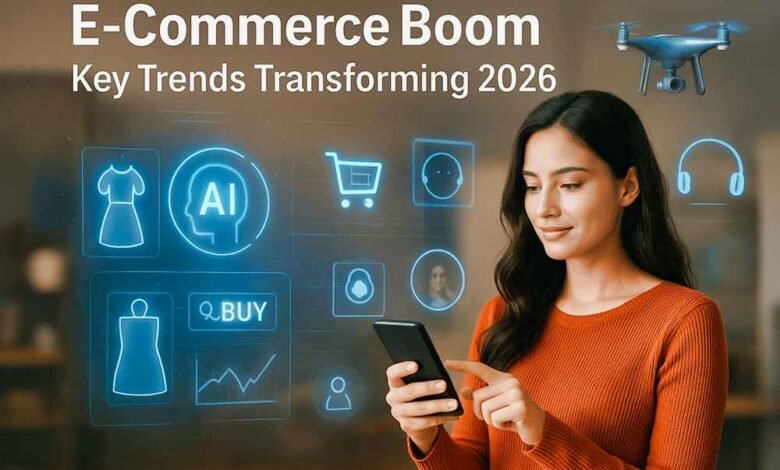
The world of online shopping is evolving faster than ever, and by 2026, the e-commerce landscape will look completely different from what we know today. With billions of people shifting their spending habits online, businesses are racing to adopt new tools, technologies, and strategies to stay ahead. The phrase E-Commerce Boom Key Trends 2026 accurately reflects the massive transformation unfolding across the global retail economy.
In the past, e-commerce was mostly about websites selling products. Today, it is a dynamic, technology-driven ecosystem powered by artificial intelligence, hyper-personalization, fast delivery models, social platforms, and intelligent logistics. This article breaks down the key trends shaping the industry in 2026 explained in clear, simple language and supported by real-world examples, expert commentary, and data-driven insights.
1. AI Driven Personalization Takes Center Stage
AI has become the engine behind the E-Commerce Boom Key Trends 2026. Consumers are no longer satisfied with generic shopping experiences. They want online stores that understand their tastes, predict what they need, and make shopping easier.
What Personalization Looks Like in 2026
Product suggestions based on browsing patterns
Dynamic pricing that adjusts according to demand
AI chatbots offering 24/7 customized support
Personalized homepages showing products tailored to each shopper
Voice-based shopping on home assistants
According to recent industry studies, over 70% of online shoppers prefer brands that offer personalized experiences, and businesses using AI personalization see a 20–35% rise in conversions.
Case Example:
Amazon, Alibaba, and Walmart now use advanced AI models to predict what customers will buy next, often before they even search for it.
2. Social Commerce Dominates Global Markets
Social commerce the merging of online shopping with social media has become one of the biggest growth engines of the E-Commerce Boom Key Trends 2026.
Platforms like TikTok, Instagram, Facebook Shops, and YouTube Shopping have made it possible for users to browse, review, and purchase products without leaving the app.
Why Social Commerce Is Exploding
Influencers drive product awareness faster than ads.
Short-form videos increase purchase intent by up to 68%.
Built-in checkout reduces friction and boosts sales.
Livestream shopping has turned creators into real-time sellers.
The Rise of Livestream Shopping
By 2026, livestream shopping especially in Asia has become a daily shopping method. Experts predict it will grow into a $200+ billion global market.
3. Quick Commerce (Q-Commerce) Redefines Delivery Expectations
Today’s customers want convenience, and in 2026, the standard is delivery within minutes or hours, not days.
Q-Commerce services like Getir, DoorDash, Amazon Prime Now, and local fulfillment networks are reshaping last-mile logistics.
How Q-Commerce Works
Micro-warehouses located in cities
AI-powered route planning
24/7 courier fleets
Partnerships with local shops
Real-time inventory updates
Consumers enjoy the ability to order groceries, electronics, beauty products, or household essentials and receive them in under an hour.
2026 Trend Insight:
Companies that adopt Q-Commerce see a 40% increase in customer loyalty, especially in urban areas.
4. AR and VR Revolutionize the Online Shopping Experience
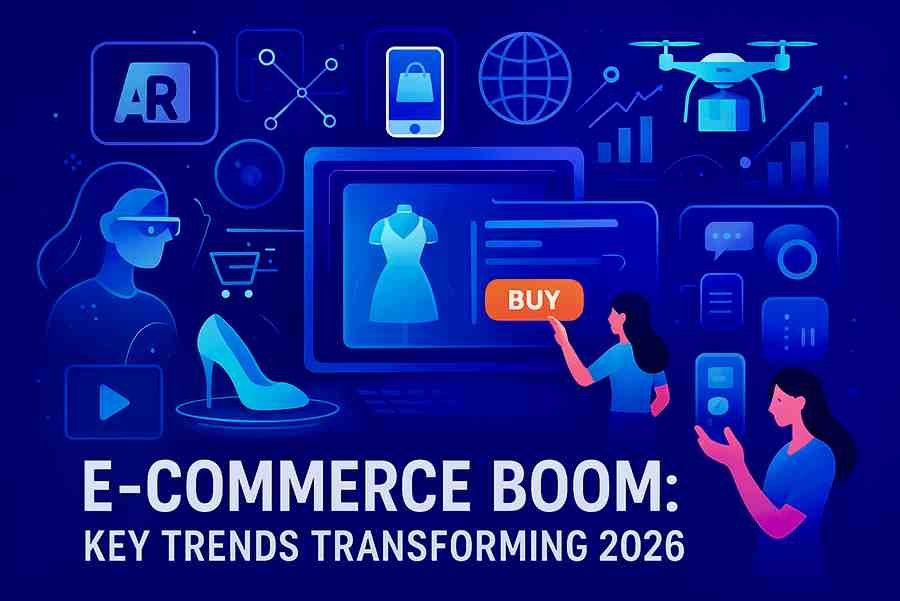
One of the most exciting E-Commerce Boom Key Trends 2026 is the growing use of augmented reality (AR) and virtual reality (VR) to help shoppers make better decisions.
Examples of AR/VR in Action:
Try-on apps for fashion and eyewear
Virtual furniture placement in your room
Virtual showrooms for electronics and cars
VR retail stores for immersive shopping
Brands like IKEA, Sephora, and Lenskart use AR to reduce returns and increase customer satisfaction. Retail analysts predict that AR-driven shopping will influence $600+ billion in sales by 2026.
5. Sustainable and Ethical Shopping Becomes a Priority
Consumers especially Gen Z want transparency. Ethical business practices and sustainability trends are strongly influencing the E-Commerce Boom Key Trends 2026.
What Shoppers Expect:
Eco-friendly packaging
Carbon-neutral delivery
Recycled materials in products
Ethical labor practices
Visibility into supply chains
More than 65% of consumers say they prefer buying from eco-conscious brands, even if products cost slightly more.
Case Example:
Major brands like Patagonia and Nike now provide detailed sustainability information for every product.
6. The Rise of Subscription Commerce and Membership Models
Subscription services have moved far beyond streaming. In 2026, they play a major role in e-commerce growth.
Popular Subscription Models:
Beauty boxes
Meal kits
Wellness and fitness products
Men’s grooming essentials
Home essentials (detergents, tissues, pet food)
Membership-based access like Amazon Prime also continues to grow, offering perks like exclusive deals, fast delivery, and early access.
Why This Matters
Subscriptions provide reliable monthly income for businesses and build stronger customer relationships.
7. Cross Border E-Commerce Expands Rapidly
Thanks to digital payments, international shipping improvements, and multi-currency support, cross-border shopping is one of the fastest-growing areas within the E-Commerce Boom Key Trends 2026.
Reasons for Global Expansion:
Shoppers want access to international brands
Better global logistics
More affordable international shipping
Digital wallets supporting global currencies
Trustworthy buyer protection policies
By 2026, over 35% of all online purchases are expected to be cross-border.
8. A New Generation of Payment Technologies
Payment innovation remains at the heart of e-commerce growth.
Key Payment Trends in 2026:
Digital Wallets (Apple Pay, Google Pay, PayPal)
“Buy Now, Pay Later” (BNPL)
Instant bank-to-bank transfers
Biometric payments (face ID & fingerprint checkout)
Why It Matters:
Customers abandon carts if payment feels complicated. Smooth, secure payments directly increase conversions.
9. AI Optimized Logistics and Supply Chains
Behind every e-commerce success story is a highly efficient supply chain. In 2026, companies use predictive analytics, smart warehouses, and robotics to manage inventory and shipping.
Examples of 2026 Logistics Tools:
AI demand forecasting
Automated pick-and-pack robots
Smart sensors for inventory management
Drone and autonomous vehicle delivery
Intelligent warehousing systems
These innovations reduce costs, minimize delays, and improve customer satisfaction.
10. The Expansion of Hyper-Personalized Marketing
Marketing in 2026 is deeply personalized, thanks to data analytics and AI.
How Hyper-Personalization Works:
Product offers based on past purchases
Tailored email and SMS campaigns
Personalized discounts
AI-powered ad recommendations
Real-time behavioral targeting
Businesses that implement hyper-personalization see dramatic improvements in click-through rates, repeat purchases, and customer loyalty.
Conclusion: The Future of E-Commerce Belongs to Innovators
The E-Commerce Boom Key Trends 2026 point to one powerful truth: the future belongs to brands that innovate. With AI, social commerce, Q-Commerce, subscription models, and AR/VR experiences defining the industry, businesses must adapt quickly or get left behind.
E-commerce is no longer just a marketplace it is a living ecosystem powered by technology, personalization, and customer expectations. Companies that understand how to connect these trends will thrive in 2026 and beyond.
Whether you are an entrepreneur, marketer, digital strategist, or an everyday shopper, the coming years promise a smarter, faster, and more immersive online shopping experience.





Hi