The Ancient City That Refused to Fade
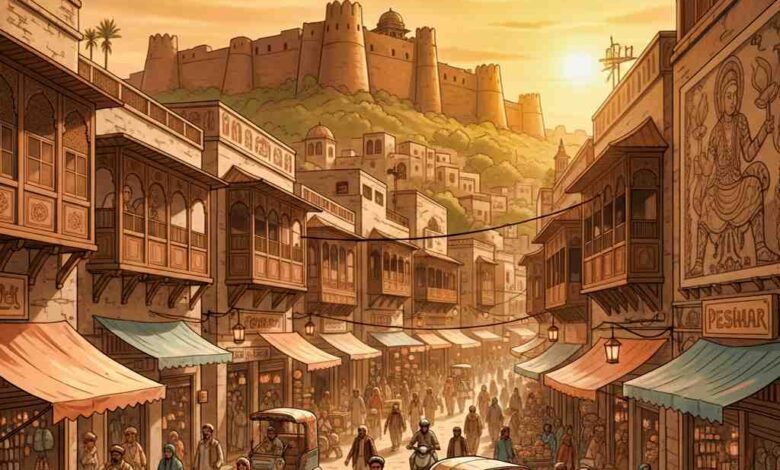
How Became a Cultural Powerhouse
Few cities in South Asia carry as much historical weight, cultural depth, and emotional resonance as Peshawar, a place that has seen empires rise, fall, and return in new forms. For more than 2,000 years, this ancient city has remained a vibrant crossroads of civilizations from Gandhara’s golden age to Mughal splendor, from Durrani rule to British colonialism, and finally to modern Pakistan. Through every era, Peshawar transformed, adapted, and reinvented itself while keeping its unmistakable identity intact.
Today, when historians discuss cities that survived the tides of time without losing their soul, Ancient City Peshawar appears at the top of that list. Its resilience, cultural richness, and strategic importance have shaped not only the city itself but also the broader region that connects Central, South, and West Asia.
This article explores how Peshawar refused to fade and instead became a cultural powerhouse whose influence is still felt around the world.
A City Older Than Most Civilizations
Scholars frequently identify Peshawar as one of the planet’s longest surviving, continuously populated urban centers. Archaeologists often compare its antiquity with cities like Damascus, Varanasi, and Jericho. Located just east of the Khyber Pass, the city stood at the center of ancient trade routes that connected China with Persia, India with Central Asia, and merchants with pilgrims.
Early Buddhist texts refer to the region as Puruṣapura, meaning “City of Flowers.” During the 1st and 2nd centuries CE, Peshawar became the crown jewel of the Gandhara Civilization, a hub of Buddhist learning, art, and philosophy. The Kushan Empire, particularly during the reign of Emperor Kanishka, elevated Peshawar to global fame. Kanishka’s stupa now lost, but described in detail by Chinese pilgrims was once one of the tallest wooden structures in the ancient world.
This period gave Peshawar its first identity as a center of ideas, culture, and artistic innovation. Gandharan sculpture, known for its Greco-Buddhist style, still fascinates historians with its blend of Greek realism and Buddhist spirituality. From the serene faces of Buddha statues to the detailed reliefs of ancient life, the art of Gandhara traveled across Asia, influencing cultures in China, Korea, and Japan.
Simply put, Peshawar’s cultural footprint spread far beyond its borders.
A Crossroads of Empires and Faiths
After the decline of the Kushans, the city remained a crucial gateway for centuries. Huns, Sassanians, Ghaznavids, and Ghorids passed through its valleys, each leaving their mark. But it was the Mughal era that added a new layer to Peshawar’s cultural identity.
Emperor Akbar strengthened the city’s defenses and rebuilt the famous Bala Hisar Fort, which still towers over Peshawar today. Jahangir and Shah Jahan further beautified the city with gardens, caravanserais, and mosques. Peshawar became not just a military outpost but also a thriving center of trade, drawing merchants, poets, artisans, and travelers from across Asia.
The Mughal influence blended with older traditions, creating a multicultural urban landscape where Persian literature, Pashtun poetry, Islamic scholarship, and Central Asian craftsmanship flourished side by side. This rich tapestry gave Peshawar a cultural depth that few cities could match.
The Heart of Pashtun Identity
While Peshawar welcomed many civilizations, it also became the political and cultural anchor of Pashtun society. From the 15th century onward, it was a gathering place for Pashtun tribes, leaders, scholars, and storytellers.
The city fostered the legendary Hujra culture a social institution where stories, poetry, music, negotiation, and hospitality came together. This tradition not only preserved Pashto language and literature but also ensured the transmission of Pashtunwali, the ethical code that guides Pashtun life.
Figures like Khushal Khan Khattak, often called the father of Pashto literature, found inspiration in the region’s landscapes and politics. His poetry, rich with themes of honor, resistance, and love for the homeland, immortalized the spirit of the Pashtuns and reinforced Peshawar’s status as a cultural heartland.
The British Era: Modernization and Resistance
The arrival of the British Empire in the 19th century brought new challenges and new transformations.
The British saw Peshawar as a frontier town of enormous strategic importance. They built roads, administrative buildings, and railway lines, introducing the foundations of modern urban life. Yet Peshawar never fully surrendered to colonial influence. It became a hub of nationalist movements and political activism.
The famous Qissa Khwani Bazaar literally “The Market of Storytellers” turned into a center where political discussions, cultural exchange, and community gatherings flourished. Traders, poets, and revolutionaries shared space with storytellers who narrated tales of ancient heroes and contemporary struggles. In 1930, this same bazaar witnessed a tragic massacre during peaceful protests against colonial rule, strengthening the city’s role in the independence movement.
This era etched another identity onto the city’s character:
Peshawar as a symbol of resistance.
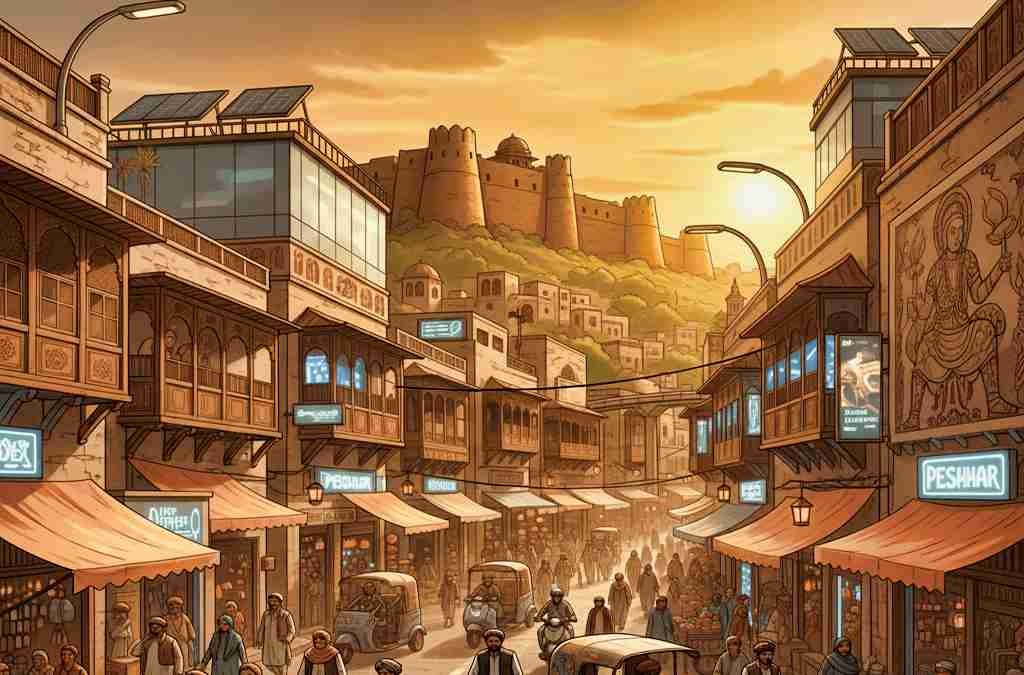
A Cultural Powerhouse in Modern Pakistan
After the creation of Pakistan in 1947, Peshawar continued its long tradition of serving as a regional hub. It became the capital of Khyber Pakhtunkhwa province and grew into a dynamic city shaped by migration, politics, trade, and cultural diversity.
A Refuge for Millions
The Soviet-Afghan War of the 1980s transformed Peshawar once again. Millions of Afghan refugees poured into the city, turning it into one of the world’s largest refugee-hosting regions. This migration reshaped the city’s demographics, economy, and identity.
Afghan carpets, gemstones, traditional foods, clothing, and art integrated into daily life. The city’s cultural landscape expanded, making Peshawar a melting pot of South and Central Asian traditions.
Revival of Heritage
Over the last two decades, the government and cultural organizations have invested in restoring Peshawar’s heritage. Historical sites like:
Sethi House
Gor Khatri
Peshawar Museum
Bala Hisar Fort
Qissa Khwani Bazaar
Masjid Mahabat Khan
have undergone conservation efforts. Tourism campaigns, academic research, and cultural festivals have renewed interest in Peshawar’s rich past.
This revival helps reconnect younger generations many of whom grew up amid political instability with the city’s inspiring heritage.
Peshawar’s Cultural DNA
So, what exactly makes Peshawar a cultural powerhouse?
1. Its Geography
Located at the mouth of the Khyber Pass, Peshawar has always been a gateway. Goods, languages, religions, and technologies passed through this narrow corridor, making Peshawar a natural center of exchange.
2. Its Artistic Legacy
From Gandharan sculpture to Mughal architecture, from Pashto poetry to Afghan handicrafts, Peshawar has nurtured artistic excellence for centuries.
3. Its Heritage of Storytelling
Qissa Khwani Bazaar symbolizes the city’s love of stories whether told by caravans from Samarkand or poets from the Indus plains.
4. Its Spirit of Resilience
Empires tried to conquer it. Wars shook it. Refugee waves reshaped it. Yet Peshawar refused to fade.
5. Its Cultural Fusion
Few cities blend South Asian, Central Asian, Persian, and Pashtun influences as naturally as Peshawar. This fusion gives Peshawar a unique cultural identity found nowhere else.
The Future: Peshawar as a Regional Cultural Hub
As Pakistan invests in tourism, heritage preservation, and urban development, Peshawar is gradually reclaiming its historic role as a cultural hub. The Bus Rapid Transit (BRT), university expansions, tech initiatives, and cultural exhibitions reflect a city reconnecting with its past while preparing for the future.
Several new projects aim to boost cultural tourism:
Restoration of old streets and bazaars
Gandhara research centers
New museums and digital archives
Documentation of Pashto literature and folklore
Heritage walks and cultural festivals
These initiatives help ensure that the story of Ancient City Peshawar continues to inspire future generations.
Its heritage is not simply a memory it is a living force.
Conclusion: Why Peshawar Refused to Fade
Peshawar’s story is not just about survival; it is about reinvention. Few ancient cities have experienced such continuous cycles of decline and revival. And fewer still have preserved their cultural identity so fiercely.
From the grandeur of the Gandhara Civilization to the poetry of Khushal Khan Khattak, from Mughal gardens to Afghan bazaars, from colonial resistance to modern transformation Peshawar embodies resilience, creativity, diversity, and pride.
The world may know it as a historic city, but to its people, Peshawar is something much deeper:
A symbol of endurance.
A cradle of culture.
A guardian of heritage.
A city that simply refuses to fade.
And that is why Peshawar remains a cultural powerhouse, not just of Pakistan but of the entire region.




9 Comments