Pakistan Inflation Update 2026: What It Means for Grocery Prices & Bills
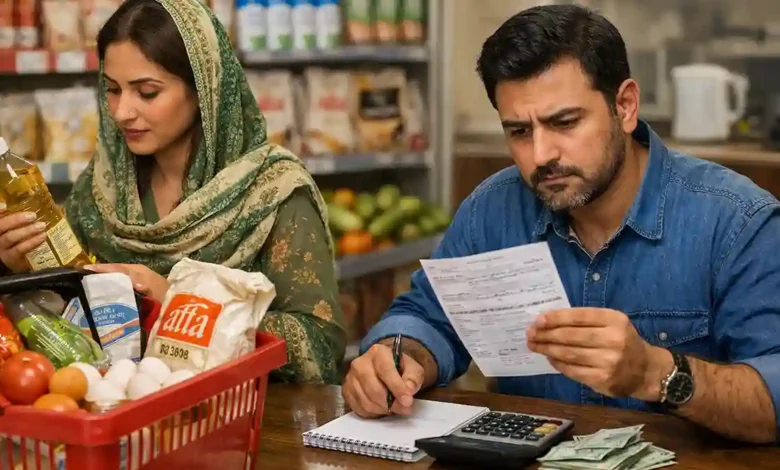
Pakistan Inflation Update 2026 is not just a policy headline or a number buried in an economic report. For ordinary households, it is the difference between a manageable month and a stressful one. It shows up in the wheat flour bag that suddenly costs more, in the electric bill that feels heavier than expected, and in the weekly grocery run where a few basic items can quietly push the total beyond the family budget.
That is why inflation in Pakistan is still such an important story in 2026. The worst phase of the crisis may have eased, but daily life has not become easy. Prices are not rising at the same speed they once did, yet many families still feel squeezed because food, utilities, transport, and household essentials remain expensive compared with earlier years. The official data supports that mixed reality: Pakistan’s Consumer Price Index rose 6.98% year on year in February 2026, while average inflation for July February FY2025-26 stood at 5.46%. On a monthly basis, CPI increased 0.27%.
At first glance, that looks like progress. And in one sense, it is. Pakistan is no longer facing the kind of runaway inflation that defined the most painful months of the previous period. But households do not experience inflation as a headline average. They experience it through flour, pulses, milk, tomatoes, fuel, school expenses, rent related costs, and monthly bills. That is where the story becomes more complicated.
The most important thing to understand is that lower inflation does not mean lower prices. It means prices are rising more slowly than before. If a family was already paying elevated prices for food and utilities last year, even a moderate inflation rate can still feel harsh. Households are not comparing today’s prices only with last month’s prices. They are comparing them with what life used to cost before repeated waves of inflation pushed the baseline higher.
This is exactly why so many people still feel pressure even when economists talk about improvement. The national inflation rate is an average, but no family buys the exact same basket as the CPI formula. One household may spend heavily on transport and school costs. Another may be more exposed to gas, electricity, milk, and wheat flour. A third may rely on LPG, local market vegetables, and frequent commuting. Each of these households experiences inflation differently.
That uneven experience is clearly visible in the latest official breakdown. In February 2026, the food and non alcoholic beverages group fell 0.85% month on month, while housing, water, electricity, gas and other fuels rose 1.86%. The transport group fell 1.89% in that month’s national CPI table. In simple terms, some food pressure eased temporarily, but household bills moved in the opposite direction.
That single pattern explains a great deal about why inflation still feels stubborn. A family may notice some relief in a few grocery items, but that relief can disappear the moment electricity or gas becomes more expensive. For many households, bills are less flexible than food. You can switch from one fruit to another, reduce the quantity of chicken, or change brands. It is much harder to avoid electricity, cooking fuel, or transport costs when they are tied to daily life.
The latest inflation picture in Pakistan
Pakistan entered 2026 with a more stable macroeconomic backdrop than it had during the height of the inflation surge. The State Bank of Pakistan said in its February 2026 Monetary Policy Report that inflation is expected to remain within the 5% to 7% target range during most of FY26 and FY27, although it warned that some months could still move above that band because of near term volatility. The central bank also highlighted two major risks: global oil prices and administered energy prices.
That outlook matters because it gives a realistic reading of the current situation. Pakistan is no longer in the middle of the most extreme inflation phase, but the country is not in a comfort zone either. Inflation has become more controlled, yet it remains vulnerable to shocks. In practice, that means families may see some months of relative relief, followed by periods when fuel, utility adjustments, or selected food items create fresh strain.
The official numbers also show that inflation is not moving evenly across categories. While headline CPI rose by 6.98% year on year in February, the impact was sharper in some of the areas households care about most. The broad housing, water, electricity, gas and other fuels category rose 9.65% year on year nationally. In urban areas, that group rose 10.51% year on year.
This is why the inflation conversation in 2026 is less about one giant across the board surge and more about shifting pressure points. One month, vegetables may dominate the discussion. Another month, gas charges or electricity adjustments take over. Then fuel prices begin to affect transport fares and delivery costs, which feed back into market prices. For families trying to plan a monthly budget, that kind of rotation can be just as exhausting as high inflation itself.
What inflation means for grocery prices
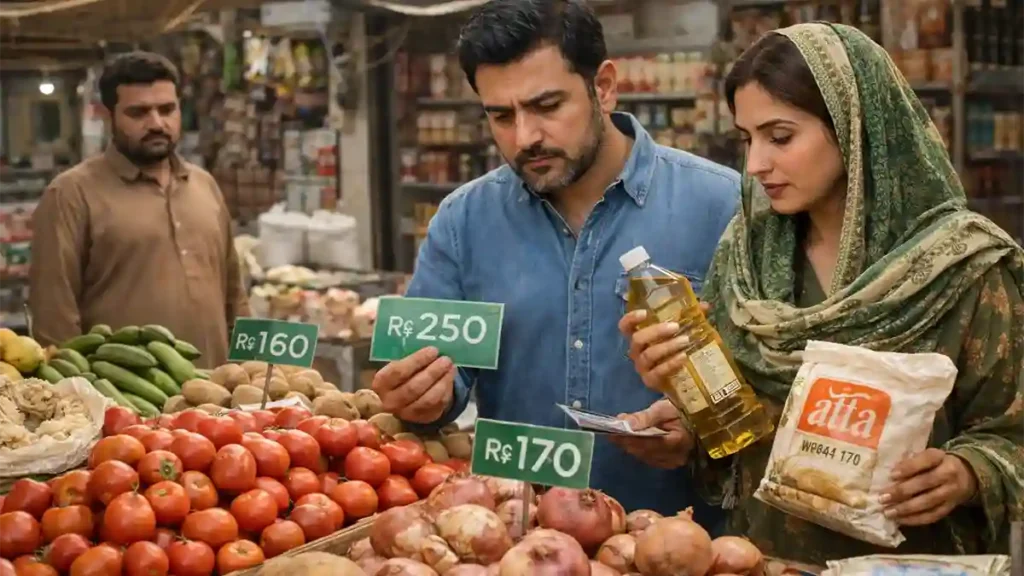
Grocery prices remain the most visible part of inflation because they are felt often. Families may pay school fees once a month and review rent once a year, but they face food prices several times a week. That frequency makes grocery inflation emotionally powerful. A single visit to the market can shape how people feel about the entire economy.
The February 2026 data shows just how mixed the grocery picture has become. In urban areas, tomatoes rose 23.05% month on month, fresh fruits 11.48%, and pulse mash 8.19%. At the same time, eggs fell 22.39%, chicken 19.99%, and potatoes 15.89%. Rural data showed a similar contrast: tomatoes rose 17.61%, fresh fruits 11.47%, and wheat flourb 2.74%, while potatoes, eggs, and chicken all declined.
This tells us something important. Grocery inflation in Pakistan is not moving in one direction. It is uneven, selective, and often volatile. That is why two shoppers can come back from the market with completely different impressions. One may say prices are finally easing because eggs or chicken were cheaper. Another may say inflation is getting worse because tomatoes, fruit, or flour cost more. Both experiences can be true at the same time.
Year on year figures reinforce the same point. In urban areas, PBS recorded large annual increases in tomatoes, wheat, wheat flour, and fresh fruits, while some other items such as potatoes, chicken, and onions were cheaper than a year earlier. The basket is moving in pieces, not as one block.
For households, this makes planning much harder. A family can gradually adapt to permanently high prices if their income also rises. What is more difficult is a market where some essential items drop for a while, others jump suddenly, and bills remain unpredictable. In that environment, budgeting becomes less about setting a fixed amount and more about managing constant adjustment.
Another reason grocery inflation feels persistent is that food prices are linked to costs beyond the market stall. Transport, storage, wholesale movement, electricity for refrigeration, and fuel for supply chains all affect the final price consumers pay. So even when the food group softens in one month, the pressure can quickly return if transport or energy costs start rising again.
Why bills matter even more than groceries
If groceries shape public mood, utility bills shape household stress. They arrive with force, they are harder to negotiate, and they leave less room for substitution. This is where many families feel inflation most sharply in 2026.
The official figures are revealing. In urban non food data for February 2026, electricity charges rose 10.03% month on month. On a year on year basis, urban non food data showed gas charges up 22.91% and liquified hydrocarbons up 11.63%. These are not minor adjustments. They are exactly the kind of increases that can wipe out any savings households may have gained from softer prices in a few grocery items.
Bills are especially damaging because they affect the rest of the economy as well. When electricity and gas become more expensive, bakeries, restaurants, milk shops, laundries, transporters, and small retailers all face higher operating costs. Those businesses eventually pass some of that burden on to customers. That means utility inflation does not stay inside the bill itself. It spreads outward into food, services, and neighborhood retail prices.
This is one reason inflation can feel larger than the headline number suggests. A family may not only be paying more for its own electricity or gas. It may also be paying indirectly through higher prices for bread, cooked food, deliveries, and local services. The same rupee is being squeezed from multiple sides.
For lower income and lower middle income households, this effect is particularly severe. These families often have little room to absorb surprises. If a power bill jumps, they cannot easily compensate by cutting fixed expenses. That forces sharper trade offs elsewhere: less variety in food, delayed purchases, reduced transport, or postponed household needs.
The role of fuel in daily inflation
Fuel remains one of the most important swing factors in the inflation story. Even when food prices are mixed and the headline CPI appears manageable, petrol, diesel, and LPG can quickly change the mood for both households and businesses.
The State Bank has already warned that the inflation outlook remains sensitive to oil prices and administered energy adjustments. That warning is not theoretical. The latest weekly Sensitive Price Indicator for the week ended March 5, 2026 showed the SPI rising 0.37% week on week, with significant increases in chicken (10.46%), LPG (5.61%), petrol (3.06%), and diesel (1.84%). On a year on year basis, the same SPI release showed notable increases in gas charges for Q1 (29.85%), electricity charges for Q1 (17.33%), and LPG (16.89%).
Fuel shocks matter because they ripple through the entire economy. Petrol affects commuting. Diesel affects freight, wholesale movement, agriculture related transport, and distribution. LPG affects households that rely on cylinders for cooking or backup use. When these costs rise, the impact does not stay at the pump or in one bill. It shows up in vegetables, fruits, delivery charges, school transport, and neighborhood fares.
That is why fuel is often the category that quietly brings inflation back into daily conversation, even after a softer CPI reading. A household may not react instantly to a policy statement, but it reacts very quickly to a transport fare increase or a visibly higher fuel bill. Those are direct reminders that inflation is still part of ordinary life.
Why inflation still feels heavy for households
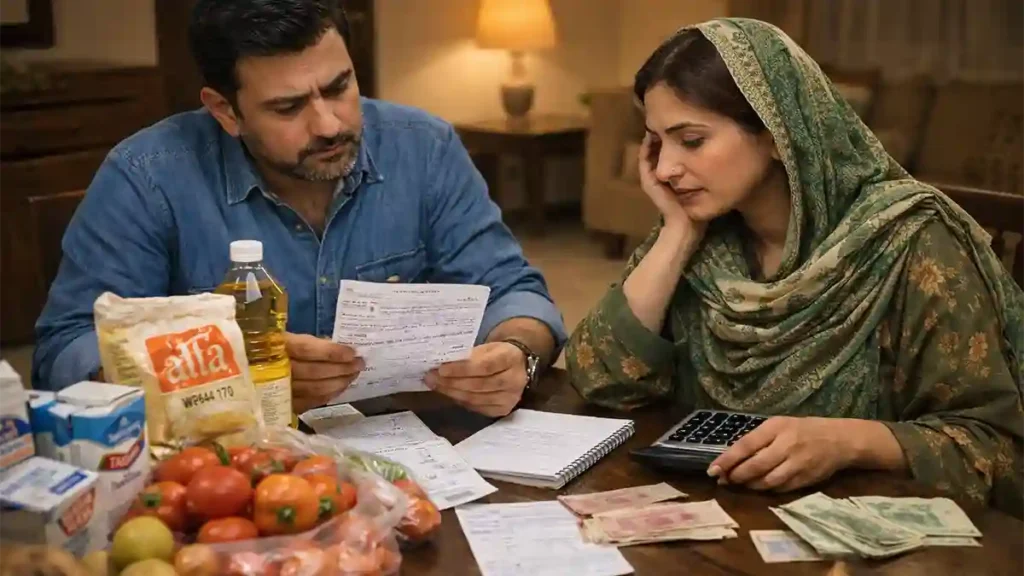
The real burden of inflation in 2026 comes from the combination of elevated base prices and uneven category pressure. Families are no longer dealing with a single dramatic spike across everything. Instead, they are dealing with recurring pressure that moves around the budget.
One month the problem is tomatoes and fruit. The next month it is gas. Then transport rises, followed by education or healthcare costs. According to the February CPI release, education rose 9.64% year on year, while health rose 7.19% and clothing and footwear rose 6.18%. These are not always the first categories people mention when discussing inflation, but they matter because they add to the steady pressure on monthly spending.
This rotating pressure explains why many households feel that they never fully recover. Relief in one area is often offset by strain in another. A cheaper carton of eggs does not solve a higher electricity bill. Lower chicken prices do not erase a gas adjustment. A small fall in transport this month can be reversed by fuel movement next week.
For middle income households, this often means shrinking financial flexibility. For lower income households, it can mean direct cuts in food quality, quantity, or household comfort. And for small businesses, it means trying to survive in an environment where customers are price sensitive but operating costs remain unstable.
What to expect for the rest of 2026
The broader picture suggests a year of controlled but unsettled inflation. The central bank does not expect a return to the crisis peaks, but it also does not promise a smooth path downward. Inflation is projected to stay mostly within the 5% to 7% range, yet risks from energy prices and oil remain real.
For households, that means the most realistic expectation is not a dramatic fall in the cost of living. It is a gradual, uneven easing, interrupted by spikes in certain categories. Grocery prices may continue to move in mixed directions depending on supply, seasonality, transport costs, and local market conditions. Bills are likely to remain more difficult because utility linked inflation is harder to escape and often more persistent.
The key lesson from Pakistan Inflation Update 2026 is that inflation now works in layers. The headline number gives one picture, but the real household experience depends on which layer is moving fastest: food, utilities, fuel, transport, education, or health. Families are not measuring inflation the way economists do. They are measuring it in the space left at the end of the month.
Quick FAQ
What is Pakistan’s latest inflation rate in 2026?
Pakistan’s national CPI inflation was 6.98% year on year in February 2026, according to the Pakistan Bureau of Statistics. Month on month, CPI rose 0.27%.
Are grocery prices still rising in Pakistan in 2026?
Yes, but unevenly. In February 2026, some food items rose sharply, such as tomatoes and fresh fruits, while others like eggs, chicken, and potatoes fell. So grocery pressure is still real, but it is not moving equally across every item.
Why do people still feel inflation if the official rate is lower than before?
Because lower inflation does not mean lower prices. It only means prices are rising more slowly. Families are still paying from a high base, and many feel stronger pressure from bills, transport, and essential recurring costs than from the headline CPI number.
Are electricity and gas bills still a major inflation problem?
Yes. In February 2026, the national housing, water, electricity, gas and other fuels group rose 9.65% year on year, while urban data showed gas charges up 22.91% year on year and electricity charges up 10.03% month on month.
What does the latest weekly inflation data show?
PBS said the Sensitive Price Indicator rose 0.37% for the week ended March 5, 2026. Major weekly increases included chicken, LPG, bananas, petrol, and diesel.
Could petrol prices push inflation higher again?
Yes. SBP has already warned that inflation is sensitive to global oil prices and administered energy prices. Reuters also reported a major Rs55 per litre fuel increase in early March 2026, which raises the risk of further pass-through into transport and retail costs.
What is SBP expecting for inflation ahead?
SBP projects inflation to remain within the 5% to 7% range during most of FY26 and FY27, but it also says some months could move above the upper bound because of volatility and energy related risks.
What should Pakistani households watch most in 2026?
The biggest watchpoints are utility bills, petrol and diesel prices, LPG, wheat and flour trends, and weekly shifts in essential foods. In the current environment, bills and transport costs can change the household budget faster than the headline inflation rate suggests.
Final thoughts
Pakistan Inflation Update 2026 is a story of improvement, but not comfort. The country’s inflation rate is far below the levels that once triggered panic, and that is an important change. Yet the pressure on households has not disappeared. Grocery prices remain uneven, utility costs are still capable of causing damage, and fuel linked volatility can quickly spread through the wider economy.
That is why inflation still feels bigger than the official average. Families do not live inside a CPI formula. They live inside a budget. And in that budget, the real challenge is not just whether inflation is lower than before. It is whether food, fuel, and bills are finally becoming stable enough for households to breathe again.
So the honest conclusion is this: Pakistan is in a better inflation environment than it was during the worst period, but everyday affordability is still under pressure. The crisis phase may have eased, yet the household strain phase is still very much alive. Until grocery baskets, utility bills, and transport costs begin to settle together, inflation will continue to feel more serious than a single headline number suggests.






One Comment