FIA EMI App Pakistan for Umrah/Hajj Travelers: What to Upload and When (2026)
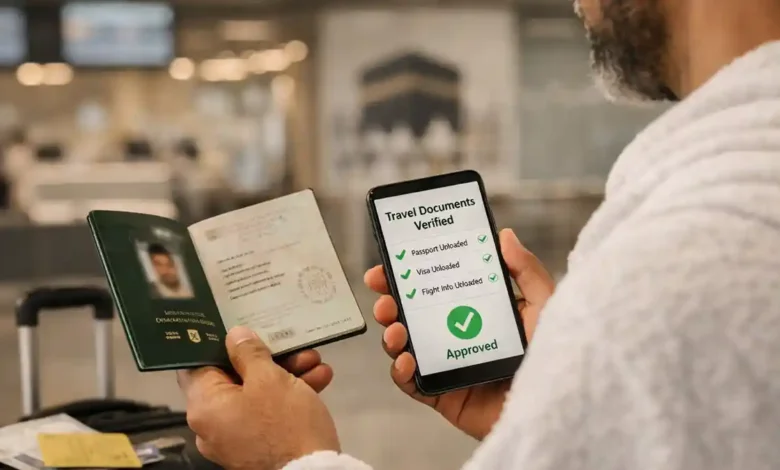
FIA EMI App Pakistan is one of the most discussed travel topics among Pakistani pilgrims in 2026, especially those preparing for Umrah or Hajj. If you have ever heard stories of travelers getting stopped at the airport after check in, you already know the real issue: it is rarely about one document. It is usually about confusion, mismatched details, unclear proof, or last minute changes that make your case look incomplete.
Immigration systems are moving toward faster, digital screening. That means the airport experience is gradually shifting from show everything at the counter to confirm everything early, then pass smoothly. For Umrah and Hajj travelers, this change is not scary, but it does demand one thing from you: preparation.
This deep dive guide explains, in plain English:
- What you may need to upload (and what you must still carry)
- The best timeline to submit details without stress
- Mistakes that cause delays and how to avoid them
- Health and vaccination documents that matter more during Hajj seasons
- A realistic travel day checklist you can follow even if you are not tech savvy
Important note: requirements and enforcement can vary by airport, airline, and rollout stage. Use this guide as a professional readiness plan so you stay safe, calm, and fully prepared.
1. What Is the FIA EMI App in 2026 (In Simple Terms)?
People use the term EMI app in different ways, which creates confusion. In practical travel talk, it usually refers to an e-immigration workflow where you enter your travel details, attach proofs, and your identity and trip are pre verified against official records. The end goal is simple: quicker clearance for clean cases and stronger checks for suspicious or incomplete cases.
Think of it like this:
- Before: officers verified everything at the airport, under pressure, with long queues.
- Now: the system wants key information earlier, so the airport process becomes faster and more controlled.
For pilgrims, that earlier step is critical because Umrah and Hajj trips often involve packages, group itineraries, and multiple documents. A small mismatch can create big delays if discovered at the last minute.
2. Why Umrah and Hajj Travelers Should Take This Seriously
Umrah and Hajj are not casual vacations. They are time sensitive journeys with fixed schedules, strict entry rules, and heavy seasonal crowds. When the airport is packed, staff have less patience for missing information. Systems and officers are trained to look for consistency. If your documents are genuine but messy or contradictory, you can still end up stuck in manual checks.
Here is what makes pilgrim travel more sensitive:
- Many travelers are first time flyers and unsure what matters most
- Elderly travelers may rely on family or agents for paperwork
- Some packages include temporary itineraries that later change
- Vaccination requirements become a major factor during Hajj seasons
The good news: most problems are preventable if you prepare your documents early and keep your data consistent.
3. The Pilgrim Mindset: Make Your Trip Easy to Understand
A smooth case is not about having more documents. It is about making your story clear:
- Who you are (identity coherence)
- Why you are traveling (purpose coherence)
- Where you are going and for how long (travel coherence)
- Whether you meet basic entry and health conditions (compliance coherence)
If your passport, visa, name spelling, and travel dates align, your risk of delay drops dramatically.
4. What to Upload in FIA EMI App Pakistan (Umrah and Hajj Checklist)
A smart approach is to divide your documents into three layers. This prevents over uploading random files and keeps your submissions organized.
Layer A: Core Identity (High Priority)
These are the foundation. Without them, nothing else matters.
- Passport bio page (clear scan or photo)
- Make sure passport number, name, date of birth, issue and expiry dates are readable
- A recent face photo (only if asked)
- Use a plain, passport style photo without filters
- Identity reference details (if requested by the system)
- Enter CNIC/NICOP details carefully if the app asks for linkage
Quality standard:
- No blur, no glare, no heavy shadows
- No cropped edges cutting off important text
Layer B: Trip Proof (Shows Intent and Itinerary)
These prove you are a real traveler with a real plan.
- Ticket or booking confirmation (PNR if available)
- Flight details (flight number, date, and route)
- Hotel booking confirmation (especially common for Umrah packages)
- Return ticket proof (important for short stays and clarity)
If your agent provides a temporary booking, treat it as temporary. Upload only what is final whenever possible.
Layer C: Pilgrim Specific Compliance (Very Important for Hajj)
This layer becomes critical during Hajj seasons and sometimes matters for Umrah depending on the period and traveler category.
- Vaccination certificates (Hajj focus)
- Meningococcal vaccine proof is a common requirement during Hajj related guidance
- Polio vaccination proof (if applicable to traveler category or travel context)
- Any health related certificates requested for the season
- Group organizer references (Hajj)
- Your scheme or organizer details can help confirm legitimacy
- Family/guardian documentation (only if applicable)
- Do not upload extra documents unless needed, but keep them ready
Key rule: even if the app does not ask for every item, having them prepared prevents last minute panic.
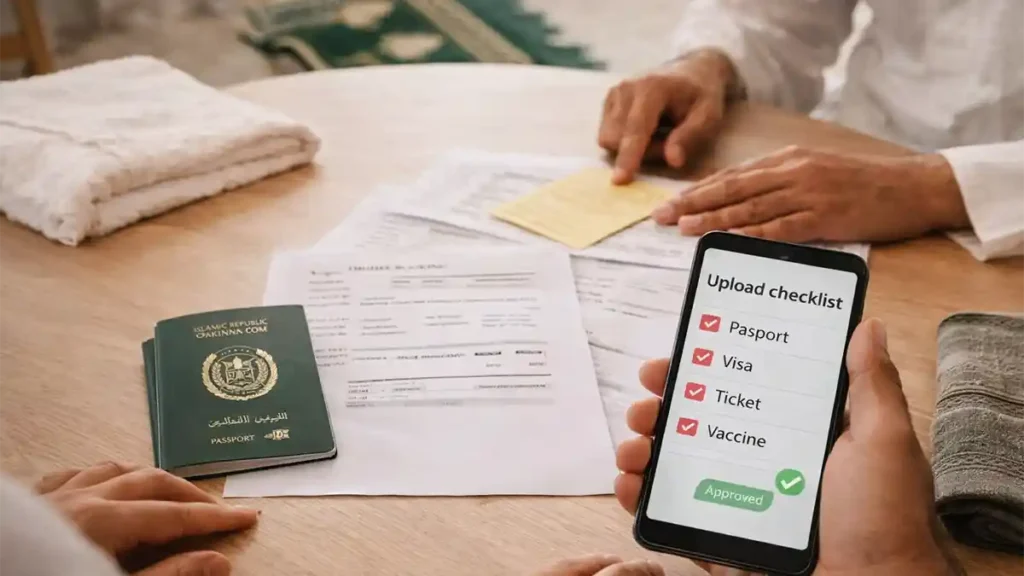
5. When to Upload: A Realistic 2026 Timeline (Best Practice)
Instead of guessing one deadline, use a staged plan. This is how experienced travelers avoid airport stress.
Stage 1: 30 to 21 days before departure (Preparation Phase)
Do this early, even if your visa is still pending:
- Create a Pilgrim Documents folder on your phone
- Save a clean passport bio page scan
- Confirm your name spelling in English (passport format)
- Ask your agent for estimated visa date and a draft itinerary
Small but powerful habit: write your passport name exactly as printed and reuse the same spelling everywhere.
Stage 2: 20 to 14 days before departure (Compliance Phase)
This is the best window to lock what truly matters:
- Confirm visa status and category (Umrah vs Hajj)
- Confirm your expected flight route and timing
- Complete vaccinations early enough to avoid timing issues
- Request final hotel confirmations from your provider
If you are doing Hajj, treat vaccination proof as non negotiable. Do not leave it to the final week.
Stage 3: 13 to 7 days before departure (Best Upload Window)
For most pilgrims, this is the sweet spot:
- Your itinerary is usually finalized
- You still have time to correct mistakes
- You are not trapped in last minute pressure
If the app is being used for your airport/airline route, upload during this window and save proof of submission.
Stage 4: 72 to 48 hours before departure (Re-check Window)
This is your safety net:
- Re-check every field you entered
- Confirm passport number, date of birth, flight number, and date
- Replace any unclear photo scans
- Save offline copies on your phone (PDF or screenshots)
Stage 5: 24 hours before departure (Travel Ready Pack)
Prepare one clean travel pack folder:
- Passport bio page
- Visa proof
- Ticket and PNR
- Hotel confirmations
- Vaccination certificates
- Emergency contact note
If you can, print a one page version too. Phones fail. Batteries die. Signal disappears.
6. How to Upload Correctly (The Rules That Prevent Delays)
Most airport stress is created by avoidable mistakes. Here are the rules that actually matter:
Rule 1: Clarity beats everything
A readable photo is better than a beautiful photo. Avoid:
- blur
- glare from lights
- extreme angles
- cropped edges cutting off passport numbers
Rule 2: One document, one file
Do not upload 10 photos of the same visa page. Create clean files like:
- Passport_BioPage.jpg
- UmrahVisa.pdf
- Ticket_PNR.pdf
- Vaccine_Certificate.jpg
Rule 3: Match your data exactly
Common mismatch examples:
- Passport: MUHAMMAD ASHRAF
- Ticket: MOHAMMAD ASHRAF
- App entry: MUHAMMAD ASHARAF (typo)
Even one small inconsistency can force manual verification.
Rule 4: Do not treat agent info as final until it is final
Agents are helpful, but you are responsible for accuracy. Confirm:
- visa category
- travel dates
- route and flight number
- hotel city names and check in dates
Rule 5: Keep a personal copy of everything
If you are traveling in a group, never depend on the organizer has it. If you get separated, you still need proof.
7. Umrah Travelers: What You Usually Need (Clean List)
Umrah documentation is often simpler than Hajj, but the risk comes from last minute bookings and name errors.
A strong Umrah upload bundle usually includes:
- Passport bio page
- Umrah visa or e-visa confirmation
- Flight booking (with PNR if available)
- Hotel confirmation (Makkah and Madinah if both are included)
- Return booking proof
- Travel insurance proof (if you bought it)
- Any seasonal health proof requested by your provider
Best upload timing for Umrah:
- Upload once your visa and itinerary are stable (often 7 to 10 days before)
- Re-check 48 hours before departure
8. Hajj Travelers: What Is Different (And Why It Is Stricter)
Hajj is a controlled, high volume pilgrimage with strict compliance expectations. Compared to Umrah, Hajj involves:
- tighter scheduling
- organized quotas and schemes
- greater emphasis on permits and official pathways
- stronger health compliance focus
A strong Hajj upload bundle commonly includes:
- Passport bio page
- Hajj visa documentation
- Flight itinerary (often group based)
- Organizer or scheme reference (government or private)
- Accommodation details
- Vaccination certificates required for the season
- Any additional documents advised for your category (elderly, dependent traveler, or special route cases)
Best upload timing for Hajj:
- Upload as soon as visa and final itinerary are confirmed (often 10 to 14 days before)
- Re-check again within 72 hours of departure
9. Why People Get Delayed or Offloaded (Even With Genuine Documents)
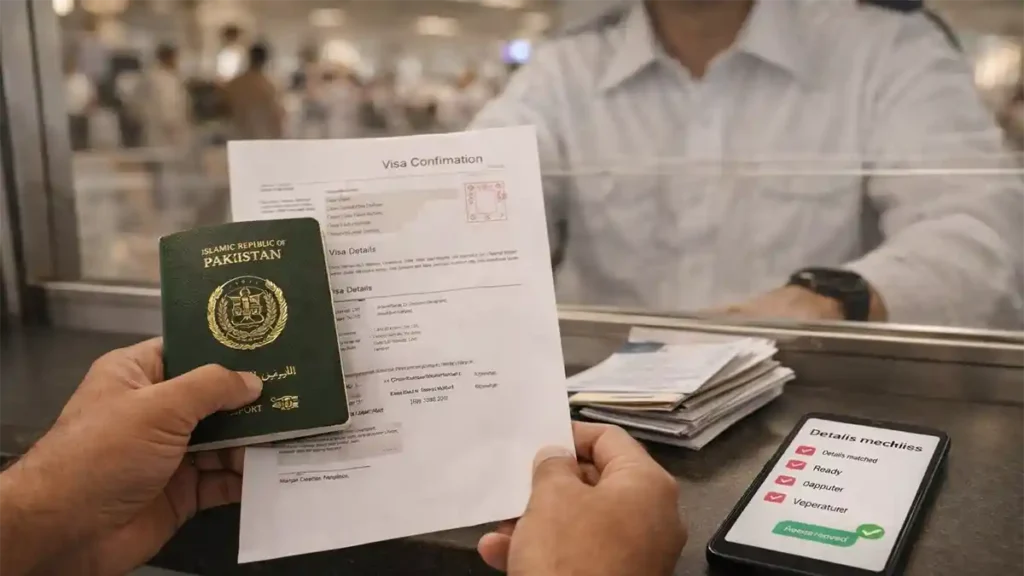
Offloading is rarely random. It usually happens when staff cannot quickly confirm that your travel is valid and consistent.
Common triggers for pilgrims:
- Blurry or incomplete visa proof
- Wrong travel dates compared to visa validity
- Name spelling mismatch across documents
- Missing vaccination proof during Hajj season
- Last minute ticket changes that are not reflected in your saved proof
- Temporary bookings presented as final
- Elderly or dependent traveler documentation missing when required
- Confusion at the counter (unable to explain itinerary)
The best prevention strategy is to reduce uncertainty:
- keep documents clean
- keep details consistent
- keep backups offline
10. Real World Scenarios (So You Can Copy What Works)
Scenario A: Family Umrah (Parents and Kids)
What usually goes wrong:
- child passport validity issues
- inconsistent spelling in bookings
- hotel confirmation not matching the itinerary sequence
What works:
- Create a separate folder for each traveler
- Keep one combined PDF for hotel confirmations
- Ensure names match passport spelling for each family member
- Keep return ticket proof visible and easy to show
Scenario B: Government or Group Hajj Traveler
What usually goes wrong:
- pilgrim does not personally hold copies
- everything is with the group leader
- traveler cannot quickly show vaccination proof
What works:
- Keep your own copies on your phone
- Keep printed proof for health certificates
- Save organizer reference details in notes
Scenario C: Elderly Traveler With a Helper
What usually goes wrong:
- confusion at check in
- missing printed pack
- medical needs not prepared
What works:
- Prepare a single travel pack PDF plus printouts
- Keep prescriptions and a simple medical summary
- Save emergency contacts on paper and phone
11. Security and Privacy: Avoid Scams and Unsafe Sharing
Because immigration apps are discussed widely online, scammers often exploit the confusion. Protect yourself:
- Install only official apps from trusted stores
- Avoid uploading passports to random links or unknown WhatsApp numbers
- Do not pay anyone claiming they can clear your status inside the system
- If you must share documents with an agent, share only what is necessary and keep your official upload files clean and unmodified
Practical privacy tip:
- Keep two sets of files:
- Official upload files (clean, clear, not watermarked)
- Agent sharing files (minimal, sometimes lightly watermarked)
12. Travel Day Playbook (Simple Steps That Save You)
Pilgrimage day is emotional. Crowds are heavy. People panic. Your goal is calm efficiency.
Night before departure
- Charge phone and power bank
- Save all documents offline (PDF or screenshots)
- Print at least the key set (visa, ticket, hotel, vaccination proof)
- Confirm flight time and terminal
At the airport
- Keep passport and visa in hand, not buried in luggage
- Keep your travel pack folder ready to open in seconds
- If asked about uploads, show your saved confirmation or submission proof calmly
- If something looks wrong, do not argue. Ask what exact item is needed and provide it cleanly
If you stay organized, you do not just reduce stress. You also reduce the chance of being treated like a complicated case.
Quick FAQ
Is FIA EMI App Pakistan mandatory for Umrah and Hajj in 2026?
It can vary by rollout stage, airport, and airline. Treat it as a preparedness requirement: be ready to submit details if requested.
What should I upload first if I want to avoid problems?
Start with the passport bio page, then visa proof, then ticket/PNR and flight details. That combination makes your case easy to verify.
When is the best time to upload documents for Umrah?
Usually when your visa and itinerary are stable, often 7 to 10 days before departure. Then re-check 48 hours before flying.
When is the best time to upload documents for Hajj?
Upload as soon as your visa and final group itinerary are confirmed, often 10 to 14 days before departure, with a second review within 72 hours.
What is the biggest reason pilgrims get delayed at the airport?
Name mismatches, unclear visa proof, missing health certificates during Hajj seasons, and last minute booking changes without updated proof.
Can I upload screenshots instead of PDFs?
Screenshots can work if they are clear. PDFs are better when your proof has multiple pages, like combined itineraries and hotel confirmations.
If my agent has all documents, do I still need my own copies?
Yes. You must keep your own offline copies. If the agent is unavailable at the counter, you will lose valuable time.
What should I do if I notice an error close to departure?
Fix what you can immediately (re-upload clearer files, correct entry fields). Arrive early and keep printed proof so staff can verify quickly.
Conclusion: Prepare Early, Upload Cleanly, Travel Smoothly
The direction of travel processes in 2026 is clear: more digital verification, more consistency checks, and less tolerance for unclear proof at the last minute. For Umrah and Hajj travelers, that does not mean trouble. It means you must plan your documents like a professional.
If you do only three things, do these:
- Build your document folder early (passport, visa, ticket, hotel, health proof)
- Upload or submit details in the best window (7 to 10 days pre departure, then re-check)
- Keep offline backups and a printed pack
That is how you travel confidently, avoid delays, and protect your pilgrimage from unnecessary airport stress.






4 Comments