Beginner Mistakes in China Importing: First Shipment
Beginner mistakes in China importing rarely feel risky in the moment. They feel like a good deal, a friendly supplier, a fast timeline, and a quote that looks too good to ignore. Then reality arrives: the bulk order does not match the sample, cartons show up crushed, customs asks for paperwork you do not have, and hidden logistics fees swallow your margin.
If you are planning your first shipment from China, this guide is designed to protect your cashflow and your confidence. We will cover the most common (and most expensive) first timer errors, why they happen, and how professionals prevent them with simple systems. You will learn how to vet suppliers, lock product specs, manage quality, understand shipping terms, avoid freight traps, and prepare customs documentation before a problem becomes a cost.
This is not about being perfect. It is about being controlled.
Why first shipments are where most losses happen
Your first shipment is the moment when you have:
- the least leverage in negotiation,
- the weakest documentation discipline,
- the least experience with logistics and customs,
- the highest optimism about timelines.
Factories and intermediaries can also sense when a buyer is new. Sometimes they will guide you. Sometimes they will test boundaries. Either way, your process needs to do the heavy lifting, not your hope.
Importing is a chain. When a single link is vague (specs, Incoterms, inspection, documents, packaging), costs appear later when fixes are expensive.
Start with the right math: landed cost beats unit price
A top beginner trap is celebrating a low unit price while ignoring landed cost: the total amount it takes to get the product to your door, cleared, compliant, and sellable.
What landed cost typically includes
- Unit cost and tooling (if any)
- Packaging and labeling
- Local transport in China (factory to port/warehouse)
- Export documents and handling charges
- International freight (air/sea/rail/express)
- Insurance (if purchased)
- Destination charges (port/terminal/handling)
- Customs brokerage and clearance fees
- Import duties and taxes (VAT/GST where applicable)
- Local delivery (port to warehouse)
- Rework costs (relabeling, repacking, returns, replacements)
A simple landed cost formula you can use
Landed Cost = Product Cost + Logistics + Duties/Taxes + Local Fees + Rework Buffer
That last part matters. Beginners often budget for best case logistics and zero defects. A small buffer is what keeps a learning shipment from becoming a financial emergency.
Mistake 1: Picking a product that sells online but imports badly
A product can be popular and still be a poor choice for a first time importer. Some categories punish beginners because they have high compliance requirements, high damage rates, or shipping restrictions.
Beginner risky product types
- Fragile goods (glass, ceramics, liquids)
- Electronics that require strict certifications
- Anything with lithium batteries, magnets, liquids, or powders (shipping restrictions)
- Oversized items where dimensional weight destroys margins
- High return categories where customers are picky (fit, color accuracy, feel)
- Products that resemble protected brands or designs (IP risk)
Beginner friendlier product filters
- Durable, simple, low breakage items
- Low compliance complexity in your country
- Stable demand rather than short viral spikes
- A price point that allows margin after freight and taxes
- A product you can explain clearly in a spec sheet
If you cannot describe the product in precise terms, you are not ready to order it at scale.
Mistake 2: Choosing the cheapest quote and calling it smart sourcing
Low price can be genuine efficiency, but it can also be a signal that corners will be cut. A supplier can reduce cost by changing materials, lowering thickness, switching internal components, skipping QC steps, or using cheaper packaging.
What cheap quotes often hide
- Material substitutions
- Reduced weight or weaker structure
- Inconsistent finishing
- More defects in the bulk run
- Underpacked cartons that increase damage
- Poor process control (especially when volume increases)
What to do instead
- Compare quotes from multiple suppliers, then ask why the price differs
- Request material specs, weight, thickness, and process details
- Ask for a basic cost breakdown (even approximate)
- Treat too cheap as a risk indicator, not a victory
In importing, the most expensive phrase is It is basically the same.
Mistake 3: Weak China supplier vetting (trusting chat instead of evidence)
Good communication is not verification. Many beginners assume a friendly sales rep equals a reliable factory. You need proof of capability and consistency.
What you must verify early
- Whether they are a factory or a trading company
- Whether they can produce consistent quality at your order size
- Whether they export to markets with similar standards
- Whether they can support your documentation and labeling needs
- Whether their timelines match your sales calendar
Practical supplier vetting checklist
- Request a business license and verify company name consistency across documents
- Confirm factory address and ask for recent factory photos/videos
- Ask what percentage of their business is export
- Ask who makes the product (in house vs subcontracted)
- Ask what their real MOQ is and whether it changes after the first order
- Confirm tooling or mold ownership terms if needed
- Confirm they can provide the documents your customs broker requires
A revealing question that tests experience
Ask: What causes delays for overseas buyers, and how do you prevent those issues?
Strong suppliers answer with specific causes and countermeasures. Weak suppliers promise perfection.
Mistake 4: Not writing a clear specification pack (and letting the supplier define quality)
If you do not define your product, the factory will define it in the cheapest reasonable way. You need a simple spec pack that removes ambiguity.
What your spec pack should include
- Dimensions with tolerances (what variation is acceptable)
- Materials (exact type and grade if relevant)
- Color references (Pantone or physical sample)
- Finish requirements (matte/gloss, coating type)
- Unit weight (helps prevent material shortcuts)
- Functional requirements (load, waterproof level, heat resistance, etc.)
- Included accessories and exclusions
- Branding placement and artwork files
- Packaging structure (inner box, inserts, master carton)
- Labeling requirements (warnings, language, country of origin marking)
- Defect standards (what counts as a fail)
Use annotated images. A clear photo with arrows prevents weeks of confusion.
Mistake 5: Treating samples as decoration instead of a decision tool
Samples are not just Does it look good? Samples are how you test supplier responsiveness, material accuracy, packaging strength, and your own ability to communicate.
A strong sample order strategy
- Order samples from 2 to 3 suppliers, not just one
- Test like a real customer (drop test, wear test, wash test where relevant)
- Confirm packaging can survive handling
- Choose a final version and approve a golden sample
- Keep one golden sample with you and send one to the factory as the reference
- Put it in writing: bulk must match golden sample
If you skip this, your first bulk order becomes your test run, and that is the expensive way to learn.
Mistake 6: Paying in a way that removes your leverage
Beginners often pay too much too early because they want production to start fast. The problem is leverage disappears once full payment is sent.
A common milestone structure
- 30% deposit to start production
- 70% balance after passing inspection and before shipment
There are other structures, but the principle is consistent: tie money to verifiable milestones.
Fraud and payment safety notes
- Confirm bank details carefully (changes should trigger verification)
- Use contracts and invoices that match the legal entity
- Keep a clean paper trail (it matters in disputes)
Mistake 7: Skipping product quality inspection (or doing it only after it is too late)
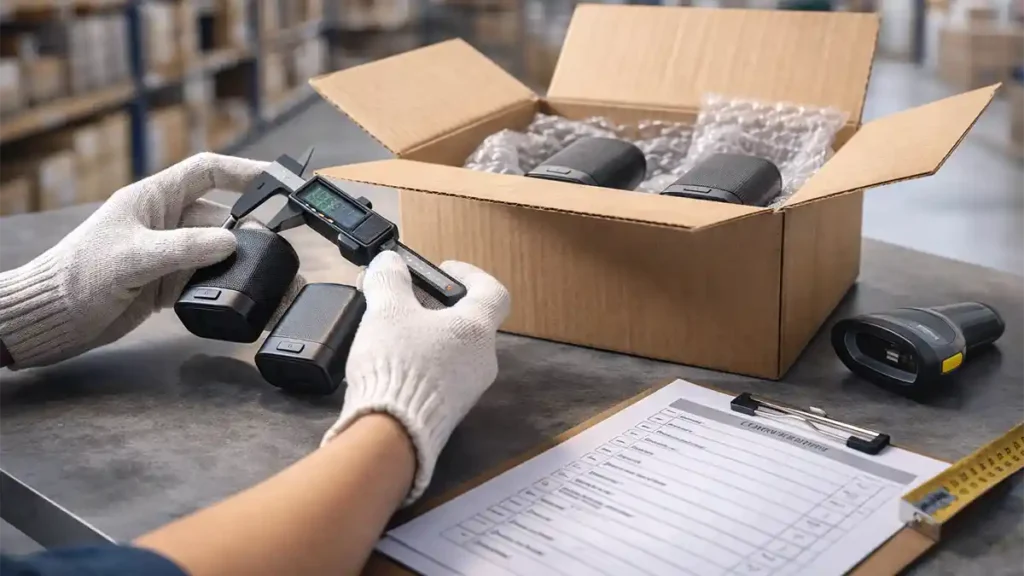
Factory QC exists, but their definition of acceptable may not match yours. Third party inspection is one of the most effective tools for first time importers.
Inspection types and when to use them
- Pre-production inspection: checks materials and setup before mass production
- During production inspection: catches issues while changes are still cheap
- Pre-shipment inspection: checks a sample of finished goods before you pay the balance
- Loading inspection: confirms correct cartons and handling during loading
Define quality in measurable terms
Quality disputes happen because good is vague. Your inspection should include:
- Quantity check (avoid short shipment problems)
- Workmanship standards and visible defect rules
- Functional testing (as applicable)
- Dimension checks against tolerances
- Branding accuracy (logos, colors, placement)
- Packaging integrity (carton strength, inserts, protection)
- Labeling compliance
Add a simple defect policy
Define:




- Critical defects: unsafe, illegal, or completely unusable
- Major defects: cannot be sold as normal grade
- Minor defects: cosmetic issues within accepted limits
This makes inspections and negotiations far cleaner.
Mistake 8: Weak packaging and labeling (the hidden profit killer)
Packaging is not a cosmetic choice. It controls damage rates, storage efficiency, compliance, and customer perception.
Common packaging failures that cause losses
- Thin master cartons that crush in stacking
- No inserts or protection for scratch prone items
- Poor sealing that opens during transit
- Labels that peel in humidity
- Missing country of origin marking where required
- Wrong barcode placement or low quality printing
Packaging upgrades that save money
- Stronger master cartons (specified strength or thickness)
- Corner protection and inserts for fragile or premium goods
- Clear carton marks and correct label placement
- Basic drop test expectation (even a simple test standard helps)
If your product arrives damaged, you lose revenue twice: once in refunds, and again in reputation.
Mistake 9: Misunderstanding Incoterms and accidentally buying confusion
Incoterms define who pays for what, who controls what, and where risk transfers.
Common Incoterms beginners should understand
- EXW (Ex Works): you handle almost everything; cheap on paper, complex in reality
- FOB (Free On Board): supplier delivers to port and loads; you control main freight
- CIF (Cost, Insurance, Freight): supplier arranges freight to your port; visibility varies
- DDP (Delivered Duty Paid): delivered to your door with duties handled; convenient but can hide costs and compliance risks
Beginner guidance (general)
Many first time importers prefer FOB because it balances responsibility: the supplier handles export side work, and you control international freight through your chosen forwarder.
With DDP, be extra careful. If you do not know how duties and taxes are paid, and whose name appears on documents, you can face compliance surprises later.
Mistake 10: Choosing a freight forwarder by headline price
Freight is not only a price. It is service quality, transparency, and problem solving.
How cheap quotes become expensive
A low initial quote can exclude:
- destination handling charges
- documentation fees
- terminal fees
- storage charges if clearance delays
- delivery fees to your warehouse
How to compare quotes correctly
Ask for a full breakdown:
- Origin charges (pickup, export handling)
- Freight cost (main transport)
- Destination charges (port/terminal/handling)
- Customs brokerage (if included)
- Delivery to your address (if included)
- Transit time estimate
- What is excluded
Ask one direct question: What costs usually surprise first time importers?
Good forwarders warn you before you pay.
Mistake 11: Not understanding shipping modes and picking the wrong one
The best shipping method depends on your product value, size, urgency, and risk tolerance.
Typical shipping options
- Express courier: fastest, highest cost, simpler process
- Air freight: fast, expensive; good for higher value, smaller shipments
- Sea freight (LCL/FCL): slowest, cheapest per unit for volume; requires planning
- Rail (where available): mid range option for certain routes
LCL vs FCL (sea freight basics)
- LCL (Less than Container Load): you share container space; good for small volumes but can involve more handling
- FCL (Full Container Load): you use a full container; often safer and more predictable at higher volume
Beginners often start with LCL, then graduate to FCL when volume grows and processes become stable.
Mistake 12: Missing customs clearance documents and paying for delays
Customs issues are rarely dramatic at first. They start as small questions, then the shipment sits and storage charges begin.
Documents commonly needed (varies by product/country)
- Commercial invoice (accurate description and value)
- Packing list (cartons, weights, dimensions)
- Bill of lading or airway bill
- HS code classification guidance
- Certificates of origin (sometimes required)
- Product compliance documentation (for regulated categories)
What to do before shipping
Request document drafts early and check:
- names match across documents
- product descriptions are consistent
- quantities and weights match
- values and currency are correct
Fixing errors before departure is cheap. Fixing them when cargo is held is costly.
Mistake 13: Guessing HS codes and underestimating duties and taxes
HS codes drive duty rates, restrictions, and compliance requirements. Guessing can create overpayment, penalties, or delays.
Smart approach
- Work with a customs broker for likely HS classification
- Use consistent product descriptions across all paperwork
- Budget conservatively so taxes do not destroy your margin
A correct HS code is not just a number. It is a cost and risk decision.

Mistake 14: Underinsuring the shipment or assuming included insurance is enough
Even when freight terms mention insurance, the coverage may be limited or difficult to claim.
When insurance is worth considering
- shipment value is meaningful to your cashflow
- goods are fragile or sensitive
- you are working with a new supplier
- a total loss would stall your business
Insurance is not about being pessimistic. It is about keeping one incident from ending your momentum.
Mistake 15: No timeline buffer and no plan for delays
Beginners plan for the best case and build launches around perfect timing. Real logistics includes holidays, port congestion, weather, inspection failures, and documentation issues.
A safer timeline mindset
- add buffer to production and shipping estimates
- avoid ordering near major factory holiday periods when possible
- track milestones (materials ready, production start, inspection date, ship date)
- have a backup sales plan if delivery slips
A delayed shipment is manageable when you planned for it.
Mistake 16: No written agreement for changes, defects, and remedies
A chat thread is not a contract. You need written clarity on what happens when something goes wrong.
Minimum terms to confirm in writing
- product specs and golden sample reference
- packaging and labeling requirements
- defect definitions and acceptable limits
- what happens if inspection fails
- rework, replacement, or refund terms
- lead time expectations
- tooling ownership (if applicable)
You do not need to be aggressive. You need to be specific.
Mistake 17: Ignoring compliance and certifications until the shipment is already moving
Compliance is product specific and country specific, but the beginner failure pattern is consistent: compliance gets treated as an afterthought.
Where compliance surprises usually appear
- electronics and anything with batteries
- food contact items
- cosmetics, supplements, chemicals
- children’s products
- products with claims (medical, safety, performance)
A safer approach for beginners
Before paying a deposit, ask:
- Are there import restrictions for this product in my market?
- Do I need test reports, certificates, or specific labeling?
- Who will provide documents, and what is the lead time?
Even if you do not become a compliance expert on day one, you must make compliance part of the purchase decision.
Mistake 18: Ordering too much for the first run (and getting trapped with inventory)
Buying volume can lower unit costs, but it also increases risk. A first shipment is where you are still learning product market fit and supplier consistency.
A practical first order mindset
- Order enough to test demand and operations
- Avoid locking too much cash into a single SKU
- Plan to reorder faster once quality and logistics are proven
A smaller first shipment that arrives clean is worth more than a large shipment that arrives problematic.
A professional first shipment playbook you can repeat
This is a simple workflow designed for beginners who want control.
Step 1: Confirm your numbers
- target selling price and margin
- conservative landed cost estimate
- buffer for defects and delays
Step 2: Vet suppliers before negotiating hard
- shortlist 5 to 10 suppliers
- verify business identity and export capability
- choose 2 to 3 for sampling
Step 3: Samples and golden sample
- test multiple samples
- lock specs and packaging
- approve golden sample and document it
Step 4: Contract and payment milestones
- deposit to start production
- final payment linked to inspection pass
- confirm remedies for failures
Step 5: Production control and inspection
- schedule inspection before final payment
- define defect categories and tolerances
- require fixes before shipping
Step 6: Freight and customs planning
- choose Incoterms that match your control level
- select a forwarder who provides full cost breakdown
- review document drafts before departure
Step 7: Receiving and feedback loop
- inspect incoming cartons and sample units
- document defects and damage immediately
- score the supplier and refine your spec pack
This is how importers turn experience into a system.
Mini case studies (realistic scenarios) to make the risks clear
Case 1: The bulk did not match the sample
A buyer approves a sample without locking materials and tolerances. Bulk arrives with a different finish and weaker structure. Returns rise and ads become unprofitable.
Fix: golden sample, written material specs, and pre-shipment inspection.
Case 2: The cheap freight quote exploded at destination
A forwarder quotes low main freight but adds destination handling, documentation, and delivery fees later. The buyer pays because the shipment is already moving.
Fix: demand full breakdown including destination charges and exclusions.
Case 3: Customs holds the shipment for document corrections
Invoice descriptions do not match the packing list, and weights look inconsistent. Cargo sits and storage charges grow daily.
Fix: review document drafts before shipping and keep descriptions consistent.
Quick FAQ
What is the biggest beginner mistake in China importing?
Ignoring landed cost. A low unit price means nothing if freight, duties, and destination fees erase your margin.
Should I choose FOB or CIF for my first shipment from China?
FOB often gives beginners better cost visibility and control through their own forwarder. CIF can reduce transparency at the destination stage.
Do I really need a third party product quality inspection?
If a defective shipment would hurt your business, yes. Pre-shipment inspection is one of the simplest ways to avoid expensive surprises.
How can I vet a China supplier quickly but professionally?
Verify the legal entity, request export experience proof, confirm production capability, and test responsiveness through sampling and clear technical questions.
What payment terms are safer for first time importers?
A common structure is 30% deposit and 70% after inspection pass (before shipment). The key is linking payment to quality milestones.
Why do first shipments get stuck at customs?
Missing documents, inconsistent descriptions, and HS code confusion are common causes. Review document drafts before the goods leave China.
How do I avoid hidden shipping fees?
Only compare freight quotes that include origin charges, freight, destination charges, delivery, and exclusions in writing.
What should I do if the bulk order does not match the sample?
Document differences immediately, compare against the golden sample/spec pack, use inspection reports, and negotiate rework, replacement, or refund based on written terms.
Conclusion: Control beats luck in your first shipment
Your first shipment is a learning milestone with real money on the line. Losses usually do not come from one dramatic mistake. They come from small gaps: unclear specs, weak vetting, no inspection, confusing Incoterms, hidden freight fees, and sloppy documents.
Build control into the process:
- price by landed cost, not unit cost
- verify suppliers with evidence
- lock specs with a golden sample
- inspect before paying the balance
- choose transparent logistics partners
- prepare customs documents early
Do that, and your first shipment becomes a foundation, not a warning.






One Comment