When Will the FIA EMI App Be Mandatory in Pakistan?
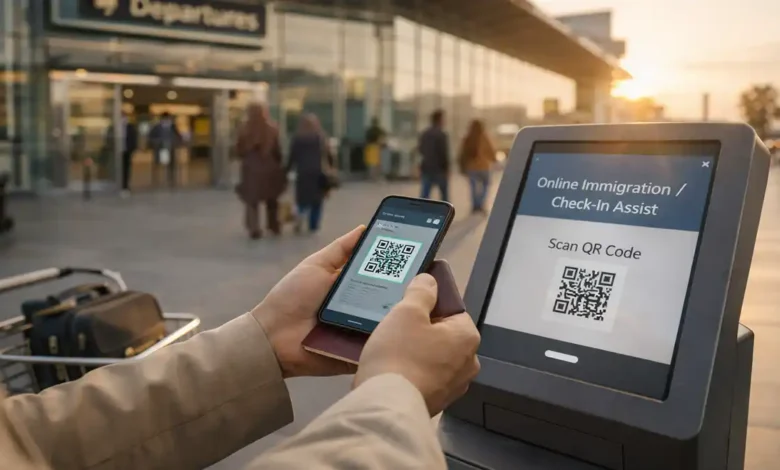
The question “Is the FIA EMI app mandatory?” is spreading fast, especially among travelers who’ve faced long queues, extra questioning, or last-minute offloading. Pakistan’s airport immigration system is under pressure on two fronts: people want faster clearance, while the state wants stronger screening to curb document fraud, illegal migration networks, and high-risk travel patterns.
In recent public reporting, passenger offloading has become a major flashpoint. At the same time, FIA has signaled a technology-driven shift: e-gates at airports and an AI-supported e-immigration mobile app connected to the Integrated Border Management System (IBMS), aiming to speed up eligible passengers while improving risk checks.
So the real question is not just “mandatory or not,” but how Pakistan could move from optional usage to a phased requirement, and what would make that policy move likely.
This article explains the EMI concept in simple terms, how mandates typically happen in government, who has the authority, what legal pathways matter, and what practical signals you can watch for.
(1) What is the “FIA EMI app” in simple terms?
“EMI app” is being used as shorthand for FIA’s planned e-immigration mobile app: a system where travelers submit key travel details before reaching the immigration counter. Instead of typing everything at the airport and handling issues at the last moment, the goal is to:
- collect passenger details early,
- verify information through government databases,
- flag problems before departure, and
- speed up clearance for low-risk, verified travelers.
Publicly described features include:
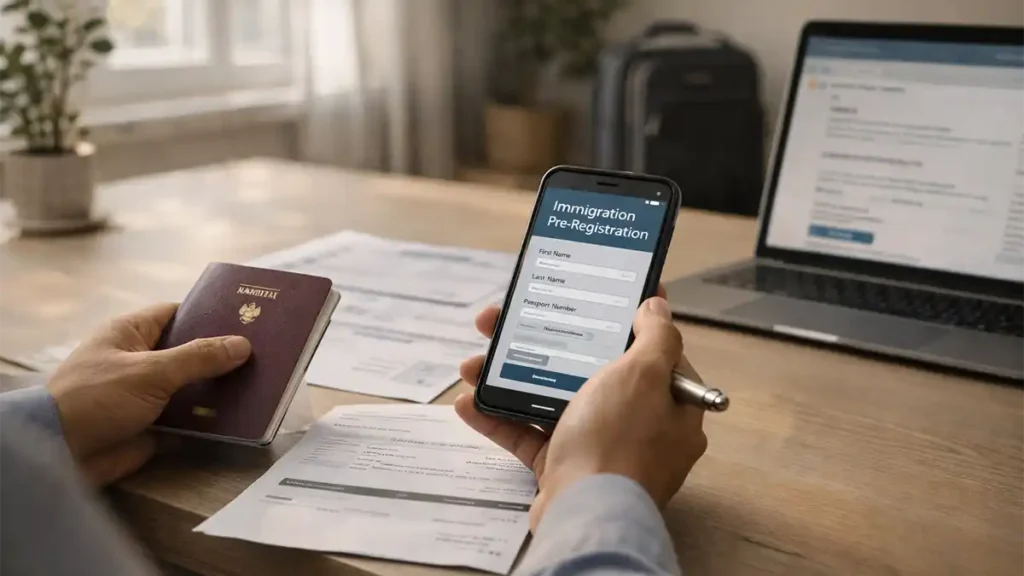
- passengers enter their personal and travel information in advance,
- the system verifies it through official records,
- AI/ML tools help create profiles for risk-based screening, and
- e-gates allow eligible passengers to self-clear by scanning their passports.
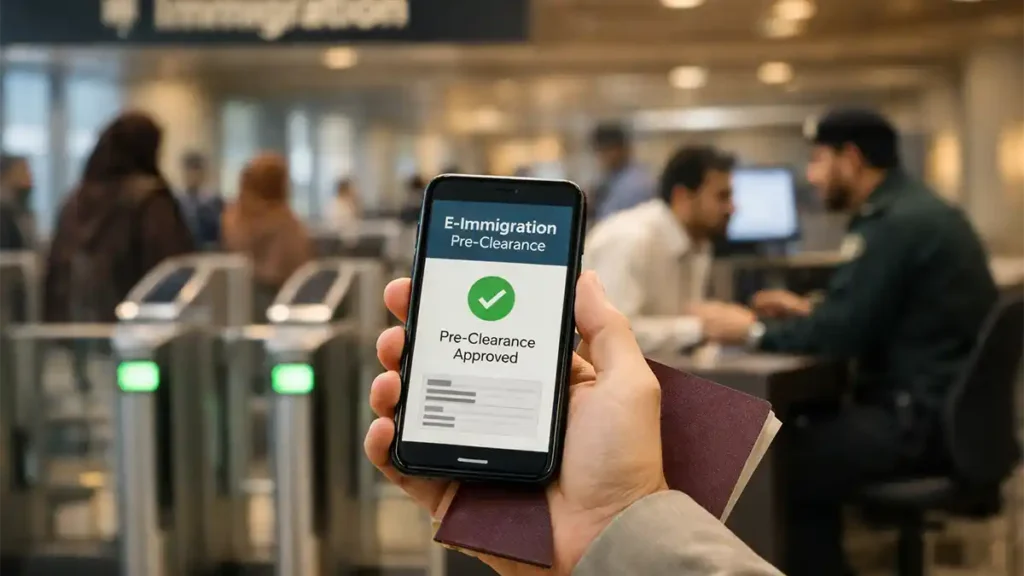
Think of it as “pre-clearance for immigration,” similar to how many countries use automated lanes or e-gates to separate routine clearance from higher-scrutiny cases.
(2) Why this topic matters: offloading, smuggling, and trust
This is not a casual tech upgrade. Pakistan’s travel ecosystem has faced serious strain, and several trends have pushed “digital immigration” into the spotlight.
(A) Offloading became a public frustration
When travelers are offloaded late after reaching the airport, sometimes near boarding it creates financial loss, emotional stress, and public backlash. It also damages confidence in the fairness of the process, especially when travelers have valid documents but still face disruption.
(B) Enforcement pressure increased
Crackdowns against illegal migration networks typically lead to stricter screening. That often increases checks for certain routes, traveler profiles, and documentation patterns, even when many passengers are legitimate.
(C) Government signaled “digital processing before departure”
When authorities talk about moving immigration steps online before departure and tightening SOPs, that usually indicates a long-term shift toward structured, data-driven screening rather than ad hoc counter decisions.
Put simply: the more the system relies on advance data, the more likely the “digital step” becomes a standard expectation and that expectation is how mandates often begin.
(3) “Mandatory” doesn’t always mean one sudden nationwide rule
When people hear “mandatory,” they imagine a single moment where everyone must install an app immediately. In reality, governments almost always introduce digital border systems in stages.
Here are the most common stages:
Level 1: Optional (with incentives)
- App use is voluntary.
- Users get faster processing (shorter queues, e-gate priority).
- Non-users continue with standard counters.
Level 2: Operational default (soft mandate)
- The app becomes “strongly recommended.”
- Non-app processing remains available, but slower or limited during peak periods.
- Airlines and airports begin advising travelers to complete it to avoid delays.
Level 3: Mandatory for specific categories (targeted mandate)
This is the most common policy move after pilots succeed. Likely categories could include:
- work-visa travelers,
- first-time travelers in certain streams,
- group travel segments, or
- passengers departing from major airports where e-gates are fully operational.
Level 4: Broad mandatory requirement (system-wide)
A stronger approach where most outbound passengers must have a successful digital pre-clearance record before being processed usually with assisted alternatives for people without smartphones.
So the practical question becomes: which stage Pakistan is likely to adopt first, and what conditions would push it further.
(4) Who can make EMI mandatory in Pakistan?
Even if FIA builds the system, a true mandate typically requires coordination across multiple institutions.
The key decision and operational actors
- Ministry of Interior: usually sets top-level policy direction for internal security and border governance.
- FIA (Immigration Wing + IBMS teams): implements workflows, screening rules, and airport operations.
- Passport authority (DGIP): relevant for travel-document governance and procedures tied to departure/entry.
- Civil Aviation and airlines: crucial for practical enforcement through airport and check-in processes.
For worker travel, policy alignment also matters with institutions involved in overseas employment systems. If the government ever introduces a targeted mandate, worker travel is a likely early category because it is high volume and highly sensitive.
(5) How can Pakistan legally require a digital immigration step?
A mandate usually rests on existing legal powers that allow the state to prescribe travel procedures and conditions for exit/entry, especially at designated ports.
(A) Passports framework: “conditions of departure”
In Pakistan’s legal structure, departure and entry are governed through passport and travel-document rules, and authorities can prescribe procedures and conditions for travel through notified ports. In policy terms, EMI could be framed as a prescribed immigration procedure rather than “just an app.”
That framing matters because it shifts the debate from “forced app download” to “required immigration process,” with multiple ways to complete it (self-service app, assisted desk, kiosk).
(B) Exit control powers (for restricted cases)
Separate legal tools exist to restrict travel in specific cases. Those laws are not primarily about digital adoption, but they demonstrate that the state already has strong border-control discretion in high-stakes contexts.
(C) Emigration/overseas employment rules (worker category)
For labor migration, Pakistan already uses structured compliance pathways and regulated documentation. That makes worker travel a realistic early target for a targeted mandate, because the policy environment is already rule-heavy and process-driven.




Important nuance: a policy can be “mandatory in practice” even before it becomes “mandatory by law,” especially if airlines and airports integrate it into routine check-in and boarding workflows.
(6) Why a mandate could become attractive to the government
Governments don’t mandate new systems just because they exist. They mandate them when the benefits are clear and the operational risks look manageable.
(1) Reducing last-minute conflict and offloading disruption
If more verification happens before a passenger reaches the counter, fewer issues should surface at the final moment. In theory, this reduces chaos, improves planning, and lowers the number of people being turned back late in the process.
(2) Focusing scrutiny where it’s needed
A risk-based approach aims to move most passengers quickly, while funneling the smaller subset of higher-risk cases into deeper review. That lets officers spend time where it matters instead of treating everyone as a manual case.
(3) Scaling capacity without expanding counters forever
Air travel volumes grow faster than staffing budgets. Automation becomes a capacity strategy. E-gates and pre-filled digital records are a predictable response.
(4) Aligning with global border trends
Many countries use automated lanes and e-gates, with officers handling exceptions and referrals. The model is: faster routine clearance, manual review when something doesn’t match.
(7) When could EMI realistically become mandatory?
There is no credible public “nationwide mandatory date” confirmed in a binding way. What exists publicly are signals of direction: e-gates, IBMS integration, and an e-immigration app designed for pre-verification and faster clearance.
So the honest answer is scenario-based.
Scenario A: Optional fast-lane (most likely first)
When it fits: initial rollout and pilots
Why it’s likely: low political risk, easier adoption
What it looks like: app users move faster; non-users still clear manually.
This is how most systems begin because it gives authorities a safe way to test stability and user behavior.
Scenario B: Targeted mandate (very plausible second phase)
When it becomes realistic: after stable operations at major airports and clearer SOPs
Who might be included first:
- work-visa travelers,
- high-volume routes or airports,
- travelers in specific risk categories.
Targeted mandates let authorities claim improvements where the stakes are highest without forcing every traveler into a new process overnight.
Scenario C: Wide mandate for most outbound travelers (possible, but conditional)
A broad mandate usually requires four prerequisites:
- System reliability and redundancy
Airports must keep moving even if the digital system slows down, glitches, or goes offline. - Accessibility and assisted alternatives
A functional mandate cannot be “smartphone-only.” It must provide an option for travelers without smartphones, elderly passengers, low-tech users, and people with disabilities. The realistic model is “mandatory digital record,” not “mandatory phone.” - Clear published rules and SOPs
A strong mandate typically needs formal procedures that can withstand scrutiny and provide predictable standards. - A correction pathway for data errors and false flags
If AI-assisted screening is involved, mistakes will happen. Travelers need a way to correct errors and resolve issues without chaos at the airport.
Bottom line: a full mandate is possible, but the most realistic pathway is staged: optional first, targeted second, broad only after maturity and safeguards.
(8) The signals that EMI is moving toward mandatory status
If you want a practical “early warning system,” look for these concrete signals:
- Official notifications describing EMI as required for a passenger category.
- Airline check-in integration (you need an EMI confirmation/token to proceed).
- Airport lane redesign where e-gates and EMI lanes expand while manual counters shrink.
- Written SOPs for specific travel categories that reference digital pre-clearance.
- Facilitation desks evolving from guidance into actual assisted pre-clearance processing.
- Public reporting of reduced offloading tied to EMI adoption and pre-verification.
- Broader infrastructure rollout beyond a single airport, showing the system is operationally dependable.
These signals matter more than social media rumors because they reflect how mandates are enforced in real life.
(9) What travelers should do now (practical, calm steps)
Even before any mandate, you can reduce risk by preparing for a more data-driven travel environment.
Before you reach the airport:
- Check passport validity and ensure your name, ID details, and documents match exactly.
- Keep visa copies, tickets, hotel details, and sponsor/employer information organized.
- If traveling for work, ensure your documentation is consistent and verifiable, and follow the proper procedures used for overseas employment travel.
- If uncertain, seek guidance early through official help desks or facilitation channels when available.
Expect more “risk-based processing”
If the system adopts profiling and pre-verification seriously, the experience will likely become:
- quick clearance for most people,
- deeper checks for a smaller subset.
That model can be fair and efficient if it’s governed well, but it depends on transparency and a working correction mechanism for errors.
(10) The trade-off Pakistan must manage: speed, fairness, and trust
A well-managed EMI rollout can reduce delays and improve screening consistency. A rushed rollout can create new friction, especially if it relies on AI signals without strong safeguards.
Where EMI can help
- faster routine clearance through e-gates and pre-filled records,
- earlier verification to reduce last-minute conflict,
- more consistent screening through structured data checks.
Where EMI can cause backlash
- false positives that disrupt legitimate travelers,
- unequal impact on low-tech users,
- system instability creating airport congestion,
- privacy concerns if data use and retention are unclear.
Pakistan’s best policy path is usually:
- optional adoption with incentives,
- targeted requirements once the system proves stable,
- wider enforcement only with assisted alternatives, published SOPs, and a fair correction process.
Quick FAQ
1. Is the FIA EMI app mandatory right now?
No confirmed nationwide requirement has been established publicly as a binding rule. The direction discussed is modernization and phased adoption.
2. Why would Pakistan make it mandatory later?
To shift verification earlier, reduce airport bottlenecks, improve screening consistency, and lower last-minute disputes.
3. Who would implement and enforce it?
Policy direction would typically come through the Interior Ministry and related authorities, while FIA implements it at airports, supported by airlines and airport operations.
4. Could it become mandatory for work-visa travelers first?
Yes. A targeted mandate for worker travel is a realistic early phase because that segment is high volume and frequently affected by strict screening outcomes.
5. Would a mandate mean “smartphone required” for everyone?
Not necessarily. A workable mandate usually requires a digital record, with assisted alternatives for people who cannot use a smartphone.
6. Will e-gates replace immigration officers?
No. Automated lanes usually handle routine cases, while officers handle exceptions, referrals, and higher-scrutiny cases.
7. What is the clearest sign a mandate is coming?
Airline check-in integration (you need an EMI confirmation to proceed), plus official SOPs or notifications stating it’s required for specific categories.
8. How can travelers reduce problems even before mandates?
Keep documents consistent, organize supporting paperwork, verify travel details early, and use official guidance channels when you’re unsure.
Conclusion
The FIA EMI app mandatory question is best answered as a policy pathway, not a yes/no headline. Pakistan is moving toward digital, data-driven immigration: e-gates, IBMS integration, and an e-immigration app that aims to pre-verify passengers and speed up routine clearance.
A full, nationwide mandate is possible in the long run, but it typically comes only after stability, infrastructure expansion, and safeguards are in place. The most realistic sequence is:
- optional fast-lane adoption,
- targeted requirements for selected traveler categories,
- broader enforcement only with assisted alternatives and clear, published SOPs.
If you want to stay ahead, watch for official rules, check-in integration, and how airport workflows change those are the real signals that an optional app is turning into a required process.
Keep visiting Roz New to stay informed. As changes and updates are made to this app, they will be updated immediately on Roz New.
For the correct identification of this Pak FIA EMI app and how to clear the confusion
In this post, EMI (FIA) refers to Pakistan’s e-Immigration system, designed to help travelers submit key details before reaching the airport immigration counter. Full form (as used in this context): E-Immigration Mobile Application. Short forms you’ll see online: EMI app, FIA EMI app, FIA e-Immigration app, or simply e-Immigration app. The idea is simple: you enter your basic travel information (and related trip details) in advance, and the system can verify it through official databases and link it with the Integrated Border Management System (IBMS). This can support faster processing, especially where e-gates are available, while helping immigration focus manual checks on higher-risk cases. Important: don’t confuse this “EMI” with the common banking term EMI (Equated Monthly Installment) here, EMI means e-Immigration, not loan payments.






3 Comments