Pakistan Trade News: Exports, Imports, and Rates
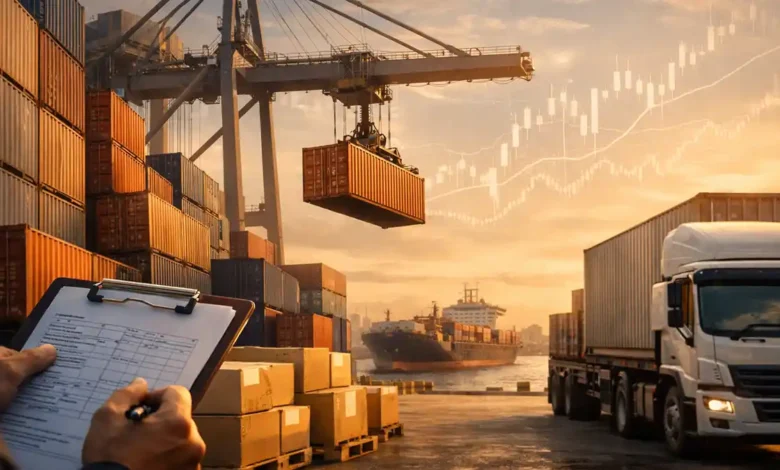
Pakistan trade news is the fastest way to understand what is happening underneath the economy’s surface. When exports rise, factories get busier, logistics networks move faster, and foreign exchange inflows improve. When imports jump, it can signal higher production needs (a good sign) or a heavier reliance on costly essentials like fuel and edible oil (a risk). And when the rupee moves against the dollar, almost everything – from import prices to business confidence – shifts with it.
This guide breaks down Pakistan’s trade picture in a simple, modern, editorial style. You will learn how to read the monthly numbers, why the trade deficit widens or narrows, what the exchange rate is really telling you, and what signals matter most as we move through 2026.
A quick data snapshot (start with facts)
Pakistan’s official merchandise trade statistics are published by the Pakistan Bureau of Statistics (PBS). The reports usually show exports and imports in both rupees and US dollars. For trade analysis, the USD numbers are the cleanest external signal.
Recent PBS highlights (provisional figures) include:
- November 2025: Exports around USD 2.421 billion, imports around USD 5.345 billion, trade deficit around USD 2.924 billion.
- December 2025: Exports around USD 2.269 billion, imports around USD 6.109 billion, trade deficit around USD 3.840 billion.
- July to December 2025 (FY2025-26 first half): Exports around USD 15.135 billion, imports around USD 34.475 billion, trade deficit around USD 19.340 billion.
For longer context, Pakistan’s Ministry of Commerce yearbook reports that in FY 2024-25, total exports were about USD 32.0 billion and imports about USD 56.6 billion, implying a trade deficit near USD 24.85 billion.
Those big numbers are important for one reason: trade is large enough to shape jobs, prices, and currency stability.
How to read Pakistan trade news without getting confused
Trade headlines can feel contradictory because they mix different comparisons. Here is how to keep it simple.
(1) Monthly versus cumulative
One month can be noisy. A delayed shipment, a holiday schedule, or a one-off spike in oil imports can swing the numbers. The cumulative fiscal-year view (July to June) usually gives a clearer trend.
(2) Value versus volume
Exports can rise in dollars because prices increased even if physical volumes stayed flat. The reverse also happens. Without volume data, treat value moves as direction, not the full story.
(3) Trade deficit versus current account
The trade deficit is goods only: imports minus exports. The current account includes services, remittances, and income flows too. Pakistan has had periods where the current account improved despite a visible goods deficit because remittances strengthened and services held up (as discussed in Pakistan’s Economic Survey).
Exports: what Pakistan sells, and why it is tough work
Exporting is not just “selling abroad.” It is daily competition on price, quality, delivery reliability, and compliance standards. Buyers do not reward excuses – they reward consistency.
The core engine: textiles (still the heavyweight)
Textiles remain Pakistan’s largest export pillar. Pakistan’s Economic Survey notes textiles at roughly about half of total exports (often cited near 53%). That dominance is a strength because Pakistan has deep capability in the sector, but it also creates concentration risk. When global retail demand softens or energy costs jump, exporters feel it quickly.
Typical export categories that show up frequently in PBS lists include knitwear, readymade garments, bedwear, cotton cloth, towels, and rice. These categories matter because they employ large numbers of workers and anchor repeat buyer relationships.
Why export growth can be slow even when “demand exists”
Exporters do not just need orders; they need workable conditions:
- Stable energy supply and competitive tariffs (especially for textiles).
- Predictable logistics: shipping schedules, port efficiency, fewer clearance delays.
- Affordable working capital, because exporters pay costs today and often get paid later.
- A stable exchange rate environment that allows confident pricing.
When these conditions are unstable, exporters either add a risk premium (making them less competitive) or accept thin margins (reducing reinvestment).
A practical case study: the exporter pricing problem
Picture a mid-sized garment exporter signing a 90-day contract priced in USD. Most costs are in rupees, but key inputs (chemicals, accessories, freight) often move with the dollar.
If USD/PKR swings sharply during production, the exporter can lose the margin even if the factory performs perfectly. This is why exchange-rate stability is not just a finance topic; it shapes whether exporters chase new buyers, how aggressively they quote prices, and whether they invest in better machinery.

Imports: what Pakistan buys and why imports are not automatically bad
Imports are often blamed for trade deficits, but the import bill is not one thing. It is a mix of essentials, productive inputs, and consumer demand.
Essential imports
- Petroleum products, crude oil, LNG and related energy inputs
- Medicines and health-related goods
- Edible oils and food inputs (for example, palm oil often appears prominently)
Productive imports
- Machinery and equipment
- Industrial raw materials and intermediate goods
- Parts for local assembly (CKD/SKD) that support manufacturing
Consumptive imports
- Non-essential consumer goods and luxury demand that pressures foreign exchange without expanding productive capacity
In PBS import baskets you will often see energy items, edible oils, plastics, iron and steel, machinery, vehicles/parts, and mobile phones. When imports jump, ask: what category drove it? Machinery can signal investment; oil can signal a global price shock.
The trade deficit: what it really tells you
The trade deficit is a scoreboard, not a verdict. It matters because Pakistan must cover the gap through other inflows: services exports, remittances, investment, loans, or reserve use.
Recent PBS figures show that the deficit widened in December 2025 compared to November 2025, largely because imports rose while exports eased. The first half of FY2025-26 (July to December 2025) also shows a large cumulative deficit.
What a widening deficit can mean
- Energy imports rose (price or volume shock)
- Consumer imports increased
- Export shipments slowed due to demand, pricing, or logistics
What it does NOT automatically mean
- “Collapse is imminent”
- “The rupee must crash tomorrow”
- “Industry is shutting down everywhere”
A deficit is a pressure indicator. The next step is to check the broader external picture: remittances, services, financing, and reserves.
Rates: the exchange rate is the trade headline behind the headline
Most people say “rates” and mean the dollar rate. In trade news, USD/PKR is the key rate because trade is mostly priced in dollars.
Interbank versus open market (simple explanation)
- Interbank rate: used by banks for large, formal transactions and trade flows
- Open market rate: seen at exchange companies, influenced by retail cash demand and sentiment
The gap between the two is a confidence signal. When the spread is small, markets are calm and planning becomes easier. When the gap widens, uncertainty rises.
A real anchor point: State Bank of Pakistan
The State Bank of Pakistan (SBP) publishes official market indicators. Around mid-January 2026, SBP reference-type indicators showed USD/PKR roughly in the high-270s to near 280 on its published pages. Use SBP as the anchor when you see conflicting numbers online.
The second “rate” that shapes trade: interest rates
Trade is rarely cash-only. Exporters and importers use working capital, trade finance, and short-term borrowing. When interest rates are high, financing becomes expensive and businesses become cautious.
SBP’s published market information in January 2026 listed the policy rate at 10.50% per annum. High borrowing costs can slow inventory cycles, reduce expansion, and soften trade volumes even when demand exists.
How currency moves translate into everyday prices
Even if you never import anything personally, exchange-rate moves pass through the economy:
- Fuel and energy costs affect transport, electricity, and manufacturing
- Edible oil and food inputs influence retail food prices
- Imported machinery and parts influence business investment costs
A weaker rupee usually increases the rupee cost of imports, which can push inflation higher. Higher inflation can trigger tighter monetary policy, which can slow demand. This is why trade, currency, and inflation are tightly linked in Pakistan.
Why the current account can improve even with a goods deficit
This is one of the most misunderstood points in trade conversations. The current account includes:
- goods trade (exports minus imports)
- services trade (IT services, freight, travel, etc.)
- remittances
- income flows
Pakistan’s Economic Survey has discussed periods where the current account moved into surplus (for example, a surplus during July to April FY2025) supported by stronger remittances. The takeaway is simple: do not judge external stability using only the monthly goods deficit.
What usually moves exports and imports in Pakistan
Export drivers (common triggers)
- Global retail demand in the US, EU, and Gulf markets
- Energy tariffs and supply reliability at home
- Freight capacity, port efficiency, shipment timing
- Exchange-rate stability that supports predictable pricing
- Compliance requirements (quality, labor, environment)
Import drivers (common triggers)
- Global oil and LNG prices
- Domestic energy demand and industrial activity
- Inventory cycles (businesses import more when stability improves)
- Currency expectations (importers rush if they fear depreciation)
A useful tip: when oil prices rise globally, Pakistan’s import bill can expand even if the economy is not overheating. That is why analysts often look at “non-energy imports” to judge underlying momentum.

Trade policy: what changes actually matter for 2026
Trade policy is not just speeches. The practical levers that affect exporters and importers include:
- Tariff structures and regulatory duties
- Import restrictions or relaxations
- Export facilitation: rebates, refunds, and customs speed
- Certification and compliance support (testing, standards)
- Incentives for value addition (moving up from raw to finished goods)
Policy that improves predictability – especially refunds, clearances, and documentation – usually helps exporters immediately.
What Pakistan needs more of (simple and realistic)
- Higher-value exports: more finished goods, better packaging, stronger branding
- Diversification: textiles remain crucial, but more pillars reduce vulnerability
- Smarter imports: more machinery and productive inputs, fewer wasteful spikes
- Stable rates: stability often matters more than any “perfect” exchange-rate number
A modern watch list you can follow each month
If you want to track Pakistan trade news in five minutes, watch these:
- PBS monthly exports and imports in USD (trend and direction)
- Trade deficit and whether energy drove the change
- USD/PKR movement (use SBP and reputable banking sources)
- Textile export momentum (still the largest pillar)
- Remittances and services direction (the external cushion)
Beyond textiles: where the next export growth can come from
Textiles may dominate the headlines, but Pakistan has several other export engines that can grow faster if quality, compliance, and logistics improve.
(1) Food and agriculture (especially rice)
Rice remains a major non-textile export, and the opportunity is moving from bulk sales to better value. That means consistent grading, cleaner packaging, and branded export lines aimed at premium buyers who pay for reliability. Even small upgrades – moisture control, better storage, smarter shipping – can reduce rejections and raise per-ton earnings.
(2) Surgical instruments and precision goods
Sialkot’s surgical instruments show what Pakistan can do when a cluster focuses on skill and standards. This is a market where certifications, traceability, and consistent finishing can unlock higher-margin contracts. The lesson is simple: in regulated sectors, trust is an asset. Once you earn it, buyers reorder.
(3) Sports goods and light engineering
Sports goods exports have a strong global reputation, but margins improve when firms invest in design, innovation, and direct relationships with brands and leagues. Light engineering – parts, tools, specialized components – can also grow when firms adopt stricter quality control and modern machinery.
(4) Services exports: the “invisible trade” that supports stability
Goods trade gets the spotlight because containers are visible, but services exports matter too: IT services, freelancing, digital marketing, design, and business process services. These exports often require fewer imported inputs, which means they can add foreign exchange with less pressure on the import bill. Over time, stronger services exports can cushion the economy when goods exports face global slowdowns.
A simple rule: goods exports create large-scale industrial jobs, while services exports can add flexible dollar inflows with lower import dependence. Pakistan benefits when both expand together.
Quick FAQ
(1) What is the trade deficit in one sentence?
Imports minus exports (goods). If imports exceed exports, the deficit is the gap Pakistan must finance through other inflows.
(2) Why do monthly trade numbers swing so much?
Shipment timing, oil price changes, seasonal demand, and currency moves can reshape a single month.
(3) Are imports always bad for the economy?
No. Machinery and industrial inputs can support growth. The risk is large spikes in costly essentials or non-productive consumption.
(4) Why does USD/PKR affect exports too?
Exports are priced in dollars, but many costs are in rupees. Big swings change margins and pricing confidence.
(5) What is the easiest reliable source for trade numbers?
Pakistan Bureau of Statistics (PBS) monthly trade releases.
(6) Why does Pakistan focus so much on textiles?
Because textiles make up roughly half of total exports and employ a large workforce, so they strongly influence export performance.
(7) Interbank vs open market: which matters more for trade?
Interbank is critical for formal trade flows. The open market reflects retail demand and sentiment; the spread between them is a key signal.
(8) What is one positive sign to watch in 2026?
Export growth alongside steady USD/PKR and rising productive imports (like machinery) is usually a healthier trade signal.
Conclusion: trade is Pakistan’s scoreboard, and rates are the weather
Pakistan trade news is not just a set of numbers; it is a practical way to track competitiveness, energy dependence, and market confidence. Recent PBS data shows exports in the low-to-mid USD 2 billion range per month late in 2025, while imports were higher, producing sizeable monthly deficits and a large cumulative deficit in the first half of FY2025-26. Annual context from the Ministry of Commerce shows trade at scale in FY 2024-25, with exports around USD 32.0 billion and imports around USD 56.6 billion.
The best way to read these updates is to focus on structure, not drama:
- Are exports becoming more value-added and diversified beyond a few categories?
- Are imports leaning toward productive investment (machinery, industrial inputs) rather than avoidable consumption spikes?
- Are USD/PKR and financing conditions stable enough for businesses to quote prices confidently, manage inventory, and invest?
When those three improve together, Pakistan’s trade story becomes less fragile. That is the real win: not one strong month, but a steadier trade system that can handle global shocks without panic.






6 Comments