Global Headlines: What the World Is Talking About

Global headlines don’t just tell us what happened. They reveal what people fear, what markets are pricing in, what governments are trying to manage, and what communities are demanding right now. If it feels like the world is louder, faster, and more complicated than ever, you’re not imagining it news is traveling at the speed of a scroll, and every big story now has ripple effects across borders.
But here’s the good part: you don’t need to be a diplomat, an economist, or a climate scientist to understand what’s going on. You just need a clear map.
This article is that map an expert, human-sounding guide to the big conversations shaping global headlines today: geopolitics and conflict, the economy, climate and energy, technology (especially AI), humanitarian crises, and the information wars happening on your phone. Along the way, you’ll get practical examples, real numbers, and a “how to read world news smarter” toolkit so you’re not just consuming headlines, you’re understanding them.
A Quick Reality Check: Why Headlines Feel More Intense Now
Before we dive into specific world news trends, it helps to understand why global coverage feels nonstop:
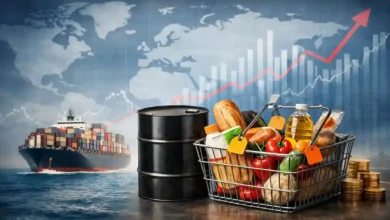
- Everything is interconnected. A shipping disruption becomes a price shock. A regional conflict reshapes energy markets. A heatwave impacts food supply.
- Technology accelerates attention. Social platforms reward emotion, speed, and certainty often the opposite of careful reporting.
- More voices are competing. Governments, influencers, activists, bots, and citizen journalists all publish “news-like” content.
- Trust is strained. Many audiences no longer agree on basic facts, which makes each story feel like a battle.
That’s the modern global news environment: high-speed, high-stakes, and often high-confusion. Now let’s make sense of it.
The 7 “Engines” Powering Global Headlines
When you look at what dominates international affairs coverage, most stories fit into seven engines. Think of these as the main forces pushing topics into the global conversation.
1) Geopolitics and security
Borders, wars, peace negotiations, military alliances, and strategic competition.
2) The global economy
Growth, inflation, interest rates, trade disputes, debt, and jobs.
3) Climate, weather, and resources
Record heat, floods, droughts, food security, and migration pressures.
4) Energy transition (and energy reality)
Renewables, oil and gas, power grids, and the race to secure reliable electricity.
5) Technology especially AI
Innovation, regulation, cyber risk, labor disruption, and the deepfake era.
6) Humanitarian crises and displacement
Refugees, forced displacement, aid access, and fragile states.
7) The information battlefield
Misinformation, propaganda, platform algorithms, media trust, and polarization.
In the sections below, we’ll walk through each engine what it means, why it matters, and why it keeps returning to the top of global headlines.
1) Geopolitics: Why the World Keeps Watching Flashpoints
If you want to understand international affairs, start with one truth: security shapes everything else.
When conflict intensifies or alliances shift, the impact spreads quickly:
- Energy prices respond to risk.
- Markets move on uncertainty.
- Migration patterns change as people flee danger.
- Aid and diplomacy get complicated.
- Domestic politics in distant countries can be affected by events abroad.
What’s different now is the “multi-theater” feeling several high-impact tensions can exist at once, and audiences are trying to track them simultaneously. This is why global coverage often feels like it’s switching channels every day: a conflict update here, a diplomatic rupture there, new sanctions, new ceasefire talks, new escalation risks.
How to read these headlines without getting lost
When you see a major geopolitical story, ask:
- Where is it happening, and who are the key actors?
- What does each actor want (stated goals vs real incentives)?
- What’s the leverage money, territory, energy routes, elections, alliances?
- What’s the “most likely next step,” not the “worst possible outcome”?
This simple framework protects you from panic headlines and helps you interpret what’s signal vs noise.

2) Global Economy Updates: The Big Story Behind the Big Stories
The economy is one of the most persistent world news trends because it affects everyone rent, food prices, jobs, travel costs, business confidence.
Even when politics dominates the news cycle, economic pressure often explains why governments behave the way they do.
What the world is watching right now
- Growth that continues, but slows. The IMF has projected global growth easing from about 3.3% (2024) to 3.2% (2025) and 3.1% (2026), highlighting a world economy that keeps moving but not at pre-shock strength.
- Trade and tariffs as “economic geopolitics.” Trade is no longer just trade it’s security, technology, and influence wrapped together.
- High debt, high expectations. Many governments are juggling public spending demands with borrowing constraints.
Why this matters beyond finance people
A slower-growth world tends to produce:
- tougher elections,
- more protest politics,
- tighter budgets,
- and bigger debates about inequality.
So even if you’re not tracking stock markets daily, economic narratives shape the tone of politics and the stability of societies.
3) Climate Change News: The Planet Is Now a Daily Headline
Climate used to be treated as a long-term story. Not anymore.
Now it shows up as:
- extreme heat and record temperatures,
- flooding and infrastructure failures,
- drought and water stress,
- food price volatility,
- insurance crises,
- and migration pressure.
In late 2025, Europe’s Copernicus Climate Change Service reported signals consistent with 2025 being among the warmest years on record, reflecting how “climate” is increasingly experienced as an ongoing condition, not a future threat.
Why climate headlines are changing
Climate reporting is shifting from:
- “Is it happening?” (old debate)
to - “How bad is it right now, and what’s the cost?” (new reality)
This is also why you’ll see more coverage linking climate to:
- health risks,
- city planning,
- agriculture,
- national security,
- and business supply chains.
4) Energy + AI: The Surprising Collision Dominating New Global Headlines
One of the most modern headline collisions is this:
The AI boom is becoming an electricity story.
AI isn’t just “software.” It runs on data centers physical infrastructure that consumes serious power.
The International Energy Agency (IEA) has projected global electricity use by data centres could double to ~945 TWh by 2030 (base case), with AI a major driver.
And this has consequences:
- grids get strained,
- power prices become political,
- and countries compete to attract investment without breaking their energy systems.
Reuters reporting has highlighted how rising demand can even keep older “peaker” power plants online longer than planned showing the tension between clean-energy goals and reliability needs.
The bigger story: energy transition meets energy reality
Many countries are trying to do three things at once:
- decarbonize (clean energy),
- modernize (electrification + AI),
- stay reliable and affordable (no blackouts, no price shocks).
That triangle is hard. And it’s why energy has returned to global headlines in such a big way.

5) Humanitarian Crises: Displacement Is Now a Global-Scale Reality
Humanitarian crises aren’t only tragic they’re also deeply geopolitical and economic. They affect borders, budgets, domestic politics, and regional stability.
UNHCR reported that by the end of June 2025, about 117.3 million people were forcibly displaced worldwide.
That number matters because displacement:
- strains host communities,
- increases demand for aid,
- tests immigration systems,
- and can fuel political polarization.
Why these stories can be misunderstood
A common mistake is to treat displacement as a single-cause issue. In reality, it’s often a mix of:
- conflict,
- persecution,
- economic collapse,
- climate pressure,
- and weak governance.
Understanding that mix helps you interpret migration headlines more responsibly and avoid simplistic narratives that don’t match the facts.
6) Poverty and Inequality: The Quiet Crisis Behind Many Headlines
Another story that keeps appearing sometimes loudly, sometimes quietly is poverty.
The World Bank’s September 2025 update projected global extreme poverty around 10.1% in 2025 (with major regional differences and persistent fragility challenges).
Why does this remain headline-relevant?
Because poverty levels influence:
- political stability,
- education and health outcomes,
- migration,
- and how societies respond to shocks (pandemics, climate disasters, commodity price spikes).
In simple terms: the poorer a system is, the less shock-resistant it becomes.
7) AI and Technology News: Innovation, Anxiety, and the “Trust Problem”
Technology has always been news. But AI has made it cultural news and political news and economic news.
What people are actually debating (beneath the hype)
- Jobs: Which roles will be augmented vs replaced?
- Power: Who controls the models, data, chips, and platforms?
- Safety: Can we detect deepfakes fast enough to protect elections and reputations?
- Fairness: Who benefits from the gains and who carries the risks?
- Energy: Can societies power the AI era without wrecking climate goals?
AI stories go viral because they hit something personal: your work, your identity, your privacy, your sense of what is real.
A practical way to read AI headlines
Whenever a headline claims “AI will change everything,” ask:
- What product or capability is being discussed?
- Is it deployed widely or just in demos?
- Who pays for it, and who saves money?
- What regulation or liability applies?
This moves you from hype-reading to reality-reading.
The Information War: Why People Disagree on the Same Headline
A major reason global headlines feel chaotic is that we’re living in an era of information disorder:
- misinformation (false, shared unknowingly),
- disinformation (false, shared deliberately),
- malinformation (true, used to harm).
Add algorithms that amplify outrage, and you get a world where:
- speed beats verification,
- certainty beats nuance,
- and identity beats evidence.
The modern headline survival kit (simple, but powerful)
- Read past the headline. Headlines are compressed; reality is not.
- Cross-check two credible outlets. If both report it, you’re safer.
- Look for primary sources. Reports, official statements, datasets, court filings.
- Separate facts from interpretation. “X happened” vs “X means…”
- Watch the visuals. Old images recycled as “breaking news” are common.
- Be careful with anonymous virality. If it has no sourcing and huge engagement, be extra skeptical.
This is how you stay informed without becoming manipulated.
A “Global Headlines” Cheat Sheet: What to Watch Going Forward
If you want to follow global headlines like a pro without doomscrolling track these “pressure points”:
- Geopolitical risk: escalation vs negotiation signals
- Global economy updates: growth forecasts, inflation trends, debt stress
- Climate change news: extremes, adaptation costs, food and water stress
- Energy transition: grid reliability, prices, infrastructure buildout
- AI and technology news: regulation, labor shifts, deepfake detection
- Humanitarian crises: displacement flows, aid access, regional stability
- Information integrity: election cycles, platform policy changes, media trust
You don’t need to track everything daily. You just need to know which indicators move the world.
Conclusion: Global Headlines Are Really One Story
The biggest lesson from today’s global headlines is that none of these topics live in isolation anymore.
A climate shock affects food prices. Food prices affect politics. Politics affects conflict risk. Conflict risk affects energy markets. Energy markets shape inflation. Inflation shapes elections. Elections shape policy toward technology and trade. And technology shapes what information people trust in the first place.
That’s the loop.
So if the world feels complicated, it’s because it is but it’s not random. Once you understand the engines behind the news, you can read world headlines with calm, clarity, and context.
And in a loud world, that’s a superpower.




5 Comments