Best Football Training Tips for Beginners
A Complete Beginner’s Guide to Effective Football Training
Introduction: Why Good Training Matters More Than Talent
Football may seem simple kick the ball, pass to teammates, and score. But anyone who has stepped onto a pitch knows the game demands far more: technique, fitness, decision-making, awareness, and discipline. For beginners, training with purpose is the fastest way to turn potential into real performance.
Whether you’re starting football at school, joining a local club, or playing recreationally, the right approach makes all the difference. This guide breaks down the best football training tips for beginners, explaining skills, drills, fitness routines, and mindset habits used by successful players worldwide.
Instead of overwhelming you with advanced tactics, this article focuses on practical, easy-to-implement advice the kind of training tips beginners can use immediately to improve. By the end, you’ll understand not just what to train, but how and why it matters.
1. Start With the Fundamentals: Building a Strong Football Foundation
Every great footballer whether Lionel Messi, Cristiano Ronaldo, or Erling Haaland mastered the basics long before becoming elite. Beginners should do the same.
1.1 Learn Proper Ball Control
Ball control is the heart of football. If you cannot control the ball, nothing else matters not speed, strength, or creativity.
Key beginner tips for ball control:
Practice using both feet equally
Work on receiving the ball smoothly
Use the inside, outside, and sole of your foot
Stay relaxed and lightly on your toes
Keep your head up as often as possible
A simple drill:
Roll the ball forward, backward, left, and right using only your right foot, then repeat with your left. You’ll be surprised how quickly this improves your comfort with the ball.
1.2 Master Basic Passing
Accurate passing builds trust between teammates and drives a team forward.
Focus on:
Short passes using the inside of your foot
Following through toward your target
Keeping the ball on the ground
Using both feet
Beginners should practice short passes first (2–5 meters), gradually increasing distance as accuracy improves.
1.3 Learn to Shoot With Proper Technique
Many beginners believe shooting is about power, but technique matters more.
To shoot properly:
Plant your non-kicking foot beside the ball
Keep your body slightly leaning forward
Strike the center or lower half of the ball
Follow through naturally




Start with controlled shots before attempting powerful strikes.
2. Work on Football-Specific Fitness
Football fitness is different from traditional gym workouts. The game demands strength, agility, stamina, balance, and speed all in short bursts of high intensity.
2.1 Build Endurance the Right Way
You don’t need marathon-level stamina; instead, aim for match-style endurance.
Recommended exercises:
Interval running (1 min jog, 20 sec sprint)
Shuttle runs (10–20 meters)
5–10 minute small-sided games
Repeated sprints
These help simulate real match demands.
2.2 Increase Strength Without Needing a Gym
Strength improves ball protection, shooting power, stability, and tackling ability.
Beginner bodyweight exercises:
Squats
Lunges
Planks
Push-ups
Glute bridges
Just 15–20 minutes, three times a week, significantly boosts performance.
2.3 Improve Agility and Speed
Football is a game of constant direction changes. Quick feet make you harder to defend and enhance your positioning.
Try:
Ladder drills
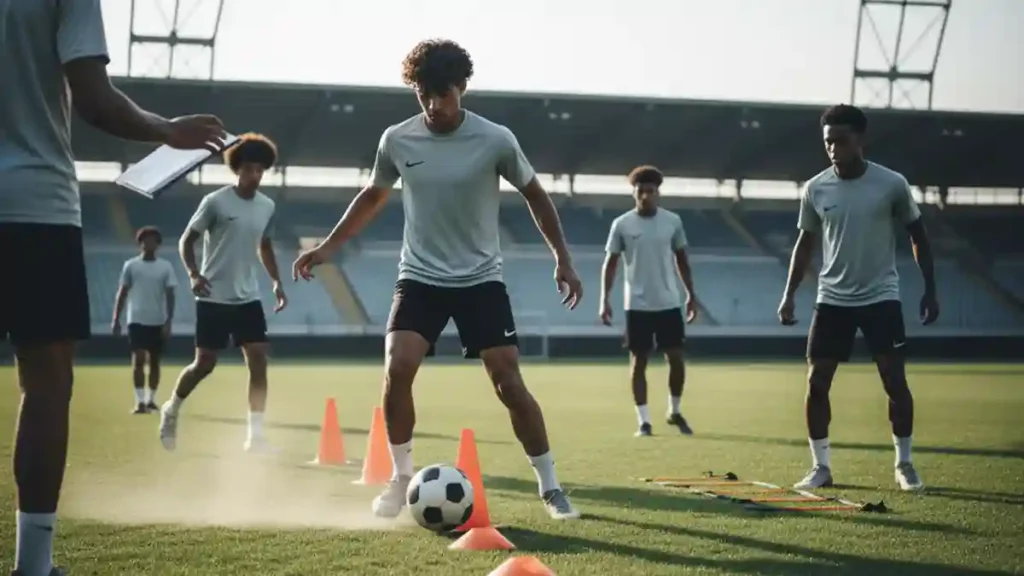
Cone zig-zag sprints
Side-to-side shuffles
Quick step-overs
Even 10 minutes daily can drastically elevate agility levels.
3. Practice Essential Football Skills Consistently
Skill development comes from repetition. Not hours of random training, but structured, focused practice.
3.1 Dribbling: Learn to Move With the Ball Smoothly
Beginner dribbling principles:
Keep the ball close
Use both feet
Dribble with your head up
Change direction regularly
Simple drill:
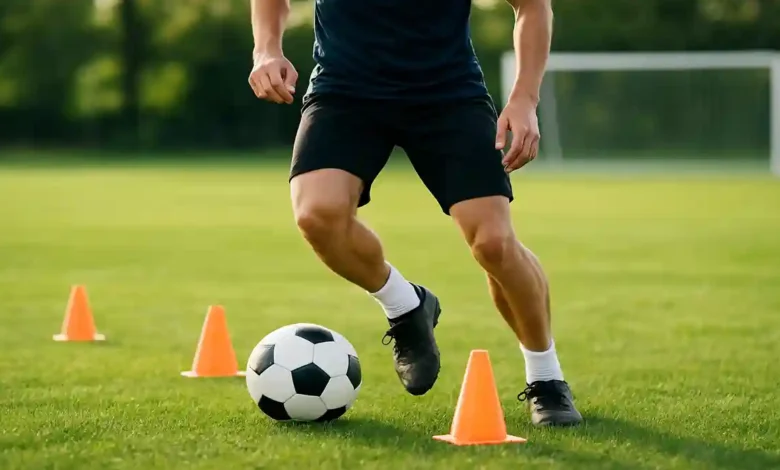
Set up 5–6 cones in a straight line and dribble slowly through them. Repeat multiple times daily to see fast improvements.
3.2 First Touch: The Skill That Separates Good Players from Great Ones
A good first touch helps you:
Control fast passes
Transition quickly
Create space
Avoid pressure
Practice receiving passes from a wall or a partner. Focus on cushioning the ball not stopping it abruptly.
3.3 Ball Shielding
Shielding helps you protect possession from defenders.
Technique:
Position your body between the defender and ball
Use your arms for balance
Keep the ball close to your feet
Stay calm under pressure
Beginners who learn shielding early become far more confident during matches.
4. Learn Basic Tactical Awareness
Football isn’t just technique it’s a mental game. Beginners often focus only on the ball, but positioning and decision-making matter just as much.
4.1 Understand Your Role on the Pitch
Each position has responsibilities:
Defenders: stop attacks and pass calmly
Midfielders: link defense and attack
Forwards: create chances and score
Wingers: stretch the field and deliver crosses
Learn the expectations of your chosen role so your training aligns with real match situations.
4.2 Develop Spatial Awareness
Great players constantly scan the field. This helps you:
Make better passes
Avoid losing the ball
Anticipate opponents’ moves
Beginners should practice checking over both shoulders before receiving passes.
4.3 Improve Decision-Making
Smart decisions often matter more than raw skill. Know when to:
Pass
Dribble
Shoot
Hold the ball
Change direction
Small-sided matches (3v3, 4v4) are perfect for improving decision-making under pressure.
5. Build Mental Strength and a Winning Mindset
Beginners sometimes underestimate the importance of mindset. Confidence, discipline, and resilience often separate committed players from casual hobbyists.
5.1 Stay Patient With Your Progress
Football skills take time. Even pros train daily to stay sharp. Don’t expect perfection right away.
5.2 Develop Consistency
Training 20 minutes daily is more effective than training 3 hours once a week.
5.3 Stay Motivated With Goals
Set small goals such as:
Improve weak foot passing
Run 2 km without stopping
Complete 30 dribbles through cones in under 40 seconds
Small achievements build momentum.
5.4 Learn From Mistakes
Every missed shot or bad pass teaches something. Instead of getting frustrated, analyze what went wrong and adjust.
6. Warm Up, Cool Down, and Prevent Injuries
Many beginners skip warm-ups and cool-downs. This leads to avoidable injuries and slower progress.
6.1 Warm-Up Routine (5–10 minutes)
Include:
Light jogging
Leg swings
Hip rotations
Short accelerations
Basic ball touches
A proper warm-up prepares muscles and reduces the risk of strains.
6.2 Cool-Down Routine (5 minutes)
After training:
Stretch hamstrings, quads, calves
Include deep breathing
Walk slowly to lower heart rate
Cooling down helps you recover faster.
6.3 Hydration and Nutrition
For best performance:
Drink water before, during, and after training
Eat a balanced diet with carbs, protein, and healthy fats
Avoid heavy meals right before playing
Small changes in nutrition improve energy and focus dramatically.
7. Practice at Home: No Field or Partner Needed
Football training doesn’t require a team or professional facility. Many beginners accelerate improvement by practicing at home.
7.1 Wall Passing
A wall is one of the best training partners:
Pass
Receive
Control
Shoot (if safe)
Wall training improves both technique and reaction time.
7.2 Simple Solo Ball-Control Drills
Try:
Toe taps
Side-to-side touches
Rollovers
Around-the-world touches
These build confidence and improve footwork quickly.
8. Join a Team or Find a Regular Training Group
While training alone helps, football is a team sport. Beginners grow faster when they join a structured environment.
8.1 Benefits of Playing With Others
Better decision-making
Improved communication
Real match experience
Faster tactical understanding
8.2 Coaching Makes a Big Difference
Even one session a week with a coach improves:
Form
Technique
Positioning
Confidence
If you cannot join a club, consider weekend community leagues or training groups.
9. Track Your Progress and Adapt Your Training
Beginners who track their improvement stay more motivated.
9.1 Keep a Simple Training Log
Record:
What drills you practiced
How long you trained
What improved
What felt difficult
This helps you identify patterns and develop consistency.
9.2 Update Your Goals Regularly
As you get better:
Increase drill difficulty
Add weak-foot exercises
Incorporate longer sprints
Practice with bigger groups
Progress comes from constantly challenging yourself.
Conclusion: Start Small, Stay Consistent, and Enjoy the Game
Football is one of the most enjoyable and accessible sports in the world. For beginners, the journey from basic skills to confident playing is exciting, rewarding, and completely achievable with the right approach. By focusing on fundamentals, improving fitness, practicing consistently, understanding tactics, and developing a strong mindset, anyone can improve rapidly.
Remember: even professional players started with the same basic steps you’re learning now. Train with purpose, track your progress, and most importantly enjoy the game. Your improvement will follow naturally.






2 Comments