Emerging Small Business Marketing Trends for 2026

Small Business Marketing Trends: In the ever-evolving landscape of small business marketing, staying abreast of current trends is not merely beneficial; it is essential for survival and growth. As consumer preferences shift, technological advancements emerge, and competition becomes more intense, small businesses must adapt their marketing strategies to maintain relevance and effectively engage their target audience. These marketing trends provide valuable insights into consumer behavior, allowing businesses to tailor their approaches to meet changing demands.
A solid understanding of small business marketing trends equips entrepreneurs with the means to anticipate shifts in the market and adopt proactive measures. By leveraging innovative tactics that resonate with their customer base, small businesses can enhance brand visibility and foster customer loyalty. For instance, digital transformation continues to shape how businesses connect with consumers, making it crucial for small enterprises to not only embrace digital marketing but also to refine their strategies within this realm.
The small business sector is characterized by its unique challenges and opportunities. Emerging trends often provide a pathway for growth that can set a small business apart from its competitors. Emphasizing personalization, leveraging data analytics, and embracing social media engagement are just a few examples of how businesses can harness market trends effectively. This adaptation does not only focus on reaching potential customers but also on fostering deeper relationships with existing clientele, thus creating a sustainable business model.
As we delve into the anticipated marketing trends for 2026, it is vital for small business owners to recognize the potential benefits that arise from being adaptable and informed. By understanding the importance of marketing trends, small businesses can realize their full potential and ensure they remain competitive in a constantly changing marketplace.
Increased Focus on Sustainability
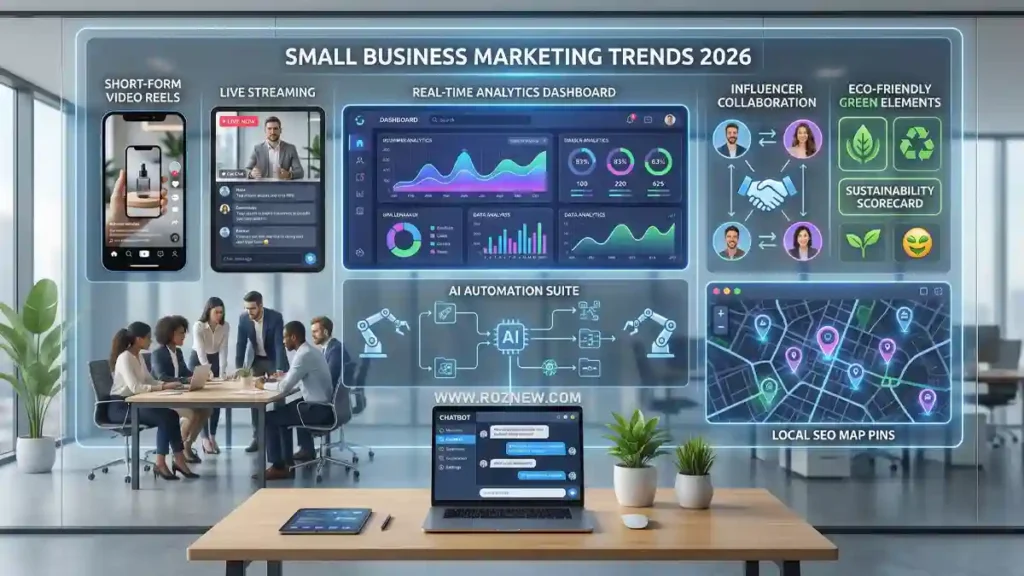
As we move towards 2026, small businesses are increasingly recognizing the importance of sustainability within their marketing strategies. This shift is largely driven by a growing consumer preference for environmentally friendly products and practices. Customers are becoming more discerning, often opting for brands that demonstrate a commitment to sustainability and environmental consciousness. As a result, small businesses are integrating eco-friendly practices into their operations and adopting these values in their marketing communications.
To effectively communicate their sustainability efforts, small businesses can utilize various strategies. For instance, highlighting the sourcing of sustainable materials can resonate with eco-conscious consumers. By transparently sharing the environmental impact of their products and supply chain, businesses can foster trust and build deeper connections with their audience. Additionally, companies can utilize storytelling to illustrate their sustainability journey, which can be a compelling element in their branding efforts. Crafting narratives around eco-friendly initiatives not only showcases genuine commitment but also engages customers on an emotional level.
Another practical approach is to leverage social media and digital marketing platforms. Small businesses can share their sustainability achievements, such as reducing carbon footprints or implementing recycling programs, through engaging content. This can involve creating informative blog posts, engaging videos, or interactive social media campaigns that inform consumers about their sustainable practices. The key is ensuring that the messaging is consistent and authentic to foster loyalty among customers who prioritize eco-friendly consumption.
Moreover, collaboration with environmental organizations and participation in community initiatives can further enhance a brand’s image as a responsible business. By aligning marketing efforts with broader sustainability goals, small businesses not only contribute positively to the environment but also tap into a growing market of environmentally conscious consumers.
Personalization and Customer Experience
As we delve into the marketing landscape of 2026, the emphasis on personalization and optimizing customer experiences is becoming increasingly pronounced. Small businesses are now presented with unprecedented opportunities to leverage data analytics and marketing automation tools to cater to individual consumer preferences. This strategic shift not only enhances marketing performance but also fosters deeper connections between brands and consumers.
Utilizing data analytics allows small businesses to glean insights from customer interactions and behaviors. By understanding purchasing patterns, feedback, and engagement levels, businesses can create tailored marketing strategies that resonate with their target audience. For instance, e-commerce platforms can analyze previous transactions and browsing history to recommend products that align with an individual’s interests. This level of personalization significantly improves the likelihood of conversion, as customers are more likely to engage with brands that understand their needs.
Furthermore, marketing automation tools play a crucial role in streamlining and personalizing customer interactions. These tools enable businesses to segment their audience based on various criteria such as demographics and behavior, allowing for targeted messaging that speaks directly to the consumer. Automated email marketing campaigns, personalized promotions, and unique loyalty programs enhance customer engagement, resulting in increased satisfaction and loyalty. For example, a small business could implement a personalized discount system for returning customers, thereby rewarding loyalty while also encouraging repeat purchases.
In the competitive market of 2026, small businesses must prioritize personalization and customer experience to thrive. By leveraging data analytics and marketing automation, they can create meaningful interactions that not only meet but exceed customer expectations, leading to sustainable growth and a dedicated customer base.
The Rise of Video Marketing
In recent years, video marketing has emerged as a pivotal tool for small businesses to connect with their target audience. As we approach 2026, the effectiveness of video content has become increasingly evident in driving customer engagement and brand awareness. Research has shown that consumers are more likely to retain information conveyed through video compared to text-based content, making video an ideal medium for storytelling and brand promotion.
One notable trend in video marketing is the rise of live streaming. This format allows small businesses to interact with their audience in real time, fostering a sense of community and immediacy that pre-recorded videos often lack. Additionally, streaming live offers a powerful way to conduct Q&A sessions, unveil new products, or provide exclusive behind-the-scenes access, enhancing the overall experience for customers. Furthermore, platforms such as Instagram Live, Facebook Live, and Twitch have gained traction, enabling businesses to reach a broader audience while engaging them directly.
Additionally, short-form videos, epitomized by platforms like TikTok and Instagram Reels, have surged in popularity. These bite-sized clips allow companies to convey their messages succinctly, catering to the reduced attention span of modern consumers. They encourage creativity and uniqueness, allowing small businesses to showcase their brand personality effectively. Utilizing catchy visuals and engaging narratives in these short formats can significantly enhance a brand’s visibility and shareability.
To leverage the power of video marketing in 2026, small businesses should prioritize authenticity and relatability. Creating content that resonates with the target demographic while maintaining a consistent brand voice is crucial. Investing in quality production, even with limited resources, can yield impressive results. Regularly analyzing video performance through analytics tools can guide businesses in refining their strategies for better customer engagement and conversion rates.
Leveraging Social Media for Community Building
In the rapidly evolving digital landscape, small businesses are increasingly recognizing the potential of social media not only as a marketing tool but also as a platform for fostering community connection. Building a strong community around a brand can lead to increased customer loyalty, more meaningful interactions, and a stronger online presence. To effectively leverage social media for community building, businesses must adopt a strategic approach centered on engagement and authenticity.
One of the primary strategies to create authentic engagement with customers on social media is to actively participate in conversations rather than merely broadcasting information. Small businesses can begin by responding to comments, asking questions, and encouraging discussions that resonate with their audience’s interests and values. Engagement can be amplified by organizing live broadcasts, interactive Q&A segments, or conversations focused on pertinent subjects. By being genuinely involved, businesses can create a sense of belonging among their followers, thereby transforming casual customers into loyal advocates.
Moreover, community-focused campaigns can significantly bolster brand loyalty. Creating campaigns that align with causes or values important to the target audience not only displays a business’s commitment to its community but also promotes shared goals. For instance, collaborating with local nonprofits for fundraising events or highlighting community heroes in social media posts are excellent ways to build rapport with the audience. Additionally, integrating user-generated content into marketing efforts can amplify reach and encourage customers to share their experiences, thus creating organic promotion and fostering a greater sense of community.
Ultimately, by focusing on authentic connections, community-oriented campaigns, and user-generated content, small businesses can effectively utilize social media as a powerful tool for community building. The outcome of these efforts will ideally lead to stronger relationships with customers and a more engaged community that supports the brand.
Integration of AI and Automation in Marketing
As we approach 2026, the integration of artificial intelligence (AI) and automation technologies is rapidly transforming the landscape of small business marketing. These advancements enable small businesses to optimize their marketing efforts, streamline processes, and enhance customer engagement, ultimately leading to improved outcomes and efficiency.
One of the significant benefits of AI in marketing is the ability to tailor customer journeys. Tools leveraging AI can analyze vast amounts of consumer data to create personalized experiences. For instance, machine learning algorithms can evaluate user behavior and preferences, allowing businesses to craft targeted campaigns that resonate with specific audience segments. By utilizing such technology, small businesses can engage more effectively with their customers, thereby maximizing their marketing returns.
Moreover, the advent of chatbots provides small businesses an avenue to enhance customer service. Chatbots, powered by AI, can handle various customer interactions, providing immediate responses to inquiries and facilitating transactions around the clock. This automation not only improves customer satisfaction by delivering timely assistance but also frees up human resources to focus on more complex tasks, fostering a more efficient workflow.
Predictive analytics is another area where small businesses can capitalize on AI and automation. By employing predictive modeling, businesses can forecast future trends based on historical data, enabling them to make informed, data-driven marketing decisions. This approach allows for more strategic allocation of resources and enhances the ability to anticipate customer needs, thus staying ahead of the competition.




In summary, the integration of AI and automation in marketing stands as a vital trend for small businesses in 2026. By harnessing these innovative technologies, small enterprises can optimize customer journeys, provide better customer service via chatbots, and leverage predictive analytics to inform their strategies, ultimately driving growth in a competitive market.
Influencer Partnerships and Collaborations
In recent years, influencer marketing has emerged as a powerful tool for small businesses aiming to enhance their brand visibility and connect with specific audience segments. The rise of social media platforms has facilitated the creation of a diverse ecosystem of influencers, particularly micro-influencers, who possess the ability to engage niche audiences effectively. Collaborating with these influencers presents a cost-effective marketing strategy for small businesses looking to maximize their reach without incurring substantial costs.
Micro-influencers, typically defined as individuals with a following ranging from 1,000 to 100,000, often have a more engaged audience compared to their macro counterparts. Their authenticity and relatability can significantly impact consumer perceptions and purchasing decisions. Small businesses can leverage these qualities by forming partnerships that resonate with their brand values and target demographics. This approach allows small businesses to tap into loyal follower bases, promoting their offerings in a manner that feels genuine and relatable.
To forge successful influencer partnerships, small businesses should begin by identifying influencers whose content aligns with their brand mission. Tools like social media analytics can assist in gauging an influencer’s engagement rates, audience demographics, and overall relevance. Once a suitable influencer is selected, businesses should approach them with a clear proposal outlining the collaboration’s intended goals and mutual benefits. Establishing an open line of communication is essential, as it encourages transparency and fosters a collaborative environment.
Furthermore, successful influencer collaborations often involve co-creating content that highlights the small business’s products or services in an authentic way. This form of partnership not only provides exposure but also generates trust among potential customers. By embracing influencer partnerships, small businesses can harness the power of social proof, ultimately driving customer acquisition and fostering long-term brand loyalty.
Emphasis on Local SEO and Online Presence
As we approach 2026, the significance of local SEO for small businesses is becoming increasingly apparent. The landscape of consumer behavior is shifting towards an emphasis on local searches, which signals a need for businesses to optimize their online presence to connect with nearby customers effectively. Local search engine optimization strategies can dramatically enhance visibility, making it indispensable for small enterprises to invest time and resources into these practices.
One of the cornerstones of local SEO is maintaining an updated and engaging profile on Google My Business. This platform allows businesses to manage their online presence across Google, including Search and Maps. By providing accurate information such as business hours, location, and services offered companies can improve their chances of appearing in local search results. Moreover, utilizing features like Q&A, posts, and highlights can help engage customers and convey actionable information, further driving local traffic.
Encouraging customer reviews is another vital strategy that directly impacts online visibility. Positive reviews not only enhance a business’s credibility but also play a crucial role in local search rankings. Actively soliciting feedback from satisfied customers and responding to reviews demonstrates a commitment to customer satisfaction. This two-way interaction fosters trust an essential factor for attracting potential customers wary of new businesses. Furthermore, the integration of user-generated content through platforms like social media can amplify a company’s online presence.
As we move forward, small businesses should recognize that local SEO is not merely an option but a necessity in the digital age. By focusing on enhancing their online presence through effective local search strategies and actively managing customer feedback, businesses can position themselves strongly in their communities. This strategic focus will ultimately lead to increased visibility, greater customer engagement, and, consequently, business growth.
Conclusion: Preparing for the Future of Marketing
As we look toward 2026, it is evident that small businesses face a rapidly evolving marketing landscape. The key trends discussed throughout this blog highlight the importance of automation, data analytics, and personalized marketing strategies. Small business owners are encouraged to embrace these changes, as they offer significant opportunities for growth and customer engagement. The integration of innovative technologies such as artificial intelligence and machine learning will play a crucial role in streamlining marketing efforts and enhancing user experiences.
Investment in digital marketing channels will be necessary for success in the coming years. Social media platforms, influencer partnerships, and content marketing are becoming increasingly vital for reaching target audiences effectively. As consumer behavior shifts towards a more digital-centric approach, small businesses must remain vigilant and adaptable to maintain relevance. This includes understanding the nuances of SEO and making data-driven decisions that align marketing strategies with customer expectations.
Additionally, focusing on sustainability and ethical practices in marketing will resonate with consumers seeking brands that reflect their values. By fostering a greater sense of community and transparency, small businesses can cultivate lasting relationships with their customers. It is essential for business owners to keep abreast of marketing trends and continuously evolve their strategies to meet changing consumer demands.
In conclusion, the path to success in 2026 hinges on the willingness to adapt and innovate in marketing practices. Small business owners must invest time and resources into understanding and implementing these emerging trends. By staying informed and proactive, they can capitalize on the opportunities that lie ahead and ensure a thriving future for their enterprises.






5 Comments