Why the Markhor Stands as Pakistan’s National Animal
A Symbol Rooted in Mountains, Strength, and Survival
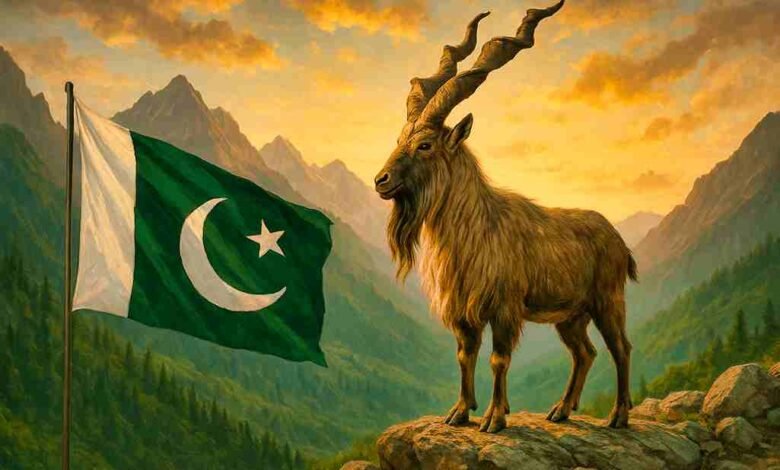
High in the rugged mountains of Pakistan, where steep cliffs cut through clouds and icy winds shape the land, lives a creature unlike any other the Markhor, the wild mountain goat known for its dramatic spiraled horns and fearless presence. While many countries choose large predators, elegant birds, or mythical creatures as national symbols, Pakistan selected a herbivore that often survives where few others can. Yet this is exactly why the Markhor represents the country so perfectly.
Why the Markhor stands as Pakistan’s national animal is a story woven with history, resilience, environmental significance, and deep cultural respect. It reflects Pakistan’s identity as a nation shaped by perseverance, courage, and an enduring relationship with nature.
This article dives into the origins of the Markhor’s national status, its symbolic meaning, the conservation miracle that saved it from extinction, and why it continues to captivate Pakistanis and wildlife experts worldwide.
1. What Exactly Is a Markhor? A Quick Overview
Before exploring the national symbolism, it helps to understand the Markhor itself.
Scientific Identity
Scientific Name: Capra falconeri
Family: Bovidae
Habitat: Northern and western mountains of Pakistan especially Gilgit-Baltistan, Khyber Pakhtunkhwa, and Balochistan
Height: Up to 115 cm at the shoulder
Horn Length: Can exceed 150 cm in older males
Population Status: Near Threatened (but previously Endangered)
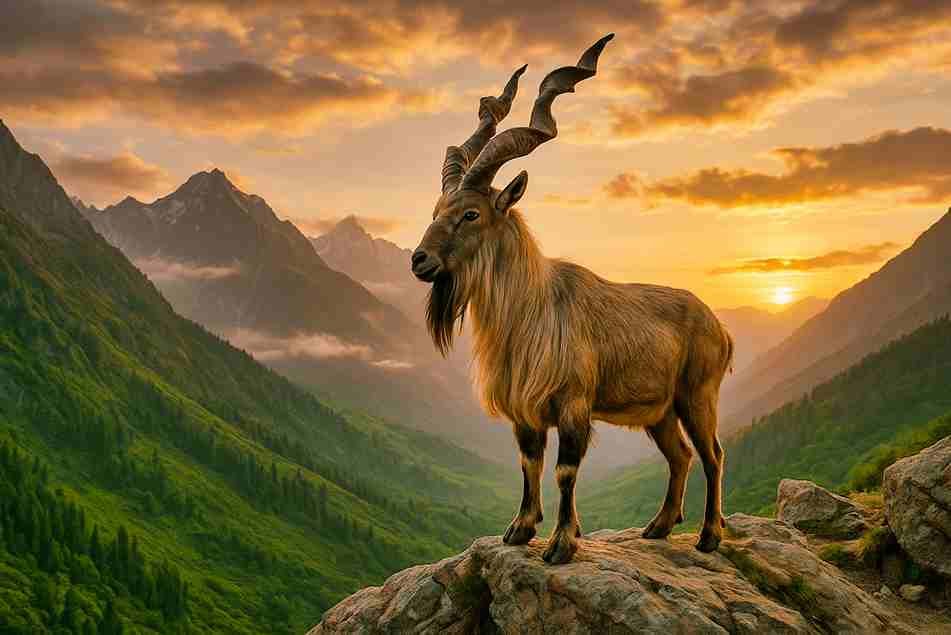
Its most iconic feature the majestic twisted, corkscrew horns has historically made the Markhor a prized sight among hunters, photographers, and conservationists alike.
Behavior and Ecology
Markhors live in rugged mountainous regions at elevations of 2,000–3,500 meters, areas that demand incredible agility. Their climbing ability is so extraordinary that many locals believe the Markhor can “dance on cliffs.” Their agility, combined with survival skills, has earned them admiration for centuries.
2. The Cultural and Historical Roots of the Markhor in Pakistan
To understand why the Markhor stands as Pakistan’s national animal, we must look beyond its biology and into its cultural heartbeat.
Historical Presence in the Region
The Markhor has inhabited the Himalayan and Karakoram ranges long before modern borders existed. Evidence of its cultural significance can be traced to:
Mughal hunting records
Ancient carvings and tribal lore
Regional folk tales glorifying its bravery and mystical attributes
Symbol of Bravery and Fearlessness
The word Markhor is often interpreted as “snake-eater,” although experts debate this translation.
Yet the name itself sparked legends: locals believed the Markhor had the ability to kill snakes by stomping them with its hooves, using its horns to break them, or producing a magical foam during fights that neutralized venom.
While these stories are folklore, they reveal how communities saw the Markhor not as a prey animal, but as a fearless protector of the mountains.
National Identity and Symbolism
Pakistan emerged as a nation with strong ties to rugged landscapes and determined people. The Markhor, thriving in harsh mountain conditions, symbolizes:
Courage under pressure
Determination to survive
Pride in natural heritage
Resilience in the face of adversity
These traits mirror the identity Pakistan aspires to project globally.
3. Why the Markhor Stands as Pakistan’s National Animal: Core Reasons
1. A Symbol of Strength and Endurance
The Markhor’s ability to live and thrive in unforgiving terrains perfectly reflects the nation’s spirit: unyielding, resilient, and shaped by the challenges it faces.
Just as Pakistan has navigated political, economic, and cultural challenges, the Markhor continues to survive in an environment that demands both mental and physical toughness.
2. An Emblem of Pakistan’s Mountainous Heritage
Unlike many national symbols chosen for aesthetics, the Markhor represents the literal geography of Pakistan. The country’s northern regions home to the Himalayas, Hindu Kush, and Karakoram are among the most spectacular landscapes on Earth, and the Markhor is one of their signature species.
Its presence ties the national identity directly to the land itself.
3. A Reminder of Environmental Responsibility
When the Markhor was declared Pakistan’s national animal in 1975, its population was rapidly declining due to:
Illegal hunting
Habitat loss
Trophy hunting without regulation
Poaching for meat and horns
Its national status highlighted the urgent need to protect wildlife, proving that national symbols are not just decorative they can drive policy and awareness.
4. A Conservation Success Story Pakistan Can Be Proud Of
In the early 1990s, Pakistan’s Markhor population had dropped dangerously, with fewer than 2,000 individuals left. Some areas had less than 200 Markhors total.
But a revolutionary conservation strategy changed everything.
4. The Conservation Miracle: How the Markhor Rebounded
One of the most compelling reasons why the Markhor stands as Pakistan’s national animal is the global recognition of the country’s successful conservation efforts.
Community-Based Trophy Hunting Programs
In 1998, Pakistan initiated a groundbreaking model:
International hunters could purchase expensive, strictly regulated trophy-hunting permits.
80% of the revenue went directly to local communities.
In exchange, communities protected the Markhor from poachers.
This turned the Markhor from a target into a valuable asset worth protecting.
Population Recovery
Thanks to these efforts:
Markhor numbers increased by over 80% within two decades.
In 2015, the IUCN reclassified the species from Endangered to Near Threatened.
Pakistan was praised globally for creating one of the world’s most successful conservation turnarounds.
A Model for the World
Today, wildlife departments in Africa, Central Asia, and the Middle East study Pakistan’s model as a blueprint for combining conservation with local economic incentives.
This conservation victory elevates the Markhor beyond a symbol it represents Pakistan’s capabilities on the world stage.
5. Markhor in Pakistani Culture, Media, and National Branding
National animals often appear in cultural expressions, and the Markhor is no exception.
Appearance in National Logos and Institutions
The Markhor symbolizes:
Pakistan’s Inter-Services Intelligence (ISI) logo
Several wildlife foundations
Tourism boards
National documentaries and environmental campaigns
Its association with strength and sharp instinct makes it a powerful emblem for institutions focused on security and stability.
Markhor in Folklore and Local Identity
Communities in Gilgit-Baltistan, Chitral, and Balochistan refer to the Markhor in:
Folk songs
Storytelling traditions
Regional heritage festivals
For many, the Markhor is a symbol of the mountains they call home.
Markhor as a Tourism Icon
Wildlife tourism centered around the Markhor including photography tours and cultural festivals has grown in regions like:
Chitral National Park
Khunjerab National Park
Tooshi Game Reserve
These activities strengthen the connection between national pride and local economy.
6. Biological Uniqueness: What Makes the Markhor So Special?
Beyond symbolism, the Markhor is scientifically fascinating.
Spectacular Horns
Its horns are not only enormous they form perfectly spiraled coils, unlike any other wild goat species. This makes it one of the most visually stunning animals on Earth.
Adaptive Mastery
The Markhor is adapted to:
Extreme cold
Sparse food availability
Predators like snow leopards and wolves
Steep terrain where a single misstep can be fatal
These biological strengths reinforce its symbolic image as a survivor.
Role in Mountain Ecosystems
Markhors play an important role in:
Maintaining plant diversity
Preventing overgrowth
Supporting predator populations
A healthy Markhor population indicates a healthy mountain ecosystem.
7. The Deeper Meaning: Why the Markhor Truly Represents Pakistan
When all elements are considered history, culture, biology, geography, and conservation the reason why the Markhor stands as Pakistan’s national animal becomes crystal clear.
It is not simply a goat with impressive horns.
It is a representation of:
Pakistan’s rugged natural beauty
The power of unity and community efforts
The struggle and eventual triumph over adversity
A strong connection to heritage and land
National pride in a global conservation success story
The Markhor’s very survival mirrors Pakistan’s own journey challenging yet determined, threatened yet resilient, endangered yet rising again with strength.
Conclusion: A National Symbol That Lives and Breathes Pakistan’s Spirit
The Markhor stands as Pakistan’s national animal not because of its size or ferocity, but because it reflects the country’s soul. Its endurance in harsh landscapes, its historical significance, its mythical aura, and its unlikely conservation comeback all contribute to a powerful narrative.
In many ways, the Markhor represents:
The courage to stand tall
The resilience to survive challenges
The pride in one’s roots
The hope for a thriving future
As long as the Markhor roams Pakistan’s mountains, it will remain a timeless symbol of what the nation stands for strength, beauty, resilience, and an unwavering connection to nature.