Why the Chukar Partridge Is Pakistan’s National Bird
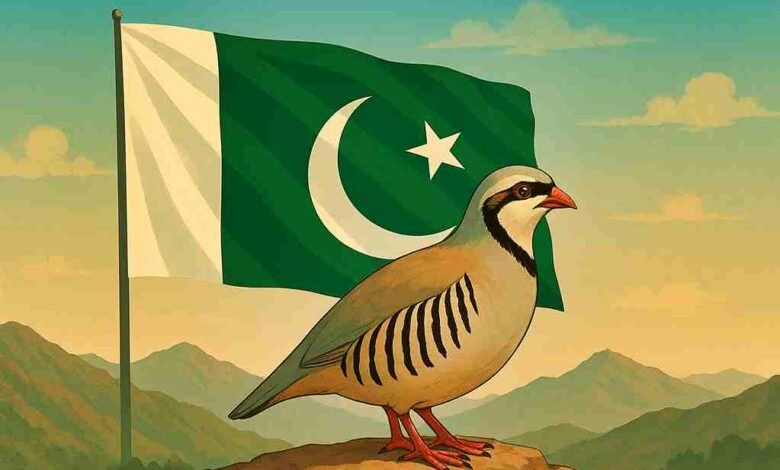
Pakistan is a land rich in natural heritage, diverse landscapes, and centuries-old cultural traditions. Among its many national symbols, one stands out not just for its beauty but for its deep emotional and cultural connection with the people the Chukar Partridge. Officially designated as Pakistan’s national bird, the Chukar is more than just a striking creature found in the rugged hills of the country. It captures the resilience, spirit, and poetic soul of the nation.
In this in-depth article, we explore why the Chukar Partridge holds this honorable title, what it symbolizes, how it connects to Pakistan’s cultural identity, and why it continues to occupy an important place in literature, folklore, and national consciousness.
1. Introduction: Why National Symbols Matter
Every nation chooses symbols flags, animals, birds, flowers that represent its values, history, and cultural identity. These are not random selections; they reflect characteristics admired by the society, traits embedded in the nation’s story, and elements deeply rooted in its natural environment.
For Pakistan, the selection of the Chukar Partridge (Alectoris chukar) as its national bird was a thoughtful decision. Its presence in literature, folklore, and daily life across centuries made it a natural fit. More importantly, its traits courage, resilience, and loyalty mirror qualities cherished in Pakistani culture.
But how did this seemingly modest bird become such a powerful symbol? To understand this, we must first understand the bird itself.
2. Meet the Chukar Partridge: A Bird Built for the Hills
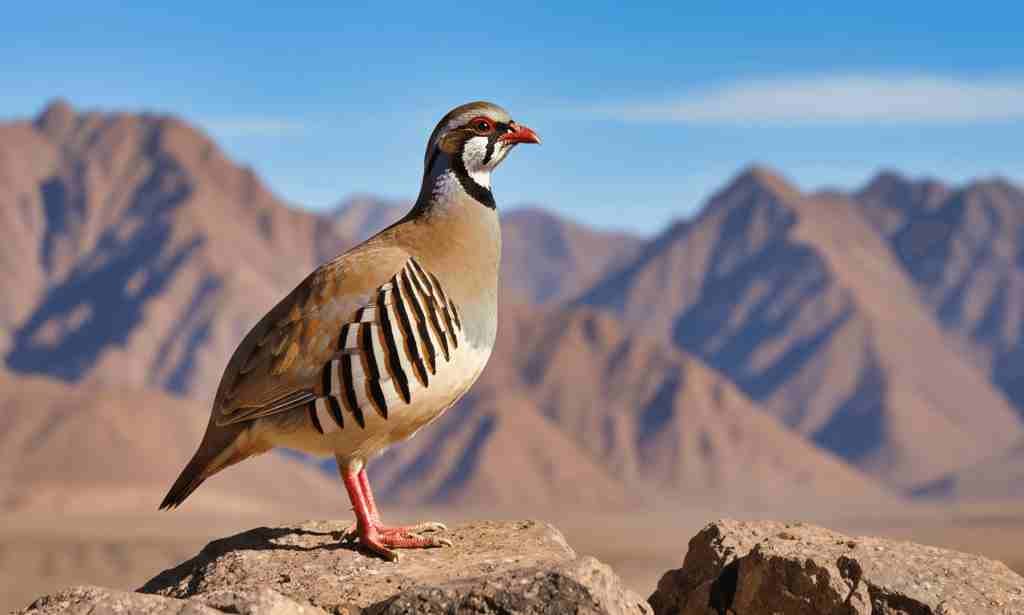
The Chukar Partridge is a medium-sized, ground-dwelling bird belonging to the pheasant family. With its soft grey plumage, striking black band across the eyes, bright red beak, and bold patterned flanks, the Chukar is a distinctive and surprisingly elegant bird.
Where does it live?
It thrives in the dry, rocky mountains of:
Balochistan
Khyber Pakhtunkhwa
Northern Punjab
Gilgit-Baltistan
Parts of Sindh’s hilly ranges
The Chukar prefers rugged terrain that many animals avoid. It adapts to extreme conditions harsh sunlight in summer, snow in winter, and rocky slopes year-round. This ability to endure difficulty plays a major role in its cultural symbolism.
Behavior and characteristics
The Chukar is known for:
Strong legs that help it climb steep cliffs
Swift running ability, often outrunning predators
Distinctive “chuk-chuk-chukar” call, which is famous in poetry
Loyalty to its mate, a trait widely romanticized
Courage it often refuses to abandon its territory
In many ways, the Chukar symbolizes the rugged beauty of Pakistan’s landscape and the resilience of its people.
3. Historical Significance: The Chukar in South Asian Culture
Long before Pakistan existed as a nation, the Chukar held symbolic meaning in the region.
Ancient folklore
In old South Asian tales, the Chukar is often described as “the bird in love with the moon.”
According to folklore, the Chukar gazes endlessly at the moon, enchanted by it and longing for what it can never reach. This simple story became a metaphor for:
Deep, faithful love
Desire for the unreachable
Persistence despite challenges
This poetic association is one of the reasons the Chukar is still referenced in classical Urdu literature.
The Chukar in Urdu poetry
Poets like:
Mir Taqi Mir
Mirza Ghalib
Allama Iqbal
Faiz Ahmed Faiz
have drawn metaphors from the Chukar. The bird appears as a symbol of passion, longing, beauty, and loyalty. Its romanticized behavior makes it one of the most culturally rich birds in the region.
Symbolism in traditional stories
The Chukar is often portrayed as fearless, proud, and elegant. In Pashto and Punjabi folklore, it is admired for:
Defending its territory
Staying loyal to its mate
Braving harsh weather in the mountains
These stories form the cultural foundation behind its recognition as Pakistan’s national bird.
4. Why the Chukar Partridge Was Selected as Pakistan’s National Bird
The decision to declare the Chukar as the national bird was not merely biological it was cultural, emotional, and symbolic. Several reasons contributed to this choice.
Reason 1: Deep-rooted cultural symbolism
The Chukar is part of Pakistan’s poetic imagination. It symbolizes:
Love
Loyalty
Courage
Resilience
These qualities align with Pakistan’s national identity.
Reason 2: Indigenous presence
The Chukar is native to Pakistan and widely found across its landscapes. A national bird should ideally be:
Abundant in the country
Naturally connected to the environment
Recognizable to the population
The Chukar fits each of these criteria perfectly.
Reason 3: Reflection of Pakistan’s rugged natural beauty
From Balochistan’s mountains to the peaks of the Himalayas, the landscapes that define Pakistan are also home to the Chukar. It represents:
The strength of the mountains
Harsh climates
Natural resilience
Thus, the bird is a natural ambassador of Pakistan’s diverse topography.
Reason 4: Symbol of bravery and determination
In local tradition, the Chukar is known for never backing down from defending its territory. Even when confronted by larger predators, it stands firm. This spirit resonates strongly with the Pakistani people.
Reason 5: Emotional attachment across provinces
Unlike many symbols that appeal to a specific region, the Chukar is admired across the entire country:
In Punjab, it is part of romantic folk tales.
In Balochistan, it is considered a sign of beauty and courage.
In Khyber Pakhtunkhwa, it appears in music and poetry.
In Gilgit-Baltistan, it is admired for surviving extreme weather.
This nationwide admiration makes it worthy of national representation.
5. Habitat and Ecology: The Bird in Its Natural Environment
Understanding Pakistan’s national bird also requires exploring the environment it lives in.
Preferred terrain
The Chukar thrives in:
Rocky cliffs
Semi-arid hills
Mountain slopes
Open shrublands
It avoids dense forests and wetlands.
Diet
A typical Chukar diet includes:
Seeds
Insects
Berries
Plant shoots
Its varied diet reflects its adaptability, an essential survival trait.
Breeding habits
Chukars breed once or twice a year, laying:
10–20 eggs, depending on climate and food availability
Eggs hatch in roughly three weeks
The high number of eggs helps maintain stable populations, even in harsh conditions.
Population status
While not endangered globally, the Chukar faces certain threats:
Habitat degradation
Overhunting
Climate pressures
Fortunately, Pakistan still maintains strong wild populations, especially in hilly regions.
6. The Chukar in Modern Pakistan: Cultural and Social Influence
Even today, the Chukar remains a widely recognized and respected bird.
In folk music
Songs in Punjabi, Pashto, Sindhi, and Hindko reference the Chukar for its beauty and symbolic meanings. Often, it represents:
Unrequited love
Beauty of the homeland
Passion and longing
In art and handicrafts
Local artisans frequently include Chukar motifs in:
Rugs
Pottery
Wood carvings
Traditional embroidery
This is especially common in northern Pakistan.
In sports and local traditions
In some regions, Chukar sightings are considered lucky. The bird’s resilience is admired by mountaineers and trekkers who often spot them in high-altitude areas.
7. Wildlife Conservation: Protecting Pakistan’s National Bird
Although the Chukar is not currently threatened, conservation efforts are still important.
Key challenges
Habitat loss due to construction and deforestation
Unsustainable hunting in some regions
Climate change, reducing water availability in hilly areas
Conservation efforts
Pakistan has implemented:
Protected wildlife reserves
Awareness campaigns
Hunting regulations
Research programs on habitat conservation
Educating local communities is crucial, as preserving Pakistan’s national bird is part of safeguarding the country’s natural heritage.
8. The Chukar as a Symbol of Pakistani Identity
Ultimately, the Chukar represents more than ecology or beauty
It embodies identity.
The bird reflects:
The rugged spirit of Pakistan’s mountains
The perseverance of its people
The romantic and poetic soul of its culture
The balance between beauty and resilience
Just as Pakistan has weathered historical challenges, the Chukar has evolved to survive in some of the most difficult landscapes in the world.
Choosing this bird as a national symbol was not merely a formality; it was a recognition of characteristics deeply rooted in the national character.
Conclusion
Pakistan’s national bird, the Chukar Partridge, is a symbol rich in meaning and deeply embedded in the country’s natural and cultural landscape. Its beauty, resilience, romantic symbolism, and indigenous presence make it a fitting ambassador of Pakistan’s identity. From ancient poetry to modern folklore, from rugged mountains to the hearts of the people, the Chukar remains a beloved national symbol.
As Pakistan continues to grow and evolve, the Chukar stands as a reminder of the nation’s strength, passion, and unbreakable spirit qualities that define both the bird and the people it represents.





One Comment