How Pakistan’s Youth Are Embracing Digital Learning

Pakistan’s Youth and the Rise of Digital Learning
Introduction: The Rise of a Digital Generation
In recent years, Pakistan’s youth have stepped confidently into the digital era, reshaping the country’s educational landscape. With smartphones in nearly every hand and affordable internet becoming more accessible, learning has moved far beyond the walls of classrooms. Today, millions of young Pakistanis are using digital tools to study, upskill, and connect with global knowledge resources.
This transformation is more than just a technological trend it represents a cultural shift. Pakistan’s youth are no longer passive learners; they are active digital explorers, harnessing technology to define their own educational journeys.
The Shift from Traditional to Digital Learning
For decades, Pakistan’s education system relied heavily on conventional classroom teaching, where memorization often took precedence over understanding. However, the rise of digital platforms has changed that.
E-learning platforms such as Taleemabad, Sabaq Foundation, Noon Academy, and DigiSkills.pk have democratized education, providing access to quality learning material for students across urban and rural areas alike. According to a 2024 report by the Pakistan Telecommunication Authority (PTA), over 55% of Pakistani youth between ages 15 and 29 now use online resources for learning.
This shift has been accelerated by the COVID-19 pandemic, which forced schools and universities to adopt online systems. What started as a necessity quickly evolved into a powerful movement toward long-term digital learning.
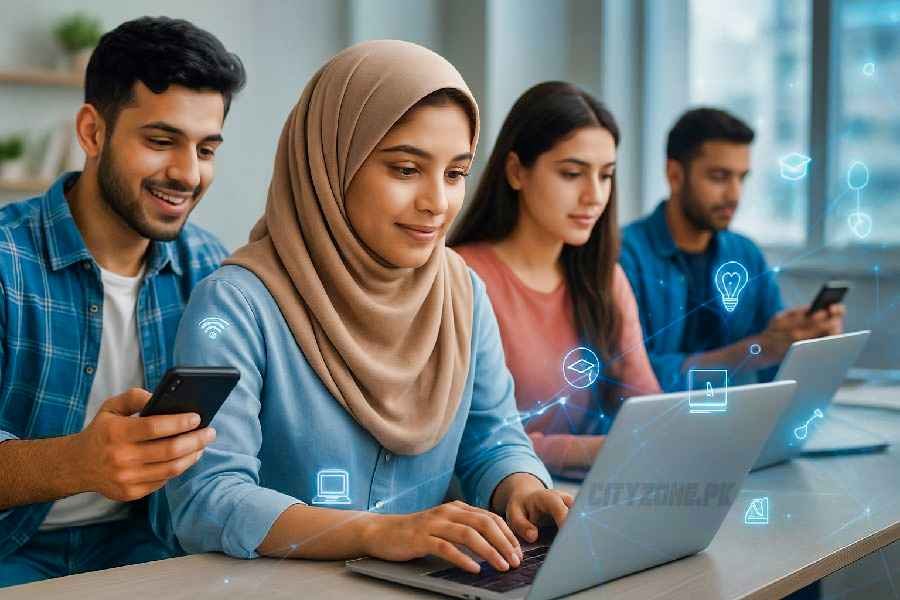
Why Digital Learning Appeals to Pakistan’s Youth
Digital learning offers flexibility, personalization, and global exposure qualities that appeal deeply to Pakistan’s tech-savvy youth.
- Flexibility: Students can learn anytime, anywhere. Whether it’s a university student in Karachi or a young freelancer in Swat, online education fits into different lifestyles.
- Affordability: Many platforms offer free or low-cost courses, breaking financial barriers to quality education.
- Skill Development: From programming and digital marketing to graphic design and freelancing, youth are learning skills that directly translate into employment opportunities.
- Global Access: Learners can enroll in international courses through platforms like Coursera, edX, and Udemy, bringing global standards of education to Pakistan’s doorstep.
This empowerment has not only enhanced learning outcomes but also encouraged self-motivation and innovation among young people.
Government and Private Initiatives Driving Change
The Digital Pakistan Vision launched by the government plays a major role in promoting online education and digital literacy. Through projects like DigiSkills.pk, over 3.5 million people have already received training in freelancing, e-commerce, and IT skills.
Private tech startups and NGOs are also contributing significantly. For instance, Taleemabad produces engaging educational videos aligned with the national curriculum, reaching thousands of low-income students. Similarly, Sabaq Foundation’s learning app offers content in both English and Urdu, ensuring inclusivity across linguistic backgrounds.
These initiatives are nurturing a generation ready to compete in the global digital economy.
Challenges on the Path to Digital Transformation
Despite rapid progress, challenges persist. Not every student has equal access to technology or the internet. Rural regions, where connectivity remains poor, still struggle with the digital divide. Additionally, some teachers lack the training needed to effectively use online teaching tools.
However, these hurdles are being addressed gradually through government programs, NGO partnerships, and the expansion of 4G and 5G networks. As infrastructure improves, the dream of an inclusive digital education system is becoming more realistic.

The Future: A Digitally Empowered Youth
Pakistan’s youth are the driving force behind this digital education revolution. They are redefining what it means to learn, work, and grow in a connected world. With continuous investment in technology, training, and policy reform, Pakistan is on track to build a digitally literate, future-ready generation.
The blend of ambition, innovation, and access to technology promises a bright educational future one where every young person, regardless of background, can learn, create, and succeed in the digital world.
Conclusion
The digital transformation of education in Pakistan is not just about technology it’s about empowerment. By embracing digital learning, Pakistan’s youth are breaking barriers, unlocking new opportunities, and shaping the nation’s future. With continued support and innovation, digital learning will remain at the heart of Pakistan’s educational progress for years to come.






4 Comments